

When choosing materials for outdoor stairs, it’s crucial to balance durability, safety, and aesthetics. Unlike indoor stairs, outdoor stairs must endure harsh weather conditions and provide safe, slip-resistant surfaces.
However, they should also complement the design of your home. This article explores the key factors to consider when selecting materials for outdoor stairs and offers insights into popular options.
Common Materials for Outdoor Stairs
Each of these materials is known for its durability, though none are invincible.
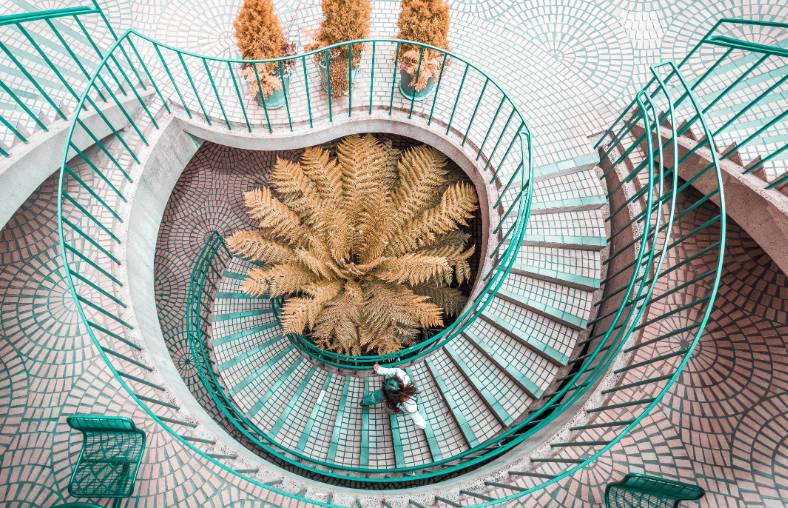
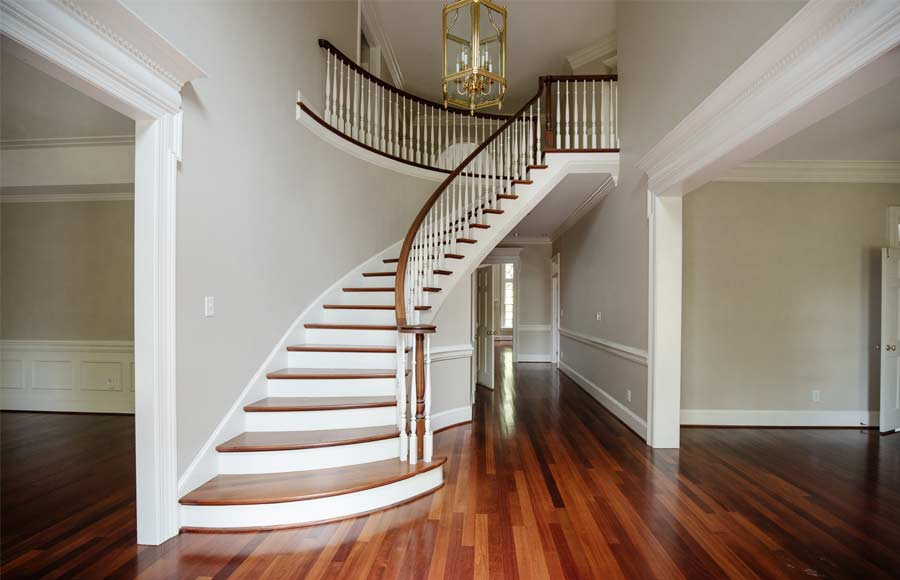
Some materials may be more suitable for certain designs, such as curved stairs, which require careful selection of materials to maintain both beauty and durability in their curved structure.
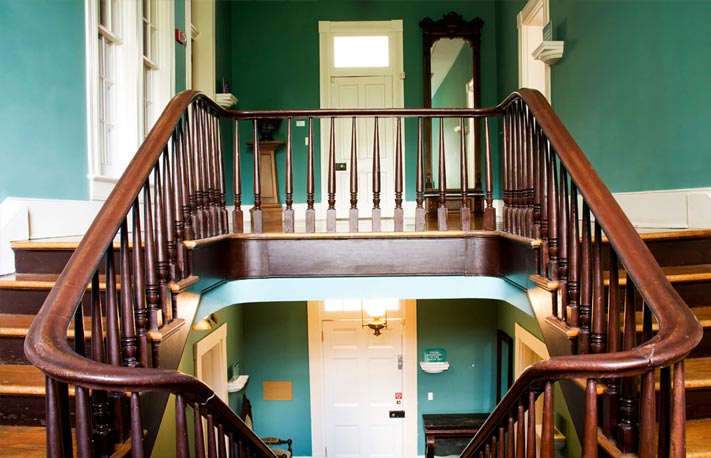
Wood
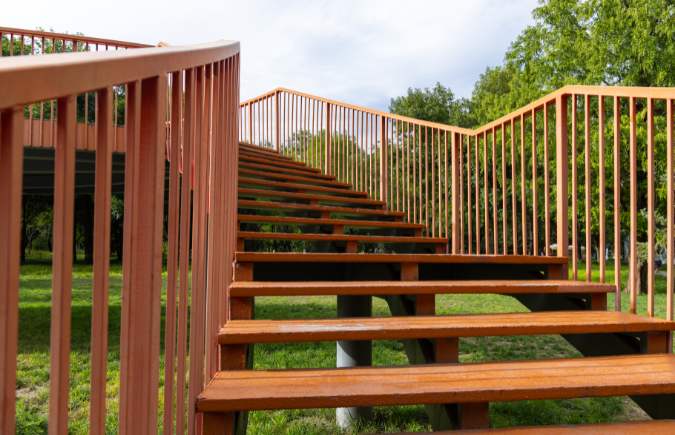
Wood is a popular choice for outdoor stairs, valued for its warm, rustic appeal that blends well with natural surroundings.
It is especially ideal for floating staircases, where the minimalist design allows the natural wood to stand out beautifully against the surrounding environment.
It’s lightweight, easy to customize, and comfortable to walk on, as it doesn’t retain heat. However, wood is vulnerable to rot and decay, though treatment can help mitigate this.
Regular maintenance, such as sealing and painting, is necessary to protect it from the elements.
Wood is also susceptible to warping and splintering in extreme weather conditions, so anti-slip treatments are advisable to prevent slips.
Concrete
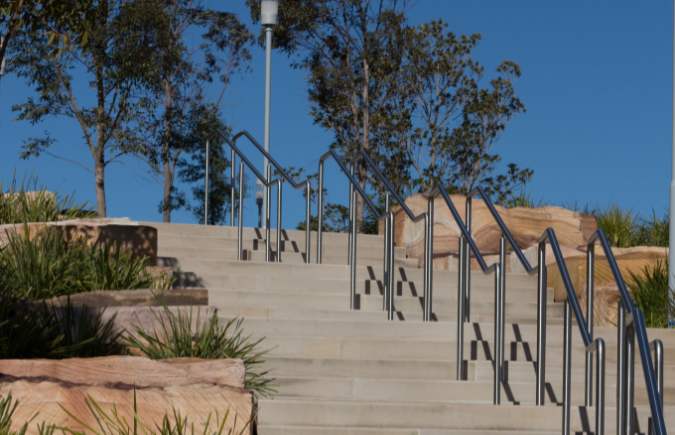
Concrete offers exceptional durability, making it a great option for high-traffic areas or harsh climates.
It’s also an excellent choice for straight stairs, where the material’s solid structure and straightforward design offer both longevity and aesthetic simplicity.
It’s affordable, low-maintenance, and can be customized with stamping, staining, or texturing to achieve different looks.
However, untreated concrete can appear cold and utilitarian, which may clash with more aesthetically designed spaces.
Concrete is heavy and typically requires professional installation. Over time, it may crack due to extreme weather, although it remains structurally sound. To extend its lifespan, sealants can be applied to prevent damage from moisture and the elements.

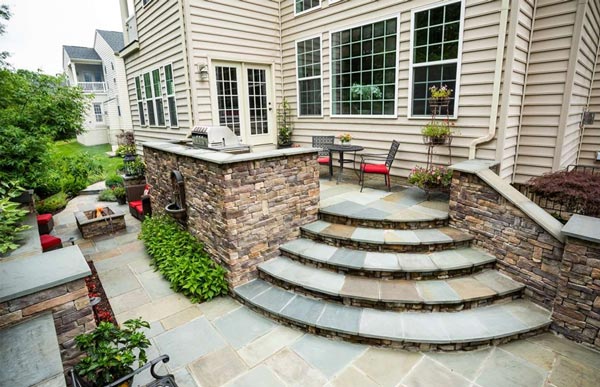
Stone
Stone adds a natural, luxurious look to outdoor stairs and is known for its durability and low maintenance.
It’s available in a variety of colors, textures, and types, allowing it to complement diverse landscapes.
The major downside is its high cost, and due to its weight, professional installation is required.
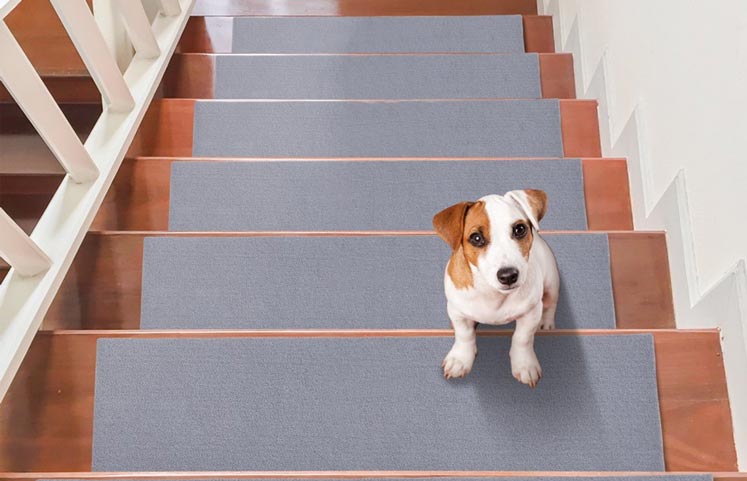
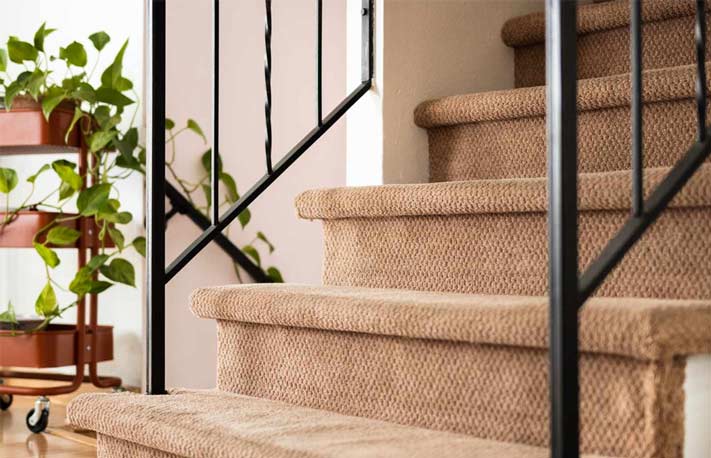
Alternatively, some homeowners may prefer covering their stairs with carpet, which can offer a more affordable and comfortable solution for both indoor and outdoor staircases.
While stone can be hard and uncomfortable to walk on barefoot, this is typically not an issue for outdoor stairs.
The initial investment can be steep, but the longevity of stone often justifies the price.
Metal: Galvanized Steel and Aluminum
Exterior metal stairs are strong, lightweight, and capable of supporting heavy loads, making them a suitable choice for modern, industrial-style designs.
They’re also a great option for exterior spiral staircases, where space-saving designs and durability are key considerations.
Galvanized steel and aluminum are particularly resistant to corrosion, enhancing their suitability for outdoor use.
However, metal surfaces can become hot in direct sunlight, making exterior metal stairs uncomfortable to walk on during warm weather.
Additionally, metal stairs can be slippery, so applying non-slip treatments is essential.
Regular maintenance is also required to ensure the protective coating remains intact, though it can be more expensive compared to other materials.
Composite Materials
Composite materials, typically made from a blend of wood fibers and plastic, offer the best of both worlds.
They resist rot and moisture, require minimal maintenance, and can mimic the appearance of wood or stone.
These qualities make composites ideal for space-saving staircase designs, where both functionality and aesthetics must be carefully balanced.
Available in a variety of textures and colors, composites are versatile and durable. The major downside is the higher upfront cost compared to traditional materials.
Additionally, composite stairs tend to retain heat when exposed to sunlight, and in some cases, the synthetic look may not appeal to all homeowners.
Despite these drawbacks, composite stairs are one of the most practical and long-lasting options for outdoor use.
Combining Materials for Functionality and Style
While each of these materials is unique on its own, it’s good to know that they can be combined to provide both durability and the preferred style.
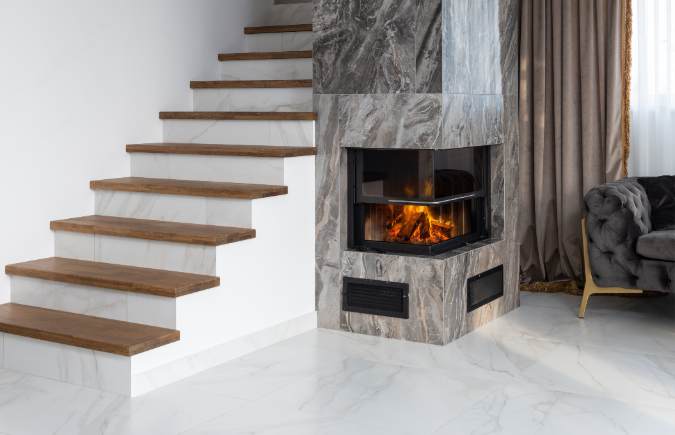
For example, you could build your stairs with a concrete base but use wooden treads to add warmth, or opt for the sleek look of glass staircases for home interiors, where transparency and modern design meet both form and function.
You’re not limited to one option! Look, compare, and contrast each of the qualities, taking into consideration the design of your house.
Factors To Consider When Choosing Outdoor Stair Materials
Durability
Unlike indoor stairs, outdoor stairs will constantly be battered by rain, sunshine, frost, and the activities of humans in general. Whatever your staircase is made of has to be able to live as long as the building it leads to.
Safety
Even with indoor stair accidents happening more frequently, outdoor stair accidents are more likely to cause permanent damage due to heights and the surrounding environment.
So, whatever material you’re choosing must be slip-resistant and have good structural integrity.
Aesthetics
Architecture has always strived to find harmony – something that will appeal to all the senses. For that reason, the material of your choice should blend in with the exterior design of your home and landscape, instead of sticking out awkwardly.
Maintenance
Outdoor stairs are bound to see a lot of use, so it’d be useful if you didn’t have to go through lots of stress to clean and maintain it. Some materials are easier to keep in certain environmental conditions than others.
Cost
As mentioned, outdoor stairs should ideally last a long time, as it’s not economical to replace them constantly.
So when choosing a material it’s best to keep in mind that while you should try to save money, you should also consider the long-term expenses attached.
Conclusion
Choosing the right material for outdoor stairs is a balancing act between durability, safety, aesthetics, and budget.
Whether you prefer the warmth of wood, the elegance of stone, or the practicality of concrete and metal, each material has its own advantages and drawbacks.
By carefully considering your needs and the environment, you can select stairs that are both functional and visually appealing.
For complex installations, consulting professionals can ensure a safe and stylish outcome. If you’re looking for an ideal outdoor stairs solution or exploring Whole House Customization in China, please contact GeorgeSolution for further inquiry!
FAQ
What is the best metal for outdoor stairs?
Galvanized steel and aluminum are the best metals for outdoor stairs. Both are corrosion-resistant, strong, and lightweight, making them ideal for exterior metal stairs to withstand harsh weather conditions.
What are the disadvantages of steel stairs?
Steel stairs can absorb and retain heat in direct sunlight, making them uncomfortable to walk on in hot weather. They also tend to be slippery, requiring non-slip treatments, and their protective coatings need periodic maintenance.
Can you buy stairs already made?
Yes, pre-made stairs are available in various designs and materials. They are often ready for installation and can be customized to fit your space.
How do you make outdoor metal stairs less slippery?
Apply non-slip coatings, textured surfaces, or add anti-slip treads to metal stairs to reduce the risk of slipping and improve safety.
Read More:
16 Creative Design Ideas For Hotel Rooms – George Solution
17 Restaurant Decor Ideas to Help Grow Your Business – George Solution
Kitchen Cabinet Materials Comparison: Solid Wood vs. Composite – George Solution
Designer Picks: 9 Popular Tiny Bathroom Color Schemes – George Solution
What Should You Inspect Stairs For? A Complete Checklist – George Solution
Choosing a Carpet Runner for the Stairs – George Solution
Glass Staircases For Your Home: Everything You Should Know – George Solution