

Stairs are a ubiquitous feature of human architecture and daily life. They connect different levels of a building, facilitating vertical movement in homes, offices, and public spaces alike.
But have you ever wondered when stairs were invented or who first thought of using a series of steps to navigate elevation? The origin of stairs dates back to ancient times, and their evolution has been shaped by necessity, innovation, and changes in building materials and design preferences.
The First Evidence of Stairs
The concept of stairs likely arose when early humans needed to scale natural terrain or reach higher ground.
Stairs, as we know them—specifically a series of steps—are believed to have emerged over 10,000 years ago, during the Neolithic period.
The earliest physical evidence of steps can be found in ancient Mesopotamia, Egypt, and the Indus Valley.
One of the first known examples of stairs appears in the Neolithic site of Jericho (in present-day Palestine), which dates back to around 8,000 BCE. Archaeologists have uncovered a stone structure in Jericho that includes a set of steps carved into the earth, leading to a raised platform.
This suggests that the idea of elevating spaces, and with it the need to move up and down, was already developing among early human societies. These first steps were simple stone platforms and earthworks, much like natural staircases.
Similarly, in ancient Egypt, stairs were incorporated into the design of some of the earliest pyramids, such as the Step Pyramid of Djoser, built around 2630 BCE, laying the foundation for architectural features such as materials for outdoor stairs used today.
The Step Pyramid, designed by the architect Imhotep, is considered the first monumental stone building in history and features a series of stacked platforms that resemble steps. While this structure is more of a stepped pyramid than a traditional staircase, it serves as an important indicator that the architectural principles of stairs were taking form.

The Rise of Stairs in Ancient Civilizations
As societies advanced, stairs became more sophisticated. By the time of ancient Greece and Rome, stairs were not only used for practical purposes but were also an important architectural feature in temples, palaces, and public buildings.
In ancient Greece, stairs were commonly used in the construction of theaters, temples, and other public structures.
The Theater of Epidaurus, built around 350 BCE, has a series of terraced steps for seating, showcasing the Greek use of stairs for functional and aesthetic purposes.
The Greeks also had a refined understanding of geometry, which they applied to the design of stairs, ensuring they were not only functional but comfortable to use—similar to the principles behind a Glass and Wooden Staircase design that balances aesthetics and usability.
The Greeks even created an early form of the “right-angle stair,” with a fixed rise and tread.
The Romans further improved and popularized the use of stairs in their architectural projects.
They made significant advancements in building materials, using concrete, which allowed for the construction of larger and more complex stairways.
Roman staircases can be seen in numerous surviving structures, including the Pantheon (127 AD), the Colosseum (70-80 AD), and Roman baths, with designs that would influence future innovations like the floating staircase seen in modern homes.
These stairs were often grand in scale and were carefully designed to facilitate the flow of large numbers of people, especially in public spaces like amphitheaters and bathhouses.
Romans also refined the construction of staircases, ensuring proper durability and function by incorporating stone steps with iron handrails and building curved or spiral staircases in towers and fortifications.
The development of stairs in Rome represented a step forward in their design, emphasizing functionality, strength, and elegance.
Stairs in Medieval Architecture
During the Medieval period (5th to 15th century), stairs continued to evolve, albeit at a slower pace than in ancient times.
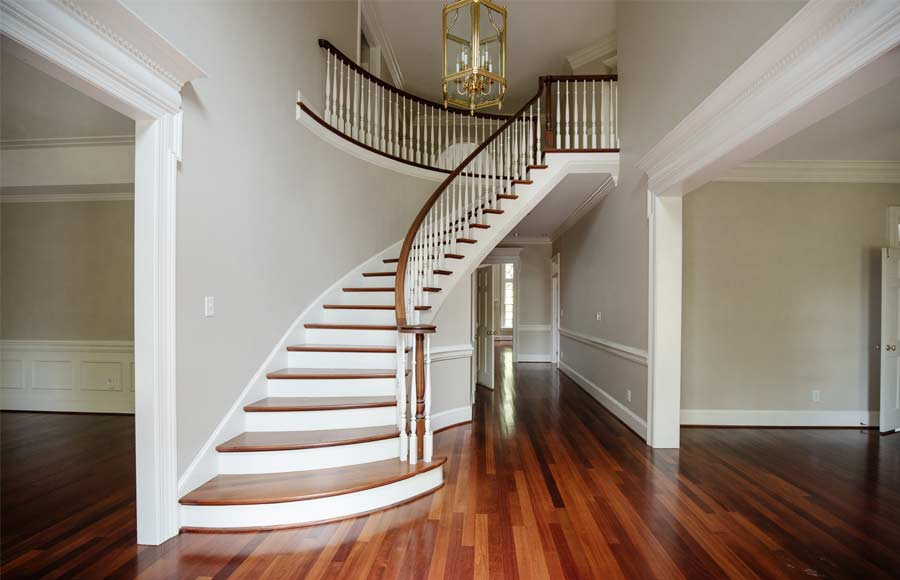
Stairs were critical in castles, monasteries, and churches, where they were often used to connect different levels of buildings and fortifications, especially through designs such as the curved staircase that conserve space while adding visual appeal.
The most notable feature of medieval stairs was their often narrow, steep, and winding design.
Due to the need for defensive architecture, spiral staircases became common in castles and fortresses.
These spiral staircases were typically constructed to ascend towers, with steps that were deliberately uneven in height to slow down attackers.
The design of these staircases was influenced by the need for both defense and space efficiency, as castles often had limited space for such structures.
In addition, many churches and monasteries from the medieval period feature spiral staircases that lead to towers or crypts.
These staircases were often constructed from stone or wood and were integral to the layout of religious buildings.
The uneven and winding nature of many medieval staircases made them less comfortable for everyday use but added to the architectural charm and defensive utility of the buildings.

The Industrial Revolution and Modern Stairs
The Industrial Revolution in the 18th and 19th centuries brought significant advancements in construction materials and building techniques, which had a profound impact on the design of stairs.
The invention of cast iron and steel allowed for larger, more durable, and more decorative staircases.
These materials made it possible to build stairs in buildings with taller floors and heavier loads, giving rise to grand staircases in public buildings such as museums, libraries, and government offices.
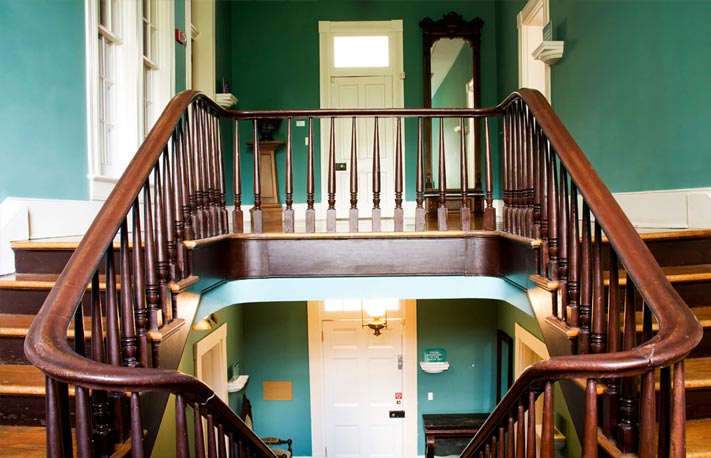
The design of stairs also became more standardized during the industrial era, with clear guidelines for rise, tread, and width, making stairs safer and more accessible.
The introduction of escalators in the late 19th century was another innovation that affected stair usage.
The first escalators were introduced at the Old Orchard Beach amusement park in Maine in 1896, and they gradually gained popularity in commercial buildings, offering a mechanical alternative to traditional stairs.
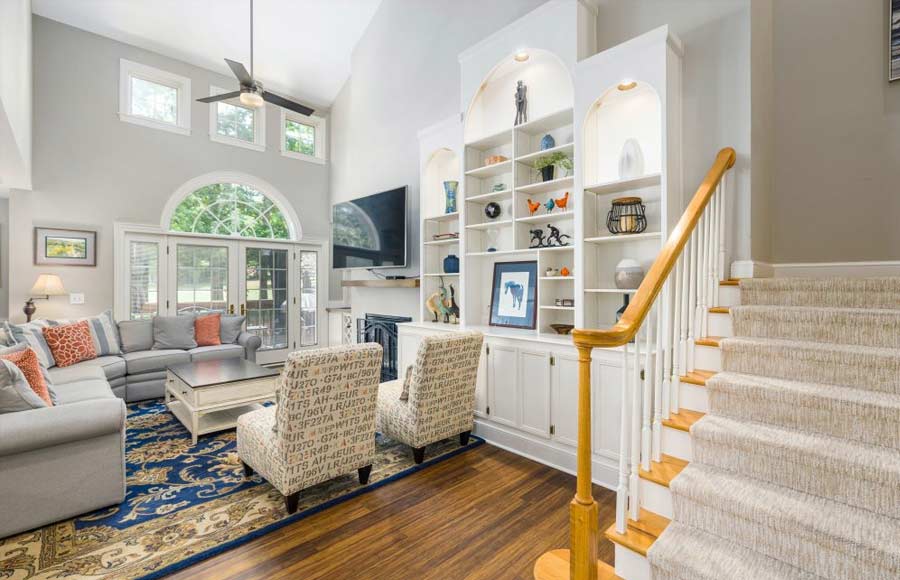
In the 20th century, the development of elevators in high-rise buildings further impacted the prominence of stairs, particularly in skyscrapers, though straight staircases continue to be a reliable and efficient option for many residential designs.
However, stairs remain an essential element of modern architecture, especially in emergency situations or where elevators are not feasible.
The Future of Stairs
In recent years, there has been a push toward creating more aesthetic and functional staircases.
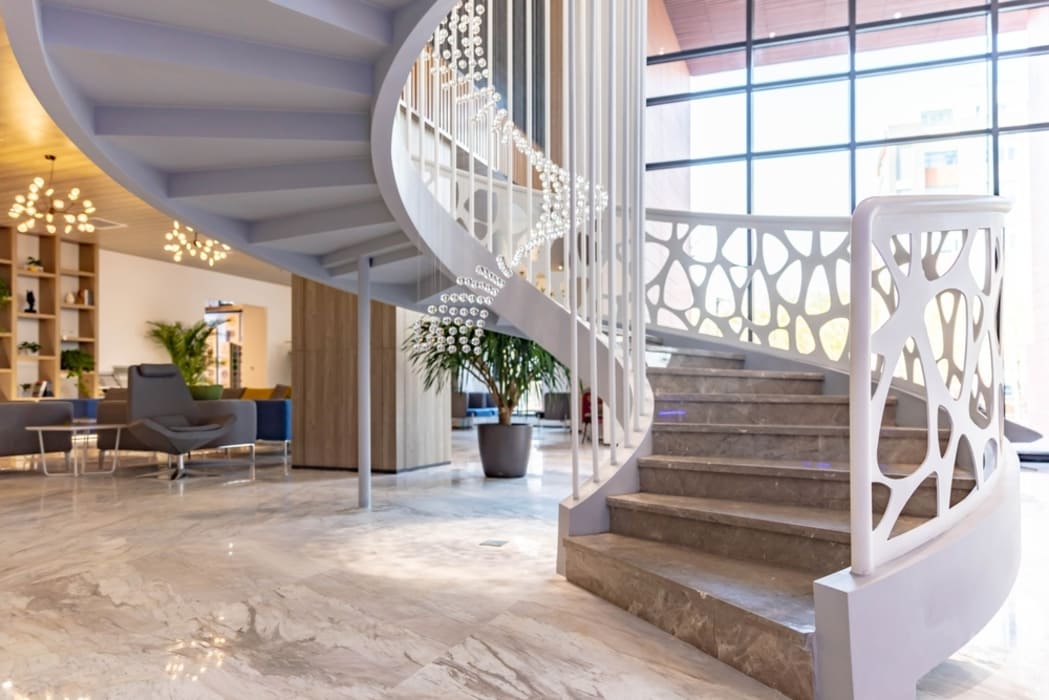
Architects and designers are incorporating modern materials such as glass, stainless steel, and wood to create visually striking stairs that also enhance the functionality of a space.
There is also a growing emphasis on accessibility, with the design of stairs that accommodate people with disabilities, such as wider treads and the addition of ramps and lifts.
In addition, there has been interest in creating movable stairs, such as those used in airports or shopping malls, which allow for greater flexibility in the use of space.
The integration of technology into the design of stairs, including sensors and lighting that activate as you approach, is also an emerging trend.
Conclusion
Stairs have come a long way since their earliest incarnation as simple stone steps in ancient civilizations.
The evolution of stairs reflects not only advances in engineering and material science, but also the changing needs and desires of societies throughout history.
From the first crude steps in ancient Jericho to the grand staircases of Roman and Renaissance buildings, stairs have remained a constant in architecture, facilitating human movement and connecting the spaces we inhabit.
The history of stairs is a testament to human ingenuity, showing how a simple concept—the need to move up or down—led to some of the most iconic and enduring elements of architecture.
Whether functional or decorative, simple or grand, stairs will undoubtedly remain an essential part of our built environment for centuries to come.
If you’re considering customizing your staircase, consult GeorgeSolution for expert design services.
Explore options like Whole House Customization in China or a Spiral Staircase to create a unique, personalized space that perfectly fits your home.
Read More:
Polished Tiles VS Glazed Tiles: What is the Key Difference ? – George Solution
16 Creative Design Ideas For Hotel Rooms – George Solution
17 Restaurant Decor Ideas to Help Grow Your Business – George Solution
Kitchen Cabinet Materials Comparison: Solid Wood vs. Composite – George Solution
Designer Picks: 9 Popular Tiny Bathroom Color Schemes – George Solution
Top 10 Modern Kitchen Design Trends for 2024 – George Solution