

Standard closet dimensions span a 24″ depth for reach‑in closets, 20–45 sq ft (5–7 ft deep) for small walk‑ins, and 90–180 sq ft (8–15 ft deep) for large or dressing‑room styles. This guide explains why dimensions matter, covers closet types, includes cheat sheets, measuring tips, and budget options.
Why Standard Closet Dimensions Matter
Balance Storage And Comfort
With the right closet depth and width, you avoid cramped aisles and wrinkled garments.
A 24‑inch depth fits standard hangers, and a 36‑inch opening gives enough space to move and view your wardrobe without bumping into walls.
Meet Building Codes And Resale Expectations
Most building codes and resale guidelines expect a minimum 24‑inch closet depth to accommodate hangers and door clearance.
Sticking to this rule ensures code compliance and makes your home more appealing to buyers familiar with this standard.
Avoid Costly Redesigns Later
Planning closet dimensions up front saves time and money by preventing awkward retrofits.
If you build to recommended sizes, you avoid demolition costs, wasted materials, and extra contractor fees. Smart planning pays off in the long run.
Closet Types And Typical Size Ranges
Reach‑In Closets
Reach‑in closets typically measure around 6 ft wide and 24 in deep, offering a compact solution for bedroom storage.
In tight spaces, depths can go down to 20 in; just be sure to account for hanger clearance and door swing.
Walk‑In Closets
Walk‑in closets range from small 20–45 sq ft layouts, ideal for single users, to medium 45–90 sq ft designs with 4–5 ft aisle clearances.
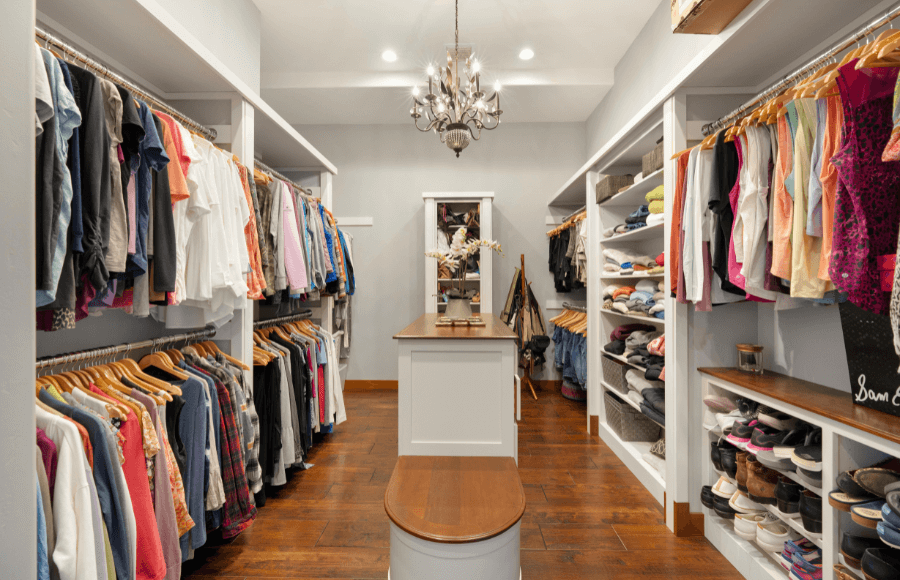
Large walk‑ins span 90–180 sq ft, accommodating islands, seating, or built‑in dressers.
Dressing Room‑Style Closets
Dressing room–style closets start at about 12 × 14 ft, giving enough room for a central island, vanity area, and seating.
These spacious layouts make outfit planning easy and often include dedicated shoe walls, jewelry drawers, and bespoke lighting.
Recommended Related Reading: Closet Without Doors: Are They A Good Choice?
Essential Dimension Cheat Sheets
Depth, Width, And Height At A Glance
Use this quick cheat sheet to compare minimum versus comfortable sizes: hanging rods at 66″ min and 72″ ideal, shelves with depths of 10″ min up to 16″ for easy folding, and drawers ranging from 14″ depth to a roomy 22″ for bulkier items.
Rod And Shelf Placement
Place a single hanging rod between 66″ and 72″ off the floor for full‑length garments.
For double‑hang systems, mount rods at 84″ and 42″ to separate shirts above and pants below. Space shelves every 12″ to 16″ to keep linens and sweaters neat.
Door And Aisle Clearances
Allow at least 30″ of clearance for swinging doors; bypass doors need a full track length plus 1″ between panels.
Pocket doors tuck inside walls but require double wall depth. In island layouts, keep a 36″ walkway around fixtures to move freely.
Planning And Measuring Your Space
Three‑Step Measuring Method
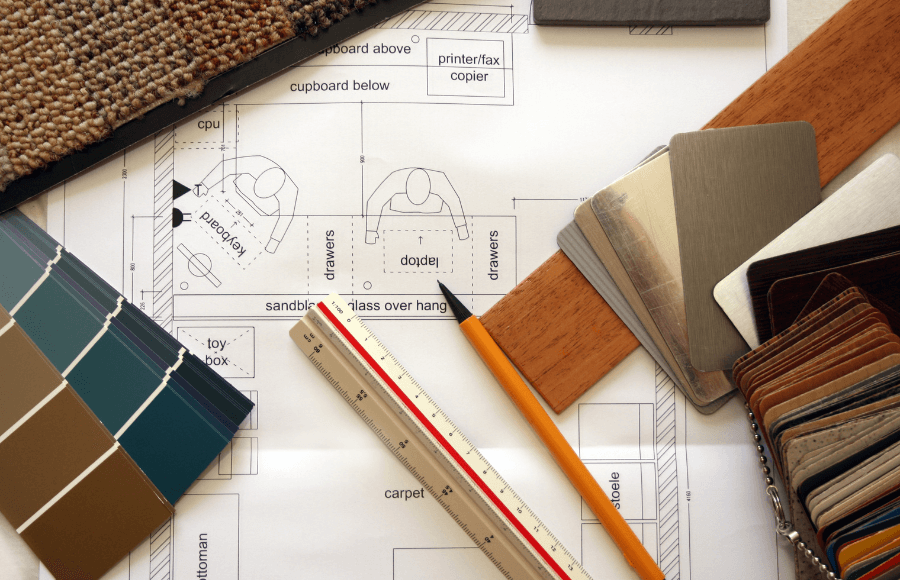
Begin by sketching your closet’s perimeter on paper, including doors and windows.
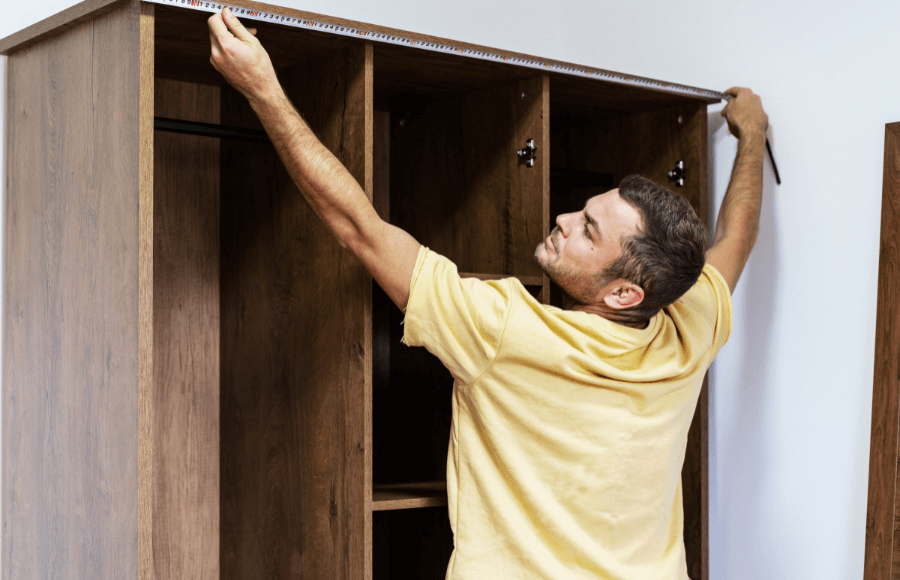
Then measure the rough opening’s width, depth, and height with a tape measure. Finally, subtract about an inch from each dimension to allow for drywall thickness.
Using Templates And 3‑D Apps
Free online planning tools let you drop in standard closet modules to see how shelves, rods, and drawers fit your space.
Try 3‑D apps from popular home stores or websites—these planners save you from guesswork and ensure your design works before you buy.
Accounting For Obstructions
Don’t forget obstructions: mark vents, light switches, electrical outlets, and any sloped ceilings or beams.
These elements can steal several inches of usable space. Accounting for them early prevents design surprises and ensures your closet components fit perfectly.

Customizing For Function And Accessibility
Modular Shelving And Pull‑Outs
Modular systems use adjustable metal tracks so you can reposition shelves and rods without drilling.
Pull‑out tie racks and built‑in hampers slide out neatly for easy access. These flexible features adapt as your wardrobe evolves.
ADA‑Friendly Adjustments
For universal access, keep rod and shelf heights within a 48‑inch reach from the floor.
Install lower hanging bars at 36–40 in for easy use. Maintain at least 30 × 48 in of clear floor space so wheelchair users can move freely.
Lighting, Power, And Ventilation
Incorporate LED strips under shelves and along rods to eliminate shadows and highlight items.
Plan for two outlets so you can safely use an iron or garment steamer. Add passive ventilation grilles to prevent musty air and ensure fresh airflow.
Looking for a turnkey solution that already folds modular tracks, pull‑outs, ADA‑friendly heights, and integrated lighting into one package? Check out the Custom Wardrobe from George Group. Their made‑to‑order system lets you mix adjustable shelves, tie racks, and soft‑close hampers in any configuration, all engineered to keep rods within a 48‑inch reach zone and provide the 30 × 48‑inch clear floor space wheelchair users need. Optional LED strips, concealed outlets, and built‑in ventilation panels come pre‑routed, so you get pro‑level accessibility and polish without the hassle of piecing it together yourself.
Recommended Related Reading: What is Cabinet Overlay?
Budget, Materials, And Next Steps
DIY Vs. Pro Install Cost Ranges
DIY closet kits using melamine panels cost about $30–$40 per linear foot, covering basic shelves and rods you install yourself.
For custom built‑in wood closets with solid hardwood finishes, expect $100+ per linear foot from a professional installer.
Material Durability And Finish Options
MDF is budget-friendly but less moisture-resistant and can sag under heavy loads.
Plywood offers stronger load capacity and resists warping at a mid-range price. Solid hardwood gives superior durability and a premium look but comes at a higher cost.
When To Call A Closet Designer
Call a closet designer when your space has challenging features like angled ceilings, tight alcoves, or if you’re planning a luxury dressing room with islands, lighting, and specialized storage.
Professional guidance prevents wasted materials and ensures a flawless finish.
Conclusion
From optimal depths and widths to planning tools, this guide arms you with everything you need to design closets that fit your space and lifestyle.
We covered reach‑in and walk‑in standards, cheat sheets for dimensions, measuring methods, customization tips, and budget options—so you can plan with confidence.