

For a long time, an outdoor pergola was just a simple wooden frame built to hold up climbing vines. Today, it has become the centerpiece of modern backyard design—turning an exposed concrete patio or deck into a genuine extension of your indoor living room.
When done right, a pergola gives you shade on hot afternoons, shelter during a sudden drizzle, and a defined space for dining or relaxing. When done poorly, it turns into a maintenance headache that warps in the sun, drips water onto your outdoor sofa, or feels too cramped the moment you pull out a dining chair.
Whether you are a homeowner upgrading your backyard or a builder sourcing structures for a residential project, here is a realistic, practical guide to choosing the right outdoor pergola.
Types of Outdoor Pergolas: Structure and Roof Options
Before looking at colors or accessories, you need to decide how the structure will sit in your yard and what kind of overhead coverage you actually need.
Freestanding vs. Attached
- Freestanding Pergolas stand independently on four or more posts. They are the most flexible option if you want to create a destination lounge by a pool, in the middle of a garden, or on a large open lawn.
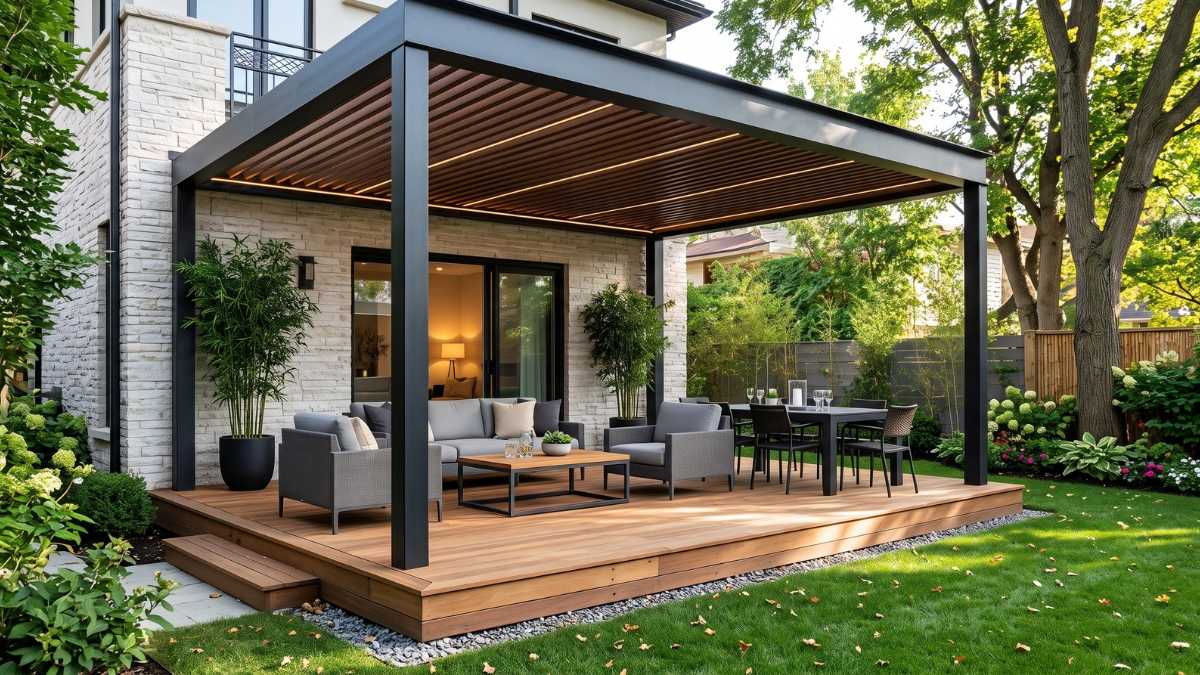
- Attached Pergolas are anchored directly to an exterior wall of your house. They create a seamless transition from your indoor kitchen or living room out onto the patio, and they save space by eliminating two posts against the house. Just keep in mind that attaching a structure to your home requires proper wall flashing and structural anchoring so rainwater doesn’t seep into your siding.
Choosing the Roof Style
- Open Lattice: The traditional pergola look. Fixed rafters provide dappled, partial shade while letting plenty of breeze through. It looks classic, though it offers zero rain protection.
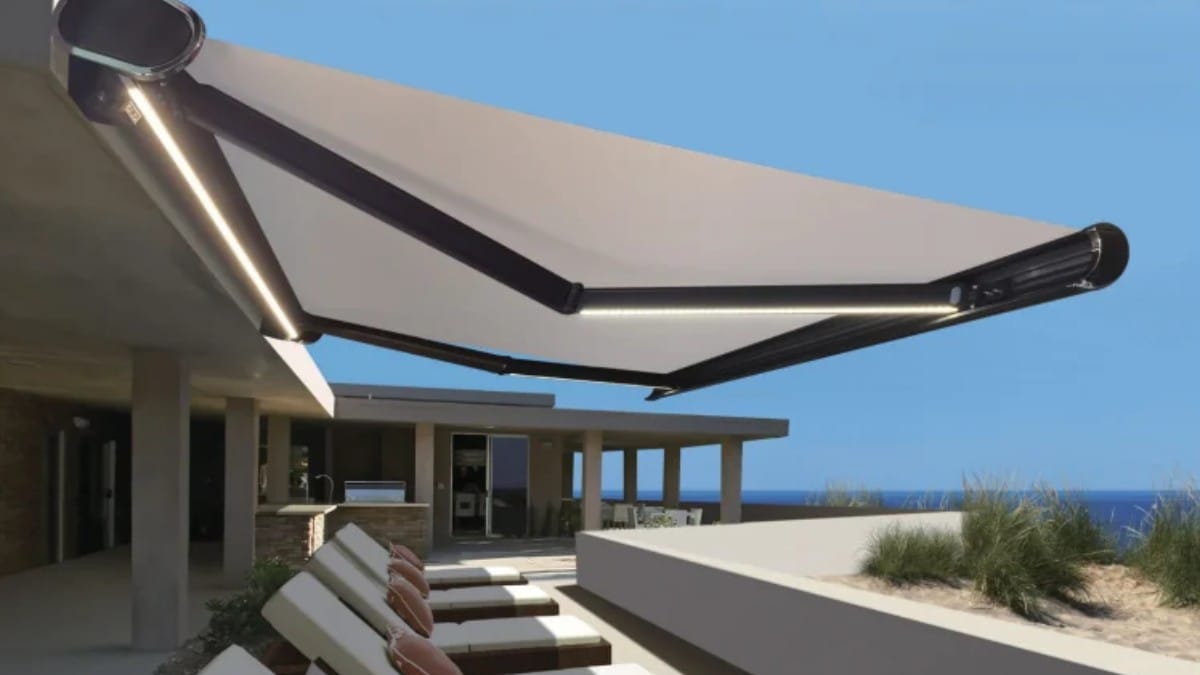
- Retractable Canopy: A metal or wood frame paired with a sliding outdoor fabric canopy. It is a budget-friendly way to get adjustable shade, though fabric canopies eventually fade and need to be replaced after a few years of heavy sun exposure.
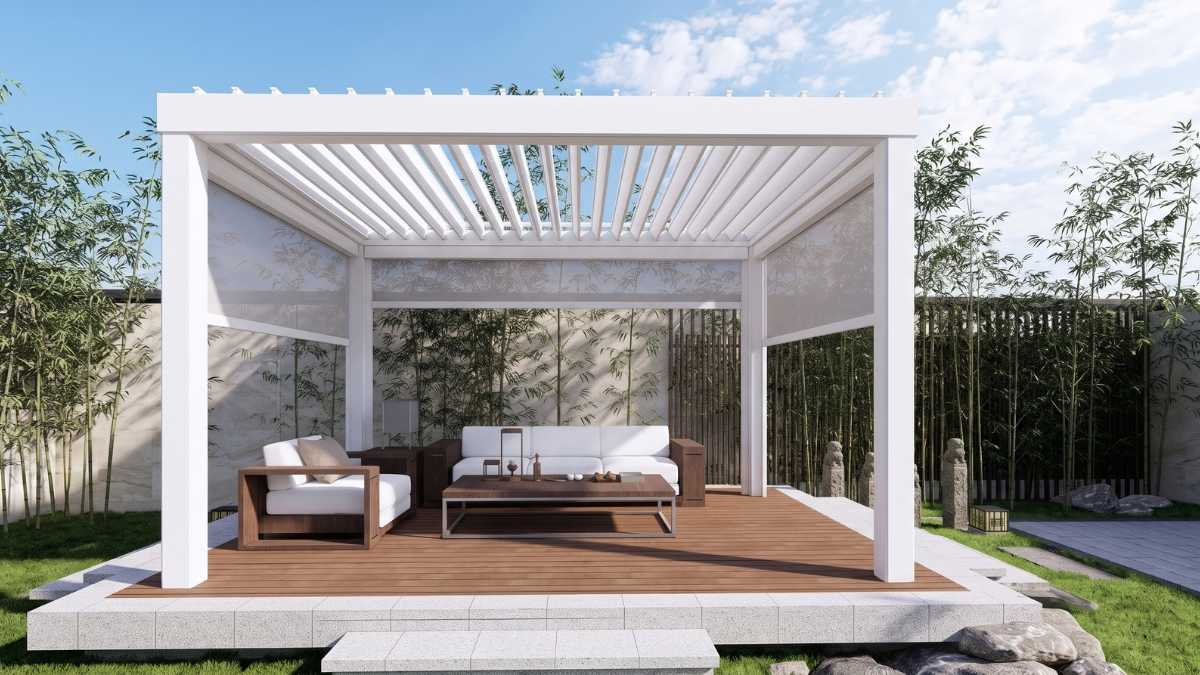
- Adjustable Louvered Roof: The most versatile modern option. Overlapping aluminum slats (louvers) pivot open to let in sunlight or close tightly to form a solid roof when it rains. You can operate them with a simple hand crank, or upgrade to a motorized system controlled by a remote, wall switch, or smartphone app.
Best Materials for Outdoor Pergolas
The material you choose dictates how your pergola looks on day one—and how much work it demands five years later.
| Material | Aesthetic & Feel | Maintenance Required | Weather & Rust Resistance | Typical Lifespan |
| Powder-Coated Aluminum | Clean, modern, architectural | Very low (rinse with a hose twice a year) | Rustproof; handles humidity and coastal air well | 20+ years |
| Cedar / Redwood | Warm, natural, traditional | High (restain or seal every 1–2 years) | Naturally resists insects, but can warp or split over time | 10–20 years |
| Steel | Heavy-duty, industrial | Moderate (inspect for scratches; touch up paint) | Very strong, but prone to rust if the coating chips | 20–25 years |
| Vinyl (PVC) | Bright, classic white | Low (wash with soap and water) | Won’t rot or rust, though it can look less natural | 20+ years |
Natural wood like cedar has an undeniable warmth, especially in traditional or cottage-style gardens. However, if you live in a climate with intense sun, heavy rain, or snow, wood requires regular sanding and sealing to stay looking sharp.
That is why powder-coated aluminum has largely taken over the market for both residential and commercial projects.
It will not rot, warp, or rust. And if you love the warmth of timber without the annual upkeep, modern wood-grain aluminum finishes give you the look of cedar with the durability of metal.
5 Practical Details to Check Before Buying
Marketing listings love words like “heavy-duty” and “all-weather,” but those labels don’t tell you how a pergola actually performs in a storm. Check these five details before committing to a purchase:
1. Integrated Drainage
If you are investing in a louvered pergola for rain protection, ask where the water goes when the slats are closed. A well-engineered system channels rainwater off the louvers into hidden internal gutters along the beams, then drains it quietly down through the inside of the hollow posts and out at the base.
Without internal drainage, water simply pours off the edges right onto your patio.
2. Published Wind and Snow Ratings
Don’t guess whether a structure can handle your local weather. Look for tested wind resistance (measured in mph) and snow load capacity (measured in pounds per square foot, or psf).
Keep in mind that these ratings assume the pergola is properly anchored to a solid foundation—usually concrete footings or a reinforced concrete slab—rather than just sitting on loose pavers.
3. Sizing and Walking Clearance
One of the most common mistakes homeowners make is sizing a pergola strictly to the footprint of their dining table. Once people sit down and push their chairs back, the space feels immediately cramped.
As a practical rule, leave at least 2 to 3 feet of clear walking space around all sides of your furniture. For most patios, covering roughly 60% to 80% of the paved area creates the most balanced visual proportion.
4. Built-In Comfort Upgrades
If you plan to use your patio after sunset or during cooler months, it is much easier to wire accessories during the build than to add them later.
Many modern aluminum pergolas allow you to integrate recessed LED strip lighting, ceiling fans, infrared heaters, or drop-down zip-track privacy screens that block low afternoon sun and wind.
5. Local Permits and HOA Rules
Before pouring concrete or ordering a structure, check with your local building department and homeowners association (HOA). Freestanding pergolas under a certain square footage sometimes skip permits, while larger structures, wall-mounted builds, or motorized units requiring dedicated electrical lines almost always need approval.
Popular Outdoor Pergola Design Ideas
- The Year-Round Patio Dining Room: Attaching a louvered aluminum pergola directly outside your kitchen doors creates a sheltered dining zone. Closing the louvers blocks midday glare while keeping the table dry during unexpected summer showers.
- The Poolside Lounge: A freestanding pergola beside the pool gives swimmers a dedicated spot to cool off in the shade. Adding retractable side screens provides instant privacy and wind protection.
- The Outdoor Kitchen Cover: Grilling under a solid roof traps smoke, while grilling in the open leaves you baking in the sun. An adjustable louvered pergola solves both problems—tilt the slats slightly open to let grill smoke escape while still blocking direct sunlight.
- The Low-Maintenance Traditional Yard: Pairing a wood-grain aluminum pergola with stone pavers or composite decking delivers a warm, classic garden aesthetic without ever having to pick up a paintbrush or wood stain.
DIY Kits vs. Factory-Direct Custom Pergolas
Standard, ready-to-assemble pergola kits (typically ranging from $1,500 to $4,000 for common 10’×10′ or 10’×13′ sizes) are a practical choice if you have a simple, flat patio and don’t mind spending a weekend assembling it with a couple of helpers.
However, standard kits quickly hit their limits when you are dealing with larger multi-zone patios, L-shaped layouts, uneven walls, or commercial hospitality spaces. If you need custom dimensions, higher wind/snow engineering, or a cohesive outdoor setup, going factory-direct custom makes far more sense.
At George, we manufacture custom powder-coated aluminum pergolas engineered to your exact project dimensions—complete with motorized louvers, concealed drainage, and integrated LED lighting.
Because we operate as a one-stop source factory, you can also coordinate your pergola with matching outdoor furniture, decking, and lighting in a single shipment, avoiding the markups and mismatched timelines of juggling multiple local dealers.
Frequently Asked Questions
Do louvered pergolas really keep the rain out?
Yes, a well-designed louvered pergola is highly water-resistant when the slats are fully closed. Interlocking louvers direct rainwater into built-in perimeter gutters and down through the interior of the posts. While heavy wind-driven rain can still blow in from the open sides unless you add side screens, the overhead coverage keeps furniture dry in normal rainstorms.
Aluminum vs. wood pergola: which lasts longer?
Powder-coated aluminum lasts significantly longer with far less effort—typically 20+ years without rusting, warping, or rotting. Cedar or redwood pergolas can last 10 to 20 years, but only if you commit to cleaning and re-sealing them every one to two years.
Do I need a permit to build an outdoor pergola?
It depends on your city, county, and HOA regulations. Small freestanding pergolas often do not require a permit, whereas attached pergolas, structures over a certain height or square footage, and motorized systems with hardwired electrical connections usually do. Always verify local rules before ordering.
Can I attach a pergola directly to my house?
Yes, attached pergolas are a popular way to extend a patio or deck. Because the ledger board connects directly to your home’s framing, it is best to have a qualified contractor handle the mounting and waterproofing to protect your exterior wall from moisture.