

A staircase is rarely just a way to get from one floor to another. In modern architecture, it often serves as the visual spine of a home or commercial building. The railing system you choose has the power to either open up a space, allowing light to flow freely, or completely anchor it with heavy, deliberate materials.
When specifying a stair railing, the decision must seamlessly balance the desired interior design language with strict engineering and safety requirements. Before exploring aesthetics, it is crucial to recognize that the primary function of any railing is fall prevention.
Whether you are dealing with strict residential building codes or commercial ADA accessibility standards, the system must provide secure, continuous graspability without compromising the architectural vision.
Moving beyond standard builder-grade wood spindles, here are the most effective modern railing configurations currently dominating high-end residential and commercial builds.
Top Modern Stair Railing Ideas for All Design Styles
Sleek and Transparent: Glass Panel Railing Systems
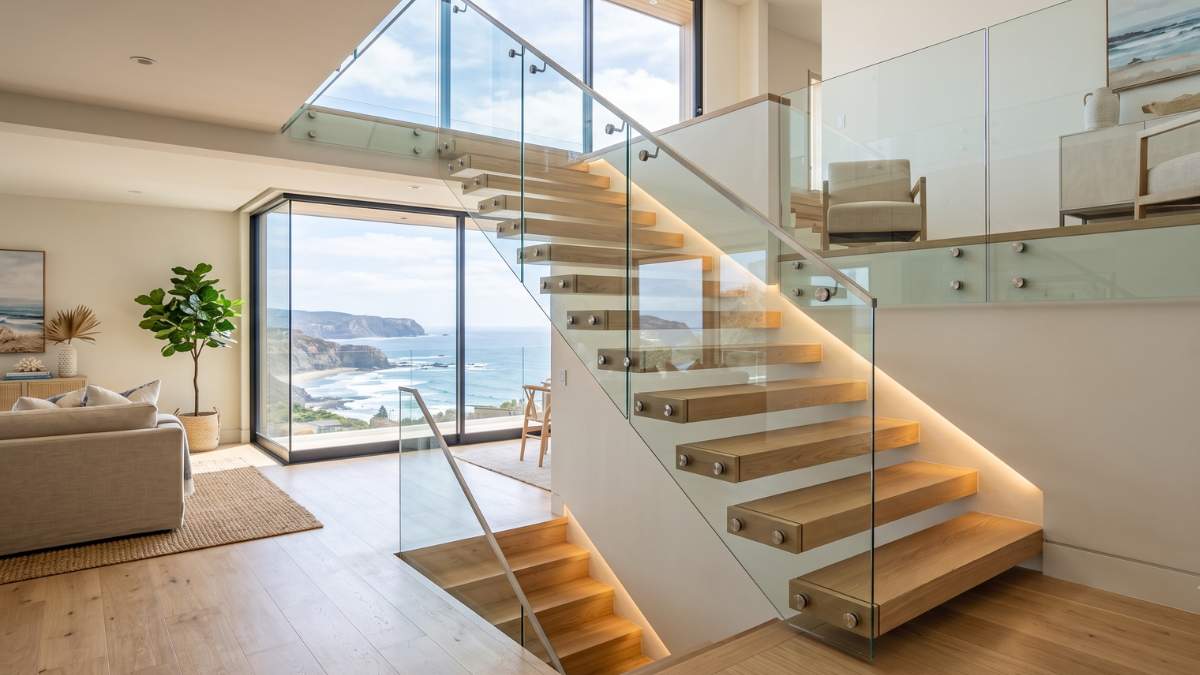
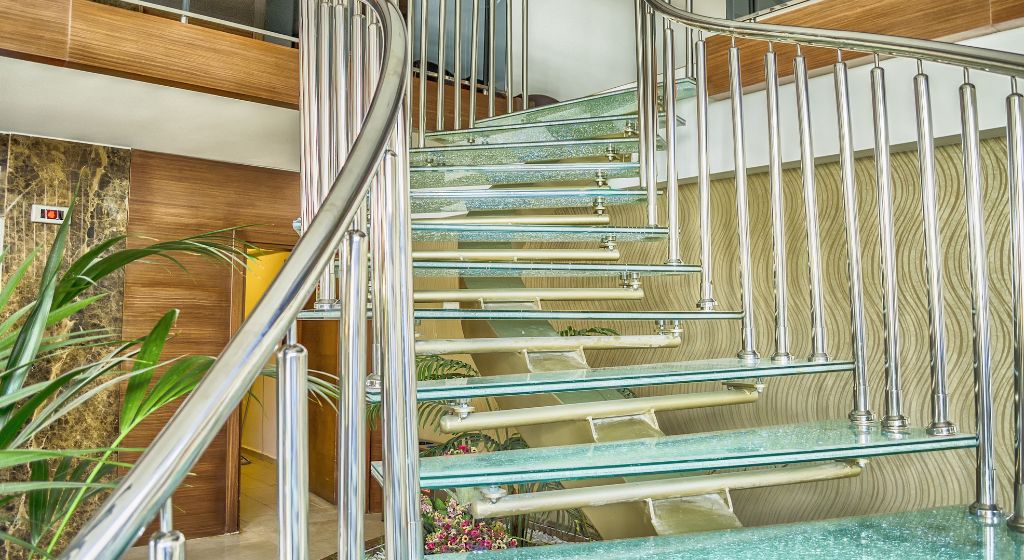
For spaces that prioritize natural light and unobstructed sightlines, glass is the ultimate solution. Instead of relying on bulky frames that interrupt the view, modern executions utilize frameless tempered or laminated glass.
These heavy glass panels are typically secured by minimalist stainless steel standoff pins drilled directly into the stair stringer, or hidden within a concealed aluminum base shoe. This transparent approach is particularly effective in open-concept homes, coastal properties, or commercial lobbies where preserving the surrounding view is the highest priority.
The Minimalist Wall-Mounted Rail
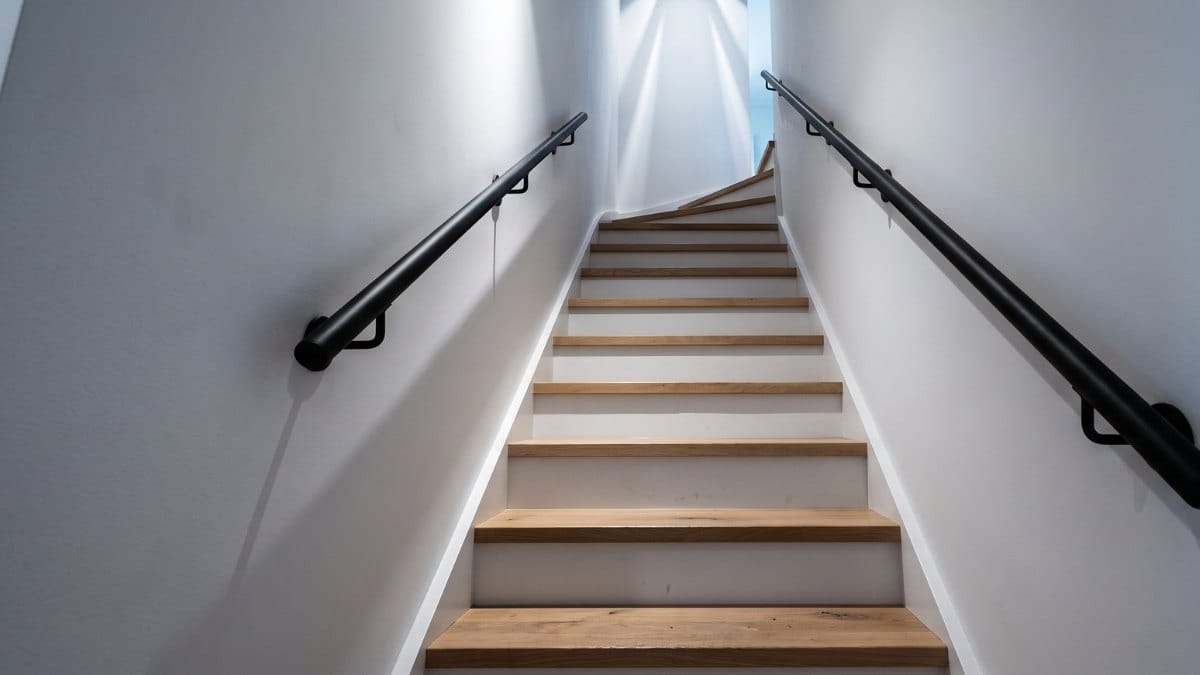
When dealing with enclosed stairwells or narrow passages, a bulky balustrade can make the space feel cramped. A minimalist wall-mounted handrail provides essential safety without encroaching on the walking path.
By utilizing compact, round aluminum or powder-coated steel profiles—often finished in a matte black—you create a sharp, architectural contrast against crisp white walls. This design is highly favored in minimalist interiors and projects requiring continuous, ADA-compliant handholds from top to bottom.
Architectural Vertical Metal Balusters
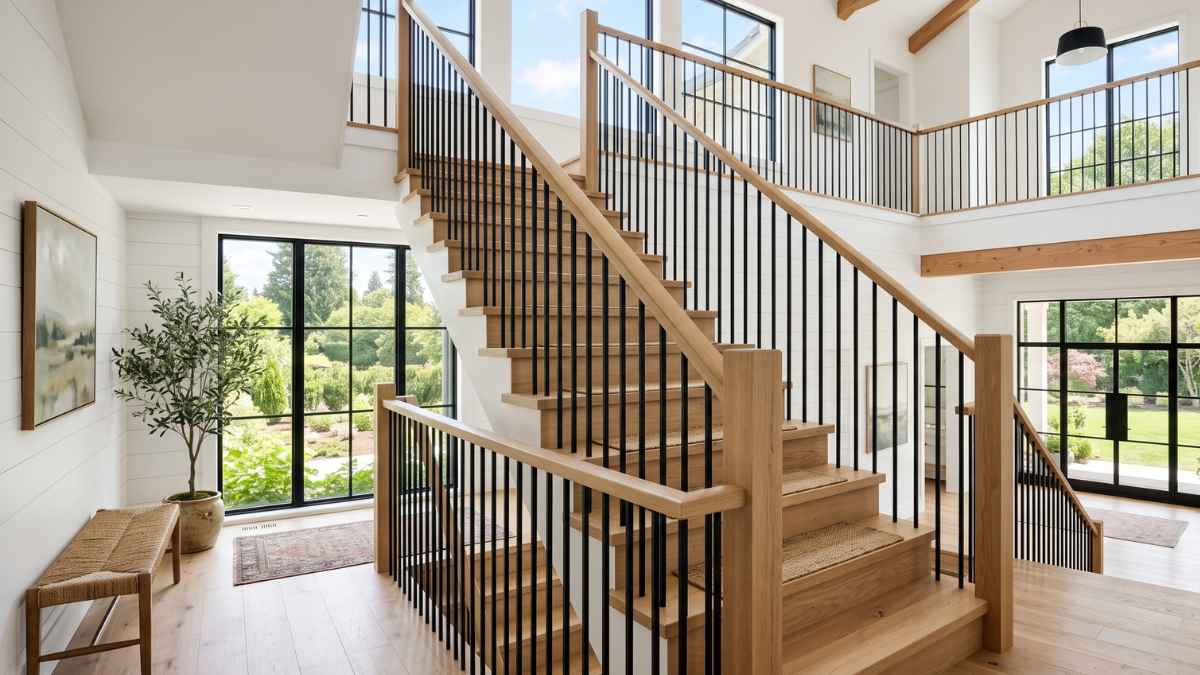
Replacing thick, ornate wooden spindles with slender metal balusters is one of the most effective and cost-efficient ways to modernize an existing staircase. The finish of the metal dictates the mood: black iron or steel balusters provide a subtle industrial edge that fits perfectly into contemporary or “Modern Farmhouse” aesthetics.
Conversely, specifying white metal balusters allows the railing to blend seamlessly into light, bright corridors, creating a quiet geometric texture without demanding visual attention.
The Illuminated Path: LED Integrated Handrails
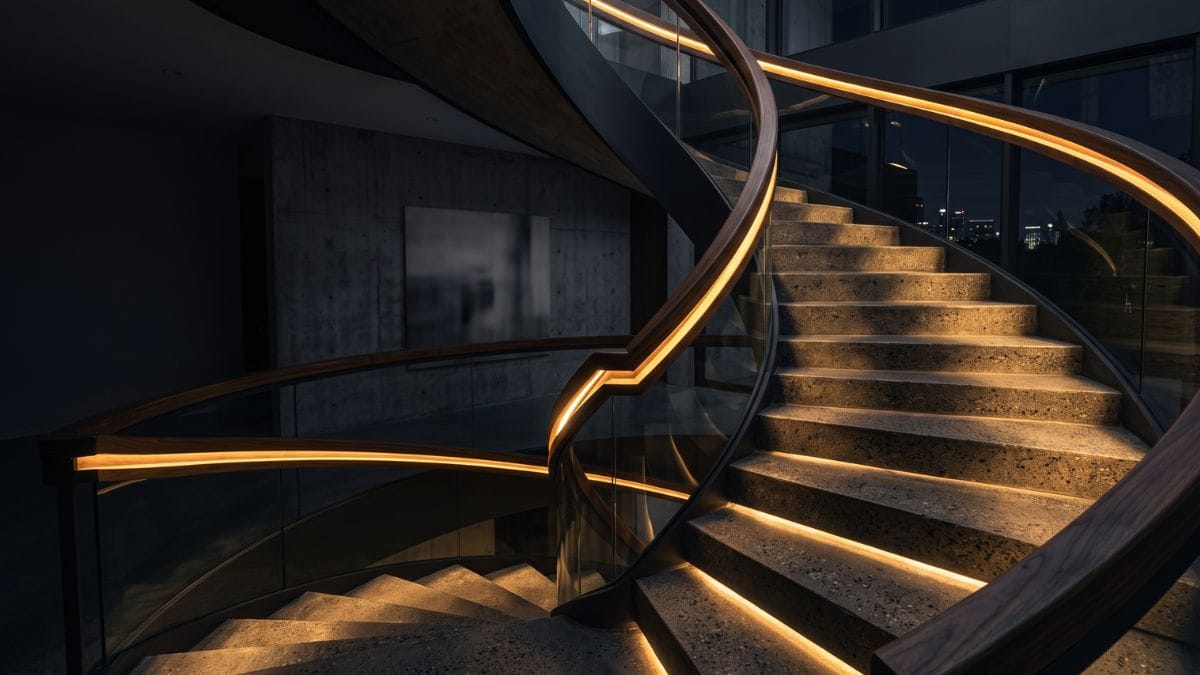
Lighting is no longer restricted to ceiling fixtures and wall sconces. Integrating illumination directly into the railing system merges functional safety with high-end atmospheric design.
By recessing continuous LED channel lighting into the underside of an aluminum or solid wood handrail, you create a luxurious “wall-wash” effect down the staircase. This not only elevates the evening ambiance of the space but serves as a highly effective nighttime wayfinding tool for residents and guests.
Mixed-Material Stair Rails
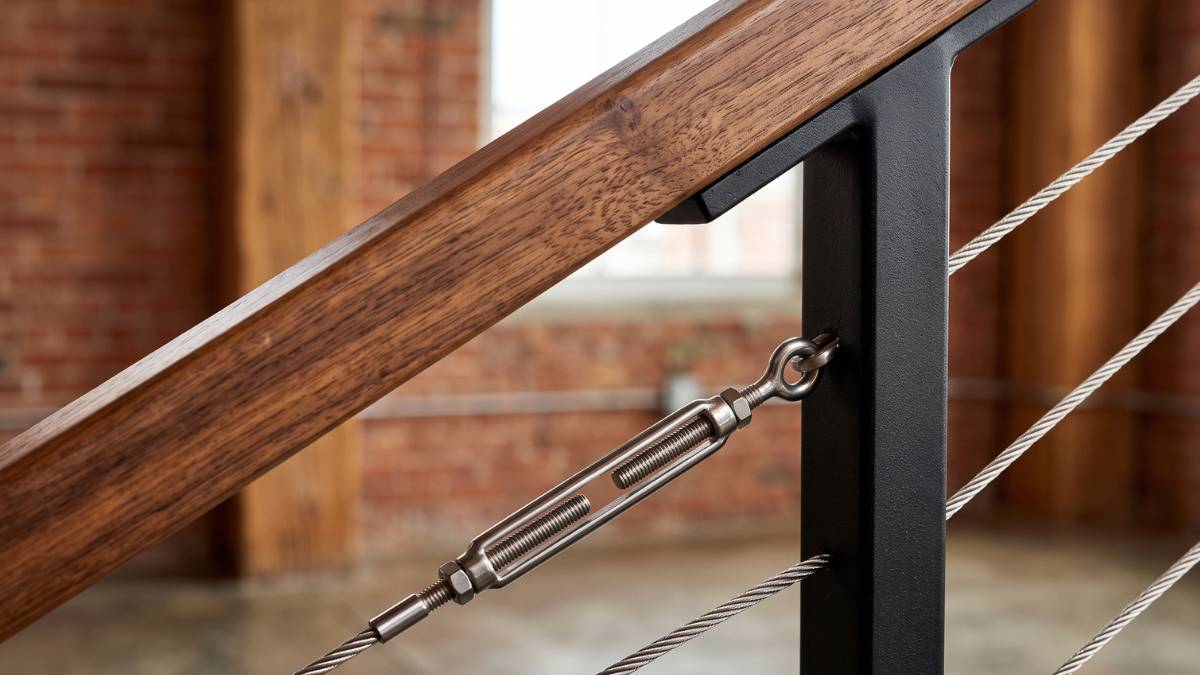
Modern design frequently relies on the tension between different textures to prevent a space from feeling too sterile or too rustic. Mixing materials is the perfect way to strike this balance.
Pairing a warm, natural oak or walnut handrail with rigid stainless steel cable tensioners or matte black iron posts offers the best of both worlds. It provides the tactile comfort and timeless warmth of natural wood exactly where the hand rests, supported by the sleek, unyielding rigidity of modern metal.
Updating Classic Configurations: The U-Shaped Stair
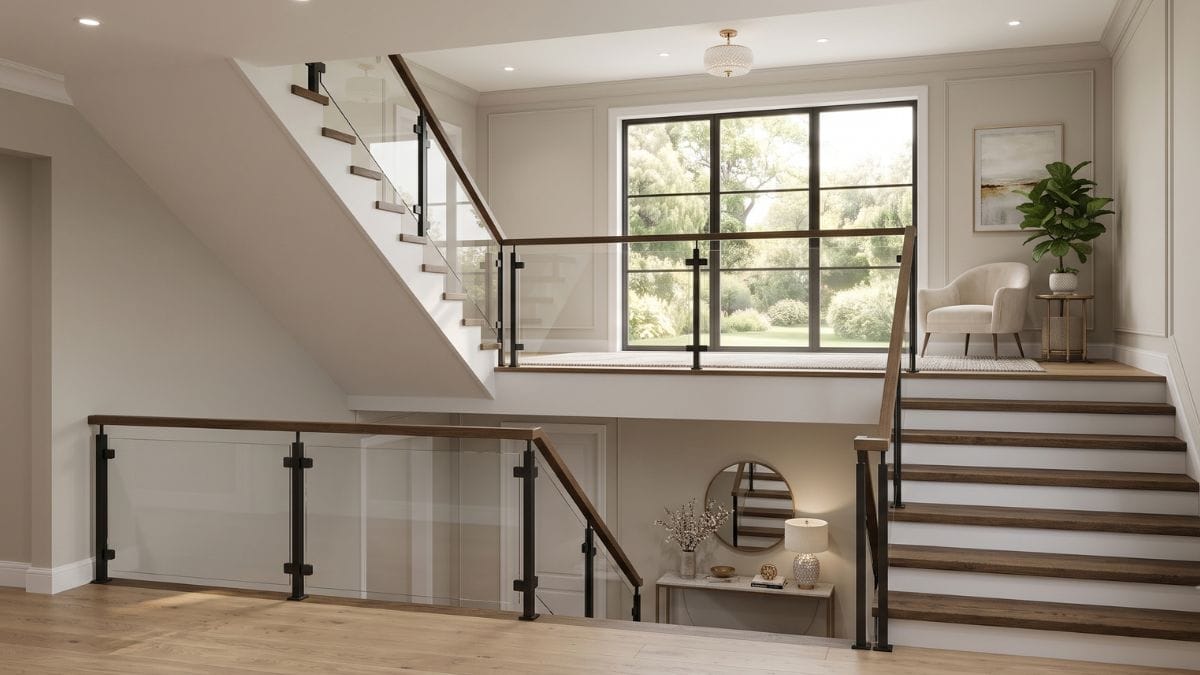
A traditional U-shaped stairwell (often called switchback stairs) typically features heavy, dated newel posts at the landings that can make the architecture feel trapped in the past. You do not necessarily need to tear down the entire structure to modernize it. By keeping the structural solid wood treads but swapping out the heavy wooden posts for streamlined metal hardware or clean glass panels, you instantly update the configuration while maintaining the classic, space-saving footprint.
How to Choose the Right Railing Style for Your Space
Selecting the right system requires evaluating the physical realities of the space, the maintenance expectations of the end-user, and the project budget.
Narrow or poorly lit staircases benefit significantly from transparent glass or thin, widely spaced metal cables, which allow light to penetrate and prevent the stairwell from feeling claustrophobic. On the other hand, grand, open foyers can easily support the visual weight of thicker, mixed-material systems.
You must also consider maintenance realities. Glass panels, while beautiful, require regular cleaning to remove fingerprints and dust, making them a commitment for active households. Conversely, powder-coated aluminum or steel balusters are practically zero-maintenance.
Common Stair Railing Design Mistakes to Avoid
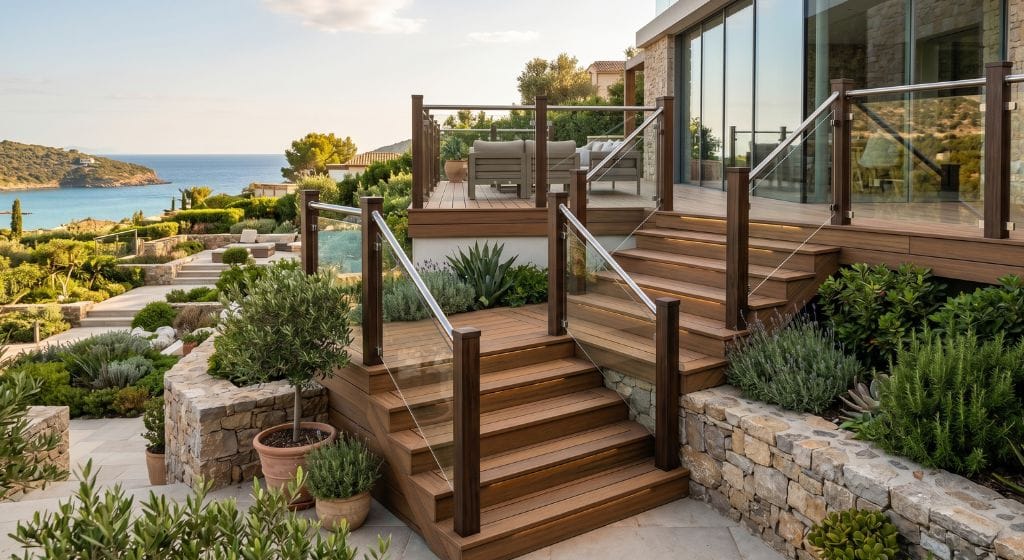
Even the most premium materials will fail if the system is poorly planned or engineered. The most common pitfall is ignoring local building codes, such as violating the “4-inch sphere rule” (where balusters are spaced too far apart) or installing a handrail profile that is too wide to be safely grasped by an average hand.
Aesthetic mistakes are equally common. Failing to match the wood stain of the handrail to the flooring on the second-level landing creates a jarring visual disconnect that immediately cheapens the design.
Additionally, installing a dark, matte black metal railing in a poorly lit stairwell without planning for auxiliary step lighting can create a serious safety hazard, blending the steps into the shadows at night.
Source Flawless Stair Systems with George Solution
The primary challenge in executing a modern, multi-material staircase is coordinating different vendors. Sourcing glass panels from a local glazier, metal balusters from a steel fabricator, and wood handrails from a lumber yard almost guarantees sizing discrepancies, delayed timelines, and finish mismatches.
Operating as a one-stop procurement hub directly from Foshan, China, George Solution eliminates these logistical risks. We engineer and supply the complete stair system—from the structural steel stringers and custom-tempered glass panels to the precisely matched wood handrails.
By consolidating your procurement under our strict quality control protocols, we ensure that every component aligns perfectly in tolerance, color, and finish, allowing contractors to execute a flawless, high-end installation on site without the usual headaches.
Frequently Asked Questions (FAQ)
What is the most durable material for a modern stair railing?
For ultimate durability, powder-coated aluminum and stainless steel are the top choices. Both materials are highly resistant to corrosion, warping, and daily wear-and-tear, making them virtually zero-maintenance. When paired with tempered glass panels, they create an incredibly strong system that retains a sleek, lightweight appearance.
Can I mix different materials for my stair railing system?
Absolutely. Mixing materials is a hallmark of modern architectural design. A highly popular configuration is pairing a solid, natural wood handrail (such as oak or walnut) with matte black metal balusters or stainless steel cable tensioners. This approach beautifully balances the tactile warmth of wood with the rigid, clean lines of modern metal.
How tall should a residential stair handrail be?
While local building codes can vary, most residential building codes (such as the IRC) dictate that stair handrails must be installed at a height between 34 and 38 inches. This measurement is taken vertically from the sloped plane formed by the nosing of the stair treads. Always consult your local building authority or contractor to ensure strict compliance before installation.