

1. Introduction: The Ultimate Statement Piece
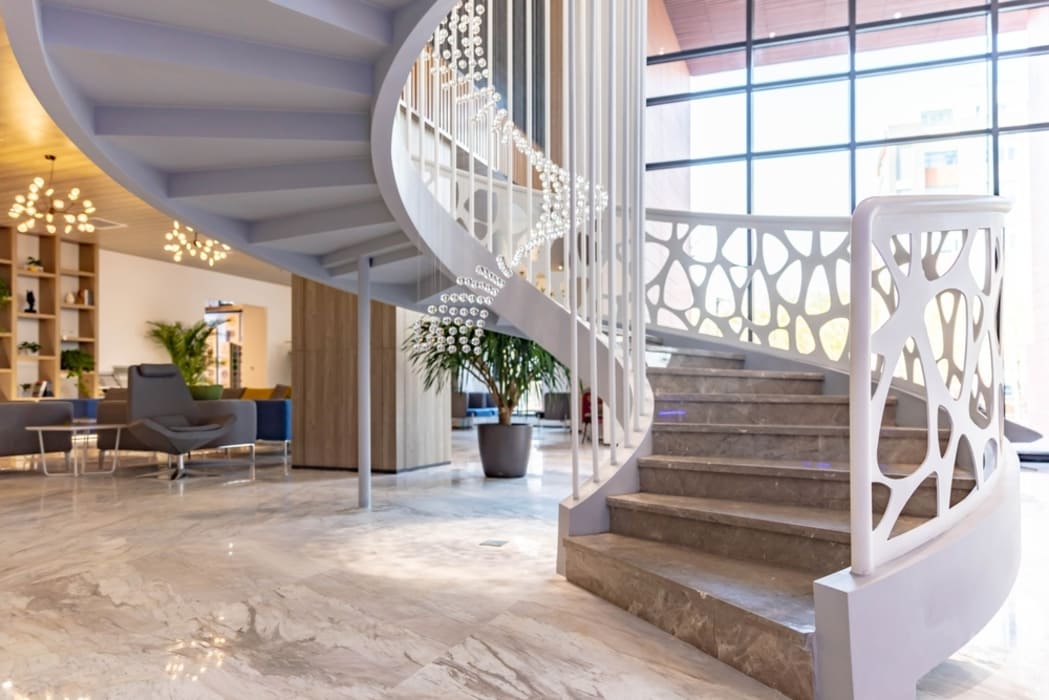
A curved staircase is no longer a feature reserved exclusively for traditional mansions or grand castles. Modern architecture has breathed new life into this classic form. Today, whether placed in a high-end private residence or a contemporary commercial lobby, a curved staircase acts as the ultimate statement piece, instantly elevating the visual value and spatial flow of a property.
For builders aiming to deliver a “wow” factor and homeowners planning their dream entryways, designing a curved staircase requires balancing bold aesthetics with precise engineering. This guide will explore the latest design trends, the integration of modern technology, and the critical factors you must consider before bringing your vision to life.
2. Top Curved Staircase Design Trends for 2026
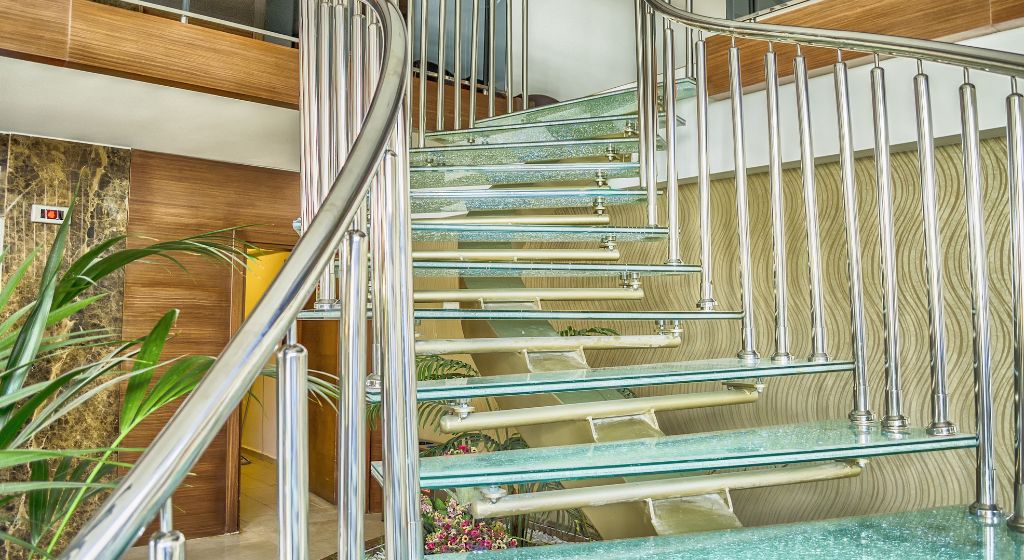
In 2026, modern curved stairs are moving away from heavy, ornate traditionalism towards clean lines and architectural lightness.
The Floating Illusion
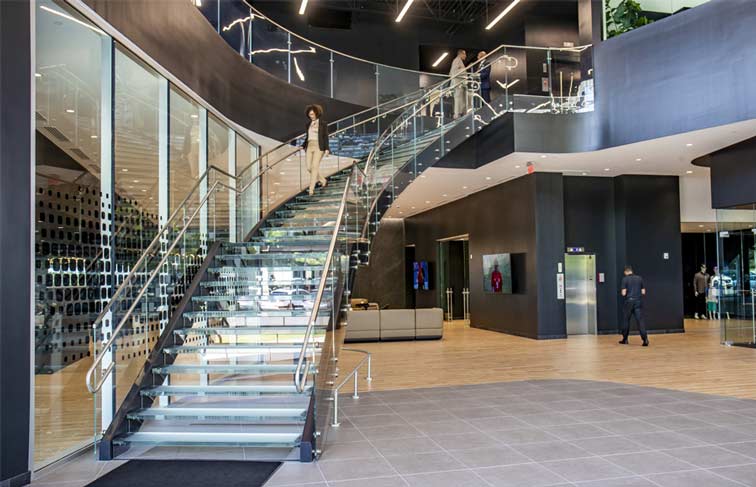
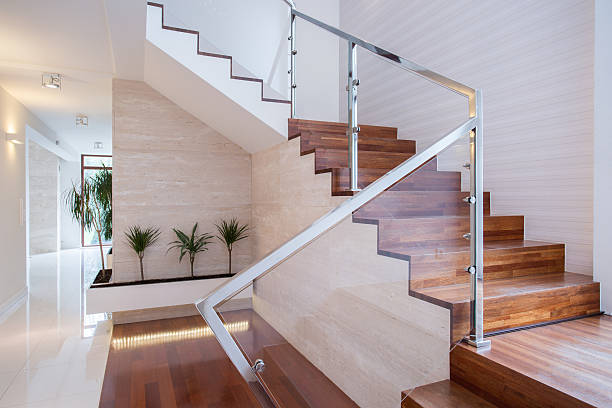
Minimalism continues to dominate. Designers are stripping away bulky supports to create the illusion that the staircase is floating in mid-air. This is achieved through concealed structural stringers (often hidden within the adjacent wall) and frameless curved glass balustrades. This approach makes the staircase feel airy and allows natural light to flow unobstructed, which is perfect for open-concept homes.
Mastering Mixed Materials
The days of matching your stairs perfectly to your floors are fading. 2026 is all about striking contrasts. A highly popular trend involves pairing warm, organic elements with cold, industrial finishes. For instance, combining thick natural oak or walnut treads with sleek matte black metallic handrails or curved glass panels. This fusion bridges the gap between traditional warmth and contemporary edge.
Sculptural & Ribbon-Style Forms
Instead of a standard curve, many luxury homes are opting for “ribbon” staircases. These feature smooth, continuous outer fascias that look like a single ribbon of wood or steel curling upward, turning the staircase into a standalone piece of modern art.
Related article: How To Choose The Staircase For A Small Space?
3. Incorporating Technology in Modern Designs
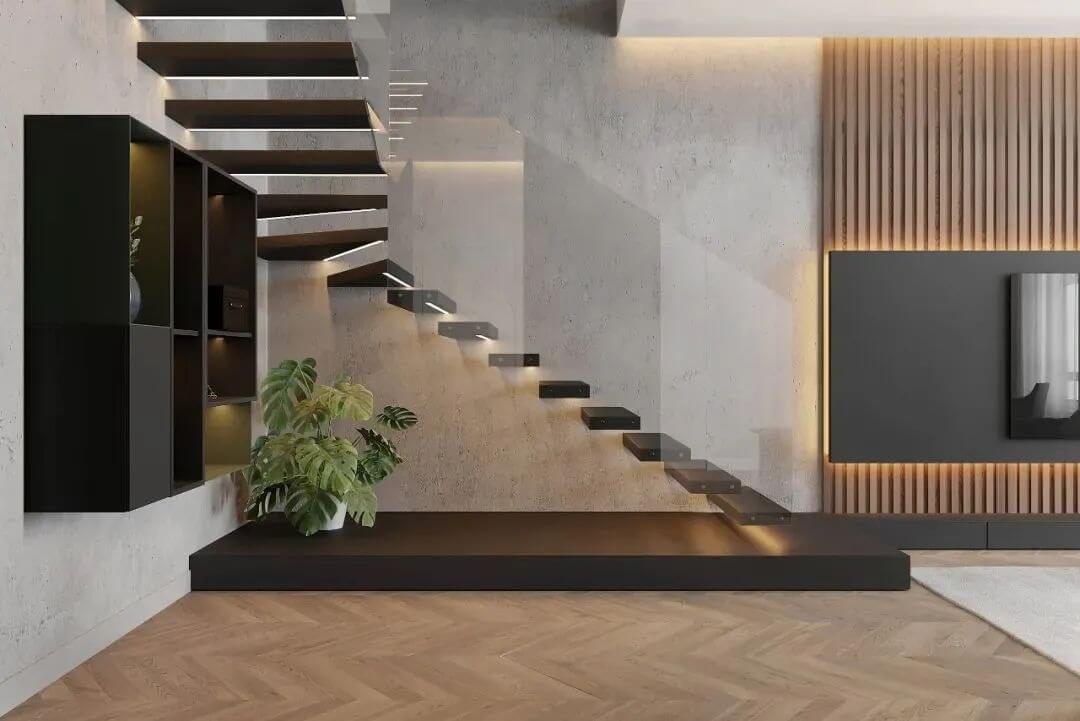
A high-end staircase in 2026 is not just structural; it is smart. Integrating technology seamlessly into the design enhances both safety and lifestyle.
- Automated & Motion-Activated Lighting: Lighting is no longer an afterthought. Modern designs integrate low-voltage LED strips directly underneath each tread nosing or flush against the wall stringer. Paired with motion sensors, these lights softly illuminate the path as you approach, enhancing safety at night without the need to fumble for a switch.
- Smart Home Integration: Staircase lighting can now be tied directly into systems like Control4, Lutron, or standard smart home hubs. Homeowners can adjust the color temperature (from crisp white to warm amber) or set schedules via their smartphones to match the mood or the time of day.
- Electrochromic (Smart) Glass Integration: For homeowners who want the openness of glass but occasionally need privacy (for example, if the staircase separates a public living area from a private upstairs lounge), smart glass is a cutting-edge option. With the flick of a switch, the curved glass railing can transition from perfectly clear to frosted.
4. The Anatomy of a Custom Build: How It Comes Together
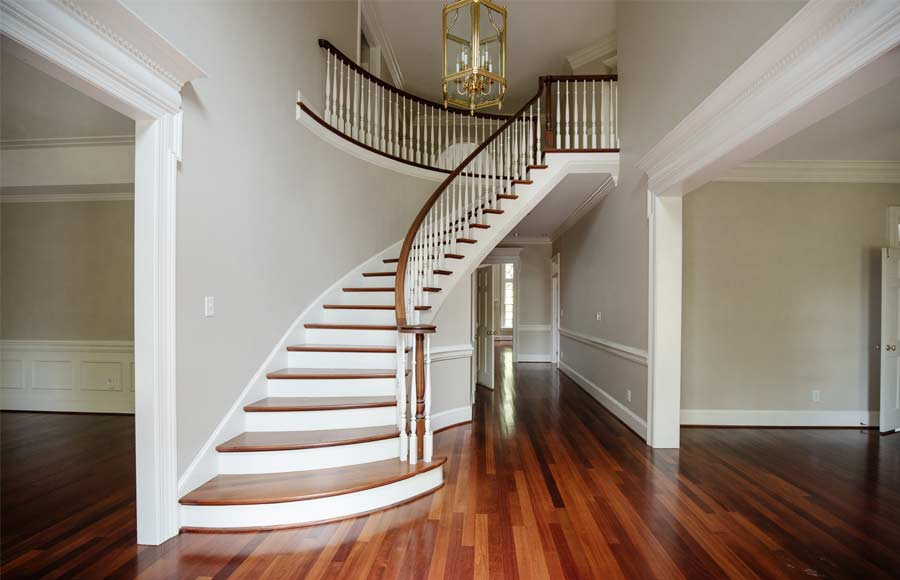
Many homeowners look at a sweeping curved staircase and wonder how it was actually built. Crafting a staircase that bends seamlessly through the air is less about traditional carpentry and more about precision engineering. Here is a peek behind the curtain at the custom fabrication process:
- Step 1: Precision Space Mapping: A curved staircase cannot be built on guesswork. Professional fabricators use laser measuring tools and 3D scanning to capture the exact floor-to-floor height and the radius of the available space.
- Step 2: 3D Modeling and Engineering: The staircase is built digitally first. Structural engineers calculate the “rise and run” to meet safety codes and determine where hidden supports must be placed to ensure the stairs won’t bounce or wobble.
- Step 3: Custom Factory Fabrication: You cannot buy true curved stairs off a shelf. Wood stringers are carefully curved using specialized laminating techniques. If your design includes glass, the panels are sent to a kiln to be thermally bent to perfectly match your staircase’s sweeping radius.
- Step 4: On-Site Assembly: Because the finished product is too large to fit through a door, it is manufactured in sections. These pre-fitted components are shipped to your site, where a skilled installation team seamlessly joins them together.
Related article: Best Materials for Outdoor Stairways 2026: A Complete Guide
5. Factors to Consider When Designing Your Staircase
Before you finalize your blueprints, there are three functional realities you must address to ensure your design is both beautiful and practical.
Space and Footprint
Curved staircases require a significantly larger footprint than straight or L-shaped stairs. You must evaluate the layout of your foyer or living room. A curve that is too tight will make the stairs steep and difficult to climb, while a radius that is too wide might overwhelm the room and block traffic flow.
Safety and Building Codes
Aesthetics cannot override safety. Local building codes strictly regulate curved stairs. For example, the inner edge of a curved tread cannot be too narrow, as it creates a slipping hazard. Furthermore, the gaps between your balustrades (spindles or glass panels) must be tight enough to ensure child safety.
Under-Stair Utilization
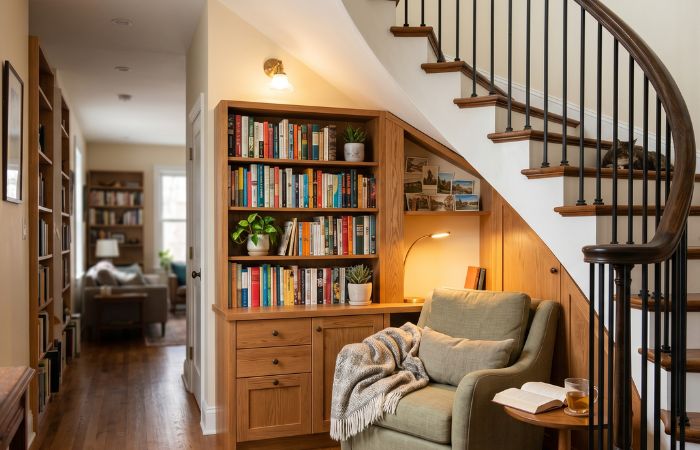
A curved staircase naturally creates an awkward, irregular space underneath. Instead of leaving it as a dead zone, plan ahead. This space can be transformed into a custom display cabinet, a discreet wine storage area, a minimalist indoor garden, or a cozy reading nook.
6. Setting Your Budget: What to Expect
Honesty in budgeting is crucial for a project of this scale. Custom curved staircases are premium architectural features. Depending on the size and materials, you should expect the budget to range from $15,000 to over $40,000.
What drives the cost? The price is rarely about the raw materials alone; it is about the manufacturing process. Bending wood, forging curved steel handrails, and manufacturing thermally curved glass require highly specialized machinery and hundreds of hours of skilled labor. Choosing exotic woods, frameless glass systems, or integrated smart technology will push the project into the higher end of the pricing spectrum.
7. Conclusion: Bringing Your Vision to Life
A modern curved staircase is an investment that defines the character of a property. It requires a delicate balance of visionary design, structural physics, and meticulous craftsmanship.
Navigating the complexities of custom bending, structural engineering, and building codes shouldn’t fall on your shoulders. At George Solution, we partner with builders, architects, and homeowners to turn ambitious concepts into breathtaking realities. With our expertise in global custom fabrication and architectural materials, we ensure your statement staircase is delivered with uncompromising quality and safety.
Ready to design the focal point of your next project? Contact the George Solution team today to discuss your custom staircase options.
FAQ
How much space is required to build a curved staircase?
Curved staircases require a significantly larger footprint than straight stairs to ensure a safe, walkable radius. Local building codes dictate the minimum width at the narrowest part of the tread. Professional 3D space mapping is essential to determine if your specific floor plan can accommodate the sweep of the stairs without compromising room flow.
Are floating curved stairs structurally safe?
Yes, provided they are engineered correctly. True floating curved stairs rely on heavy-duty, concealed steel stringers integrated directly into the wall framework. This advanced structural engineering ensures the staircase meets or exceeds strict load-bearing requirements, preventing any bounce or wobble while maintaining a minimalist aesthetic.
Why do custom curved staircases have a premium cost?
The budget, which typically ranges from $15,000 to over $40,000, is driven by the manufacturing process rather than just raw materials. You are investing in precision 3D engineering, specialized wood laminating techniques, thermally bent glass, and highly skilled manual assembly. Unlike straight stairs, no part of a curved staircase can be purchased off-the-shelf.