

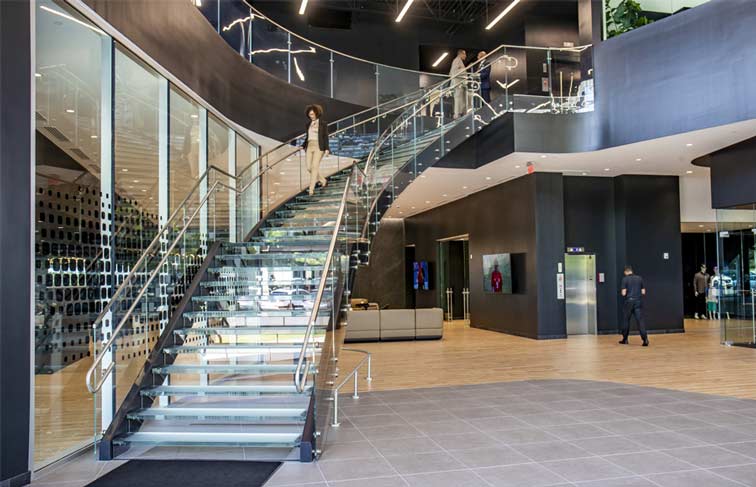
Imagine walking into a home or a commercial lobby and being greeted by a staircase that seems to float in mid-air. A well-executed glass staircase does more than just connect two floors; it manipulates light, erases visual boundaries, and instantly becomes the architectural heartbeat of the space.
Whether you are a homeowner dreaming of a brighter, open-concept living area, or a builder looking to deliver a “wow” factor for your high-end clients, glass staircases are a powerful design tool. However, beneath the stunning aesthetics lies a very real engineering challenge. Choosing the right setup requires navigating safety codes, hardware options, and structural realities.
In this guide, we will decode the engineering behind the glass, explore the most popular design configurations for 2026, and give you a clear picture of what to expect for maintenance and budgeting.
2. The Core Material: Engineering Safety & Glass Types
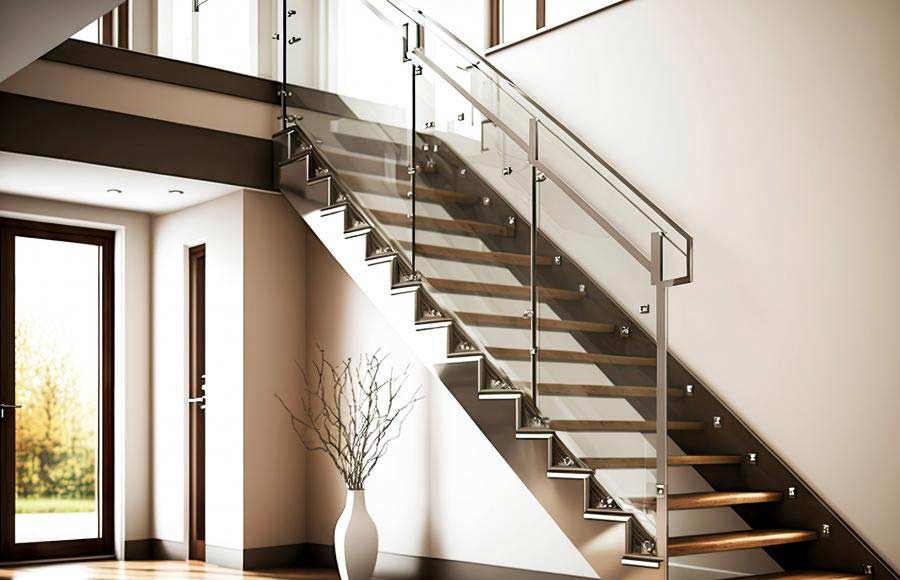
Let’s address the elephant in the room. When most people look at a glass staircase, their first thought is: “Is it really safe to walk on?” We are conditioned to think of glass as fragile. But architectural glass is a completely different beast, sharing more DNA with a high-security building’s facade than your living room window.
The Foundation: Architectural Glass Types
A true structural glass staircase relies on a highly engineered combination of treatments to keep you safe:
- Tempered Glass (The Muscle): Standard glass breaks into dangerous shards. Tempered glass undergoes a rigorous thermal treatment, heating and rapidly cooling it to increase its tensile strength to four to five times that of regular glass.
- Laminated Glass (The Safety Net): This is the non-negotiable core of any glass staircase. Laminated glass consists of two or more layers of tempered glass permanently bonded together by a heavy-duty resin interlayer (typically PVB or the highly rigid SGP). If a heavy impact occurs, the glass will not shatter and fall. The interlayer holds the “spiderwebbed” pieces firmly in place, maintaining the structure.
- Standard Clear vs. Low-Iron Glass: Here is an insider tip for a premium finish. Standard clear glass contains iron oxide, which leaves a distinct green tint on the thick, exposed edges. For luxury projects, specifying Low-Iron Glass (such as Starphire) is a game-changer. It removes the iron to ensure maximum light transmittance and a crystal-clear, ice-like edge.
Related article: Best Materials for Outdoor Stairways 2026: A Complete Guide
3. Popular Glass Staircase Designs
Modern manufacturing allows glass to be paired with almost any architectural style. Here is how leading designers and builders are configuring these stru
Frameless Glass Staircase
This is the pinnacle of the “invisible” look. By utilizing heavy-duty base shoe systems concealed entirely within the floor or stair treads, the glass panels appear to rise naturally from the ground. Without any interrupting vertical metal posts, this design allows for 100% unobstructed sightlines, making tight spaces feel incredibly expansive.
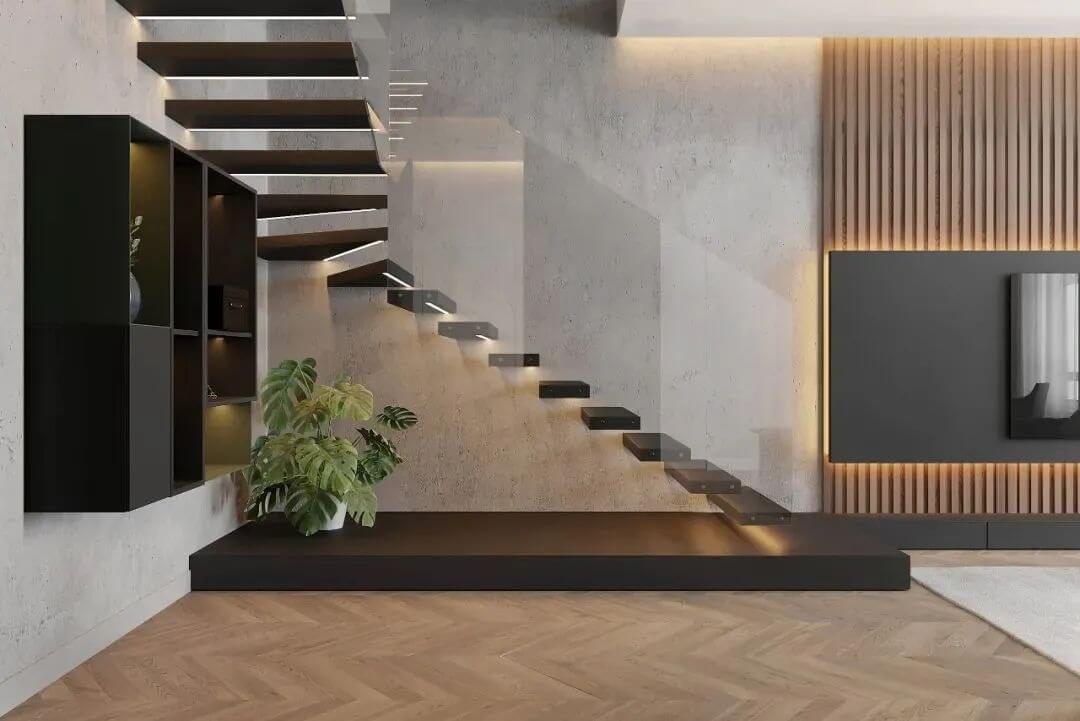
Modern Glass Staircase (Floating Treads)
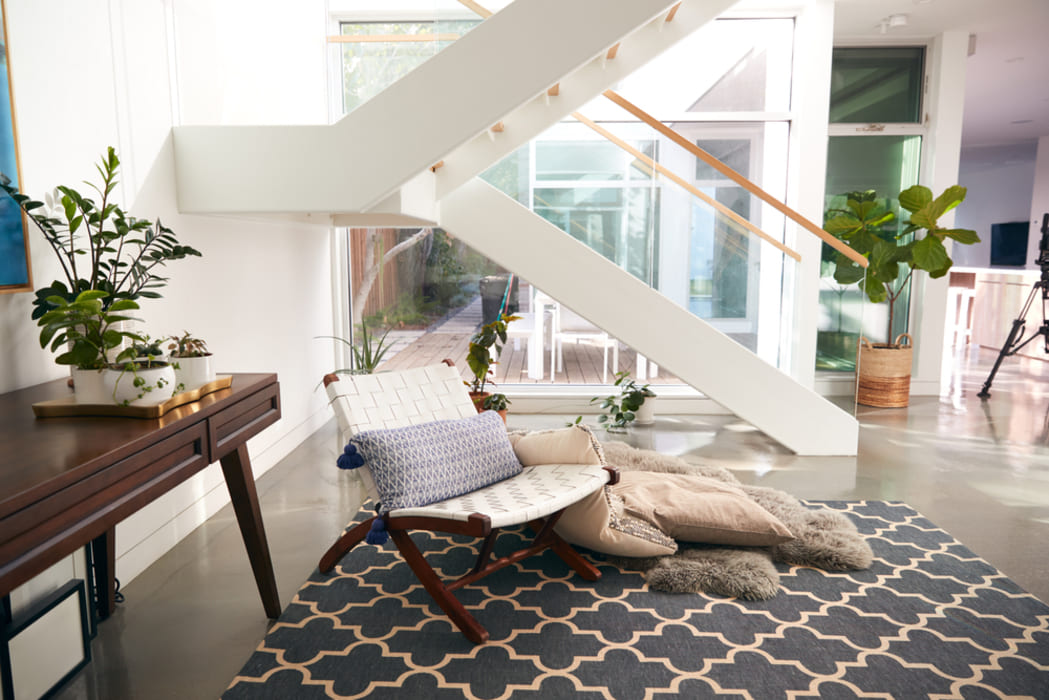
Often the centerpiece of ultra-modern homes, this setup incorporates “floating” treads anchored to a hidden steel wall stringer on one side, flanked by a sheer pane of glass on the other. This floating glass staircase creates an anti-gravity illusion, allowing light to cast beautiful, shifting shadows through the open risers throughout the day.
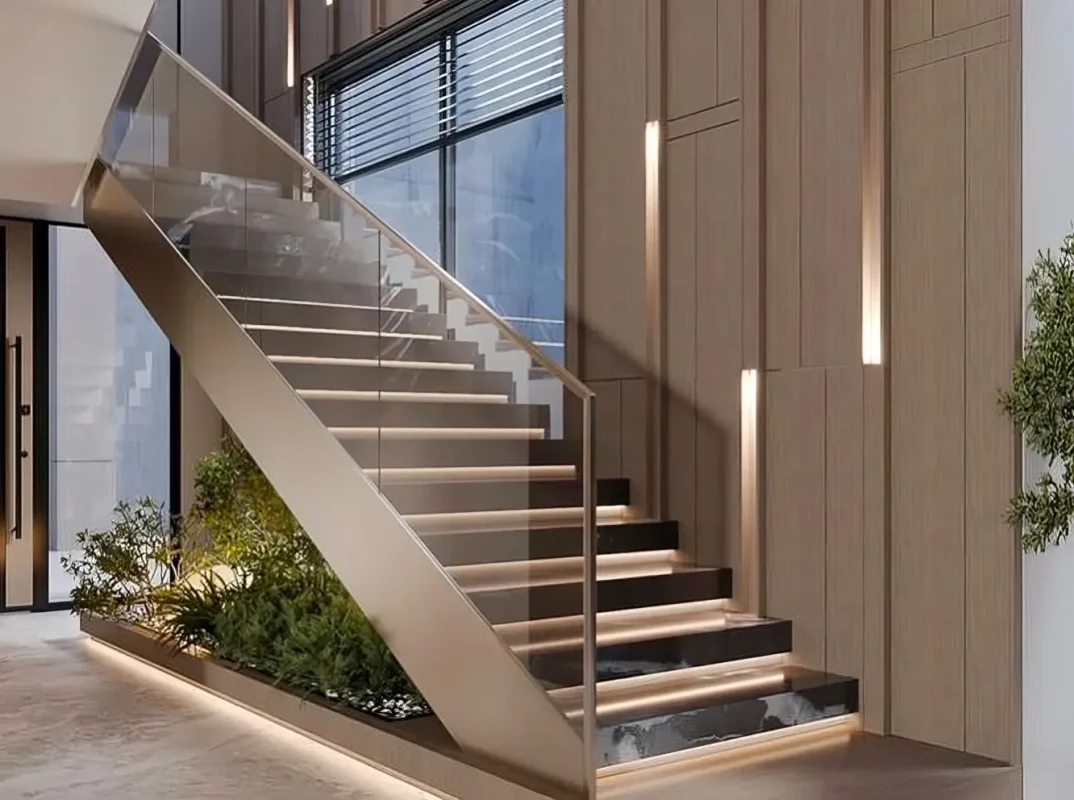
Box-Style Staircase Design With Ceiling-To-Floor Glass Panels
Instead of stopping at a traditional handrail height, this innovative design extends the glass entirely to the ceiling, essentially encasing the staircase in a transparent “box.” It is an incredibly smart solution for open-concept homes—it blocks noise and cooking odors from traveling between floors while maintaining complete visual transparency.
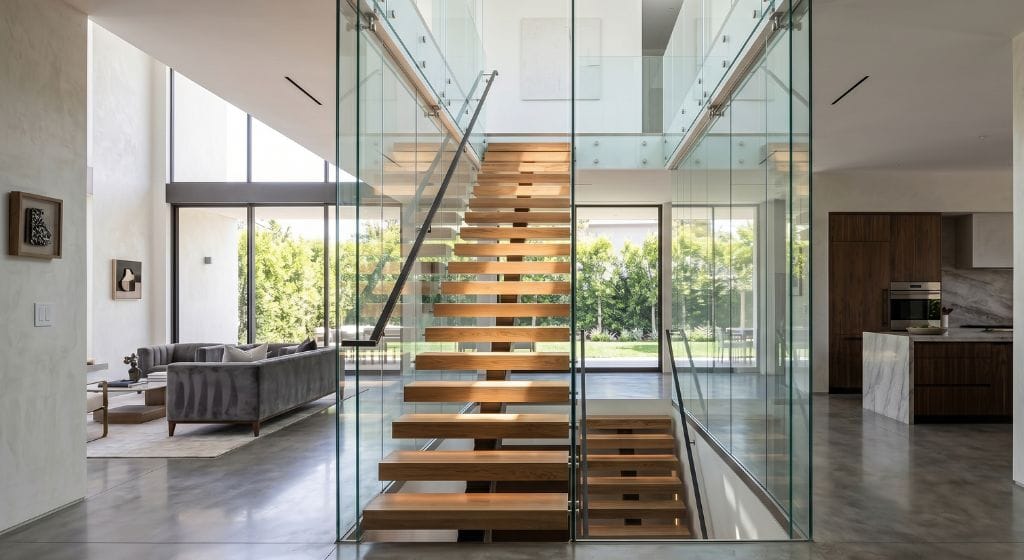
Wood and Glass Staircase
Pure glass can sometimes feel a bit cold or sterile. This combination is the ultimate transitional style. By adding the organic warmth of thick oak, walnut, or maple treads, you instantly neutralize the icy, industrial feel of the glass balustrades. It is a perfect bridge for homes that feature both traditional and contemporary elements.
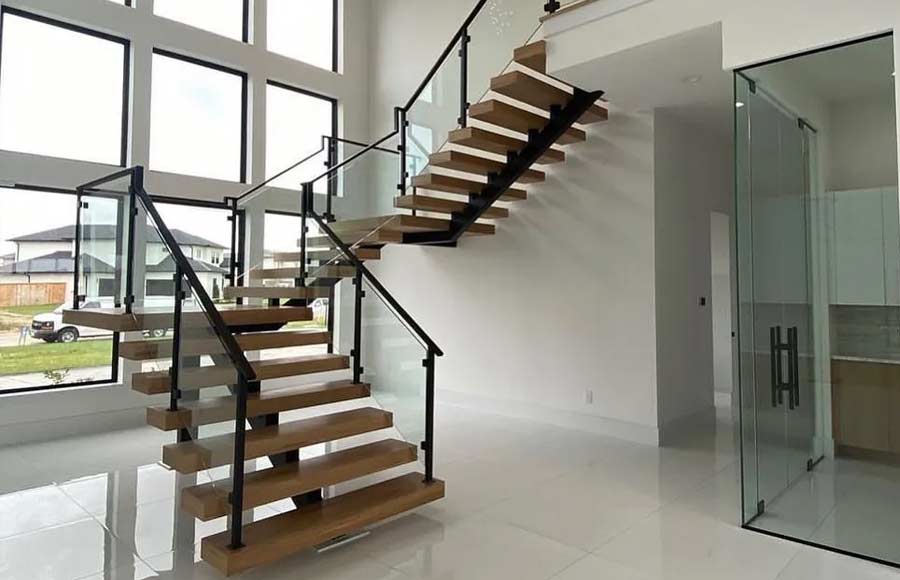
Stainless Steel And Glass Staircase
When structural rigidity and an industrial vibe are what you are after, exposed steel is the answer. Heavy-duty stainless steel stringers combined with clear glass panels provide an unmatched, high-tech aesthetic. It is a highly popular choice for converted lofts and modern commercial office spaces.
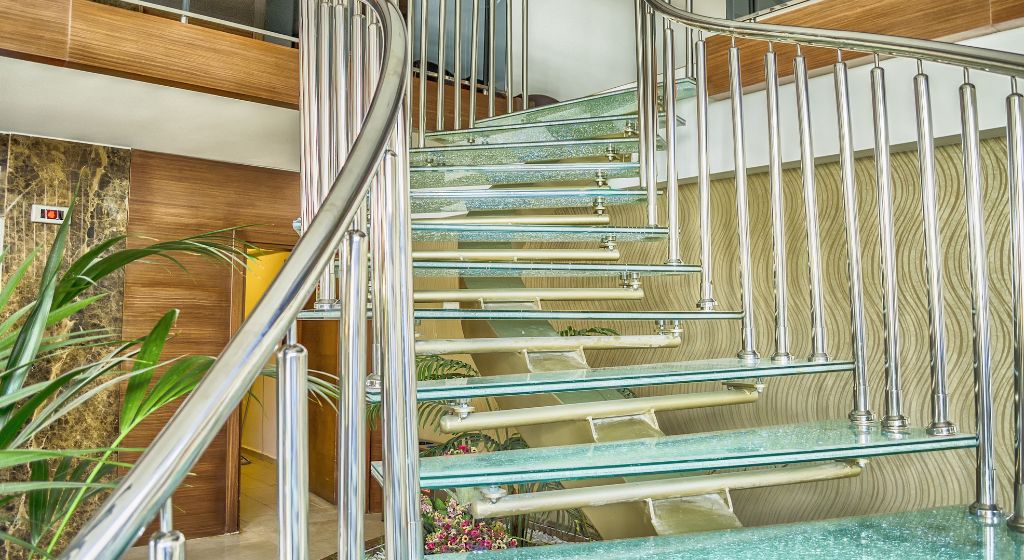
Glass Staircase With Metallic Handrails
While frameless is beautiful, adding a slim, brushed nickel, brass, or matte black top rail over a glass balustrade provides critical tactile guidance. It gives users a reassuring grip when walking up and down, ensuring strict compliance with safety codes without sacrificing the modern look.
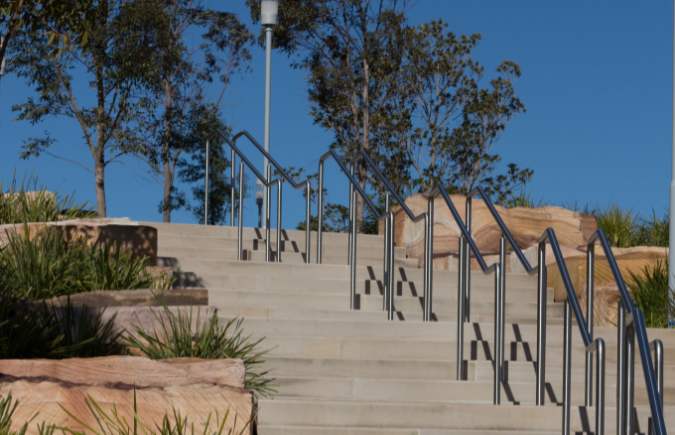
Stainless Steel Railing Staircase Design With Mirror Panels
This is a brilliant architectural trick for extremely narrow or dimly lit spaces. By alternating clear glass with mirrored stainless steel panels along the staircase, you create an optical illusion. The mirrors bounce the available light around, visually doubling the width of the stairwell and adding a layer of high-end luxury.
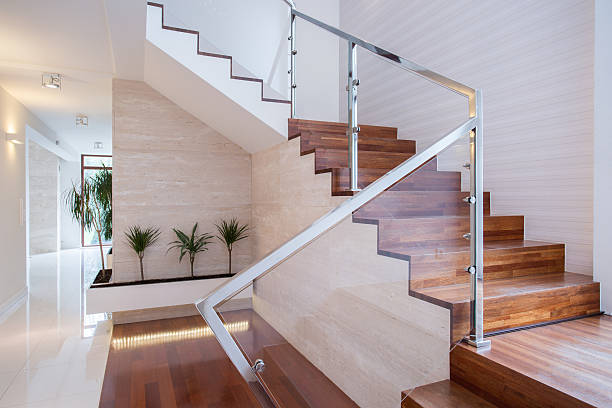
Spiral Staircase With Glass Railing
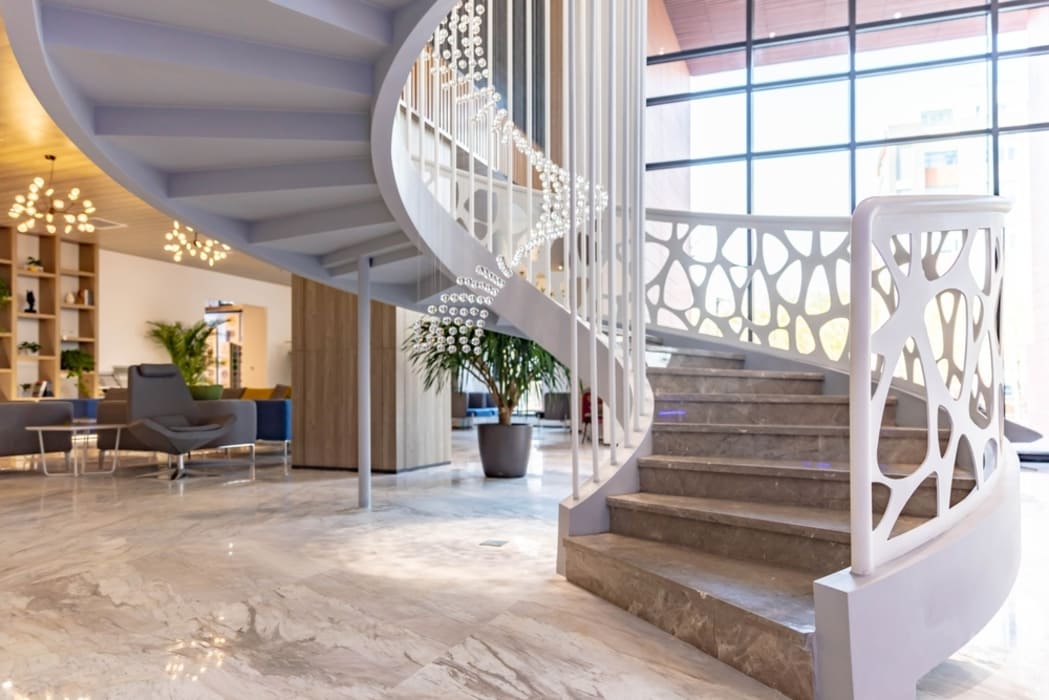
Executing a curved staircase is a masterclass in craftsmanship, requiring thermally bent glass precisely measured to match the staircase’s radius. The fluid, sweeping lines of a glass spiral staircase eliminate rigid angles, creating a breathtaking, sculptural focal point that draws the eye upward.
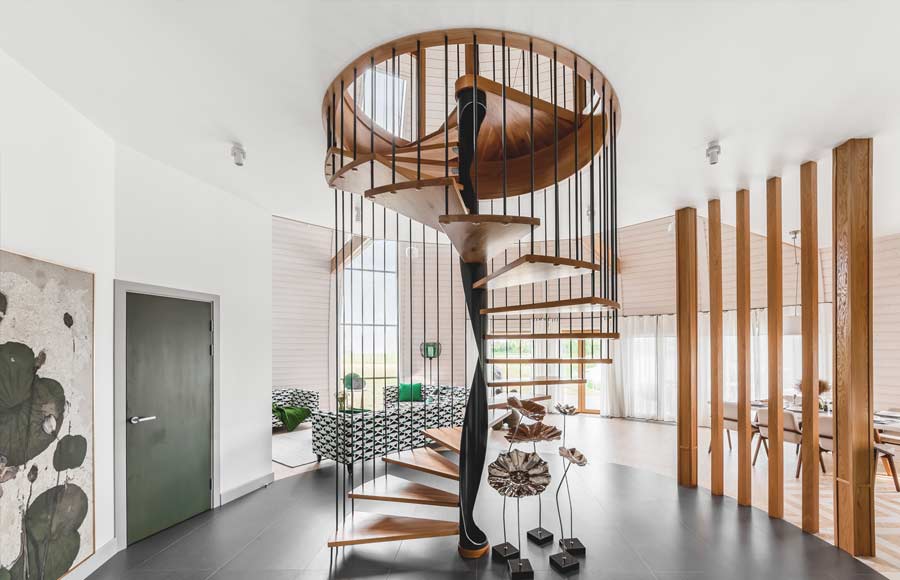
4. Technical Customization: Hardware & Anti-Slip Solutions
A beautiful staircase is useless if it isn’t structurally sound. The hardware you choose dictates both the final look and the stability of the build.
Anchoring Systems
- Standoff Pins: These stainless steel cylinders bolt the glass directly to the side of the staircase. They leave the hardware exposed, providing a highly mechanical, sturdy look.
- Base Shoe Systems: An aluminum U-channel is bolted to the floor, gripping the glass panels at the bottom. Once the channel is covered by baseboards or flooring, it offers the cleanest, most uninterrupted glass line.
Anti-Slip Measures
If you are designing a staircase with full glass treads (the part you step on), safety is the top priority since smooth glass offers zero traction. Professional fabricators solve this by applying Ceramic Fritting (baking a textured pattern into the glass surface) or Sandblasting the leading edge of the tread. This gives your feet the grip they need without blocking the light.
5. Maintenance and Upkeep: Keeping It Pristine
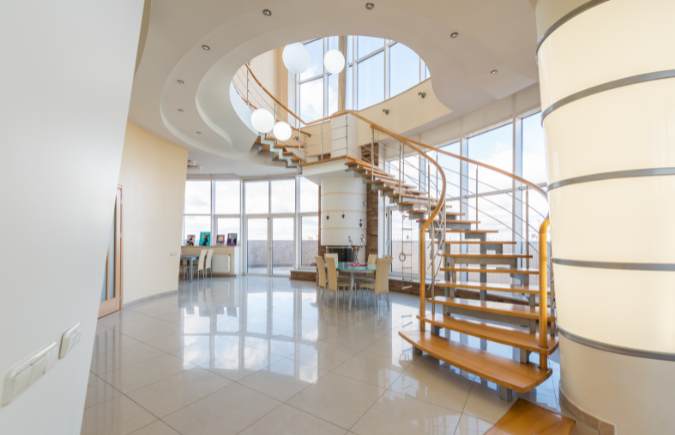
Let’s be real for a moment: everyday life happens. If you have active kids, pets, or high foot traffic, glass will show fingerprints, nose smudges, and dust faster than a traditional wood or concrete staircase.
But don’t let that deter you. To drastically cut down on cleaning time, you can request a hydrophobic nano-coating applied at the factory. This invisible layer fills the microscopic pores of the glass, actively repelling water and natural skin oils. For your weekly routine, put down the harsh chemicals.
A simple microfiber cloth and an ammonia-free glass cleaner will easily wipe away the week’s mess, restoring that showroom-quality clarity in minutes.
6. The Real Costs: Budgeting for Your Project
Because these projects are highly customized, pricing requires separating the job into two distinct categories:
- Installing Glass Railings Only: If you are remodeling an existing wooden or concrete staircase and simply want to replace the old spindles with a sleek glass balustrade, expect to budget between $150 to $400+ per linear foot. The exact price fluctuates based on glass thickness, the hardware system chosen, and upgrades like low-iron glass.
- Full Structural Glass Staircases (Glass Treads): Building a custom staircase featuring both glass treads and glass railings is a premium engineering feat. Because it requires ultra-thick laminated treads, custom steel support systems, and rigorous structural engineering, these turnkey projects generally start in the tens of thousands of dollars and scale upwards based on complex features like bent glass.
7. Conclusion: Crafting Your Vision
Integrating a glass staircase into your property is a high-yield investment. It modernizes the space, maximizes natural light, and leaves a lasting impression. However, success relies entirely on exact measurements, high-grade architectural materials, and a strict adherence to local building codes.
At George Solution, our team specializes in bridging the gap between ambitious design and rigorous structural engineering. Whether you are a homeowner seeking a minimalist frameless railing or a builder executing a complex wood-and-glass floating structure, we provide the custom fabrication and technical expertise needed to bring your vision to life—safely and flawlessly.
FAQ
- Can glass staircase treads get scratched easily?
While tempered glass is highly durable, it can be scratched by hard debris like small stones trapped in the soles of your shoes. For high-traffic areas, applying a textured, anti-slip sandblasted finish not only provides necessary traction but also effectively hides minor surface scratches over time.
2. Are glass staircases difficult to keep clean?
They do require more frequent spot-cleaning than wood stairs. However, using a factory-applied hydrophobic nano-coating prevents oils and dust from bonding to the surface. This makes them incredibly easy to maintain with just a quick wipe from a microfiber cloth.
3. Do I need a handrail if I have a frameless glass staircase?
In almost all jurisdictions, yes. Local building codes typically dictate that any staircase with more than a few steps must have a continuous, graspable handrail. Designers easily solve this by mounting a slim, metallic handrail directly onto the side or top of the frameless glass panels, keeping it safe and stylish.
4. What is the difference between PVB and SGP interlayers?
Both are used to hold shattered glass together safely. PVB (Polyvinyl Butyral) is the industry standard and highly effective. SGP (SentryGlas Plus) is a significantly stiffer, stronger upgrade. It is highly recommended for structural elements like frameless railings and stair treads because it remains rigid and upright even if the glass breaks.