

When it comes to interior doors, practicality and durability are non-negotiable. A door needs to withstand decades of daily use, block out noise, and operate flawlessly without warping or coming off its tracks.
For a long time, homeowners accepted that to get this solid durability, they had to deal with heavy, swinging doors that bang into furniture, block narrow hallways, and eat up valuable floor space.
But modern engineering has changed the equation. Today’s high-end sliding doors are no longer the flimsy, rattling tracks of the past. Built with heavy-duty top-hung mechanisms and precision-machined rollers, they offer the lifetime durability your home demands. More importantly, they solve the biggest practical headache of all: they give you your space back.
A well-engineered sliding system does not just quietly close off a room; it smoothly dictates the flow, light, and layout of your entire home. If you are looking for solutions that are as tough as they are beautiful, here are six innovative sliding door ideas for your next remodel.

Key Takeaways for Your Sliding Door Project:
- Reclaim Your Floor Space: Sliding doors eliminate the “swing radius,” instantly freeing up 10 to 15 square feet of usable space per doorway.
- Durability First: Always opt for heavy-duty, top-hung track systems to ensure silent operation and eliminate floor-level dust traps.
- Erase the Boundary: Use multi-panel bi-fold doors to open up 90% of your wall, completely merging your living room with your patio.
- Material Cohesion: A sliding door should naturally blend into your architecture. Matching the door’s veneer to your wall panels and cabinetry is the secret to a flawless look.
6 Ways to Transform Your Space with Sliding Doors
When planning a remodel, it is almost a reflex to default to traditional swinging doors. But rethinking how your rooms connect can fundamentally change how your home functions every single day. Let’s look at six ways to do exactly that.
The Invisible Magic of Pocket Doors
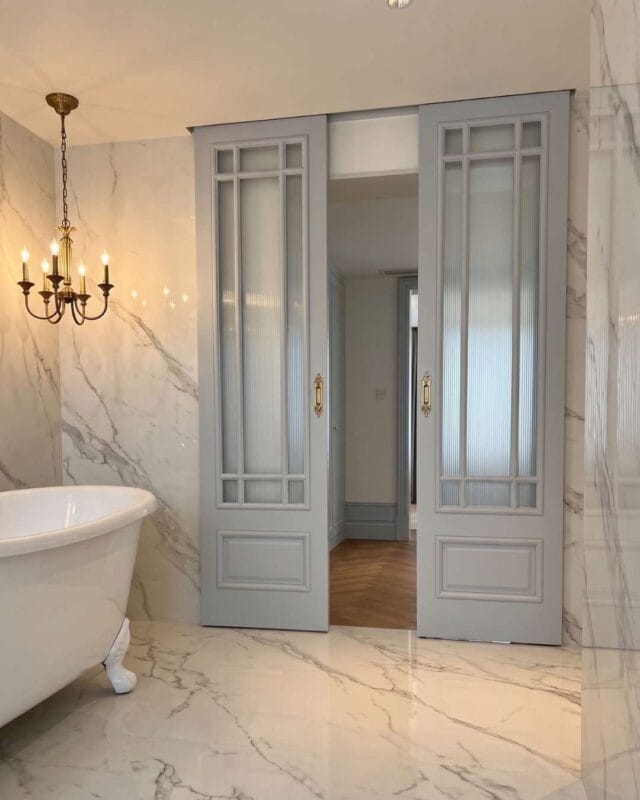
We have all experienced the frustration of a cramped en-suite bathroom or a narrow walk-in closet where the door just takes up too much space. This is where the pocket door is a lifesaver.
Instead of gliding along the outside of a wall, a pocket door is engineered to slide inside the wall cavity, disappearing entirely when opened. Because the door simply vanishes into the architecture, you get your walls back. You can suddenly place a piece of furniture or hang artwork right where a traditional door would normally swing.
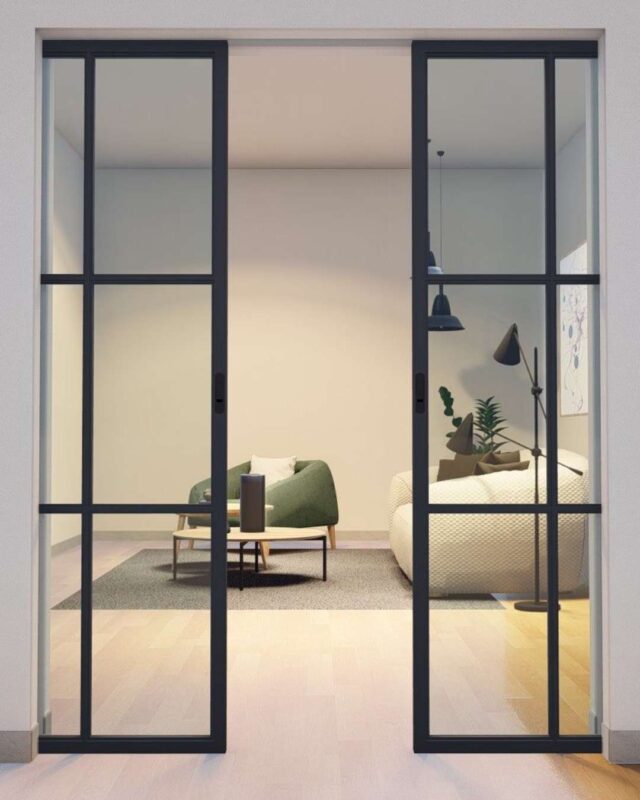
2. Fluted Glass Room Dividers
We all love the airy feel of open-concept living—until someone needs to take a Zoom call while the kids are watching TV. Enter the fluted glass sliding partition. Fluted (ribbed) glass is the perfect practical compromise: it allows beautiful natural light to pour through the rooms while softly blurring the view behind it.
By sliding a floor-to-ceiling glass partition between your living room and home office, you instantly create a quiet, dedicated zone without making the house feel dark or boxed-in.
3. The Modern “Barn Door”
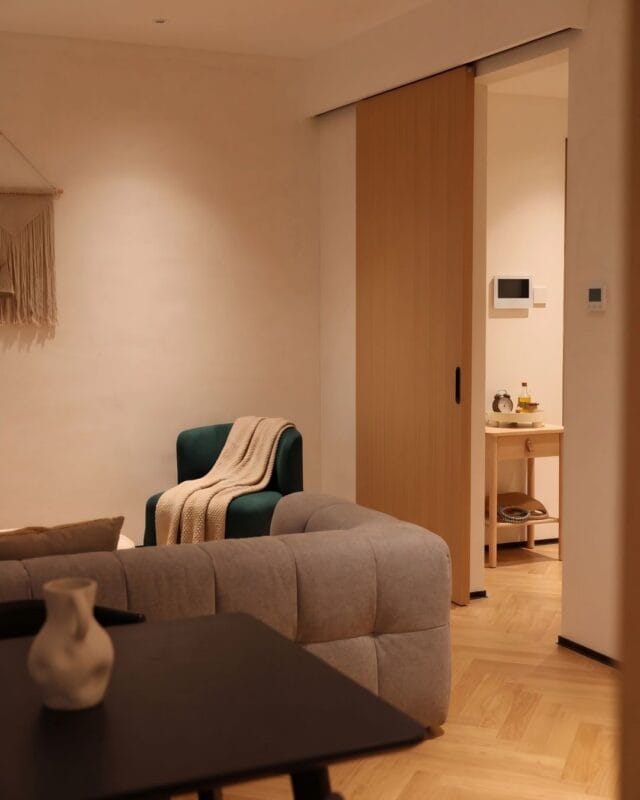
The heavy, rustic farmhouse barn door was everywhere a few years ago. But today, high-end homes demand a much cleaner, quieter aesthetic. Modern surface-mounted sliding doors use ultra-slim, hidden tracks that make the door appear to effortlessly float across the wall.
Instead of reclaimed barn wood, imagine a sleek, matte lacquered finish or a rich, solid wood veneer. When closed, it acts as a beautiful moving wall; when open, it frames the adjoining room perfectly.
4. Seamless Indoor-Outdoor Glass Sliders
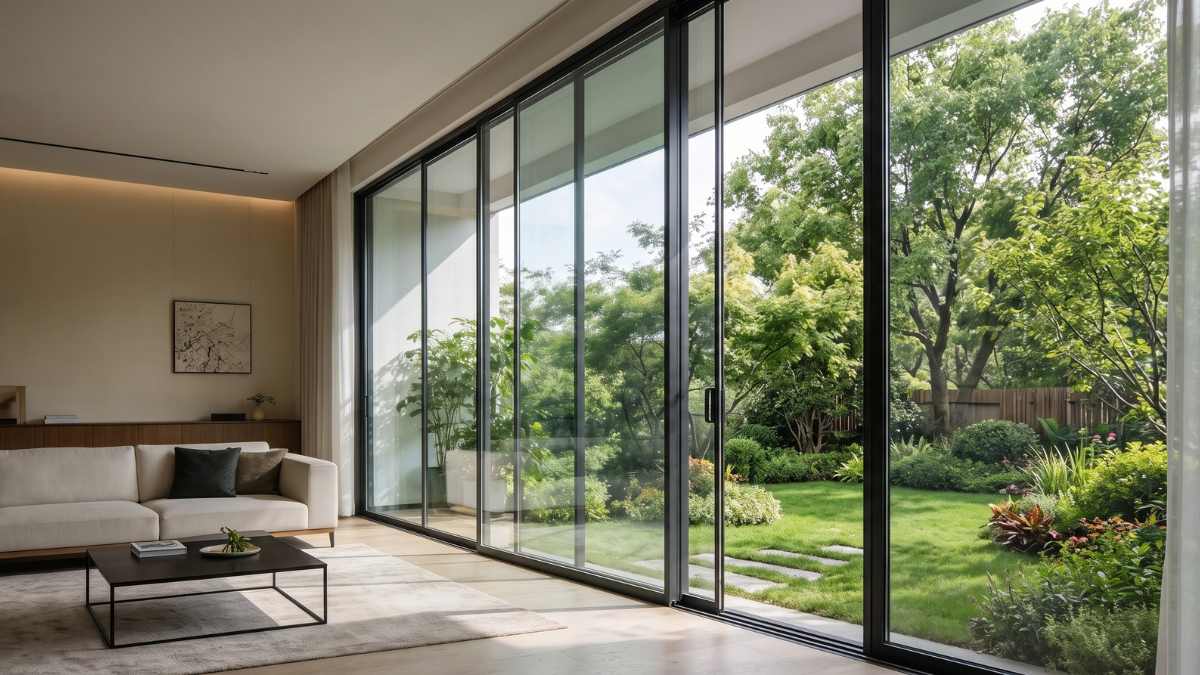
Imagine hosting a summer barbecue where the transition from your living room sofa to the outdoor patio is completely effortless. Large-format glass sliding doors are the secret here. Modern engineering allows for massive, double-glazed glass panels with ultra-thin aluminum frames, blurring the boundary between inside and out.
The best part? By choosing tracks that are completely flush with the floor, you eliminate the traditional “step-over” threshold, creating a unified entertainment space that naturally expands your living room when the doors are pulled back.
5. The Accordion Effect: Bi-Fold Sliding Doors
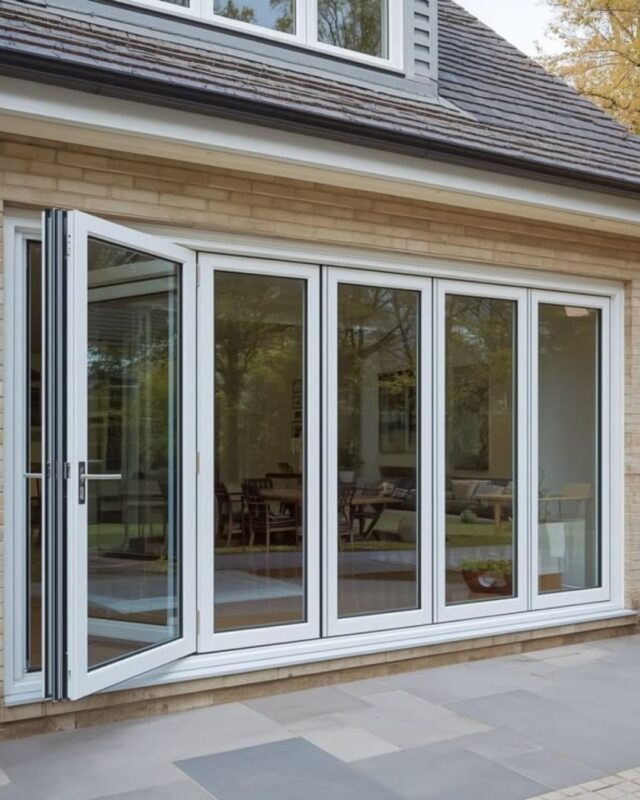
While traditional glass sliders are excellent for natural light, one panel is always stuck behind another, meaning half of your doorway is always blocked. If your goal is to completely erase the wall between your living room and your deck, Bi-Fold Doors are the superior choice.
These multi-panel doors are hinged together like an accordion. With a gentle push, they fold and stack neatly to one side, opening up almost the entire width of the wall. It is the ultimate setup for letting a fresh breeze flood your home on a spring afternoon.
Related Article: The Ultimate Guide to Bifold Garage Doors: Engineering Meets Modern Design
6. Top-Hung Sliding Systems for Wardrobes
Sliding doors are not just for room transitions; they are essential for high-end custom storage. Traditional sliding wardrobes often use bottom-rolling tracks, which quickly gather dust, hair, and create an awkward lip on the floor.
Premium custom wardrobes solve this by using heavy-duty top-hung track systems equipped with soft-close mechanisms. The doors glide silently, hovering just millimeters above the floor. It looks incredibly minimalist and operates flawlessly year after year.

The Secret to High-End Doors: Material Cohesion
Here is a practical secret from the interior design world: the biggest mistake you can make is treating your new door as an isolated purchase. Buying a highly durable sliding door from one retailer and your living room wall panels from another almost guarantees a jarring mismatch of wood tones.
In well-designed homes, the door is an extension of the wall. If you have a beautiful walnut fluted wall panel, your sliding door should feature that exact same walnut finish. It creates a continuous, uninterrupted visual line that makes a room feel intentionally and thoughtfully built.
Make it Flawless with George Solution
Achieving this level of material cohesion and engineering requires factory-level precision. At George Solution, we specialize in providing one-stop, whole-house customized solutions. Because we manufacture your sliding doors, bi-fold systems, architectural wall panels, and custom cabinetry in the same facility, we guarantee that every finish, texture, and color aligns perfectly.
From heavy-duty top-hung concealed tracks to expansive outdoor bi-fold doors, our systems are engineered for silent, effortless operation and uncompromising style. Don’t settle for mismatched, off-the-shelf doors. Contact George Group today to seamlessly integrate premium sliding doors into your next interior project.
Frequently Asked Questions (FAQ)
Are sliding doors more expensive than regular doors?
Basic sliding doors can be quite affordable, but high-end architectural sliders (like pocket doors or massive bi-fold systems) do require a larger initial investment than standard hinged doors. The increased cost comes from the precision track hardware and the structural framing required inside the walls.
What is the difference between sliding doors and bi-fold doors?
Traditional sliding doors glide past each other on a track, meaning one panel always blocks part of the doorway. Bi-fold doors, on the other hand, are hinged panels that fold up like an accordion and stack neatly against the wall, allowing you to open up almost the entire width of the opening.
Can sliding doors block out sound effectively?
Because standard sliding doors leave tiny gaps to allow for movement, they don’t block sound quite as perfectly as a heavy swinging door. But you don’t have to sacrifice quietness. By opting for solid-core wood panels or double-glazed glass sliders with specialized acoustic seals and draft excluders, you can significantly block out household noise.