

Whether you are a homeowner planning your dream kitchen or a contractor looking to deliver a flawless build, you have likely come across the term “inset cabinetry.” When you look at a kitchen that feels incredibly solid, tailored, and seamlessly built into the architecture of the room, you are almost always looking at inset cabinets.
While historically associated with high-end luxury builds, inset cabinetry is increasingly becoming a smart, accessible investment for anyone who values lasting durability and timeless design. But what exactly makes this cabinet style so different, and is it the right choice for your project?
Here is an honest, expert guide to understanding the mechanics, the aesthetics, and the real-world practicalities of inset cabinets.
Key Takeaways for Inset Cabinetry:Inset Cabinetry:
- The Definition: Inset cabinets feature doors and drawer fronts that fit perfectly inside the cabinet’s face frame, creating a completely flat, flush surface.
- The Craftsmanship Test: They require millimeter-precision manufacturing. The tiny gap (reveal) between the door and the frame must remain perfectly consistent on all four sides.
- Space Consideration: Because the doors sit inside the frame, they slightly reduce the internal depth of your cabinets and drawers compared to frameless designs.
- Smart Investment: While they require a higher initial investment due to the labor involved, factory-direct sourcing makes this durable, heritage style accessible without the middleman markup.
Defining Inset Cabinets and Their Architectural Roots
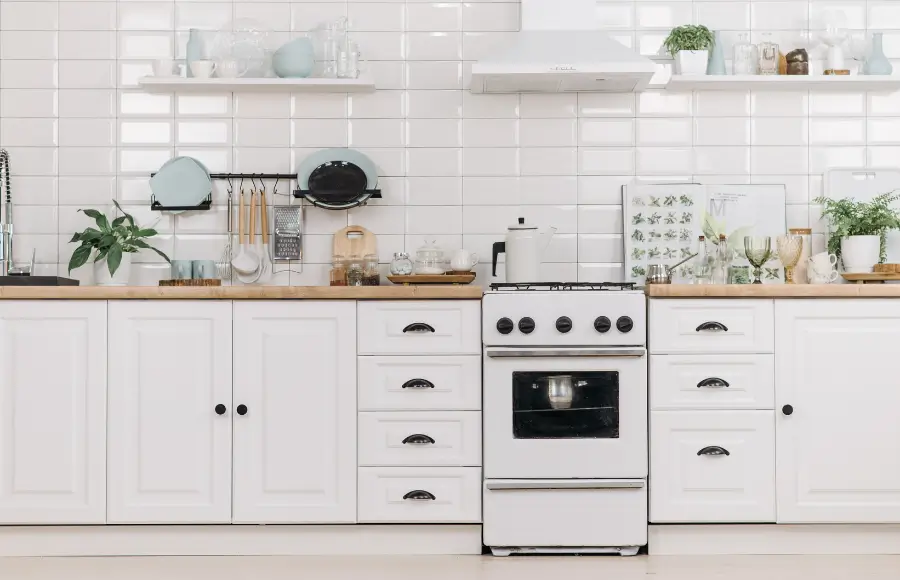
To understand inset cabinets, you have to look at the anatomy of the cabinet box.
In a standard kitchen, the cabinet doors overlap the structural frame (known as an overlay). With inset cabinets, the doors and drawer fronts are precision-cut to sit exactly flush within the cabinet’s face frame.
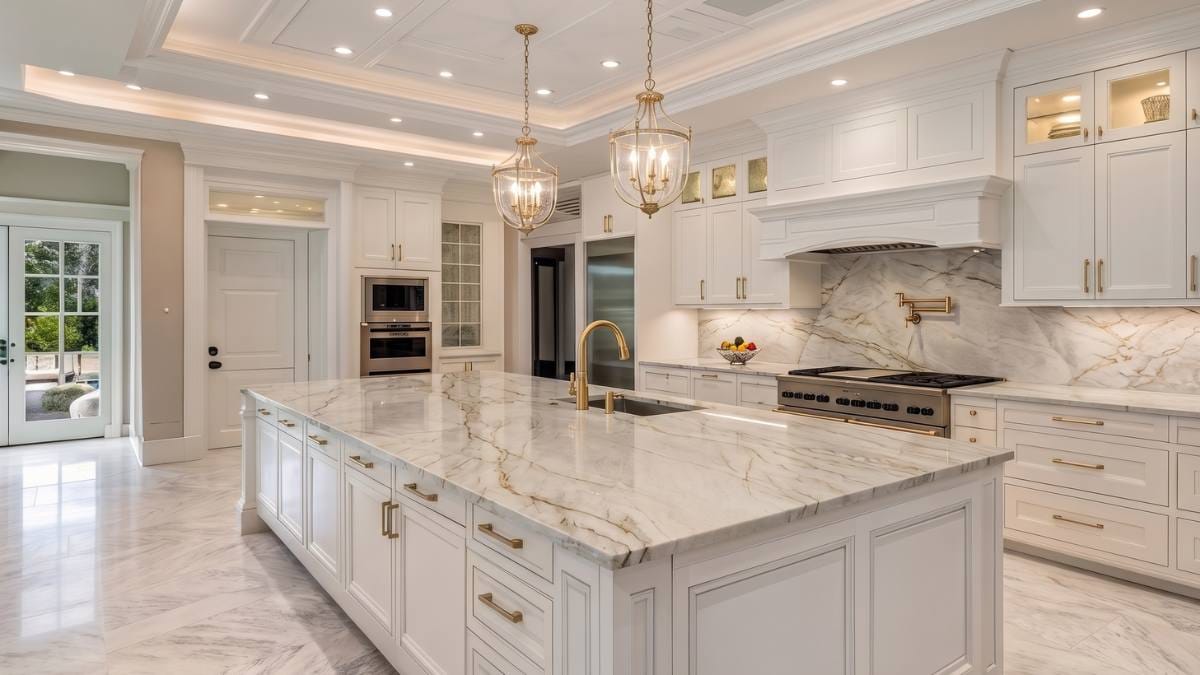
When you run your hand across the front of an inset kitchen island, the wood frame and the cabinet doors feel like a single, continuous, flat plane.
The Heritage of Master Craftsmanship
Long before the era of mass-produced, factory-line kitchens, cabinetry was built like fine furniture. During the Georgian and Victorian eras, master artisans hand-built freestanding cupboards for elite homes.
Because they didn’t have adjustable metal hinges, every single wooden door had to be painstakingly planed and sanded by hand to fit perfectly inside its wooden frame. This flush, inset construction became the ultimate hallmark of bespoke joinery and high-society craftsmanship.
Today, modern inset cabinetry honors this rich architectural heritage. While the technology has evolved, the aesthetic remains a symbol of uncompromised quality.
You can customize this historic look with two distinct frame options: a flush face frame for a sleek, modern minimalist aesthetic, or a beaded face frame (which features a subtle groove carved around the opening) to fully capture that traditional, heritage charm.
The Reality Check: Why Inset Cabinetry Demands Extreme Precision

Let’s talk about the real challenge with inset cabinets: the gap.
With a standard overlay cabinet, the door acts like a big band-aid—it covers the frame. If the cabinet box is a little crooked or the doors are slightly off-size, no one will ever know.
Inset cabinets expose everything. The gap (or reveal) around the door is usually just 3/32 of an inch (around 2.4mm). If the cabinet opening is even slightly out of square, that tiny gap turns into an ugly, uneven wedge shape. There is no cheap fix for a poorly sized inset door; you cannot simply adjust it away.
Furthermore, wood is a natural material that expands in the summer and contracts in the winter. If your manufacturer does not use properly kiln-dried wood, advanced climate-sealing techniques, and exact CNC measurements, those beautiful doors will swell and stick tight during a humid August.
For contractors and builders, this means nightmare installations and expensive callbacks. For homeowners, it means doors you literally cannot open.
This is why inset cabinetry is the ultimate test of a manufacturer’s capability.
Inset Cabinets vs. Overlay vs. Frameless
How do inset cabinets compare to other popular styles on the market?
Inset vs. Overlay Cabinets
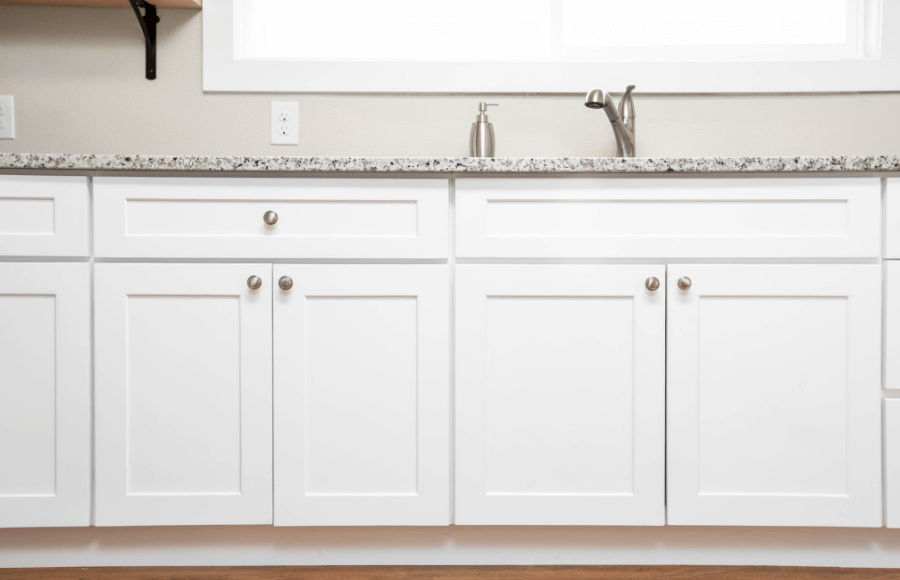
Overlay cabinets are the standard choice for most homes for one simple reason: they are forgiving. Because the doors sit on top of the frame, they effortlessly hide minor manufacturing errors or cabinet boxes that are slightly out of square. This makes them significantly cheaper and faster to produce.
Inset cabinets, on the other hand, are the perfectionist’s choice. They demand exact manufacturing tolerances and offer a tailored, flush elegance that overlay cabinets simply cannot replicate.
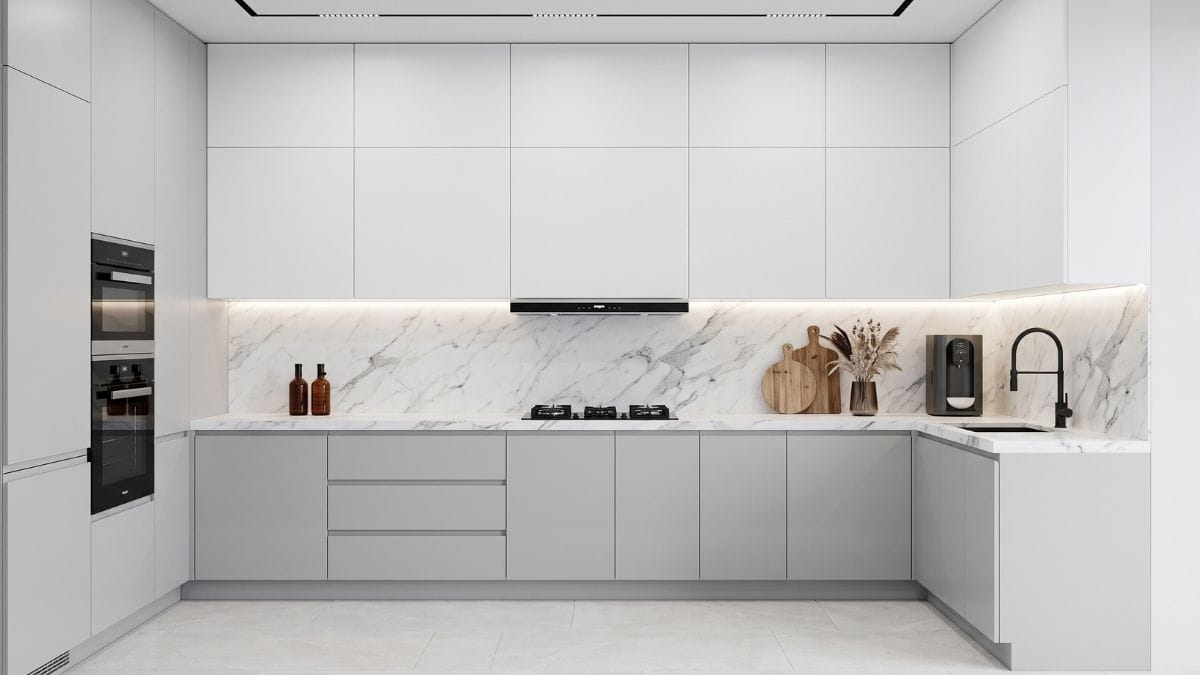
Inset vs. Frameless (European) Cabinets
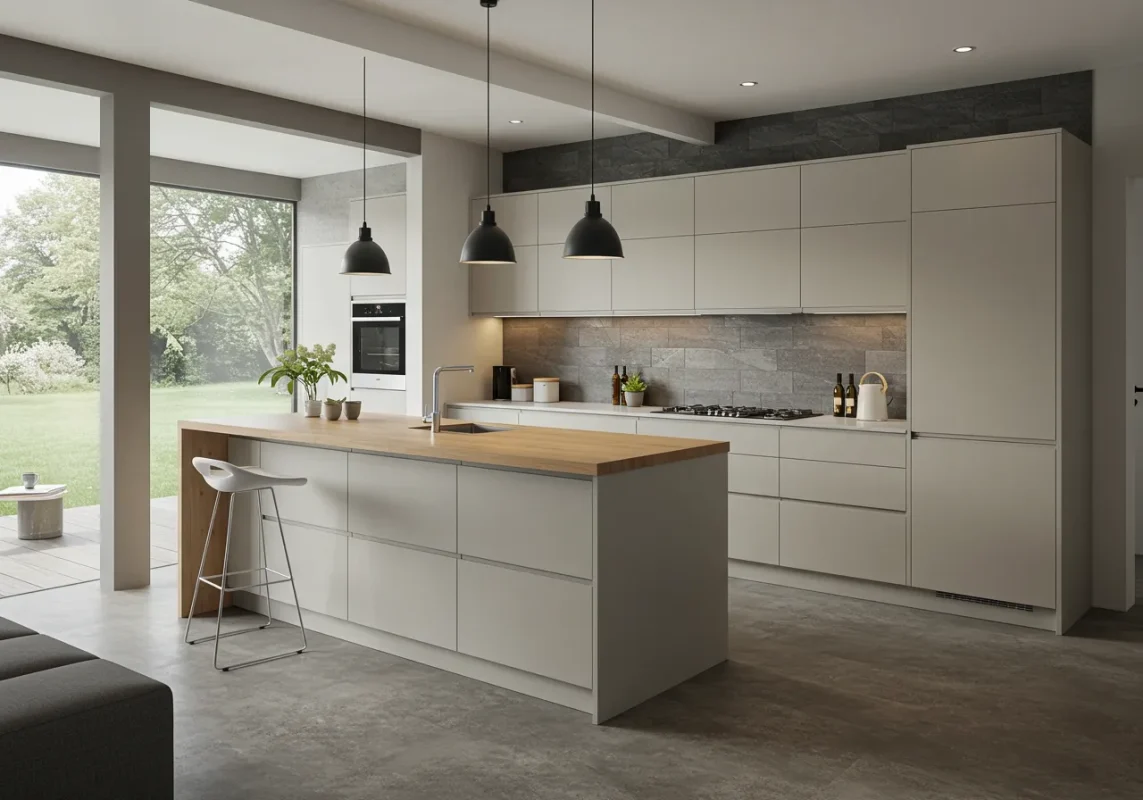
Frameless cabinets ditch the front face frame entirely. This provides a hyper-modern, continuous look and maximizes every millimeter of interior drawer space. However, without a solid wood face frame, a frameless cabinet relies entirely on its side panels for structural integrity.
Inset cabinets retain that solid wood face frame. While you sacrifice a tiny fraction of interior depth, you gain a cabinet box that is built like a tank, offering superior structural rigidity and a classic architectural charm that frameless boxes lack.
The Quick Decision Guide:
- Choose Overlay if: You want a traditional or transitional look on a tighter budget and need a more forgiving installation.
- Choose Frameless if: You are designing an ultra-modern, minimalist kitchen and need to maximize every inch of interior storage.
- Choose Inset if: You value heirloom-quality craftsmanship, demand superior structural rigidity, and want that timeless, high-end built-in aesthetic.
Practical Considerations Before Buying Inset Cabinets
Cost and Investment Value
Inset cabinets typically carry a 15% to 30% premium over standard overlay cabinets. This is not because the wood is magically more expensive, but because of the sheer amount of labor, CNC machine time, and extreme precision required to fit each door perfectly.
However, their classic aesthetic never goes out of style, making them a highly desirable feature that boosts a home’s long-term resale value.
Storage Efficiency
Because the door sits inside the frame, you lose a slight amount of internal depth (about 3/4 of an inch). When planning your kitchen, simply work with your designer to ensure your oversized dinner plates or deep cast-iron pots will still fit comfortably in the drawers.
Maintenance Advantages
With no overlapping edges or protruding lips, inset cabinets offer fewer crevices for kitchen grease and dust to settle. This streamlined, flush design makes wiping down your kitchen surfaces incredibly fast and efficient.
Source Flawless Inset Cabinets Factory-Direct with George Group
The beauty and functionality of an inset cabinet lie entirely in the precision of its manufacturing. Sourcing these cabinets from a low-tier supplier or a local shop without advanced machinery is a gamble that often results in crooked reveals and sticking doors.
At George Solution, we eliminate that risk for both homeowners and professional contractors. As a premier source-factory manufacturer of custom cabinetry, our state-of-the-art facility utilizes precision CNC machining and advanced moisture-resistant materials. We guarantee that every cabinet box is perfectly square, every reveal is flawless, and every door opens smoothly—regardless of the season.
By offering a direct factory-to-project model, we allow you to achieve this premium, architect-grade cabinetry without the traditional showroom markups. Explore our Custom Kitchen Cabinet solutions and let the George Group team bring uncompromised precision to your next project.
Frequently Asked Questions (FAQ)
Why do inset cabinets cost more than overlay cabinets?
Inset cabinets require a face frame and demand extreme manufacturing precision. Every door and drawer front must be custom-fitted into its exact opening with millimeter accuracy. This meticulous process significantly increases both labor and CNC production time compared to standard overlay doors.
Should I choose concealed hinges or exposed barrel hinges for inset cabinets?
It depends entirely on your design goals. Exposed barrel hinges offer a beautiful, classic, and traditional farmhouse look. Concealed hinges, hidden inside the cabinet, provide a cleaner, modern aesthetic and typically include built-in soft-close mechanisms and 3D adjustability, making installation and fine-tuning much easier for contractors.
Do inset cabinets lose storage space?
Yes, slightly. Because the doors and drawer fronts sit inside the face frame rather than outside it, the internal usable depth is typically reduced by about 3/4 of an inch. You should factor this in when designing deep drawers for large pots and pans.