

When designing a luxury home or a high-end commercial space, the way you transition from one environment to another sets the tone for the entire architectural experience. Standard off-the-shelf doors simply close off a room. Custom architectural doors, however, are designed to orchestrate light, frame landscapes, and create a profound sense of arrival.
To execute a flawless design that merges expansive aesthetics with structural integrity, we focus on the three most requested, high-impact door systems in modern architecture. Let’s explore how they actually feel and function within a space.
Related article: Top 10 Window and Door Manufacturers in China
1. Pivot Doors: The Grand Entrance
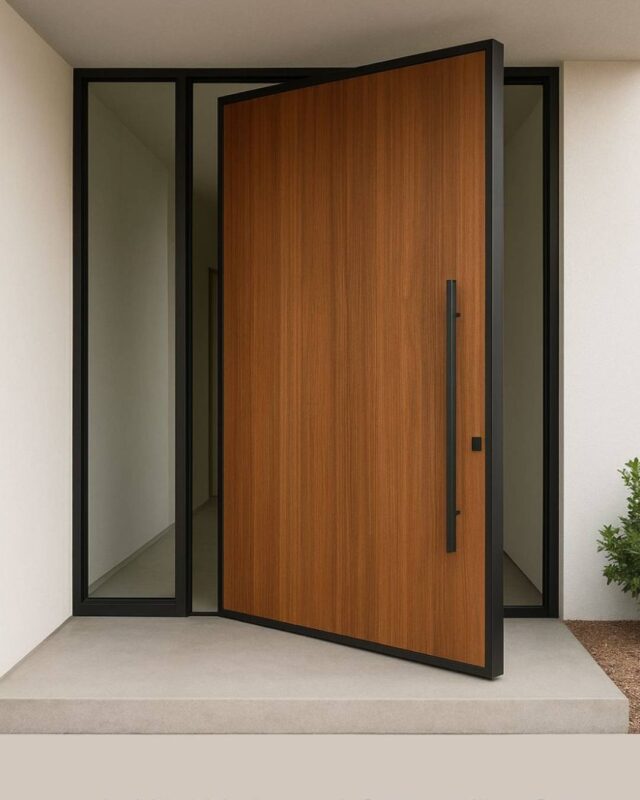
Imagine walking up to a residence and being greeted by a massive, six-foot-wide slab of raw carbon steel, rich clad walnut, or frosted glass. Instead of pulling a handle attached to a side frame, you push gently, and the entire wall gracefully rotates. This is the magic of a custom pivot door.
Unlike traditional doors that hang from side hinges, a pivot door rotates on a single vertical axis—a heavy-duty pin system installed directly into the floor and the top frame.
Because the monumental weight of the door is entirely supported by the floor rather than the wall, architects are freed from traditional size constraints. This engineering marvel allows for massive, oversized panels that would otherwise tear standard hinges straight off the jamb.
Beyond their structural capability, pivot doors offer incredibly clean, modern lines by eliminating the need for bulky side frames.
Premium systems also come equipped with hidden self-closing mechanisms, multi-point locking systems, and adjustable rotational speeds, ensuring that the sweeping, theatrical opening experience remains perfectly controlled and effortlessly secure.
2. Slim-Frame Sliding Doors: The Seamless Transition
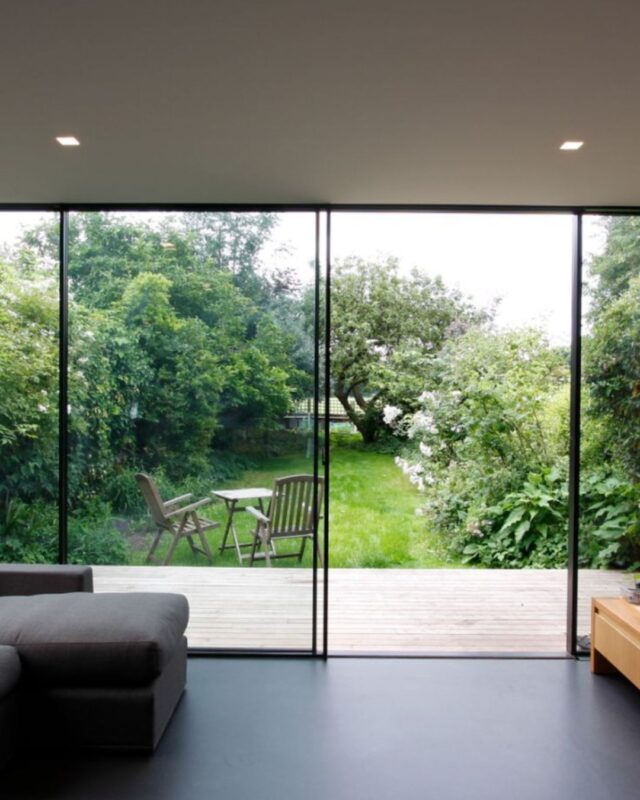
The philosophy behind slim-frame sliding doors is simple: the architecture should disappear, leaving only the view. Engineered to deliver expansive, uninterrupted sightlines, these systems dissolve the boundary between your interior sanctuary and the exterior landscape.
To achieve this minimalist aesthetic without sacrificing security or insulation, the structural strength is shifted away from the aluminum frame and directly into the glass itself. The result is a massive wall of glazing held together by ultra-narrow vertical profiles—often less than an inch wide.
When you fully open these doors, the panels glide silently away, seamlessly extending a living room out onto a patio or a pool deck. The true mark of luxury in these systems is the floor transition. When paired with flush-mounted, recessed bottom tracks that align perfectly with your finished floor, they create a zero-threshold, trip-free passage.
Supporting hundreds of pounds of thermally broken, double or triple-pane glass on a minimal frame requires aerospace-grade aluminum and marine-grade stainless-steel tandem rollers, ensuring that even the heaviest glass wall opens with the push of a single finger.
3. Bi-Fold Doors: The Transformative Space
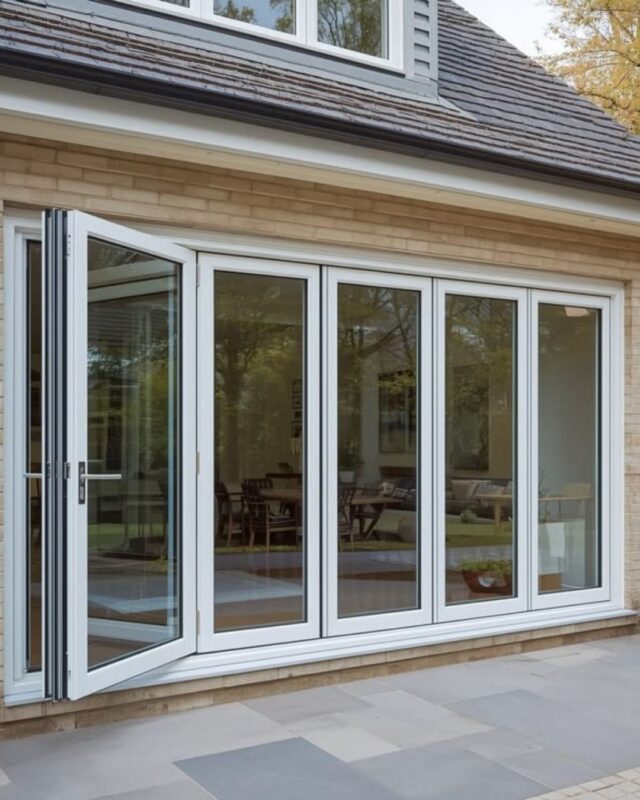
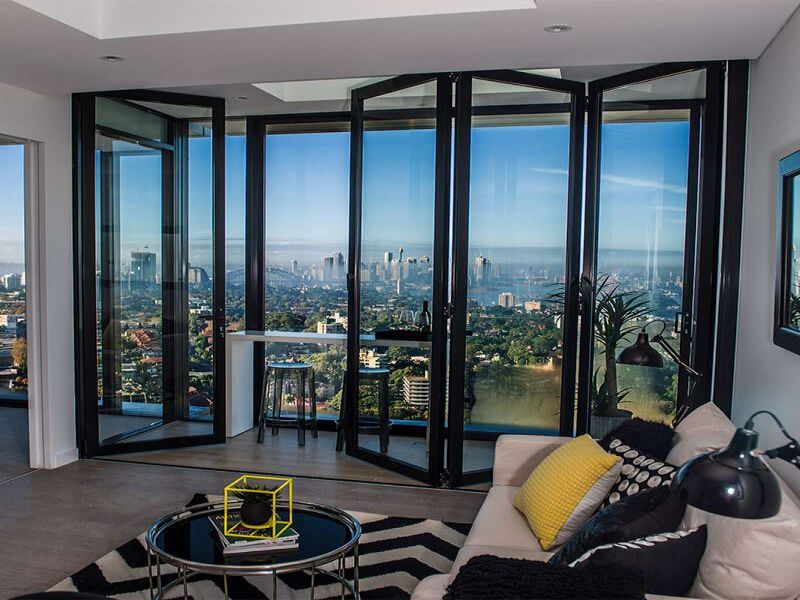
If sliding doors are about minimizing visual boundaries, bi-fold doors are about eliminating them completely. Often referred to as accordion doors, these multi-panel systems fold back onto themselves, neatly stacking against the wall to completely open up an entire side of a room.
Bi-fold doors are the definitive choice for homeowners and designers who want true “indoor-outdoor living.” Picture a warm summer evening where your dining room naturally flows into the outdoor kitchen, with no glass separating your guests from the breeze.
While a sliding door always requires at least one fixed panel for the others to slide behind (limiting the opening to about 50-70%), a bi-fold door can open up over 90% of the wall space.
Because the panels fold outward and stack together, the structural weight is typically suspended from the top header track. This top-hung system requires precise structural engineering above the doorway to prevent any sagging over time.
When closed, they lock tightly into place, providing excellent thermal insulation against the elements; when open, they completely transform the footprint of your home.
The Hidden Value of Custom Engineering
It is easy to find visually similar, cheaper alternatives in the mass market. However, when dealing with oversized architectural doors, cutting corners on the internal hardware is a recipe for disaster.
The true value of a custom door system lies in what you cannot see: the silence of the rollers, the absolute seal against driving rain, and the effortless movement of heavy glass.
Premium systems utilize interlocking weatherstripping, specialized drop-down floor seals, and advanced hidden drainage tracks to ensure absolute climate control. A 500-pound door should never feel like a chore to open; it should feel like a piece of finely tuned machinery.
Conclusion: Define Your Space
The right architectural door does more than fill an opening; it dictates how a space is lived in, navigated, and experienced. Whether you want the dramatic flair of an oversized pivot entrance or the invisible boundary of a slim-frame slider, the execution must be flawless.
At George Solution, we engineer doors for spaces that refuse to compromise. By blending cutting-edge European hardware with premium global manufacturing, we deliver bespoke fenestration solutions that look magnificent and perform effortlessly over decades.
FAQ
What is the difference between a pivot door and a standard hinged door?
A standard door hangs from hinges attached to the side frame, limiting how heavy and wide the door can be. A pivot door rotates on a vertical axis with hinges mounted into the floor and top frame. This floor-bearing design allows pivot doors to be built to massive, oversized dimensions that traditional hinges simply cannot support.
Are slim-frame sliding doors energy efficient?
Yes, when engineered correctly. Premium slim-frame sliding doors utilize thermally broken aluminum frames and high-performance Low-E double or triple glazing. This ensures that despite the expansive glass surface, heat transfer is minimized, keeping your home insulated and energy costs down.
Do bi-fold doors require a bottom track?
Yes, bi-fold doors require a bottom track to guide the panels securely. However, in high-end custom applications, this bottom track can be recessed seamlessly into the floor. This creates a “flush threshold,” providing a smooth, trip-free transition between your indoor and outdoor living spaces.