

Choosing new flooring is one of the most significant decisions in any home renovation or new build. The material you select extends far beyond visual preference—it directly impacts your daily life, your maintenance routine, and the long-term value of your property.
Whether you are a homeowner managing a personal remodel or working alongside a contractor, understanding the realities of living with these materials is essential to protecting your investment.
In this article, we’ll find out what each option brings to the table, from looks and comfort to maintenance and cost. Let’s dive in and help you pick the best flooring for your home!
The Quick Answer
- Hardwood flooring is best for homeowners who want authentic natural warmth, unique character, and a timeless look in dry living spaces like bedrooms and living rooms.
- Tile flooring is the superior choice for bathrooms, kitchens, laundry rooms, entryways, and any high-traffic area where absolute durability and water resistance are mandatory.
- Wood-look porcelain tile is the ultimate middle ground. It delivers the aesthetic warmth of real wood combined with the indestructible, waterproof performance of tile.
Key Differences Between Tile and Hardwood Flooring
| Category | Hardwood Flooring | Tile Flooring (Porcelain/Ceramic) |
| Aesthetic Appeal | Authentic, natural warmth; unique grain | Endless designs; stone, marble, or wood-look |
| Moisture Resistance | Highly sensitive; prone to cupping and warping | Excellent; porcelain is virtually waterproof |
| Installation Reality | Requires environmental acclimation time | Requires precise subfloor leveling and thin-set |
| Daily Life & Pets | Can be scratched by pet claws and furniture | Highly scratch-resistant and stain-proof |
| Long-Term Upkeep | Requires future sanding and refinishing | Virtually zero maintenance required |
| Ideal Zones | Bedrooms, dining rooms, formal living areas | Kitchens, bathrooms, mudrooms, high-traffic zones |
Related article: Polished vs. Glazed Porcelain Tiles for Commercial & Luxury Builds
Understand of Hardwood Flooring: The Timeless Classic
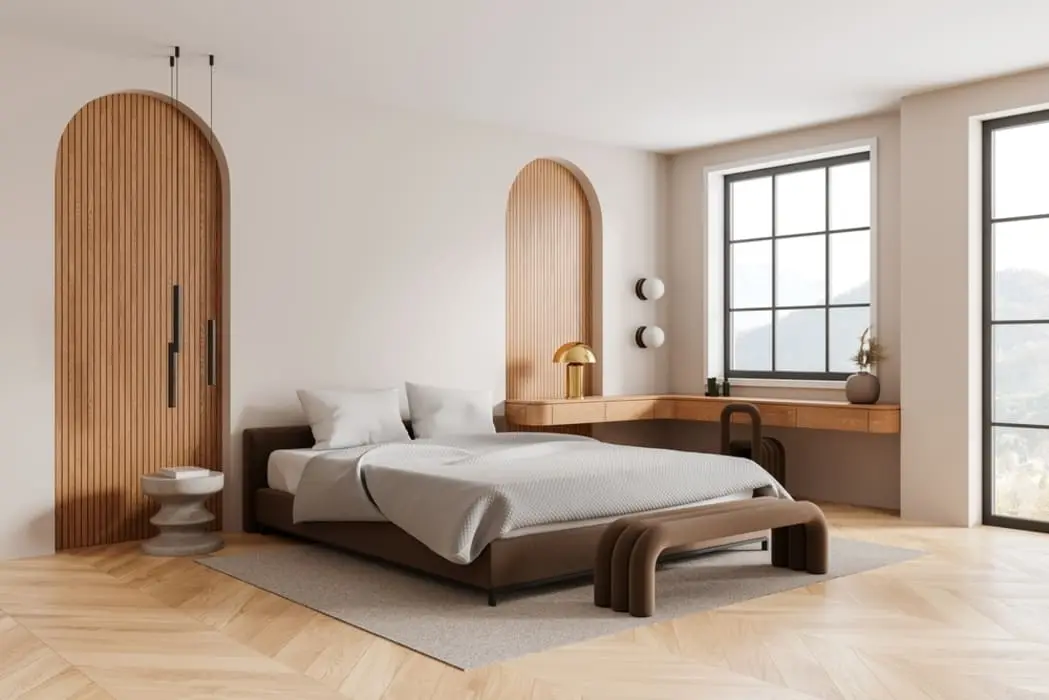
Hardwood flooring is universally valued for its natural beauty, warmth, and classic architectural appeal. When specifying wood for a project, it generally falls into two categories: solid hardwood, which is milled from a single piece of timber, and engineered hardwood, which uses a real wood surface layer bonded over a structurally stable, multi-layered core.
Because of its organic nature, hardwood works best in dry, climate-controlled environments such as living rooms, bedrooms, and dining spaces.
Hardwood flooring remains the ultimate benchmark for premium residential design. For homeowners looking to maximize both the aesthetic and financial value of their property, real wood offers several distinct, irreplaceable advantages:
- Acoustic and Ergonomic Comfort: Unlike the dense, hard surface of tile, natural wood has a slight structural “give.” This makes it significantly more comfortable to stand or walk on for extended periods, reducing joint fatigue. Furthermore, wood naturally absorbs sound, eliminating the harsh echoes often found in rooms with expansive tile floors.
- Lifelong Design Adaptability: This is hardwood’s greatest hidden feature. If you want to update your home’s interior style ten years from now, solid hardwood can be sanded down and re-stained. You can transition from a light, natural oak finish to a deep, dark walnut without ever having to replace the actual floorboards. Tile, once installed, is permanent in both color and texture.
The Realities of Daily Upkeep
While the benefits of authentic wood are substantial, specifying hardwood requires understanding how a natural, breathing material behaves over time:
- Environmental Sensitivity: Wood expands and contracts with changes in humidity and temperature. It requires proper acclimation on-site before installation and a stable indoor climate to prevent future cupping or gaping. It is strictly incompatible with wet zones like bathrooms or damp basements.
- Surface Vulnerability: The finish on real wood is susceptible to daily life. High heels, dropped pans, heavy furniture, and active pets will inevitably leave scratches or dents. To maintain its pristine appearance, homeowners must be prepared for the financial and logistical reality of professional sanding and refinishing every 10 to 15 years.
Understand of Tile Flooring: The Lifetime Investment
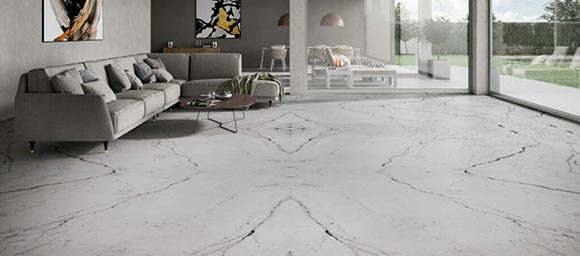
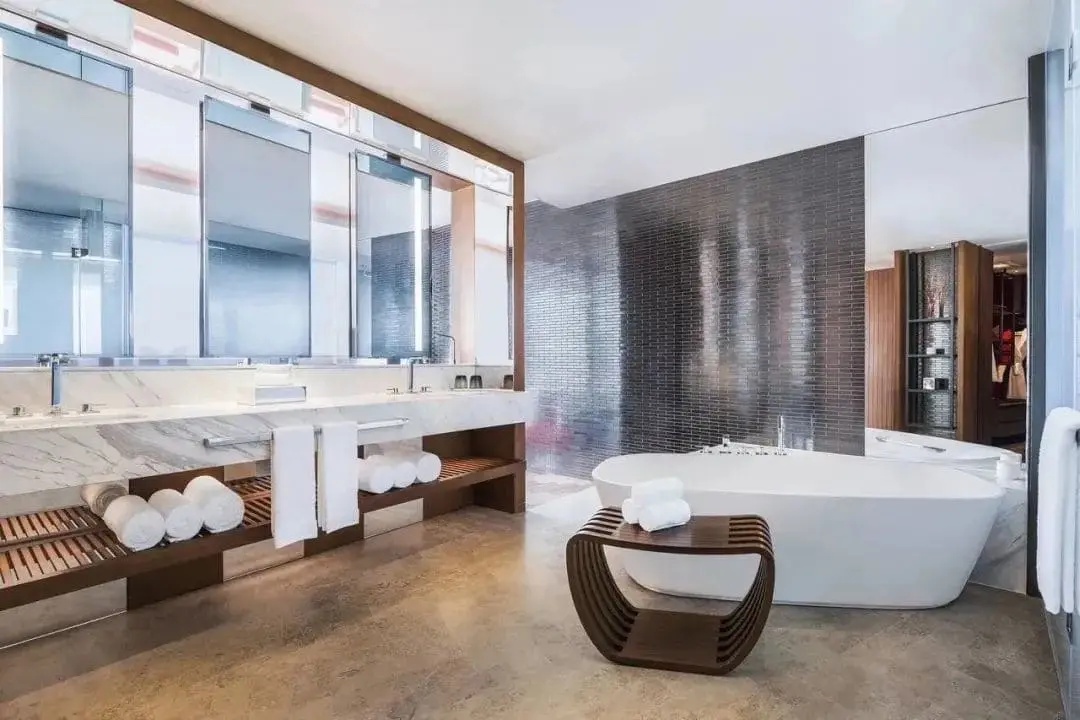
Tile flooring encompasses porcelain, ceramic, and natural stone, offering an incredibly dense and rigid surface. Porcelain, in particular, is manufactured at extreme temperatures, resulting in a highly water-resistant and structurally sound material. When your priority is indestructible durability and complete peace of mind, tile is the standard specification.
When your priority is indestructible durability and complete peace of mind, porcelain and ceramic tiles are the standard specification.
- Exceptional Durability: High-density porcelain tile is engineered to withstand heavy use. With a water absorption rate of under 0.5%, it is immune to water leaks, pet accidents, and fading from direct sunlight. Once installed, it is practically a permanent fixture.
- Installation Demands: The trade-off for this longevity is the initial installation process. Large-format tiles require a perfectly leveled subfloor and skilled labor to ensure a flawless finish without cracking.
- Thermal Comfort: Tile is naturally cooler underfoot, which is refreshing in warm climates. For colder regions, tile is actually the most efficient flooring material to pair with radiant underfloor heating systems, turning cold floors into a comfortable heat source.
The Ultimate Compromise: Wood-Look Porcelain Tile
For homeowners torn between the cozy, welcoming aesthetic of wood and the worry-free performance of tile, wood-look porcelain tile has emerged as the ultimate solution.
Thanks to modern high-definition inkjet printing, manufacturers can now replicate the exact grain, knots, and tonal variations of natural oak, walnut, or maple onto a dense porcelain body. Premium collections utilize dozens of different print variations in a single batch so the floor looks organic, never repetitive.
It provides the timeless visual of a hardwood floor but can be installed directly in a wet shower, a busy mudroom, or a spill-prone kitchen with absolutely zero risk of water damage. It is the perfect hybrid for modern, active households.
Related article: The Complete Guide to Wood Look Tiles: Pros, Cons, and Comparisons
Where to Install Which? A Practical Zone Guide
To maximize the lifespan of your materials, align your flooring choice with the specific demands of each room:
- Wet Zones (Bathrooms, Kitchens, Laundry Rooms): Tile is mandatory. Wood-look porcelain is a fantastic choice here to carry a warm aesthetic into wet areas without the risk of rot or mold.
- High-Traffic Zones (Entryways, Mudrooms, Hallways): Porcelain tile. It easily withstands wet shoes, grit, and frequent cleaning without showing wear.
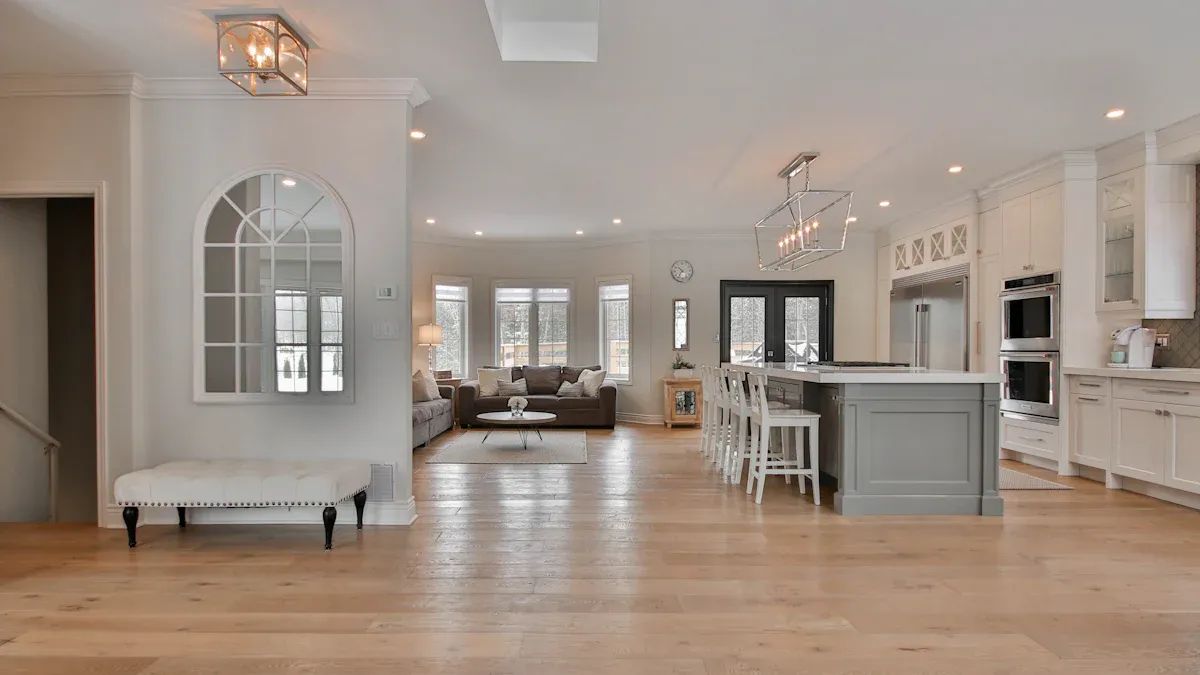
- Dry Living Areas (Bedrooms, Living Rooms): Hardwood is highly recommended for its acoustic softness and underfoot comfort. However, wood-look tile is an equally valid option, especially if you have large indoor pets or plan to use radiant heating.
Understanding the True Cost
When budgeting for your renovation, do not just look at the retail price per square foot. Hardwood often carries a higher initial material cost, plus the inevitable future costs of professional refinishing. Tile may require a higher labor budget upfront for proper subfloor preparation, but it demands zero financial upkeep later. Over a 20-year timeline, porcelain tile generally presents a significantly lower total cost of ownership.
Simplify Your Project with George Solution
The most common headache in a whole-house customization project is coordinating materials. Transitioning from hardwood in the living room to tile in the kitchen often leads to mismatched floor heights, clashing tones, and logistical delays from dealing with multiple retail vendors.
At George Solution, we provide a one-stop procurement experience for your entire project. Because we supply premium engineered hardwood, large-format porcelain, and HD wood-look tiles directly from our manufacturing hubs, we eliminate the guesswork.
By consolidating your flooring procurement with us, you ensure consistent batch quality across all materials and eliminate middleman markups. We help you and your contractor coordinate the exact thicknesses and aesthetic transitions required for a flawless installation, delivering the complete package directly to your site.
Frequently Asked Questions (FAQ)
Is tile or hardwood better for homes with dogs?
Tile, particularly porcelain or wood-look porcelain, is the superior choice for homes with pets. It is completely resistant to scratch marks from claws and is unaffected by liquid accidents, whereas natural hardwood can be easily scratched and stained by active dogs.
Can both tile and hardwood be installed over radiant underfloor heating?
Tile is highly recommended for radiant heating due to its excellent thermal conductivity, which efficiently transfers heat to the room. While certain engineered hardwoods are compatible with radiant heat, solid hardwood is generally not recommended, as the direct heat can cause the wood boards to dry out, shrink, and crack over time.
Does wood-look tile actually look like real hardwood?
Yes. Premium wood-look porcelain tiles utilize high-definition printing and embossed textures to mimic the exact grain and feel of real wood. When installed by a professional using minimal 1.5mm grout lines and color-matched grout, it is very difficult to distinguish from real wood at a glance.