

When planning a bathroom renovation or specifying plumbing fixtures for a commercial build, the toilet is rarely the most glamorous decision—but it is arguably the most impactful in terms of daily utility usage. As water conservation regulations tighten globally, traditional plumbing systems are being rapidly replaced by more efficient alternatives.
Leading this shift is the dual-flush toilet. While they look nearly identical to standard toilets on the outside, their internal mechanics represent a significant upgrade in plumbing efficiency.
Whether you are a homeowner looking to lower utility bills or a developer aiming for green building certifications, understanding how these systems operate is essential for making an informed purchasing decision.
What Is a Dual-Flush Toilet?

At its most basic level, a dual-flush toilet is a high-efficiency plumbing fixture that offers two different flush volumes. Instead of a single trip lever that releases the entire tank of water regardless of what is in the bowl, a dual-flush system is typically operated by a split push-button actuator located on the top of the tank or on the wall.
One button initiates a partial flush (usually ranging from 0.8 to 1.1 gallons) designed exclusively for liquid waste. The second button triggers a full flush (typically 1.28 to 1.6 gallons) to handle solid waste. This simple choice gives the user direct control over water consumption.
Related article: 2026 Guide: Top 10 Toilet Brands for Luxury & Commercial Builds
The Mechanics: How Does a Dual-Flush Toilet Work?
The visual difference of having two buttons is just the surface. The real innovation lies inside the tank and the bowl’s underlying architecture.
The Flush Valve and Push Buttons
Traditional single-flush toilets use a simple rubber flapper that lifts via a chain to let water into the bowl, then drops back down as the tank empties. Dual-flush toilets replace this flapper with a sophisticated drop valve system in the center of the tank.
When you press the half-flush button, a mechanical linkage lifts the seal just long enough to release a specific, smaller volume of water before snapping shut.
Pressing the full-flush button engages a different part of the mechanism, lifting the seal higher and holding it open longer to drain the entire designated volume of the tank. This enclosed drop-valve mechanism is inherently more durable than a traditional chain-and-flapper, which is prone to tangling, warping, and leaking over time.
Washdown vs. Siphonic Action
The efficiency of a dual-flush toilet isn’t just about the tank; it is also about how the bowl clears waste. Traditional toilets in North America generally use a “siphonic” action. They feature a narrow, heavily curved trapway (the pipe at the bottom of the bowl).
When water rushes in, it creates a vacuum that aggressively pulls the waste down. While this keeps the bowl clean, it requires a large volume of water to initiate the siphon.
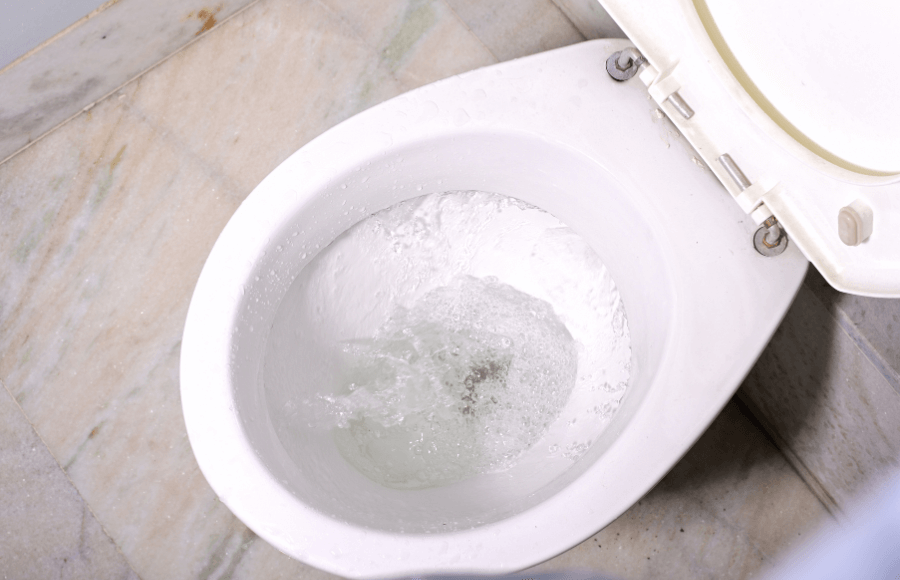
Most modern dual-flush toilets operate on a “washdown” action. Because they must be able to clear the bowl using far less water, they rely purely on the gravity of water rapidly dropping into a wider, shorter trapway to push waste down the drain. This fundamental difference in physics allows the toilet to perform effectively on a fraction of the water.
Related article: How Can I Make My Toilet Flush Stronger
Core Benefits for Homeowners and Developers
From our aspects, the shift toward dual-flush technology is driven by tangible engineering and financial advantages rather than passing design trends.
Water Conservation and Certifications
The primary advantage is a drastic reduction in water usage. According to the EPA, older traditional toilets can use up to 3.5 to 7 gallons per flush (GPF). A modern dual-flush toilet can reduce indoor water usage by up to 67%.
For developers and builders, specifying dual-flush models that meet the 1.28 GPF WaterSense standard is often a critical step in securing LEED certification or meeting stringent local environmental building codes.
Cost-Saving Utility Bills
For a single-family home, this efficiency translates to noticeable annual savings on water and sewage bills. However, for investors managing multi-family apartment complexes, hotels, or commercial office buildings, the ROI is substantial.
Upgrading hundreds of units to dual-flush systems can cut annual utility operational costs by thousands of dollars, paying for the initial hardware investment relatively quickly.
Plumbing Reliability (Fewer Blockages)
Because washdown dual-flush toilets utilize a wider trapway—often up to 4 inches compared to the 2-inch trapways found in siphonic toilets—they are structurally less prone to clogging.
The waste path is wider and less convoluted. For property managers, fewer blockages mean fewer emergency calls to plumbers and lower ongoing maintenance expenses.
Types of Dual-Flush Toilets for Different Architectural Needs
Once the internal mechanics are understood, the next step is selecting the right structural profile to match the bathroom’s layout and design aesthetic.
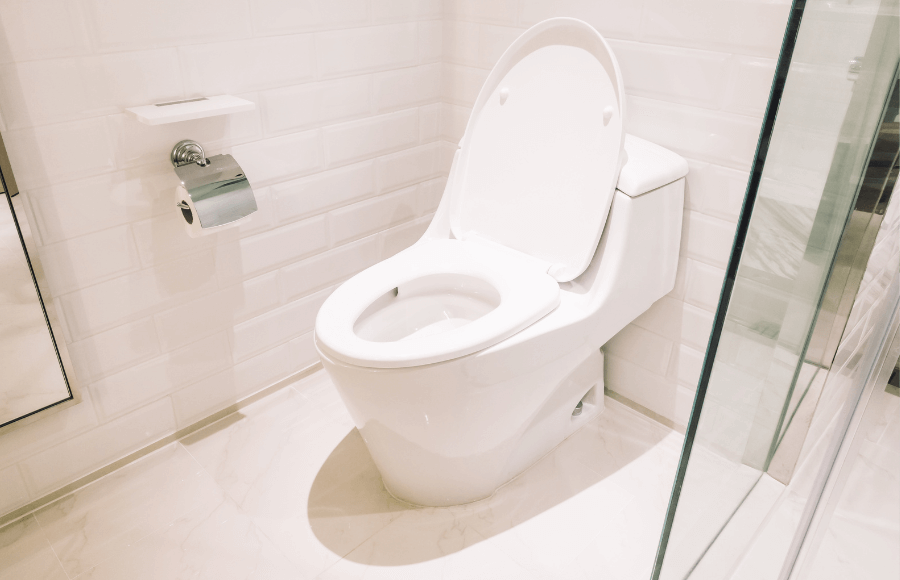
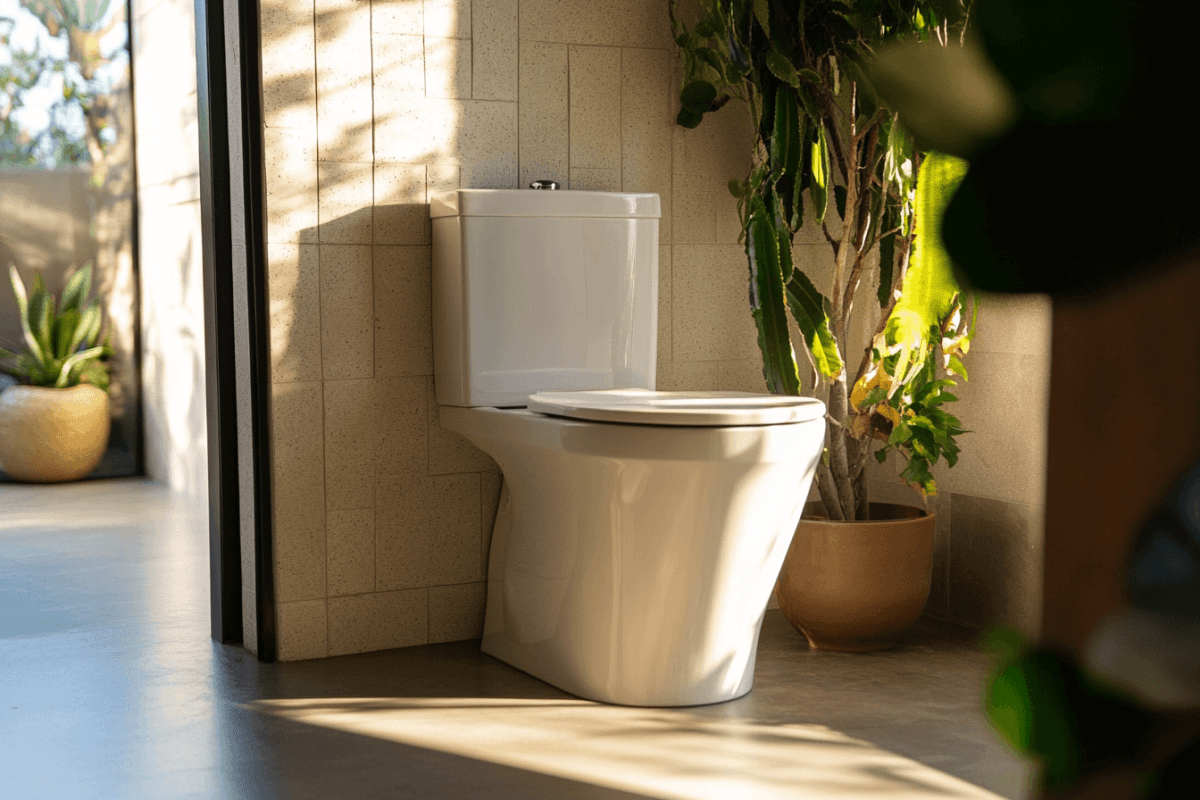
- Close-Coupled Dual-Flush Toilets: This is the most common and recognizable format. The water tank sits directly on the back of the bowl, forming a single, connected unit. They are the easiest to install and repair, making them the standard choice for most residential bathroom renovations.
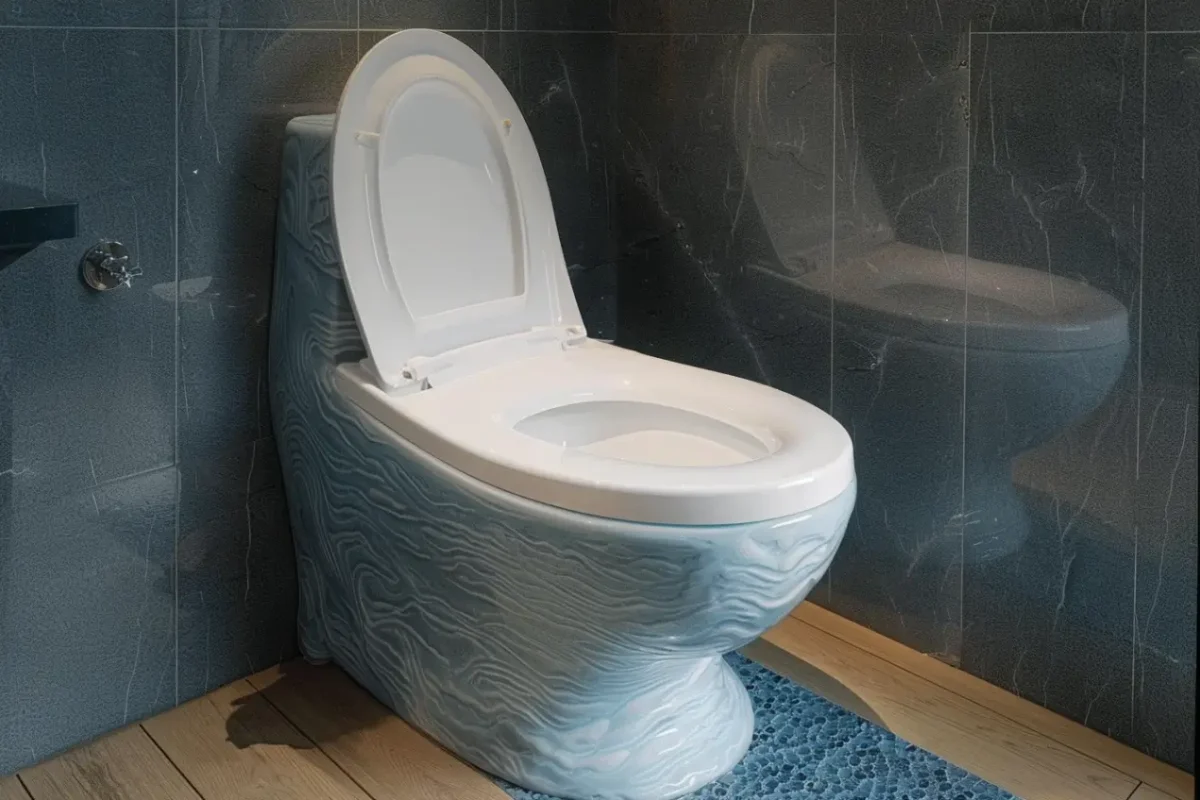
- Back-to-Wall Dual-Flush Toilets: In this configuration, the back of the toilet sits entirely flush against the bathroom wall, hiding all plumbing connections behind the ceramic casing. This creates a clean, modern look and eliminates the dusty crevices behind the toilet, making floor cleaning significantly easier.
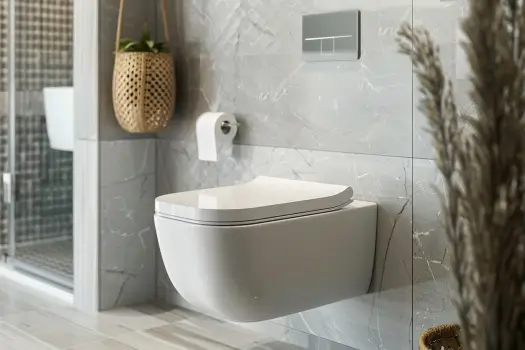
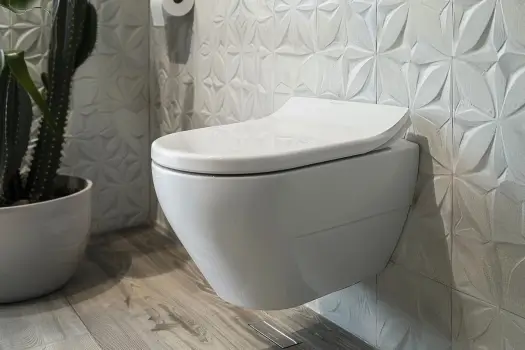
- Wall-Hung Dual-Flush Toilets: The premium choice for luxury homes and high-end commercial spaces. The bowl is mounted directly to the wall, floating above the floor, while the water tank and plumbing are concealed completely inside the wall cavity (using an in-wall carrier system). The dual-flush buttons are mounted on a sleek actuator plate on the wall. This design maximizes floor space and provides a striking, minimalist aesthetic.
Single vs. Dual-Flush Toilets: Which Is Better for Your Project?
Choosing between a single-flush and a dual-flush system comes down to prioritizing initial simplicity versus long-term efficiency.
Single-flush systems have fewer internal moving parts. The traditional flapper mechanism is universally understood, and replacement parts are inexpensive and easy to find at any hardware store. They also tend to have a slightly stronger immediate wash to clean the sides of the bowl.
Dual-flush systems, while slightly more expensive upfront and requiring a bit more precision to calibrate during installation, offer superior long-term value. The environmental benefits, utility savings, and modern flush-valve durability make them the undisputed choice for forward-thinking construction and major renovations.
Streamline Your Sanitary Ware Procurement with George Solution
Specifying sanitary ware for a large-scale project—especially when dealing with advanced systems like wall-hung dual-flush toilets—requires precise coordination.
Sourcing the ceramic bowl from one vendor, the concealed in-wall tank from another, and the flush actuator plate from a third often results in mismatched components, delayed timelines, and installation failures on site.
Operating as a comprehensive building materials supplier in Foshan, China, George Solution eliminates these procurement bottlenecks. We engineer and supply the complete sanitary system.
From rigorous quality control on the ceramic glaze to ensure color consistency, to supplying the exact heavy-duty carriers and dual-flush mechanisms required for the build, we ensure everything arrives on-site ready for seamless installation. Whether outfitting a single luxury villa or a 200-room hotel, we provide reliable, water-efficient plumbing solutions tailored to your project’s specifications.
Frequently Asked Questions (FAQ)
Can I convert my existing single-flush toilet into a dual-flush system?
Yes, you can install a dual-flush conversion kit. This replaces your traditional flapper with a dual-flush drop valve. However, it will not change the physical structure of your toilet’s trapway, so you won’t get the exact same anti-clogging performance as a factory-made dual-flush toilet.
Are dual-flush toilets harder to maintain than standard toilets?
No. The internal flush valve is generally more durable than a traditional rubber flapper. If the mechanism does fail, you simply replace the internal manufacturer-specific cartridge by snapping a new one into place.
Why does my dual-flush toilet still occasionally get clogged?
Blockages typically occur if the half-flush (designed only for liquid waste) is mistakenly used for solid waste or excessive toilet paper. The half-flush simply does not release enough water to push heavy solids through the plumbing system.