

A garage door is not just a secondary entrance; it often makes up to 30% of a home’s front facade. More importantly, it is the largest moving piece of machinery in residential construction. Choosing the wrong material isn’t just an aesthetic misstep—it is an expensive structural error that can lead to high energy bills, constant maintenance, and premature motor failure.
Before you start looking at color swatches and panel designs, you need to understand the physical realities of what you are buying. As building material experts, we see the long-term results of these choices every day.
Here is the unfiltered guide to choosing the right garage door material, starting with the rules that actually dictate the market.
The 4 Factors That Actually Matter Before You Buy
Instead of getting lost in a dozen different specifications, professional builders and informed homeowners focus their decisions on these four foundational pillars:

1. Climate & Insulation
Your local weather is the ultimate judge of your garage door. Coastal salt air will rapidly corrode standard steel, while extreme temperature fluctuations can warp unsealed natural wood.
Furthermore, if your garage is attached to your home, insulation is not optional. A poorly insulated door acts as a massive thermal bridge, draining your HVAC efficiency. You must evaluate a material based on its ability to house polyurethane foam insulation.
2. Maintenance & Durability
How much weekend time are you willing to dedicate to your garage? Natural wood requires sanding and restaining every few years to prevent rot. Vinyl and fiberglass, on the other hand, offer a “set it and forget it” reality. You must also weigh weather resistance against impact resistance. Steel is structurally invincible against weather, but a rogue baseball can leave a permanent dent.
3. Aesthetics & Weight
Curb appeal matters, but a door’s aesthetic directly dictates its physical weight. A solid mahogany door looks breathtaking, but it is incredibly heavy.
Heavy doors demand specialized, high-horsepower garage door openers and heavy-duty torsion springs. If you pair a heavy premium material with standard builder-grade lifting hardware, your motor will burn out in less than a year.
4. Cost vs. Return on Investment (ROI)
Replacing a garage door consistently ranks in the top three home improvement projects for national ROI. However, the initial upfront cost varies wildly.
Single-layer steel is the budget floor, while custom wood and architectural glass sit at the premium ceiling.
Expert Tip: The true cost includes long-term upkeep. A cheap wooden door that requires constant repainting is never actually a bargain.
Garage Door Material Options: An Unfiltered Breakdown
With the criteria established, here is how the major materials available on the market actually perform in the real world when exposed to daily wear and tear.
Steel: The Industry Standard
When we talk about the default choice for modern construction, steel is the undisputed leader. It offers the best balance of price, security, and design versatility. Manufacturers can stamp steel to mimic traditional wood grain or leave it smooth for a flush, contemporary look.
For climate control, steel is unparalleled because it easily accommodates a “sandwich” construction, trapping high-density polyurethane foam between two metal plates for maximum R-value.
However, steel is not invincible. It does not absorb blunt impacts well; a rogue baseball or a minor vehicle bump will leave a permanent dent. Additionally, if the protective galvanized layer is deeply scratched, the exposed steel will eventually rust.
Wood: Timeless Luxury and Heavy Upkeep
For high-end luxury homes and historic renovations, authentic solid wood—such as cedar, redwood, or mahogany—remains the king of curb appeal. Real wood offers an architectural warmth and authentic texture that synthetics simply cannot replicate.
While it provides decent natural insulation and unmatched aesthetic value, it comes with severe trade-offs. Wood is incredibly heavy, requiring heavy-duty torsion springs and high-horsepower motors to operate safely.
Furthermore, it demands rigorous, ongoing maintenance. Without regular sealing and painting, solid wood will inevitably rot, warp, and crack when exposed to moisture and seasonal temperature shifts.
Aluminum & Glass: The Modern Statement

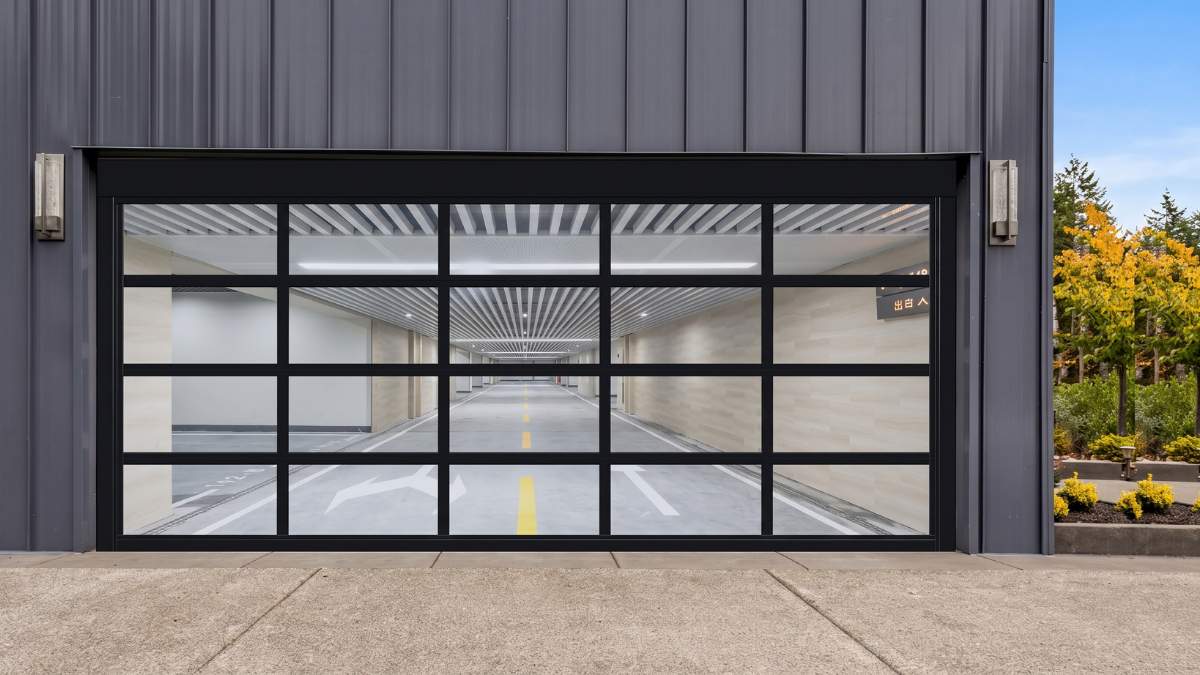
If you are designing a contemporary, industrial, or mid-century modern facade, an aluminum frame fitted with heavy-duty glass panels is the definitive choice. Architects favor aluminum because it is naturally rust-proof and exceptionally lightweight, which drastically reduces the strain on the operating hardware.
The large glass panels flood the dark garage interior with natural light. The primary drawback here is thermal inefficiency. Standard aluminum and glass offer terrible insulation and zero visual privacy. For cold climates, you must pay a significant premium to upgrade to “thermally broken” aluminum frames and insulated, frosted glass.
Fiberglass: The Coastal Specialist
Fiberglass doors consist of a durable fiberglass skin molded over a steel framework, often filled with polyurethane insulation. This material is arguably the best on the market for mimicking the exact texture of real wood without the associated maintenance nightmare.
Crucially, fiberglass is entirely impervious to saltwater corrosion, making it the top choice for coastal properties where salty air destroys standard steel. The main limitation of fiberglass is its reaction to extreme cold; in sub-zero temperatures, the material can become brittle and crack upon hard impact.
Composite (Engineered Wood): The Smart Imitator
Composite doors are manufactured from wood fibers blended with synthetic resins, offering the look of authentic wood backed by the strength of modern engineering. This is the solution for homeowners who love the carriage-house wood aesthetic but refuse to spend their weekends sanding and staining.
It holds paint beautifully, resists moisture rot, and will not split or warp. However, composite material is nearly as heavy as solid wood, meaning you still need to invest in upgraded lifting hardware, and it sits at a noticeably higher price point than standard steel doors.
Vinyl: The Indestructible Choice
Often overlooked in the residential market, vinyl is a heavy-duty plastic material engineered to take a beating. It is frequently described by installers as “kid-proof.” Vinyl is highly resistant to dents, scratches, and rust, and it easily bounces back from light impacts that would permanently ruin a steel door.
You never need to paint it, making it the ultimate low-maintenance option. The trade-off lies in its aesthetics. The design and color options are somewhat limited, and you should avoid painting it entirely—especially with dark colors, as excessive heat absorption can cause the vinyl panels to warp in direct sunlight.
Scenario-Based Selection: Which Material Fits Your Lifestyle?
Still not sure which material to choose? Here is the cheat sheet based on specific project environments:
- For Extreme Winters (Cold Climates): Choose Multi-layer Insulated Steel or Composite Wood. These materials hold high-density foam insulation perfectly, keeping the freezing temperatures out of your home.
- For Coastal & High-Humidity Areas: Choose Fiberglass, Vinyl, or Aluminum. These materials are fundamentally immune to saltwater corrosion and moisture rot. Avoid standard steel or natural wood.
- For High-Traffic Family Homes (Kids & Sports): Choose Vinyl. It will not dent from basketballs or bicycles and requires zero weekend maintenance.
- For Modern Architectural Builds: Choose Aluminum & Glass. It delivers the sharp, clean lines required for contemporary facades and maximizes natural light.
Conclusion
Your garage door is a primary defense against the elements and a major factor in your home’s curb appeal. There is no single “best” material—only the best material for your specific climate, budget, and aesthetic vision.
By matching the structural realities of steel, wood, composites, or aluminum to your actual daily needs, you ensure a lasting investment rather than an ongoing maintenance headache.
At George Solution, we specialize in providing high-performance, architecturally stunning doors built for any environment. Contact our experts today to find the exact material configuration your next project demands.
Frequently Asked Questions (FAQ)
What is the most durable garage door material?
If durability means resisting dents and physical impacts, Vinyl is the most durable. If durability means resisting harsh weather and long-term structural integrity, heavy-gauge Steel is the industry standard.
Do I really need an insulated garage door?
If your garage is attached to your house, yes. An uninsulated door allows outside temperatures to easily penetrate your home, forcing your HVAC system to work overtime. If your garage is fully detached and you do not use it as a workspace, a cheaper, uninsulated single-layer door is perfectly fine.
Can I paint my garage door?
Wood, Steel, and Composite doors can be painted very easily to match your home’s exterior. Fiberglass can be painted, but it requires specific bonding primers. Vinyl should generally not be painted, especially with dark colors, as the heat absorption can cause the plastic to warp.