

Let’s be honest: traditional outdoor decking is a massive commitment. Building a custom wood deck requires expensive architectural permits, heavy timber joists, days of loud construction, and a lifetime of sanding, staining, and sealing.
But what if you want to elevate a high-rise apartment balcony, refresh a cracked concrete patio, or build a luxury rooftop lounge without the heavy construction? In 2026, modern architects, landscapers, and homeowners are bypassing traditional lumber entirely. The solution is Interlocking Composite Deck Tiles.
By merging the beautiful aesthetics of natural wood with advanced polymer engineering, these modular tiles allow you to transform a barren outdoor space into a premium sanctuary in a matter of hours, not weeks.
In this article, I will provide a detailed overview of everything you need to know about interlocking composite patio tiles. Also cover everything from the manufacturing process to the product’s advantages, installation methods, and how to choose the right product.
What Exactly Are Composite Deck Tiles?
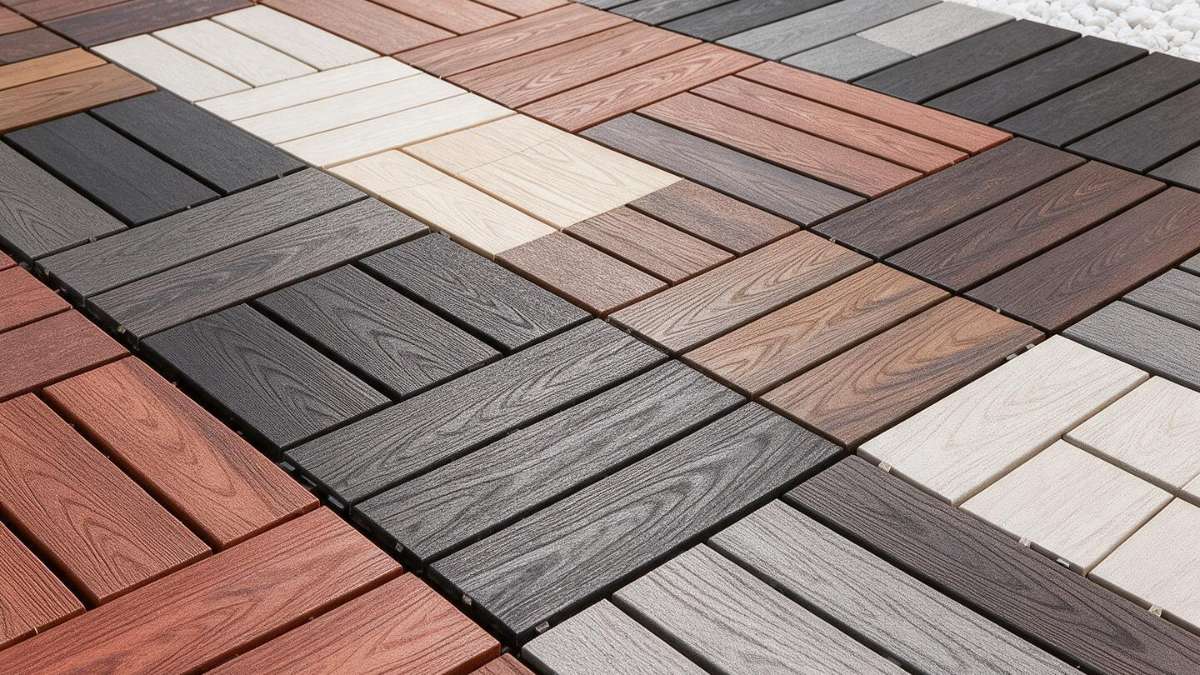
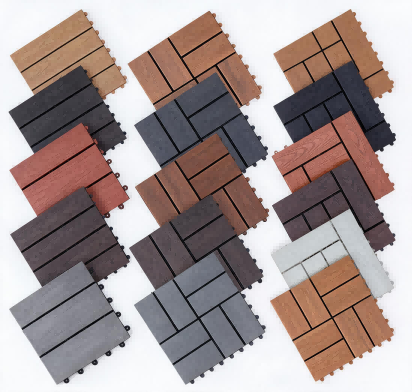
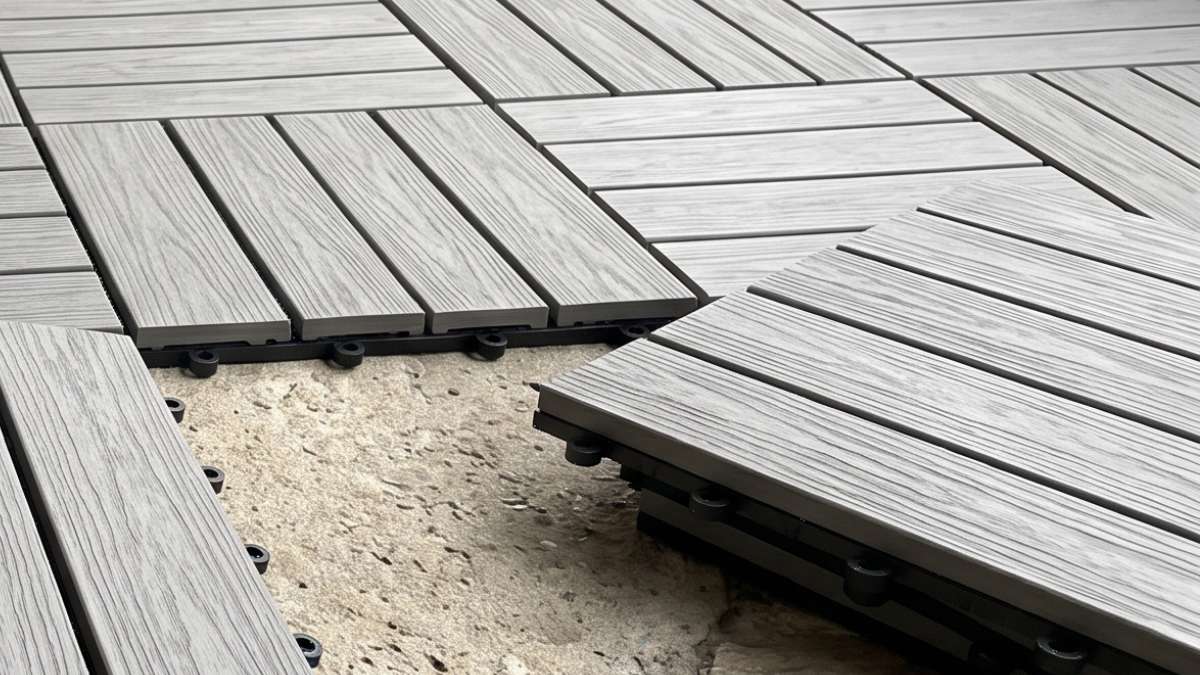
If you are unfamiliar with the product, a composite deck tile is a modular, pre-assembled square (typically 12″ x 12″ or 30×30 cm). It consists of two distinct layers engineered to solve the biggest problems of outdoor flooring:
- The Surface (Wood-Plastic Composite): The top layer is made of WPC (Wood-Plastic Composite)—a highly durable blend of recycled wood fibers and premium polymers. It looks and feels like natural timber but completely resists rot, termites, and splinters.
- The Base (Interlocking Grid): The bottom layer is a high-density plastic grid. This grid features a simple “click-and-lock” mechanism on all four sides, allowing the tiles to snap together seamlessly by hand, much like puzzle pieces.
4 Key Advantages of Composite Deck Tiles
Why are high-end builders and luxury homeowners choosing modular WPC tiles over traditional building materials? It comes down to practical engineering and effortless aesthetics.
1. Tool-Free, Rapid Installation
Traditional decking requires circular saws, specialized hidden fasteners, and heavy wooden sub-framing.
Composite deck tiles, however, feature a built-in interlocking system. You simply align the tabs and step down to click them into place. You can completely cover a 200-square-foot balcony in a single afternoon with zero power tools, zero nails, and zero construction dust.
2. The “Floating” Drainage System
A major issue with laying outdoor rugs or cheap plastic tiles over concrete is that water gets trapped underneath, leading to mold and foul odors. The elevated plastic grid base of a composite tile creates a “floating” floor.
When it rains, water flows perfectly through the slats and drains away underneath. Your deck surface dries incredibly fast, and the continuous airflow prevents any mildew from forming.
3. Co-Extruded Weather Shielding
Natural wood requires constant maintenance. If you forget to seal it before winter, it will warp, crack, and turn a dull gray. Premium composite tiles utilize co-extrusion technology, wrapping the core in a 360-degree protective polymer shield.
It is highly resistant to UV fading, completely waterproof, and immune to barbecue grease stains. A quick spray with a garden hose is all it takes to keep it looking brand new.
4. The Condo & Renter Advantage (Non-Permanent)
If you live in a luxury high-rise or condo, Homeowner Associations (HOAs) rarely allow you to drill framing into the building’s structural concrete balcony.
Because these tiles simply click together and rely on their own weight, they do not damage the surface underneath. When you move to a new property, you can literally unsnap your premium deck and take it with you.
Related Article: What Are Skirting Tiles? A Complete Guide to Styles, Sizes, and Designs
The Showdown: WPC Deck Tiles vs. Traditional Wood Tiles
For decades, traditional wood was the only acceptable choice for high-end outdoor design. However, when we look at long-term performance and maintenance, engineered WPC deck tiles offer a significant advantage.
| Feature | Traditional Wood Tiles | WPC Composite Deck Tiles WPC 复合板材瓦片 |
| Maintenance | Requires annual sanding, staining, and sealing to prevent rot. | Zero maintenance. Only requires an occasional rinse with a hose. |
| Durability | Prone to warping, splintering, and termite damage over time. | Impervious to moisture, insects, and rotting. 100% splinter-free. |
| Weather Resistance | Fades quickly and turns a dull, weathered gray under UV exposure. | Co-extruded UV shield prevents fading and retains rich, vibrant colors. |
| Installation | Often requires nails, screws, and wooden joists. | Tool-free. Built-in plastic grid simply snaps together over any flat surface. |
Ultimately, while traditional wood offers a classic charm on day one, WPC composite tiles preserve that exact same aesthetic for decades without demanding your weekends for upkeep.
Related Article: Polished vs. Glazed Porcelain Tiles for Commercial & Luxury Builds
Ideal Applications: Where Do Deck Tiles Shine?
Because they require a solid, flat surface to sit on, interlocking deck tiles are incredibly versatile. Here is how modern homeowners and designers are utilizing them to transform challenging outdoor areas:
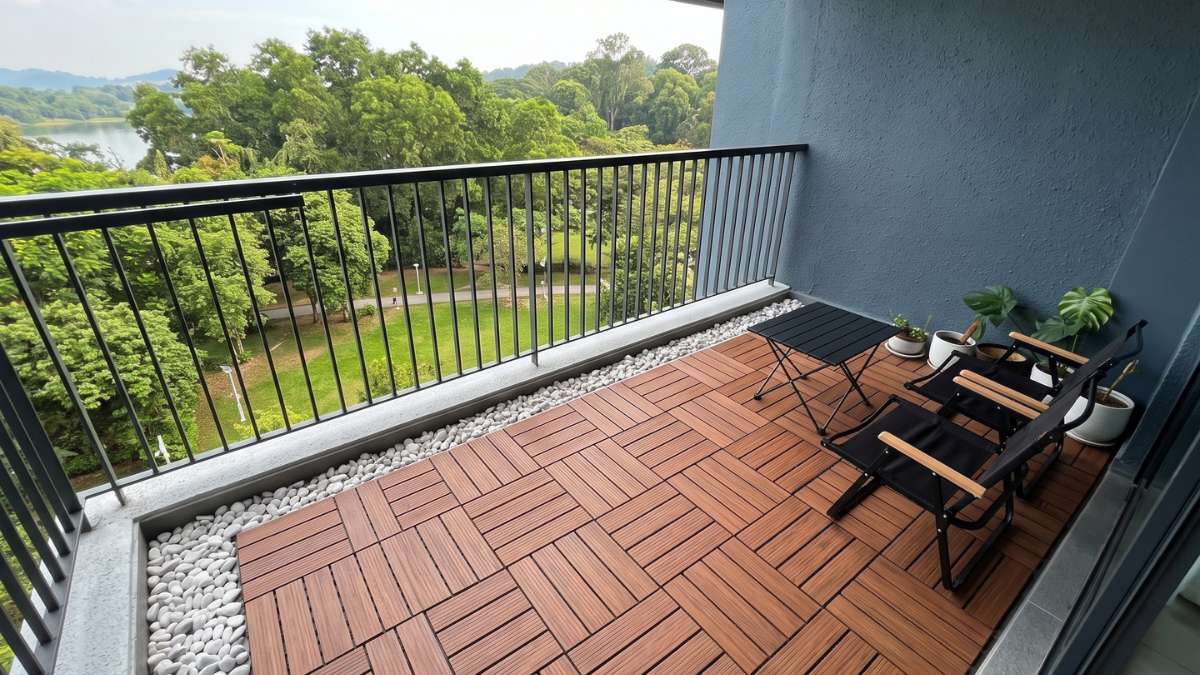
High-Rise Balconies & Terraces
Most apartments and condos come with a standard, sterile concrete balcony slab that feels cold and uninviting. By snapping down composite deck tiles, you instantly create a warm, boutique hotel vibe.
It visually extends your indoor living room to the outdoors, turning a barren concrete slab into a cozy, barefoot-friendly retreat perfect for enjoying your morning coffee or hosting evening drinks.
Luxury Rooftop Lounges
Rooftops are notoriously difficult to design because you cannot use nails or heavy framing without risking a puncture to the building’s critical waterproofing membrane.
Because WPC tiles “float” and interlock over the existing surface, they protect the roof while providing a stunning, highly durable lounge area that easily withstands the intense sun and high winds typical of rooftop exposures.
Pool Surrounds and Outdoor Spas
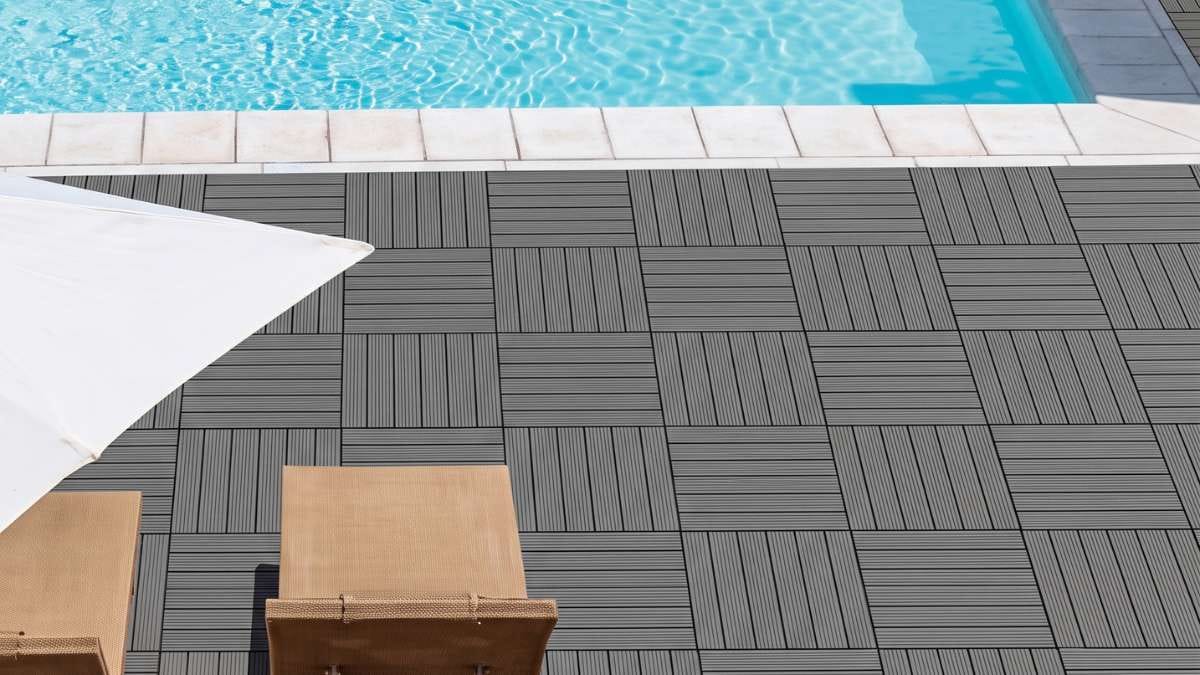
Safety and comfort are the top priorities around water. Natural wood becomes incredibly slippery when wet and poses a constant threat of painful splinters for bare feet. WPC deck tiles are engineered with inherently slip-resistant textures and are 100% splinter-free. Furthermore, they are completely immune to the damaging effects of chlorinated pool water or the constant moisture from an outdoor hot tub.
Resurfacing Aging Wooden Decks
If you have an old, weathered wooden deck, the thought of tearing it down and rebuilding it from scratch can be financially daunting. If the structural framing and joists underneath your old deck are still safe and sound, you don’t need to demolish it.
You can lay composite deck tiles directly over the ugly, splintering old boards, giving your backyard an instant, luxurious facelift for a fraction of the cost of a full rebuild.
Related Article: The Complete Guide to Wood Look Tiles: Pros, Cons, and Comparisons
How to Install Composite Deck Tiles: A Step-by-Step Guide
One of the biggest selling points of interlocking deck tiles is the straightforward, DIY-friendly installation. Follow these simple steps to transform your space in a single afternoon:
Step 1: Prepare and Clean the Surface
Ensure your surface (concrete patio, balcony, or old deck) is hard, flat, and swept clean of debris. Do not lay them directly on soft grass or dirt.
Step 2: Plan Your Layout
Map out your design. You can lay the tiles in a uniform linear direction, or alternate the direction of each tile by 90 degrees to create a classic checkerboard pattern. Always start from one perfectly square corner and work your way outward.
Step 3: Click and Lock
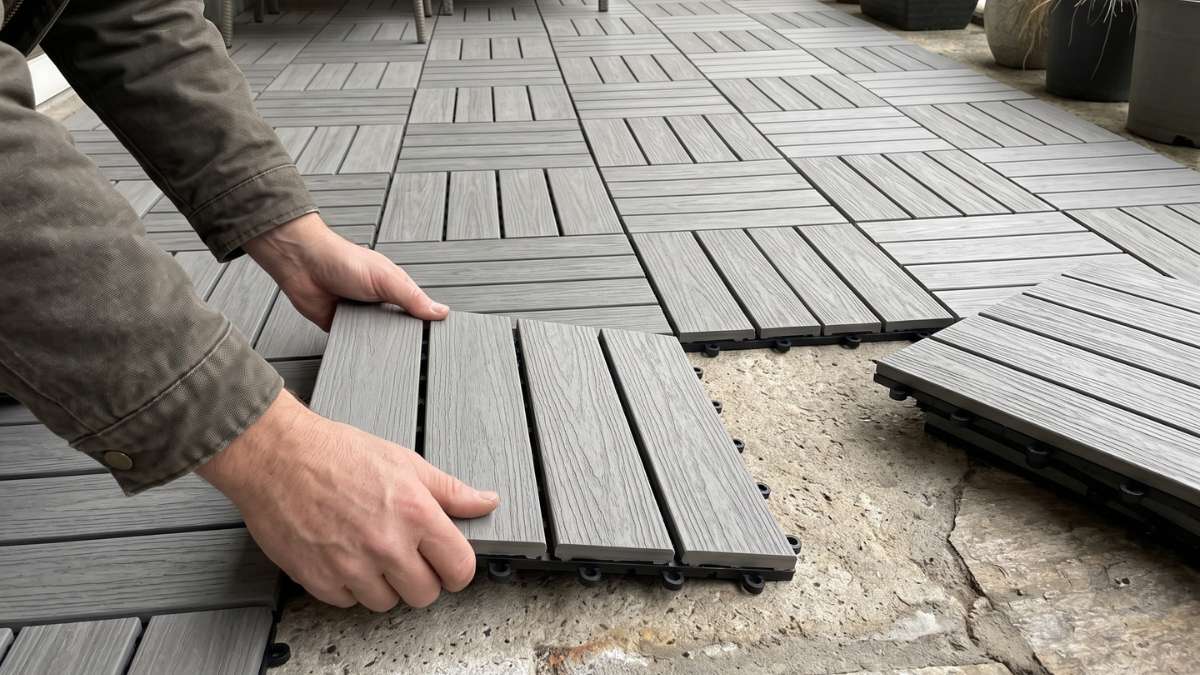
Take your first tile and lay it flat in the corner. Take the second tile, align the plastic tabs on the edge with the interlocking loops of the first tile, and press down until you hear a satisfying “click”. Repeat this process, working row by row.
Step 4: Custom Trimming (If Needed)
When you reach the edge of your balcony or a drainage pipe, you may need a partial tile. WPC material is incredibly easy to cut using a standard handsaw or a jigsaw. Just measure the gap and cut the tile to fit.
Step 5: Add Finishing Edges (Optional)
To give your new deck a polished look, attach angled edge ramps (fascia trim) to the exposed sides. This creates a smooth transition down to the concrete, eliminating tripping hazards.
The George Group Advantage: Beyond the Outdoors
When you buy retail deck tiles from a big-box hardware store, you are stuck with limited color choices that rarely match the interior of your home. True architectural luxury relies on a seamless transition from the inside out. As a premier source-factory for whole-house customization, George Solution bridges this gap.
Because we manufacture both interior finishes and exterior WPC materials in our Foshan facility, we can ensure that your outdoor balcony decking perfectly complements your indoor flooring and architectural wall panels.
We deliver complete, architect-grade solutions directly to your project site. You aren’t just buying outdoor tiles; you are securing a flawlessly coordinated design for your entire property.
Ready to elevate your outdoor living space? Contact the George design team today to explore our premium composite deck tile collections.
Frequently Asked Questions (FAQ)
Can I put heavy outdoor furniture on composite deck tiles?
Yes. The high-density plastic grid base distributes weight evenly across the solid surface below. This allows the tiles to easily support heavy ceramic planters, cast-iron dining tables, and large barbecue grills without cracking or denting.
Do WPC deck tiles get too hot in the summer?
Like any outdoor material, composite decking retains heat in direct sunlight. However, high-quality WPC tiles feature UV-reflective properties, keeping them cooler than solid concrete or dark natural wood. For areas with intense afternoon sun, we recommend selecting lighter color variations like soft gray.
Will water get trapped underneath the tiles?
No. The elevated interlocking plastic base creates a “floating” floor system. Rainwater flows seamlessly through the gaps between the WPC slats and drains away underneath the tile. This continuous airflow ensures quick drying and prevents mold or mildew buildup.