

In modern commercial and residential construction, the intersection between the wall and the floor is a critical test of execution and detail. While traditional wood or MDF baseboards are easy to install, they frequently fail when exposed to moisture, termite infestations, or the daily impact of mops and vacuums.
As a highly durable alternative, skirting tiles have become a standard specification in high-end residential and heavy-traffic commercial spaces. They serve as both a physical protective barrier and a defining architectural detail.
What Are Skirting Tiles and Why Are They Essential?
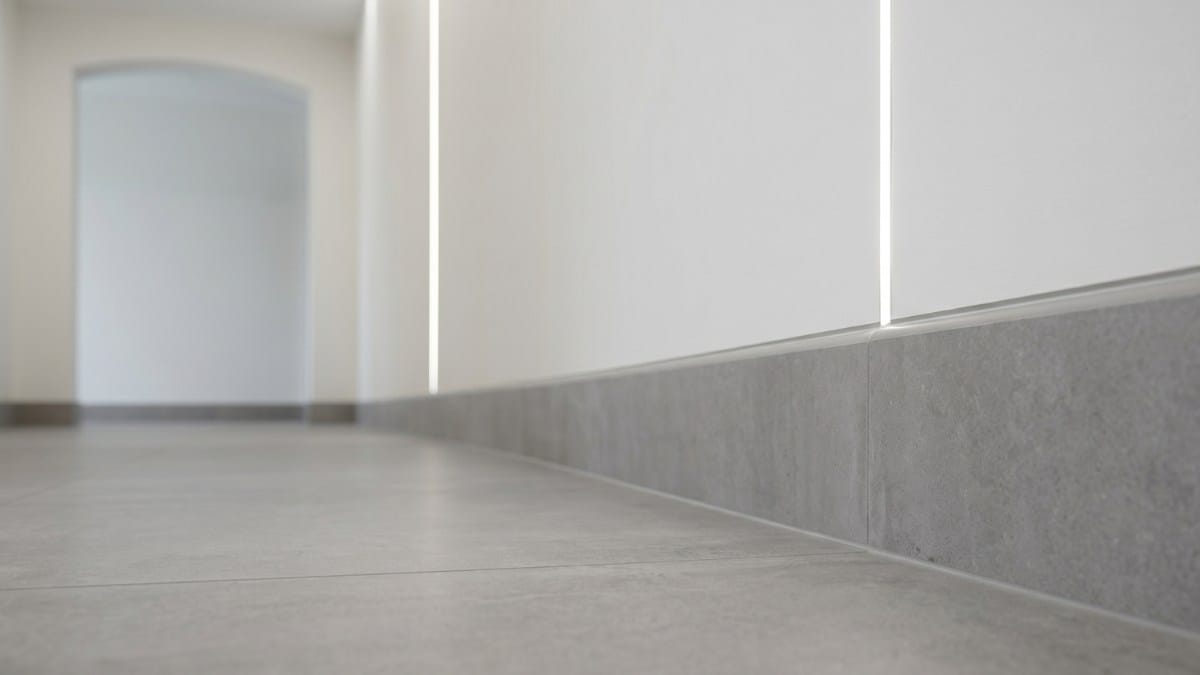
Skirting tiles are specialized tile strips installed at the lowest part of the interior wall, resting flush against the floor. Their primary function is to conceal the expansion gap between the flooring and the wall finishes, while protecting the lower wall drywall or plaster from mechanical damage.
For contractors and property owners, the shift toward tile skirting is driven by physical performance. Tile is inherently waterproof, allowing it to be used in wet zones like bathrooms and kitchens without the risk of swelling or rot. It is immune to pest damage and offers an extremely high resistance to impact and abrasion, eliminating the need for future repainting or touch-up maintenance common with wood baseboards.
Types of Tile Skirting Materials
Not all tiles perform equally in a skirting application. Manufacturers categorize these materials based on their manufacturing process, density, and physical characteristics. Specifying the correct material depends on the project’s traffic levels and budget.
Ceramic Skirting Tiles
Manufactured from red or white clay and finished with a glaze, ceramic is the most budget-friendly option. It has a slightly higher water absorption rate and moderate hardness. In engineering applications, it is suitable for low-traffic areas like residential bedrooms or back-of-house storage rooms where heavy impact resistance is not a primary requirement.
Porcelain Skirting Tiles
Porcelain is formed from high-density clay fired at extreme temperatures, resulting in an exceptionally low water absorption rate (typically under 0.5%). This high modulus of rupture makes porcelain skirting highly resistant to mechanical impact. It is the standard specification for areas requiring frequent wet cleaning, such as residential living rooms, bathrooms, and high-traffic office corridors.
Vitrified Skirting Tiles (GVT/PGVT)
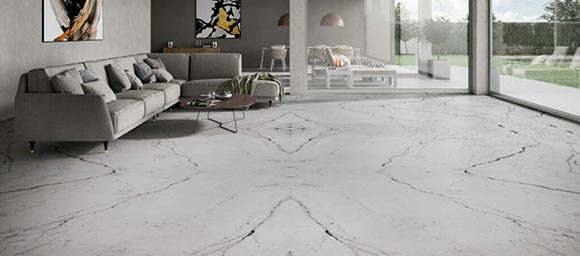
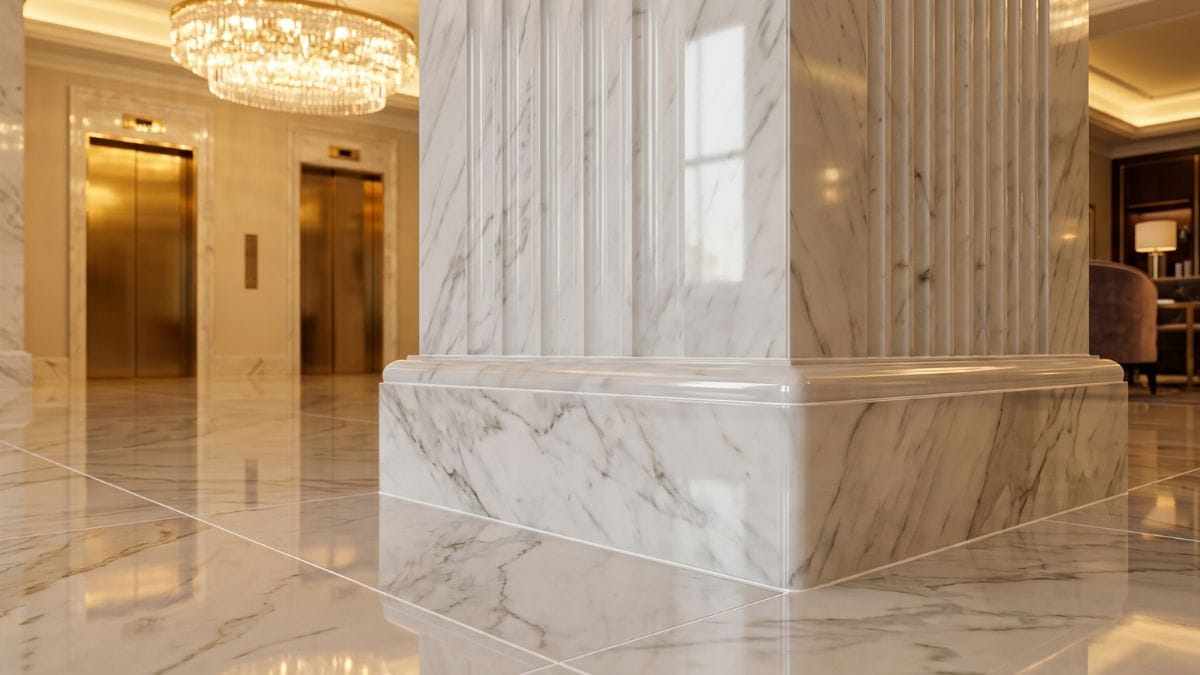
Glazed Vitrified Tiles (GVT) and Polished Glazed Vitrified Tiles (PGVT) represent the premium tier of ceramic manufacturing. These tiles undergo deep vitrification and precision polishing, resulting in a high-gloss, ultra-dense surface. In luxury hotel lobbies, villa grand entryways, or premium retail spaces, PGVT skirting perfectly mimics the look of natural marble while offering superior scratch resistance and stain repellency.
Related article: Polished vs. Glazed Porcelain Tiles for Commercial & Luxury Builds
Skirting Tile Sizes and Heights
The height of the skirting tile directly impacts the visual proportions of the room. Factory-finished skirting is generally available in three standard height categories:
- 75mm (Narrow Skirting): Favored in modern minimalist and contemporary Italian design. In standard apartments with ceiling heights around 2.6m to 2.8m, narrow skirting maximizes the visible wall space and avoids a heavy, compressed look.
- 100mm (Standard Skirting): The universally accepted specification in global construction. It offers an optimal balance between wall protection and visual proportion, widely used in standardized commercial buildings and multi-family residential projects.
- 150mm and Above (Tall Skirting): Designed specifically for spaces with high ceilings. In double-height villa living rooms, hotel banquet halls, or large commercial atriums, standard 100mm skirting looks disproportionately small. A 150mm profile provides the necessary architectural weight to ground these large volumes.
Design Ideas & Matching Strategies
Integrating skirting into the overall interior architecture requires a deliberate design strategy. Current high-end construction utilizes three main approaches:
1. Seamless Match
This approach uses the exact same material and color for both the floor and the skirting. For example, extending a Calacatta marble porcelain floor tile up the base of the wall. This eliminates visual breaks at the floor line, creating an optical illusion that visually expands the floor plan.
2. Contrast and Framing
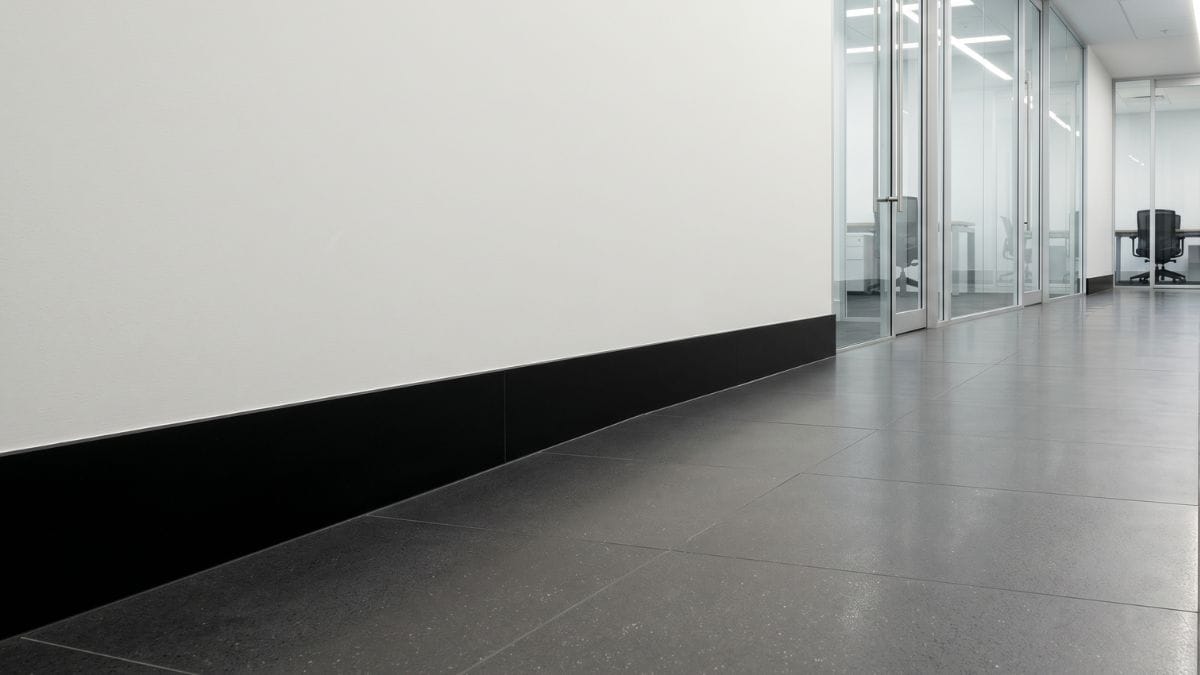
This involves specifying a skirting tile that sharply contrasts with both the floor and the wall. Installing a matte black skirting tile between a light grey floor and a white wall acts as an architectural frame. This defines the geometry of the room, a technique frequently used in industrial or modern corporate environments.
3. Flush Skirting (Recessed Baseboards)
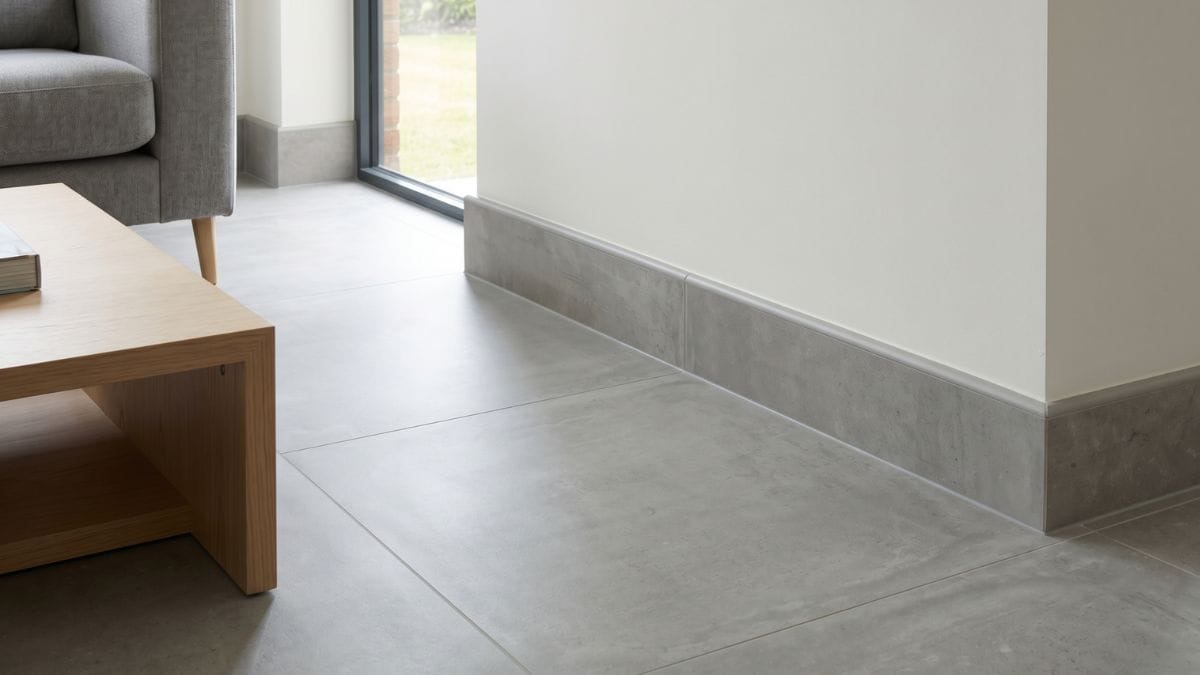
Flush skirting is the current benchmark in luxury custom builds. Traditional skirting sits on top of the wall surface, creating a small ledge that collects dust and prevents furniture from sitting completely flat against the wall.
The flush method requires contractors to channel a recess into the base of the masonry or drywall, embedding the skirting tile so it sits perfectly level with the finished wall. This eliminates dust collection and delivers a severely clean, minimalist architectural line.
Core Applications: Residential vs. Commercial Spaces
Residential Wet Zones
In private homes, bathrooms, kitchens, and laundry rooms carry a high risk of moisture damage. Using standard wood casings or baseboards here guarantees eventual rot or swelling. Specifying full porcelain or vitrified skirting in these wet zones, installed with a dual-component epoxy grout, provides a permanent, maintenance-free barrier against water ingress.
High-Traffic Commercial Areas
Office buildings, hospitals, and airport terminals are subjected to thousands of footfalls daily and the aggressive impact of industrial floor scrubbers. In these environments, the skirting must meet commercial PEI (Porcelain Enamel Institute) wear ratings. High-density vitrified tiles, installed with a high-adhesion C2-grade tile adhesive, ensure the skirting remains intact and firmly bonded under continuous heavy use.
Related article: Polished vs. Glazed Porcelain Tiles for Commercial & Luxury Builds
Installation Realities: Can Any Tile Be Used As Skirting?
When managing a commercial project or a luxury residential build, efficiency on-site is just as critical as the final design. A frequent question from property owners and contractors is whether leftover large-format floor tiles can simply be cut into strips and used as skirting.
Technically, the answer is yes. However, relying on on-site cutting introduces significant hidden liabilities. When a contractor cuts a porcelain tile on-site using a wet saw, the resulting top edge is sharp, slightly uneven, and prone to microscopic chipping.
Left untreated, these raw edges look unfinished and collect dust. To make them acceptable, tile setters must spend hours manually grinding and polishing each individual edge, which drains labor hours and slows down the project timeline.
Premium procurement strategies specify factory-finished skirting tiles. Factory-produced pieces feature a machine-polished “bullnose” (rounded) edge or a precise top bevel. Because these profiles are shaped under controlled industrial conditions, the glaze wraps smoothly over the edge, ensuring absolute uniformity. For the contractor, it eliminates an on-site fabrication bottleneck. For the owner, it guarantees a sleek, premium boundary line that is safe from impact and easy to clean.
Maintenance and Upkeep
Compared to wood skirting that requires periodic sanding, filling, and repainting, tile skirting is practically maintenance-free. Because the surface is dense and non-porous, routine cleaning simply involves wiping the skirting with a standard floor mop. In commercial settings, the chemical stability of porcelain ensures that even harsh industrial cleaning solvents will not discolor or degrade the finish.
Sourcing Premium Skirting Tiles with George Solution
Executing a flawless floor transition requires exact material matching. Sourcing floor tiles from one vendor and skirting from another frequently results in jarring color discrepancies and mismatched batch tones, which compromises the interior design.
Operating out of Foshan, China—the global hub for premium building materials—George Solution provides consolidated, one-stop procurement for contractors, architects, and project owners.
When you specify a high-end floor tile for your project, we manufacture the exact matching factory-finished bullnose or flush skirting from the same production batch. By managing the precise factory edge profiling and consolidating your supply chain, George Solution eliminates retail markups and ensures your architectural details are delivered with zero color variation and flawless structural execution.
Frequently Asked Questions (FAQ)
Can any wall or floor tile be cut into skirting?
Physically, yes. However, standard red-body ceramic wall tiles have high water absorption and are too soft to withstand the impact a skirting board receives from vacuums and foot traffic. It is always recommended to use porcelain or vitrified tiles. Furthermore, cutting tiles on-site leaves a sharp, raw edge. Factory-finished skirting with a bullnose edge is the safest and most professional option.
Is flush (recessed) skirting more expensive than standard surface-mounted skirting?
Yes, the overall installation cost of flush skirting is significantly higher. While the tile material cost is similar, the recessed method requires precise wall channeling during the masonry phase and flawless vertical leveling by both the tile setter and the plasterer. This increases labor hours but delivers a premium, zero-dust minimalist aesthetic.
How do I prevent skirting tiles from detaching from the wall over time?
Detachment usually occurs when contractors use traditional cement mortar or fail to clean the wall substrate properly before installation. For commercial or high-end residential projects, specification should mandate a high-adhesion C2-grade tile adhesive, proper primer application on the wall surface, and the inclusion of a 1.5mm to 2mm expansion joint to accommodate minor structural settling.