

Most rooms are built as simple boxes with flat windows. While a standard window gives you a view straight ahead, a bay window fundamentally changes how a room feels. By projecting outward from the exterior wall, it creates a physical nook inside the house.
For homeowners, this means a perfect spot for a built-in reading bench, a sunlit home for houseplants, or a way to make a dining room feel much larger. For contractors and designers, it is a tool to break up a flat exterior facade and give the house architectural character.
However, choosing the right look matters. The style of bay window you select should complement your home’s architecture while serving the specific needs of the room.
Executive Summary: A bay window is not merely a decorative feature; it is a smart architectural upgrade. By projecting outward from the primary building envelope, it increases interior floor space, captures sunlight from multiple angles, and adds significant curb appeal without expanding the foundation footprint. This guide explores the different styles of bay window to help homeowners and contractors select the right design, explains the hidden structural details, and outlines how to perfectly integrate custom window treatments.
The 4 Core Styles of Bay Window
While window and door custom manufacturers can build almost any configuration, bay windows generally fall into four distinct architectural styles. Understanding the structural differences of each will help you maximize your room’s potential.
1. The Classic Canted Bay
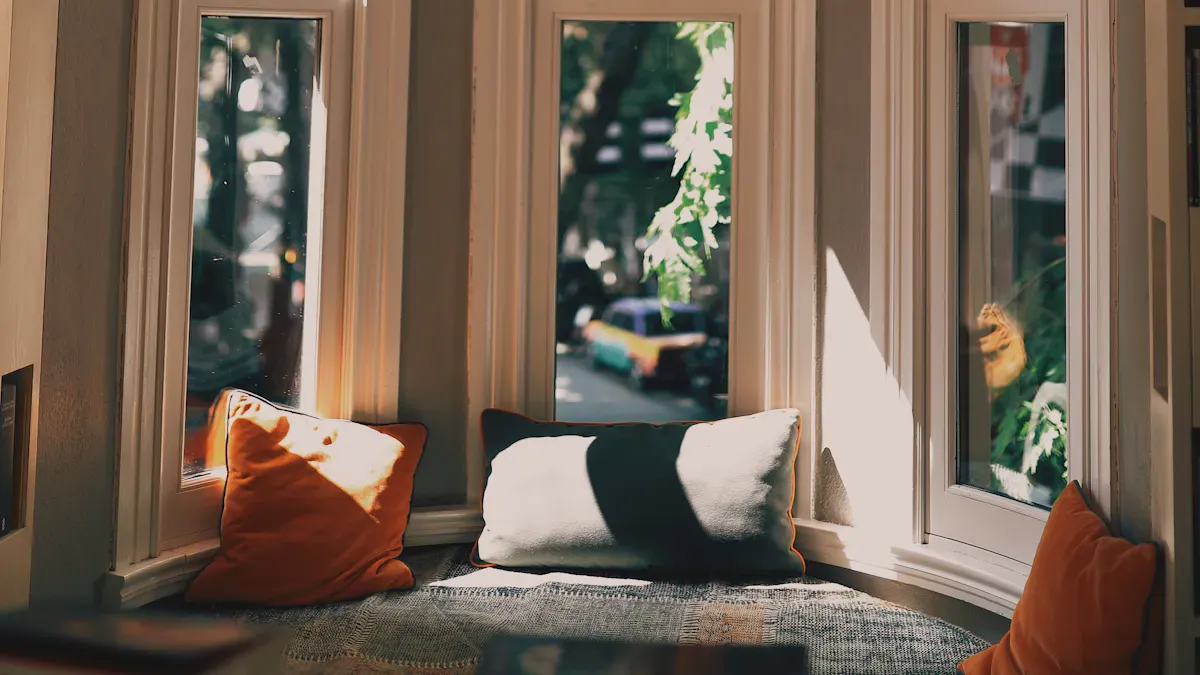
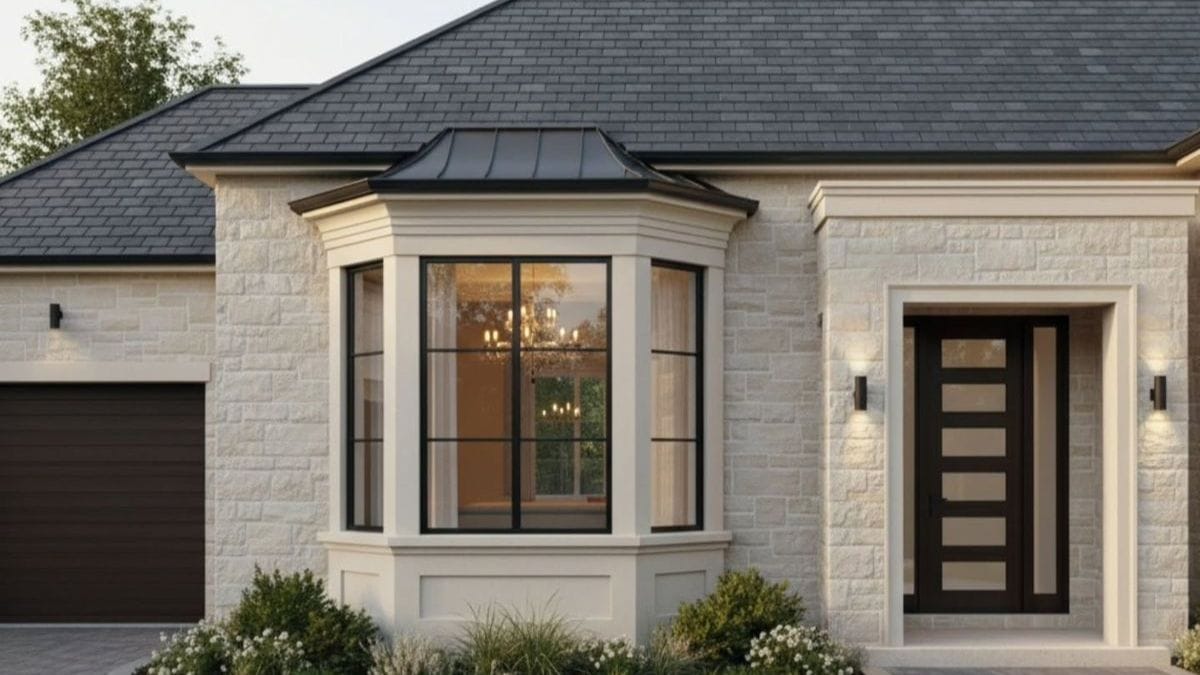
The canted bay is the most recognizable and traditional style. It projects outward to create a distinct trapezoidal alcove inside the room. Structurally, it is composed of three panels: a large, fixed picture window in the center designed to frame the primary view, flanked by two narrower windows angled back toward the house (typically at 30 or 45 degrees).
- Best For: Living rooms, master bedrooms, and classic architectural styles.
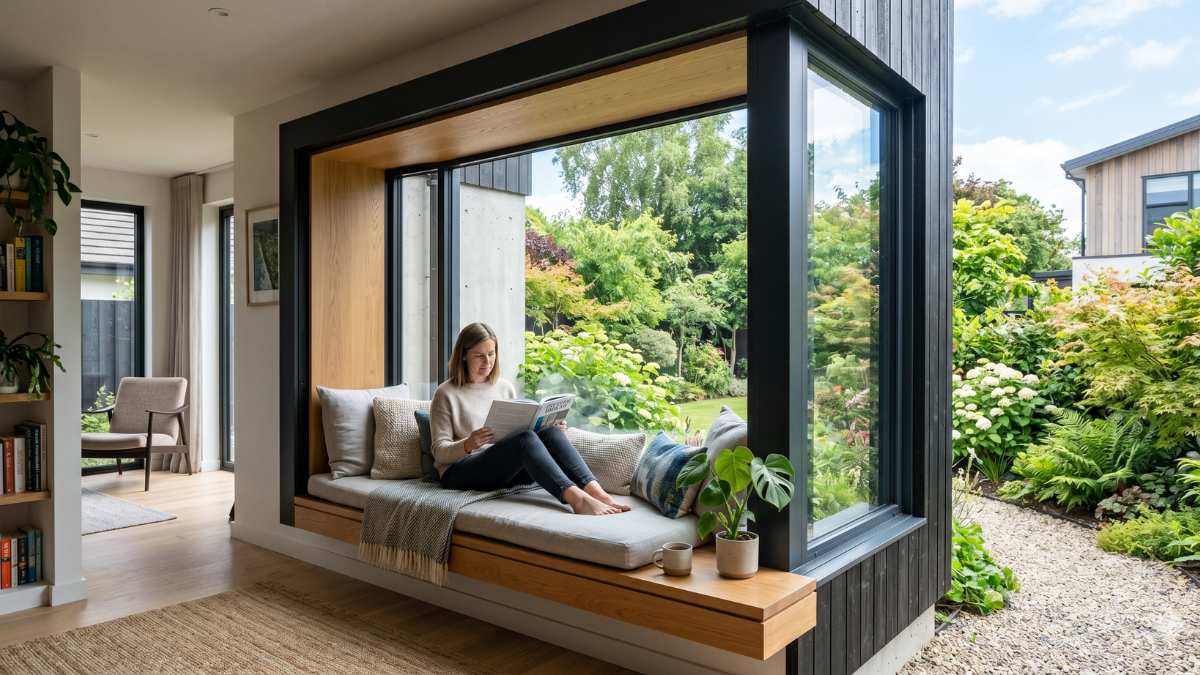
- The Advantage: The angled side panels are usually operable, allowing for excellent cross-ventilation. Because it catches sunlight from three different directions, it provides a consistent level of natural light from morning to evening. The deep trapezoidal base serves as the perfect foundation for a built-in window seat.
2. The Modern Box Bay
Unlike the angled sides of a canted bay, the box bay projects straight out from the exterior wall, forming a perfect rectangle with sharp 90-degree corners. It typically features a large flat front panel and two side panels positioned strictly perpendicular to the main wall. Occasionally, modern box bays are designed with a glass roof to maximize overhead sunlight.
- Best For: Modern homes, contemporary kitchens, and dedicated reading or display nooks.
- The Advantage: Because of its squared-off design, a box bay often provides more usable, flat interior space than a canted bay. It is incredibly popular in kitchens—often placed right behind the sink—to seamlessly extend the countertop space or create a deep indoor herb garden without interrupting the room’s straight, minimalist lines.
3. The Bow Window (The Gentle Curve)
A bow window is fundamentally different in its panel structure. Instead of using three distinct flat windows with sharp angles, a bow window uses four, five, or even six identical glass panels arranged in a continuous, sweeping arc. It generally requires more horizontal wall space than a standard bay window but projects outward less deeply.
- Best For: Large living spaces, dining rooms, and transitional home designs aiming for panoramic views.
- The Advantage: A bow window softens the harsh, straight lines of a building’s exterior. It creates a semi-circular space inside the home, offering an almost uninterrupted, panoramic view of the landscape and creating a highly elegant, open feel in the room.
4. The Oriel Window (The Floating Upper-Floor Bay)
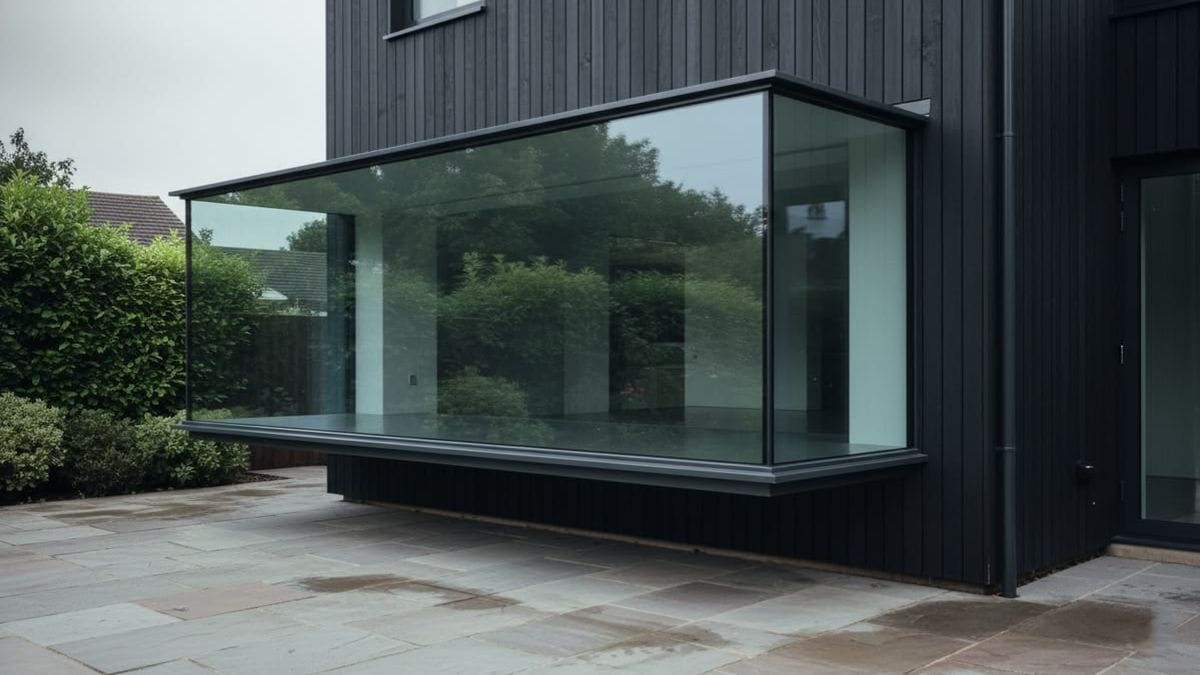
Structurally, an oriel is a bay window that does not reach the ground. Instead of resting on a foundation, it protrudes from the upper stories of a building and is structurally supported by heavy-duty brackets or decorative corbels underneath. While it originated in historic architecture, modern oriels are widely used in multi-story contemporary builds.
- Best For: Upstairs bedrooms, home offices, and adding architectural depth to flat two-story facades.
- The Advantage: Oriel windows allow you to add valuable interior floor space and multi-directional natural light to an upper-level room. From an exterior perspective, they break up a flat facade and add significant architectural interest without requiring the massive expense of pouring a new concrete foundation below.
The Hidden Engineering: What Makes or Breaks the System
Specifying the correct style of bay window is only the first step. The execution of the system depends on resolving critical engineering challenges that do not exist with standard flush-mounted windows.
- Deflection and Structural Support: Bay windows consist of hundreds of pounds of insulated glass suspended outside the building. If the cantilevered joists or support brackets are inadequate, the structure will experience deflection (sagging) over time, leading to cracked glass and inoperable sashes.
- Thermal Envelope Continuity: A bay window exposes its top (the skirt roof) and its bottom (the base soffit) directly to exterior temperatures. If these extended horizontal planes are not properly insulated, they become severe thermal bridges, resulting in localized heat loss and interior condensation.
- Material Selection for Oversized Projections: Standard vinyl (UPVC) extrusions lack the tensile strength required for large-scale bay windows. For high-end architectural builds, the framing material must possess superior structural rigidity.
- Thermally broken aluminum provides the strength necessary to hold massive panes of heavy glass while maintaining ultra-slim sightlines. Aluminum-clad wood is ideal for traditional oriel or bow windows, offering interior warmth and exterior weather protection.
Interior Ideas: Dressing Your Bay Window Space
Selecting the architectural style of your bay window is only half the project; the final step is integrating it into your interior design. Because bay windows create unique angles and depths, standard off-the-shelf furniture and window treatments rarely fit perfectly.
Here is how to maximize the functionality and aesthetic of your new space, utilizing custom-fitted solutions.
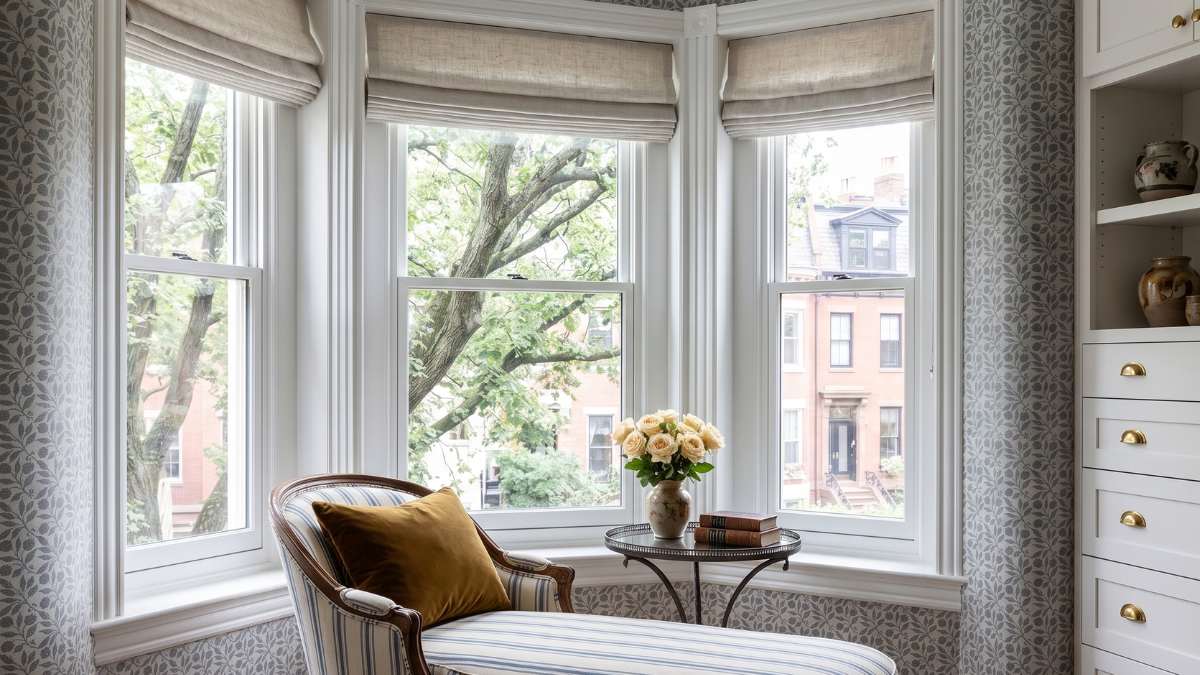
Idea 1: The Built-In Window Seat (Best for Canted & Bow Windows)
The most popular use for a traditional canted or bow window is a built-in banquette or reading nook.
- The Soft Furnishing Solution: A raw wooden bench is uncomfortable. This space requires high-density custom cushions cut to the exact degree of your window angles, paired with performance fabrics that resist UV fading.
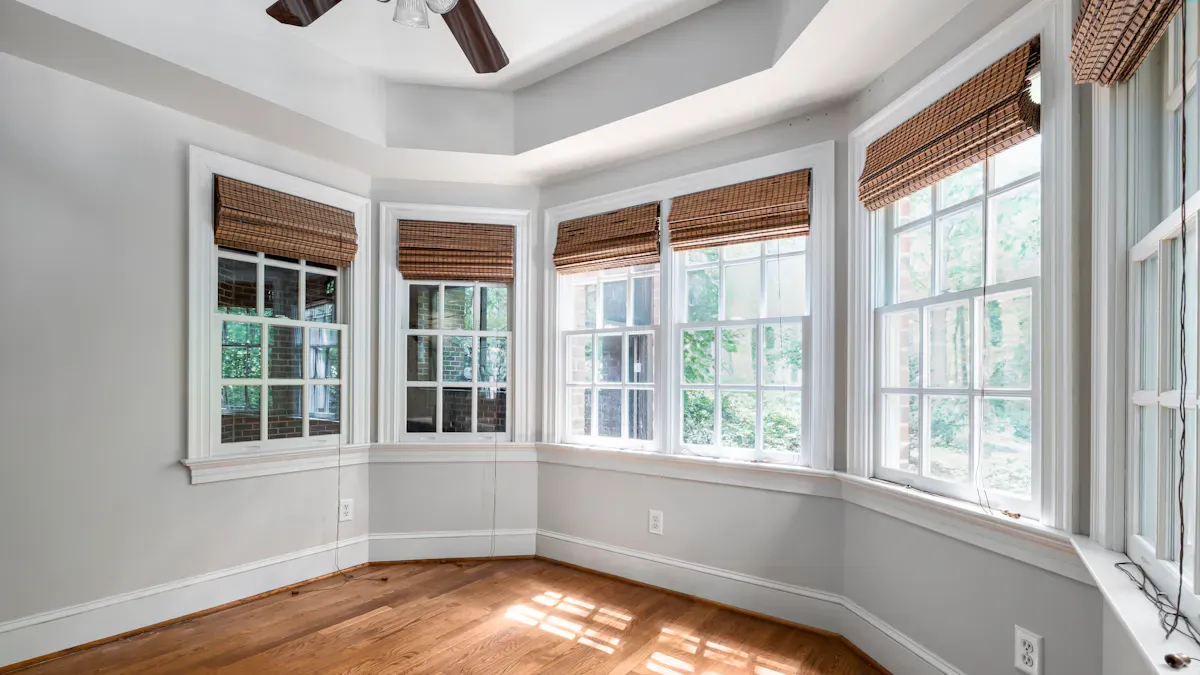
- Window Treatments: Roman shades or woven wood blinds work best here. They add texture to the reading nook and can be drawn down individually to block glare.
Idea 2: The Minimalist Extension (Best for Box Bays)
Because a box bay features strict 90-degree angles, it excels at extending the existing room’s function without creating a separated nook.
- The Soft Furnishing Solution: Keep it clean. Avoid heavy draperies that clutter the sharp architectural lines.
- Window Treatments: Precision-fitted motorized cellular shades are ideal. They sit perfectly flush within the 90-degree aluminum frame, offering excellent thermal insulation and retracting completely out of sight to maintain a minimalist aesthetic.
Idea 3: The Drapery Wrap (Best for Large Bow or Canted Windows)
If you have a massive, floor-to-ceiling bay window in a formal living or dining room, you may want to emphasize the height and elegance of the space.
- The Soft Furnishing Solution: Floor-to-ceiling draperies that wrap around the entire bay.
- Window Treatments: Standard straight curtain rods cannot navigate the angles of a bay window. This design requires custom-bent traverse rods or curved ceiling tracks that perfectly mirror the footprint of your window. When closed, they create a continuous, elegant wall of fabric.
The George Solution: A True One-Stop Integration
Executing these interior ideas often frustrates homeowners and contractors when they source materials from multiple vendors. Curtains collide with window handles, tracks do not match the frame angles, and measurements are slightly off.
As a one-stop building material supplier, George Solution eliminates these integration issues. When you specify a bay window with us, we supply the complete package from the exterior glass to the interior fabric:
- Factory-Fitted Tracks & Blinds: We engineer custom curved drapery tracks and inside-mount blinds to perfectly match the exact angles and mullion clearances of your custom window.
- Integrated Motorization: We pre-drill our aluminum frames to conceal the wiring for smart shades, ensuring a clean, wire-free interior finish.
- Consolidated Delivery: The structural window frames, architectural glass, custom cushions, and motorized window treatments are manufactured together and shipped in one consolidated delivery, ready for seamless installation.
Contact our engineering team with your plans today to evaluate the structural, thermal, and interior requirements for your next custom project.
FAQs
What is the structural difference between a canted bay and a box bay window?
A canted bay uses angled side panels (typically 30 or 45 degrees), which requires corner mullions engineered to manage complex wind loads. A box bay projects at strict 90-degree angles, creating a rectilinear form that relies heavily on parallel cantilever support to prevent deflection at the outermost corners.
How does an oriel window support its own weight without a foundation?
An oriel window is a suspended architectural feature on upper floors. Because it does not transfer weight to the ground foundation, it must transfer its structural load back into the building’s primary frame. This is achieved through the use of heavy-duty exterior corbels, steel brackets, or deep structural tie-ins integrated directly into the floor joists.
Can I install motorized blinds on a custom bay window?
Yes, but it requires precise engineering. Because of the complex angles, custom bay windows should be designed with sufficient frame depth and mullion clearance so blinds do not collide. A one-stop supplier like George Solution can pre-drill the aluminum frames to conceal low-voltage wiring, ensuring a seamless, wire-free finish for motorized shades.