

When dealing with a small bathroom, color can be your best friend or your worst enemy. If you get it wrong, the space can feel cramped and claustrophobic. That is why many homeowners instinctively reach for plain white paint to open up the room.
But relying solely on flat white can leave your bathroom feeling clinical and devoid of personality. How do you make a compact space feel expansive without sacrificing style?
The secret lies in combining the right paint shades with highly reflective materials, contrasting textures, and space-saving cabinetry. We have categorized the 9 best small bathroom color schemes used by top designers to help you maximize your footprint, breaking down exactly why they work and how to pull them off.
9 Paint Schemes to Maximize Space
It’s no secret that light colors make a room feel bigger. They act as natural reflectors, bouncing whatever light you have—whether from a small window or your vanity mirror—around the room to erase harsh shadows. But doing it right requires more than just buying a bucket of white paint.
1. Bright White & Cool Gray Marble
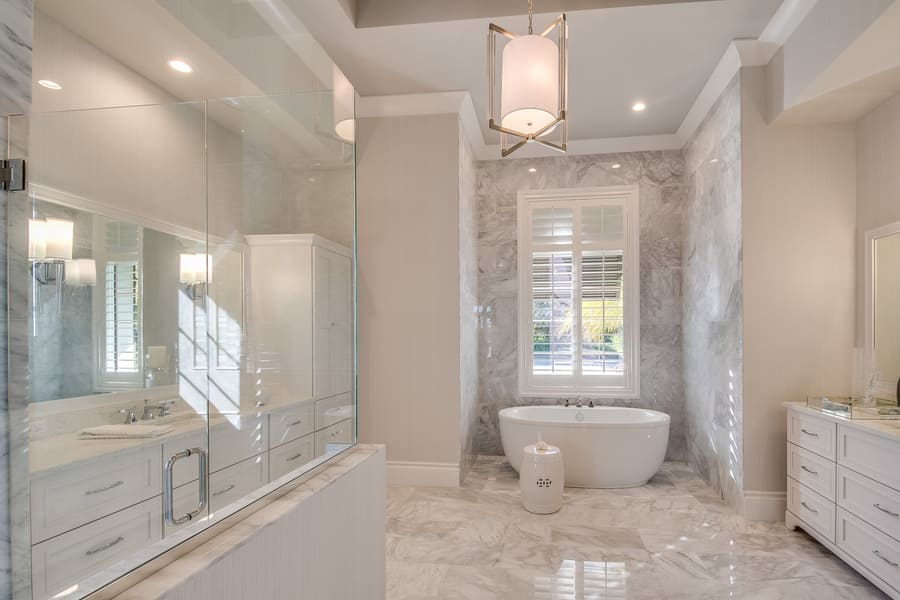
There is a reason bright white and cool gray is a timeless classic for small bathrooms: the combination visually pushes the walls outward. However, the biggest mistake people make here is using tiny tiles. Tiny tiles mean endless grout lines, which visually chop up a compact room into a busy grid.
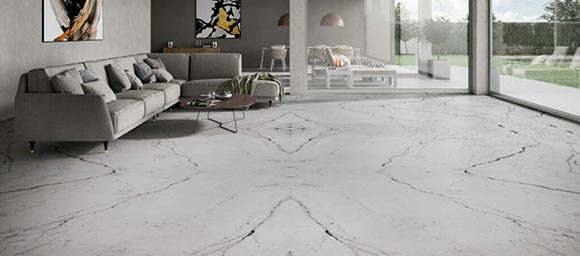
To get that expansive, seamless look, you want to use large-format gray marble porcelain tiles. Running them continuously from the floor straight up the shower walls tricks the brain into seeing one large, uninterrupted surface. Pair this with a crisp white custom vanity, and the room instantly feels twice its actual size.
2. Soft Muted Blue & Warm Brass
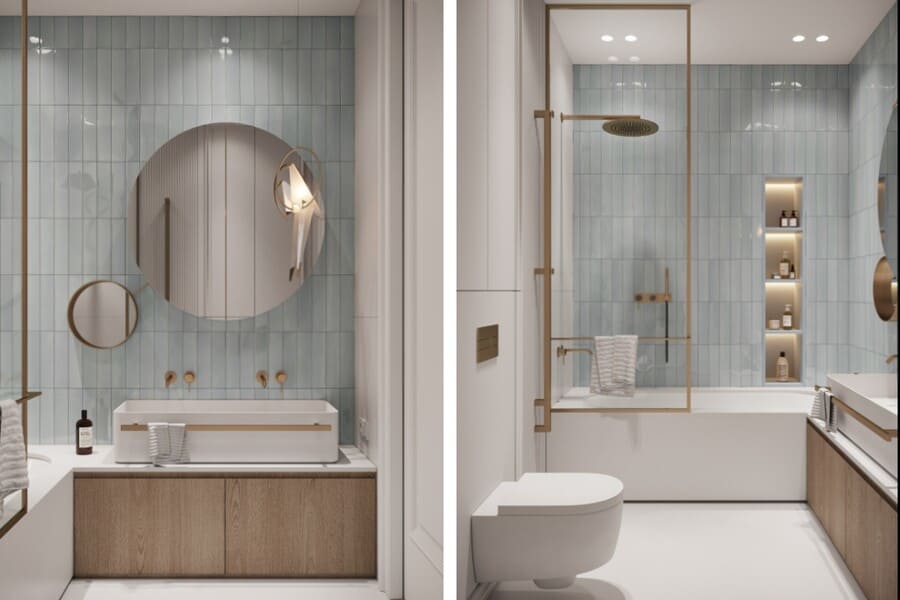
If stark white feels a bit too clinical for your taste, soft, muted blues (think of shades like Sherwin-Williams Sea Salt) are your next best friend. Because they mimic the sky and water, these cool tones naturally evoke a sense of vastness.
But there’s a catch: an entirely cool-toned room can easily feel like a sterile hospital. You need to inject warmth to balance the temperature. This is exactly where hardware comes into play. By adding brushed brass or gold fixtures and anchoring the space with a custom wood vanity, you introduce organic texture that makes the airy space feel inviting and bespoke.
3. High-Contrast Black & White
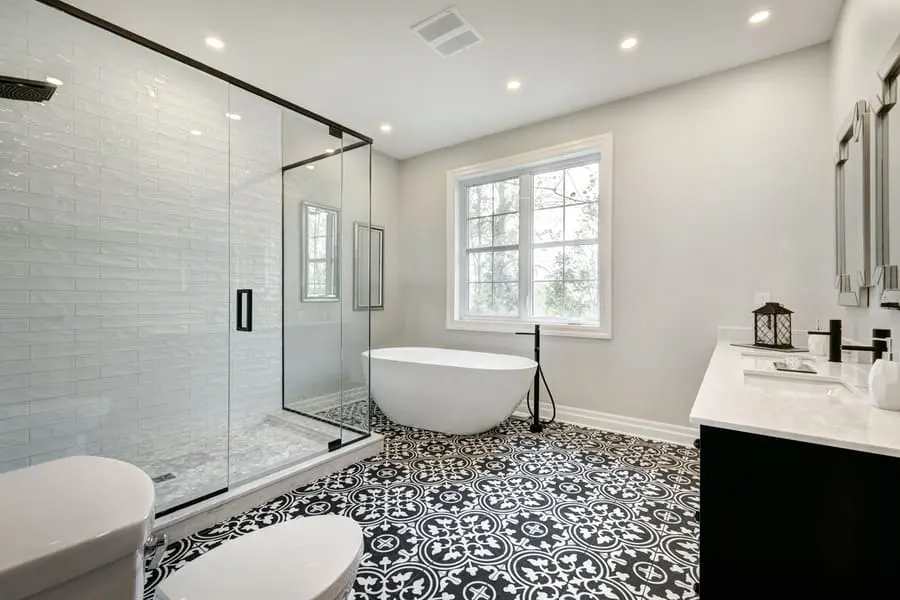
It sounds counterintuitive, but adding stark black to a tiny bathroom doesn’t shrink it—it anchors it. When you have an all-white canvas, the space can sometimes feel flat and boxy.
By strategically deploying black—such as matte black faucets, a black showerhead, or thin black framing on your shower glass—you create sharp architectural focal points. The matte black absorbs light while the white tiles reflect it, creating a striking 3D contrast that distracts the eye from the room’s limited physical footprint.
Let’s bust a common design myth: dark colors do not automatically ruin a small room. In fact, deep, saturated colors are a designer’s secret weapon. They blur the edges and corners of a room, creating an illusion of infinite depth—much like looking into the night sky.
4. Deep Cocoa Brown & Bright White
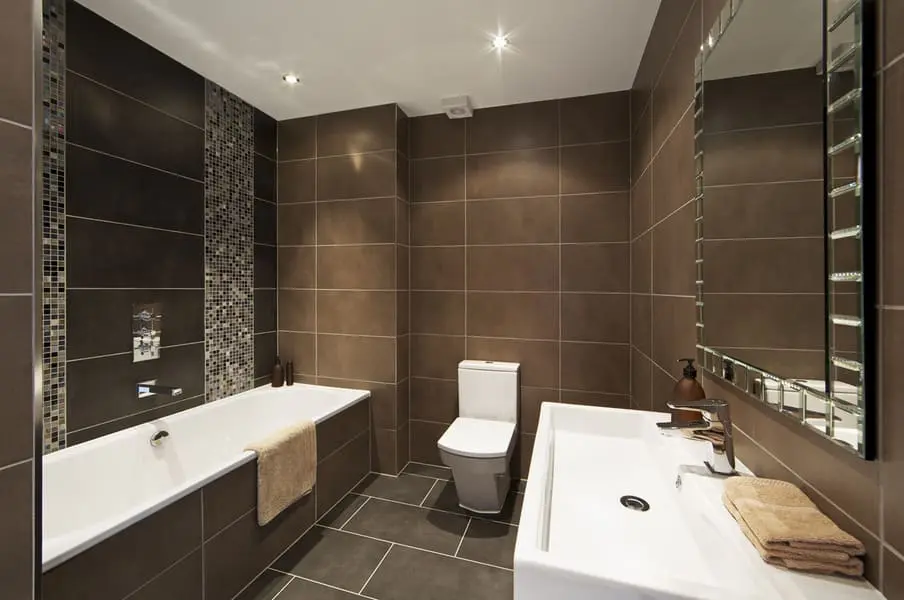
Wrapping a small bathroom in a deep, rich brown sets a warm, enveloping tone that transforms a cramped space into an intimate, high-end jewel box.
The trick to pulling this off without making the room feel like a cave is high-gloss contrast. You want your major fixtures—like a sleek freestanding bathtub and toilet—to be bright, glossy white. This stark contrast allows the white porcelain to aggressively catch the light, ensuring the dark walls feel sophisticated rather than overwhelming.
5. Modern Charcoal Gray & Dark Wood
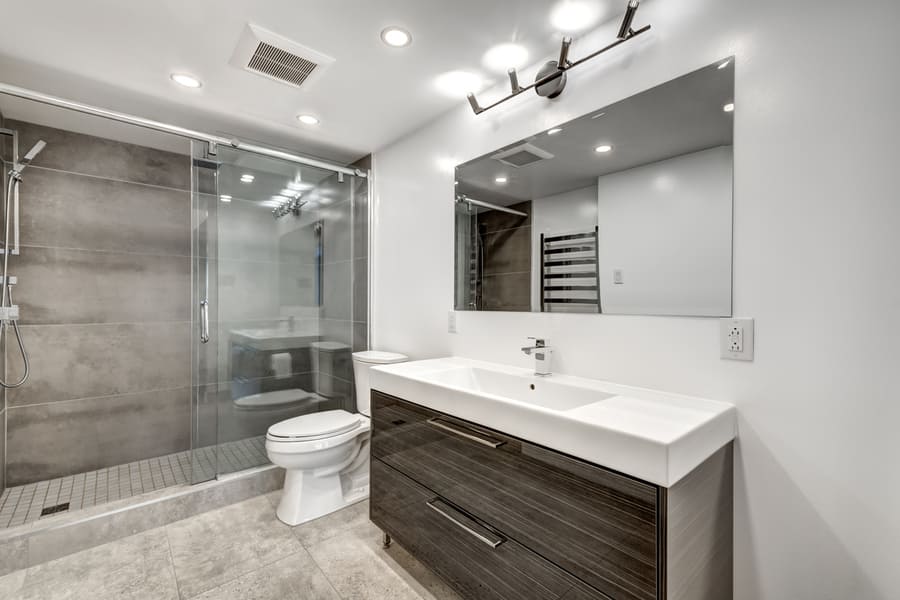
For a more modern, masculine edge, charcoal gray (like Benjamin Moore Kendall Charcoal) is incredibly effective. It provides a moody canvas that looks exceptionally custom when paired with warm wood elements.
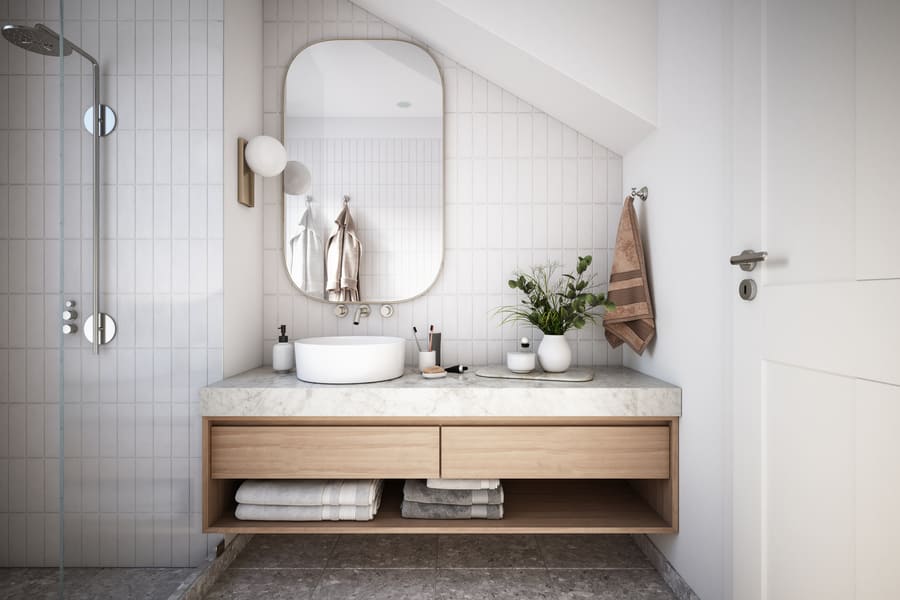
However, if you are wrapping a small room in dark paint or tile, you absolutely must free up visual floor space. This is where a wall-mounted floating vanity becomes essential. By exposing the floor underneath the cabinetry, you trick the eye into seeing more square footage, completely offsetting the heavy, dramatic tones of the walls.
6. Warm Earthy Brown & Chrome
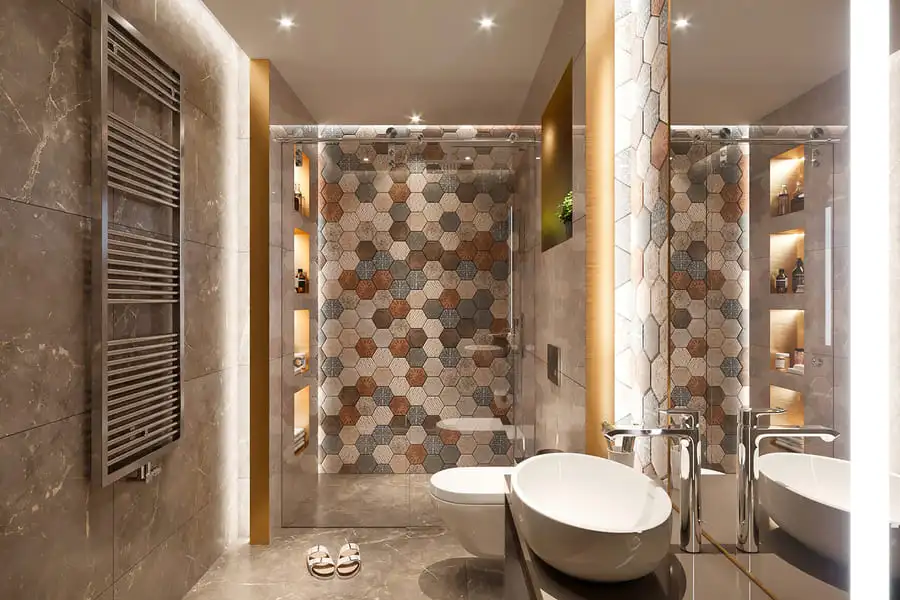
Solid, flat walls tend to highlight exactly how small a room is. By bringing in earthy, textured browns, you add crucial architectural depth to those flat surfaces.
Instead of just painting the wall, try incorporating hexagonal mosaic tiles in the shower niche, mixing rusts, browns, and muted grays. To keep these warm earth tones from feeling too heavy or dated, introduce highly polished chrome fixtures. The mirror-like finish of the chrome adds a sleek, modern edge and bounces a tremendous amount of light back into the room.
We are seeing a massive shift away from the sterile grays of the 2010s. For 2026, warm neutrals are taking over. They are perfect for small bathrooms because they create a classic, spacious aesthetic that leans heavily on cozy texture rather than bold, distracting color.
7. Warm Beige & Dark Brown Cabinetry
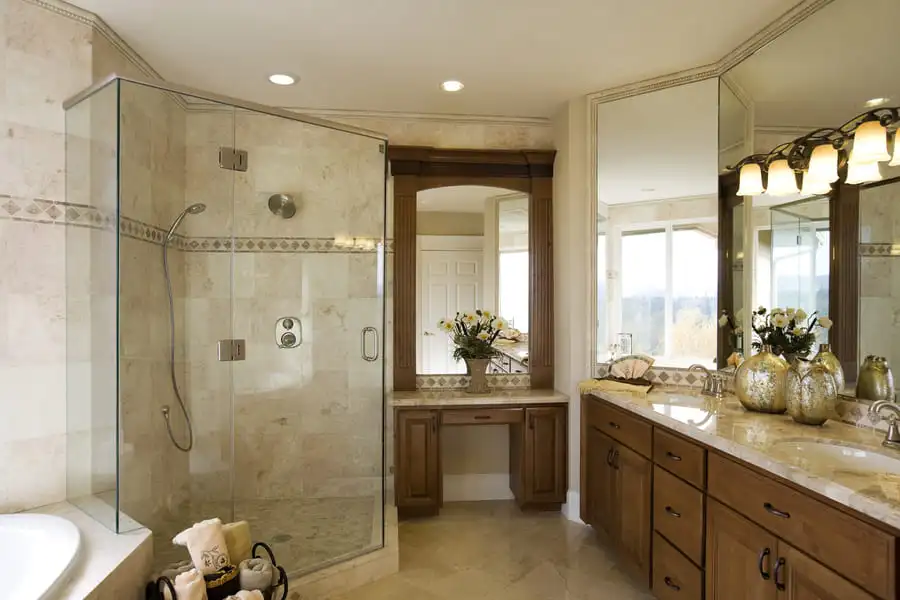
Beige gets a bad reputation for being boring, but when executed with the right materials, it feels like a luxury hotel. Unlike flat white, beige carries warm undertones that make a small space feel cozy rather than confined.
The secret to this scheme is layering finishes. Use glossy beige marble tiles to deepen the room’s tones, and then contrast that sleek stone with rich, dark brown wooden cabinetry. The tactile warmth of the wood against the polished tile creates a high-end, layered design that looks intentionally expensive.
8. The Japandi Blend: Natural Wood & Soft Beige

If you want your bathroom to feel like a Zen retreat, the Japandi blend—where Japanese minimalism meets Scandinavian warmth—is the answer. The lack of harsh visual interruptions keeps the room feeling incredibly airy.
Keep your finishes soft and non-reflective to maintain that calming atmosphere. Matte beige tiles paired with slatted natural wood vanity panels create a beautiful organic base. From there, you can ground the space with matte black or gunmetal accessories for a subtle, modern touch that doesn’t disrupt the tranquility.
9. A Golden Touch in Warm Beige
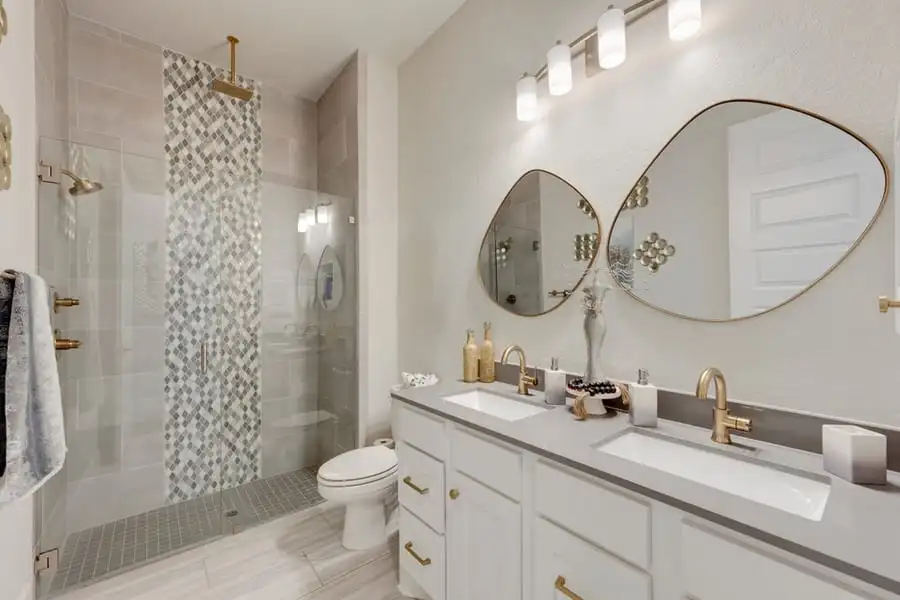
Sometimes, your paint color should just be a quiet backdrop for the real stars of the show. A soft, warm beige wall paired with a slightly cooler greige floor creates a beautiful, sophisticated neutral canvas.
From there, you bring in the jewelry. By using polished gold or brushed brass faucets, towel bars, and mirrors, you draw the eye directly to the luxury details rather than the tight boundaries of the room. The reflective gold stands out beautifully against the soft beige, adding effortless elegance to the smallest of spaces.
Expert Insight: How Lighting Makes or Breaks Your Color Scheme
While selecting the right paint color is the first step, how that color behaves in a compact 3-4㎡ bathroom depends entirely on your lighting setup.
“The biggest mistake homeowners make in small bathrooms is relying on a single overhead light, especially when using trendy moody or saturated colors,” explains Moon, Senior Project Manager at George Solution. “A dark, sophisticated palette looks custom and intimate when lit correctly, but without layered lighting, it simply makes the space feel heavy.”
To maximize the visual impact of your chosen color scheme and make a tight space feel expensive, designers recommend a strategic lighting approach:
Reflect the Light to Expand Space
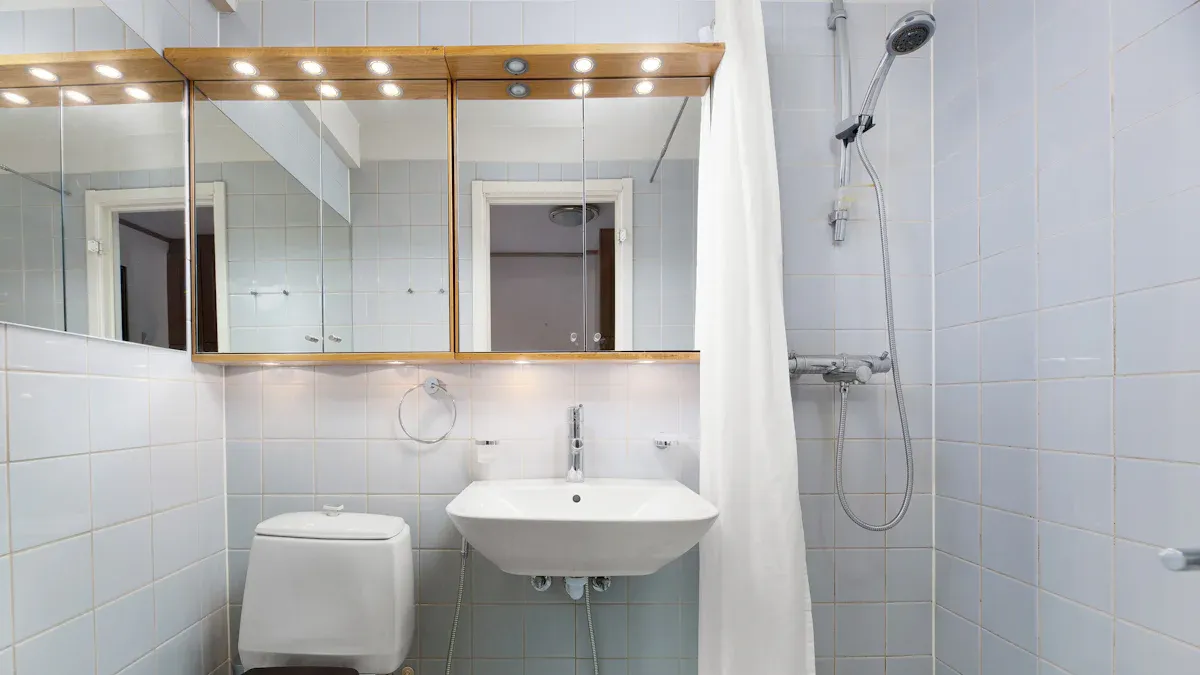
If you use deep hues like charcoal or cocoa brown, you must compensate for the light those colors absorb. Installing a large, frameless Custom Mirror With Lights is the ultimate designer trick. The built-in perimeter LEDs eliminate shadows and bounce ambient light across the dark walls, instantly doubling the room’s visual depth.
Warm Up Neutral Tones
For warm, earthy palettes (like terracotta or beige), harsh, cool-white overhead bulbs can wash out the richness of the paint. Instead, flank your vanity with Indoor Wall Lighting (Sconces) mounted at eye level. Using warm-toned bulbs (2700K – 3000K) enhances the natural wood grains of a custom vanity and casts a flattering, hotel-like glow across the room.
Top Tips for Small Hotel Bathroom Design in 2026
Maximize Your Small Bathroom with Custom Solutions
For small bathrooms, the color scheme is not just about aesthetics—it is about creating an experience. The right palette transforms a tight space into an oasis of comfort and function. But paint color alone isn’t enough. To truly maximize a compact footprint, your colors must be paired with smart spatial design, reflective tiles, and custom-fitted cabinetry that eliminates wasted corners.
At George Solution, we know that no bathroom is too small for luxury. We offer an incredible selection of direct-to-site bathroom solutions, from large-format tiles that visually expand your space to custom floating vanities tailored to your exact dimensions.
Our design experts are ready to help you with whole-house customization, managing every detail from fixtures and finishes to layouts. Explore our custom bathroom solutions today and let us help you make your space feel not just bigger, but better.
Frequently Asked Questions
What is the best color for a small bathroom with no natural light?
In windowless bathrooms, avoid overly dark matte colors that absorb artificial light. Opt for warm neutrals, such as soft beige, or crisp white paired with large-format glossy tiles to reflect as much light as possible. Layering your lighting, such as combining overhead lights with a custom LED mirror, is essential to keep the space from feeling claustrophobic.
Should the ceiling be painted the same color as the walls in a small bathroom?
Generally, painting the ceiling a lighter shade than the walls (typically flat white) creates the illusion of height. However, if you are using a light or neutral color scheme, “color-drenching”—painting the walls and ceiling the exact same color—can blur the room’s boundaries and make the space feel cohesive and expansive.
Do dark floors make a small bathroom look smaller?
Not necessarily. Pairing a dark floor with light-colored walls grounds the space and creates visual depth. This contrast draws the eye downward and outward, which can actually make the room feel wider. This effect is maximized when using a wall-mounted floating vanity to expose more of the dark floor area.
What tile size is best for a small bathroom?
Large-format tiles are highly recommended for small bathrooms. Using small tiles creates excessive grout lines, which visually chop up the space into a busy grid. Large tiles create a seamless, uninterrupted surface that tricks the eye into perceiving the room as larger than it is.