

In 2026, the biggest competitor to your corporate office isn’t the company across the street—it’s your employees’ living rooms.
If you are planning a workspace upgrade this year, the stakes are higher than ever. You can no longer just order 50 identical desks, line them up, and expect top talent to happily commute.
Today, a successful office must function as a high-performance ecosystem that justifies the trip. It needs to offer the acoustic privacy people crave for deep work, the tech-integrated spaces required for seamless collaboration, and a level of aesthetic comfort that rivals high-end hospitality.
But figuring out exactly which pieces actually deliver that experience—and how to source them without creating a logistical nightmare—is where most commercial projects derail. Before you start flipping through endless supplier catalogs, let’s explore the five essential types of modern office furniture you actually need, and the smartest way to procure them.

Why Upgrading Your Office Furniture Actually Matters
Many business owners view office furniture as a basic administrative expense. In reality, it is a strategic investment in human resources and brand identity.
When you upgrade to modern office furniture, you are directly impacting employee health and productivity. Sitting in a rigid posture for eight hours a day leads to fatigue and physical strain. Modern ergonomic furniture adapts to the human body, keeping energy levels high throughout the day.
Furthermore, the furniture you choose dictates the acoustic environment of your office; the right pieces absorb echoing noise, allowing your team to actually focus.
Finally, your office is the physical embodiment of your corporate brand. When top-tier talent or high-value clients walk through your doors, the textures, colors, and layout of your furniture tell them exactly what kind of company you are long before anyone speaks a word.
Now, let’s break down the five essential types of modern office furniture you need to build a workspace that actually works.
Related Article: 10 Office Decoration Ideas for Work to Improve Productivity & Style
Type 1: Modular and Ergonomic Workstations
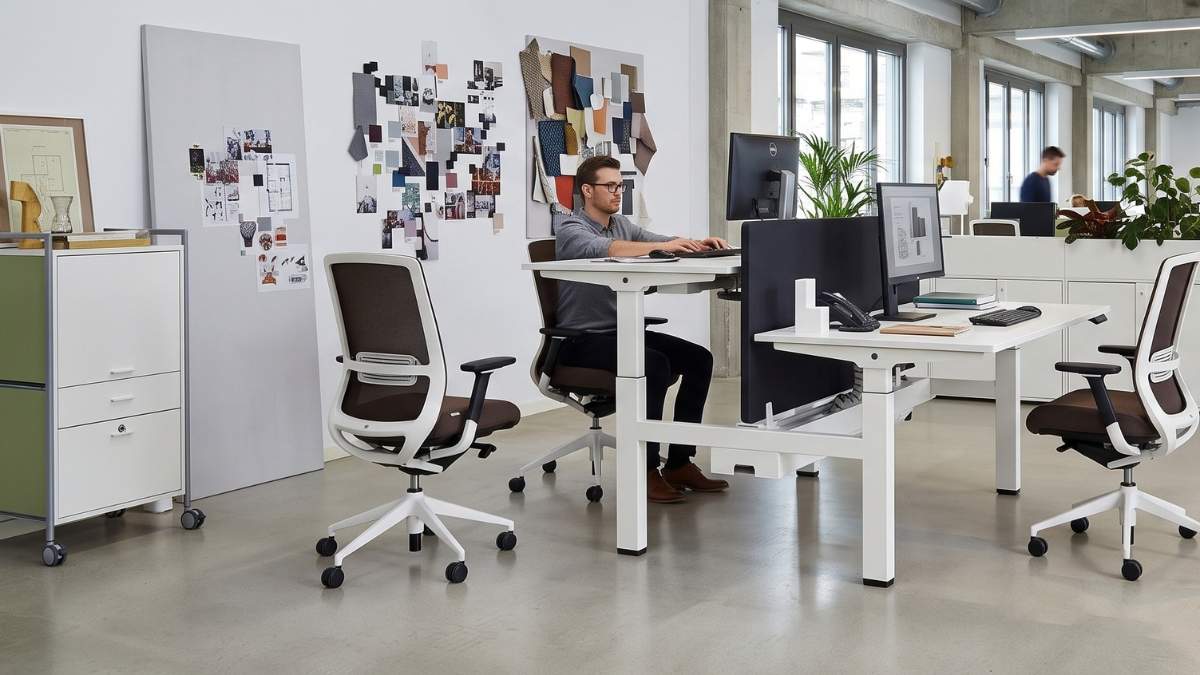
Because we understand the health risks of sedentary work, the standard static desk has been largely replaced by the height-adjustable sit-stand desk. However, in a modern open-plan layout, you don’t just want standalone desks floating around randomly.
The industry standard is now the benching system—a continuous, modular run of workstations that encourages team interaction while drastically saving floor space.
When sourcing these systems, the biggest detail to watch for is wire management. A beautiful open-plan office is quickly ruined by a spaghetti-tangle of power cords hanging under the desks. You will want to specify benching frames that feature built-in, hidden cable troughs and elegant aluminum desktop power boxes to keep the surface entirely clean.
Type 2: Acoustic Furniture and Privacy Pods
Open-plan offices are fantastic for team energy, but they have a fatal flaw: noise. With half the team jumping on video calls throughout the day, background chatter can make deep, focused work nearly impossible.
Acoustic furniture is no longer a luxury reserved for Silicon Valley tech giants; it is a fundamental necessity. The most popular solution is the freestanding privacy pod, or phone booth. These are soundproof glass booths equipped with built-in ventilation and power, allowing an employee to step inside and take a loud client call without bothering the entire floor.
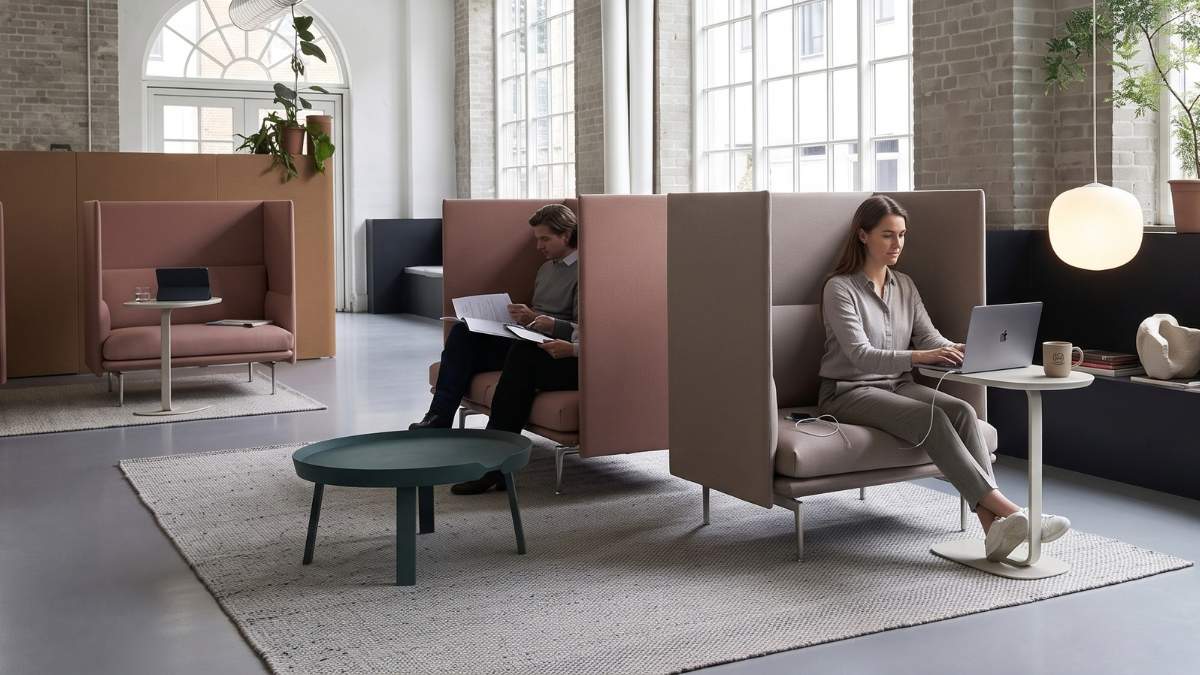
If standalone booths are out of your budget, high-back sofas manufactured with sound-absorbing acoustic felt can create an instant, semi-private meeting nook right in the middle of a busy space.
Type 3: Tech-Integrated Conference Tables
The massive, heavy, traditional boardroom table that takes a dozen people to move belongs in the past. Modern collaboration areas require agile, tech-friendly solutions.
Today’s conference tables feature sleek metal bases and expansive tops that seamlessly integrate pop-up power modules and HDMI or USB ports, ensuring no one ever has to crawl under the table to plug in a laptop.
To give your executive boardroom a commanding, premium feel, many designers are moving away from basic melamine boards and specifying natural wood veneer surfaces. Wood veneer delivers the luxurious, organic texture of solid wood, but utilizes an engineered core that guarantees the expansive tabletop will never warp or crack over time.
Type 4: The “Resimercial” Breakout Zone and Pantry
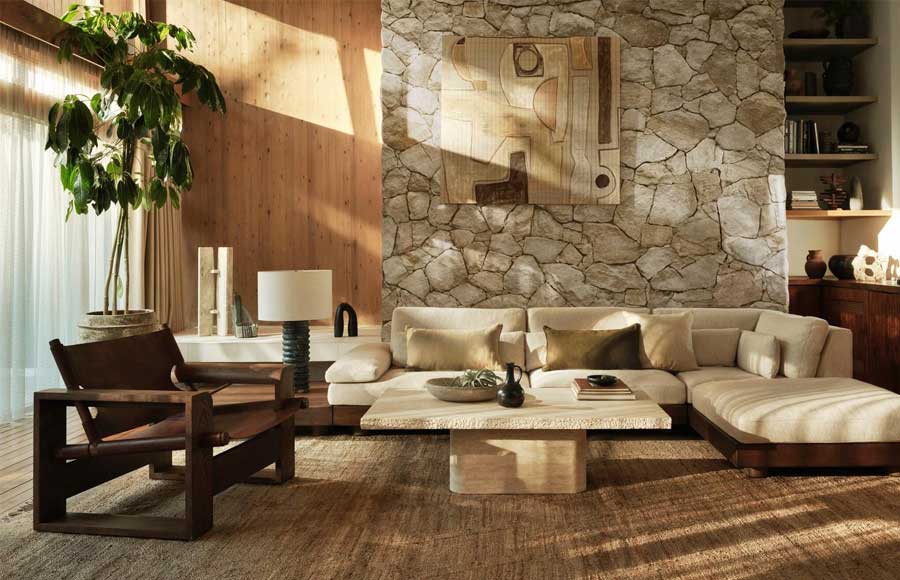
One of the biggest design shifts of the decade is “Resimercial” design—a blend of residential comfort and commercial durability. The goal is to bring the warmth of a living room into the corporate environment, and this trend is most obvious in the office pantry and breakout lounge.
These areas are no longer just a sad corner with a coffee maker and a plastic folding table. They are being designed like high-end luxury residential kitchens. Instead of using stark, cheap commercial cabinets, modern companies are upgrading their pantry islands and storage with skin-feel PET or matte lacquer finishes.
These advanced materials feel incredibly smooth, resist greasy fingerprints, and instantly elevate the corporate culture during coffee breaks.
Type 5: Smart Storage and Space Dividers
While we are rapidly moving toward paperless operations, people still have personal belongings like gym bags, laptop cases, and coats.
Instead of tall, ugly metal filing cabinets that block natural light and make the office feel like a warehouse, modern layouts utilize modular employee lockers equipped with smart digital locks.
Forward-thinking designers are also using low storage credenzas as physical space dividers. By placing a waist-high cabinet between two departments and topping it with potted plants, you naturally divide the space and guide foot traffic without ever building a solid, light-blocking wall.
Related Article: Five Office Wall Decor Ideas That Actually Impress
How to Source Office Furniture from China
If you are managing a large-scale commercial project, sourcing your modern office furniture directly from China is the most cost-effective route. However, it comes with a major trap: supply chain fragmentation.
If you buy your sit-stand metal desks from one factory, your acoustic pods from a second vendor, and hire a third supplier to custom-build your luxury pantry cabinetry, you are asking for trouble. The “white” on your metal desks will inevitably clash with the “white” of your wood cabinets, and managing three different international shipping schedules is an absolute nightmare.
The smartest way to buy is to partner with a true one-stop direct manufacturer.
At George Solution, we eliminate the risks of fragmentation. Operating from our massive manufacturing hub in Foshan, China, we produce commercial furniture, custom cabinetry, and architectural wall panels all under one roof.
We ensure every wood grain, metal frame, and painted finish speaks the exact same design language. We can customize your entire ecosystem—from the boardroom veneer table to the resimercial pantry island—and consolidate it securely into a single shipping container.
Simplify your next commercial project. Contact the George Group engineering team today to source your complete, color-matched modern office ecosystem.
Frequently Asked Questions (FAQ)
What does “resimercial” office furniture mean?
Resimercial is a design trend combining “residential” and “commercial.” It involves bringing the warmth, comfortable textures, and relaxed lighting of a home environment into the office, using elements like plush sofas, wood veneers, and premium matte cabinetry in employee lounges.
Why are acoustic privacy pods necessary in modern offices?
In open-plan layouts, ambient noise and constant video calls cause major distractions. Privacy pods provide freestanding, soundproof environments where employees can take confidential calls or focus on deep work without disrupting the rest of the team.
What is the best way to handle cable management on office desks?
The most effective solution is to purchase modular benching systems or height-adjustable desks with integrated cable management built directly into the frame. This includes under-desk steel troughs to hold power strips and sleek aluminum desktop grommets to route monitor cables invisibly.