

If you are at the beginning of a luxury kitchen remodel, you will inevitably ask yourself one critical question: “What is the best wood for my kitchen cabinets?”
It is completely natural to start here. The material you choose will dictate the entire visual atmosphere of your home. However, navigating the world of cabinetry can be incredibly overwhelming. Most online guides will simply give you a generic list of tree species, leaving you to guess which one will actually survive the daily wear and tear of your family.
As a custom manufacturer working directly with global builders and architects, I want to take a different approach. Let’s look beyond the basic showroom sales pitch.
We are going to explore why your wood selection matters, dive into the top species trends for 2026, and uncover a closely guarded industry secret about how modern luxury cabinets are actually built.
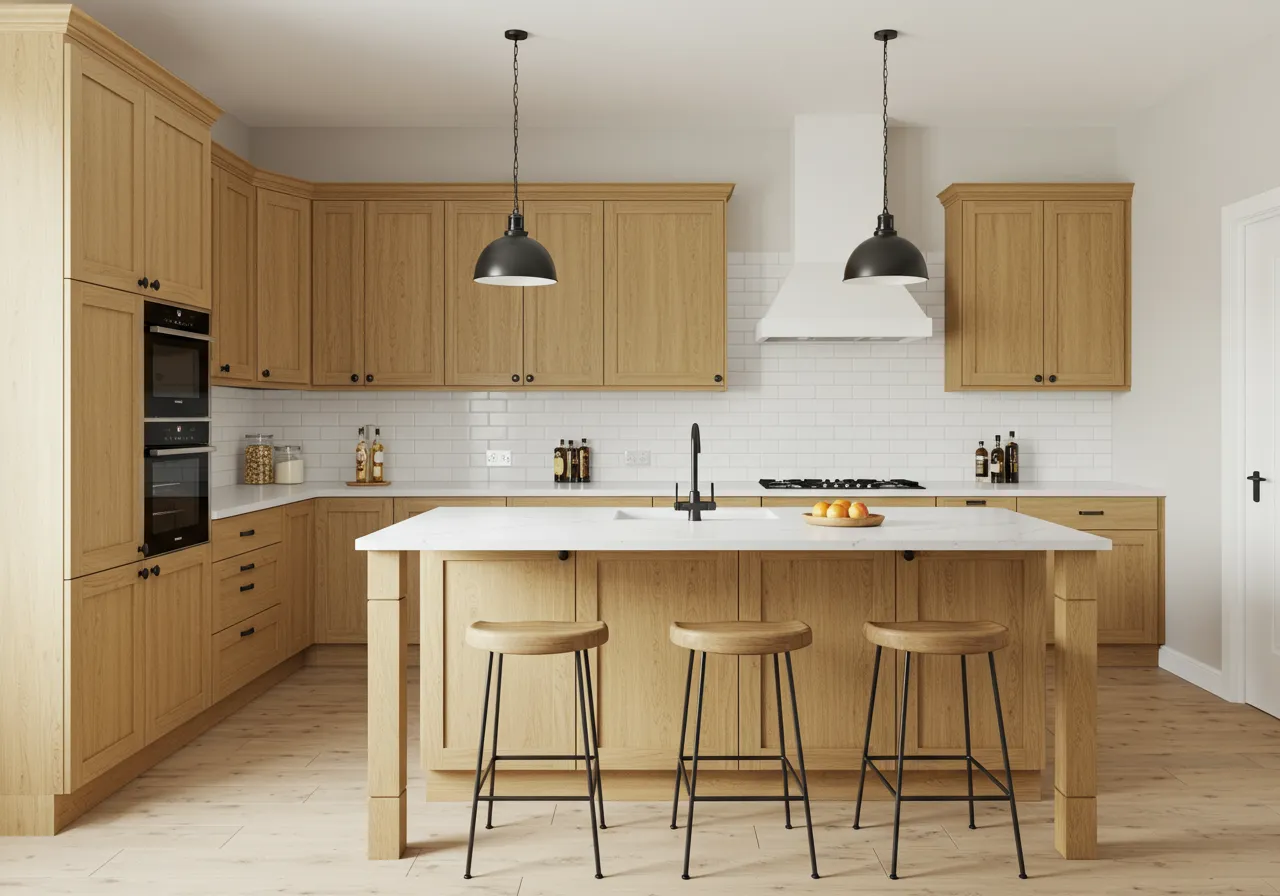
Why Your Wood Selection Matters More Than You Think
A kitchen is not a museum; it is the highest-traffic workspace in your home. Your cabinets will endure more daily abuse than almost any other piece of furniture you own. They are constantly exposed to boiling steam from the stove, grease, fluctuating temperatures, and the heavy impact of daily cooking.
When you select a wood type, you are essentially balancing two very different needs. First, you need an aesthetic impact. The natural grain pattern and color tone of the wood serve as the architectural foundation of the room, determining whether your kitchen feels like a warm, organic retreat or a sharp, ultra-modern lounge.
Second, you need density and durability. Different tree species grow at different rates, resulting in different levels of hardness.
A soft wood might be slightly cheaper upfront, but it will dent easily the moment a heavy cast-iron pan bumps against it. Premium hardwoods, on the other hand, resist impact and have the internal density to hold heavy steel hinges securely in place for decades.
Top Wood Species Trends for 2026
When homeowners look for the “best” wood, they are usually trying to find the most beautiful hardwood species for their cabinet exteriors. If you want a design that feels current yet timeless, here are the three materials dominating luxury kitchens this year:
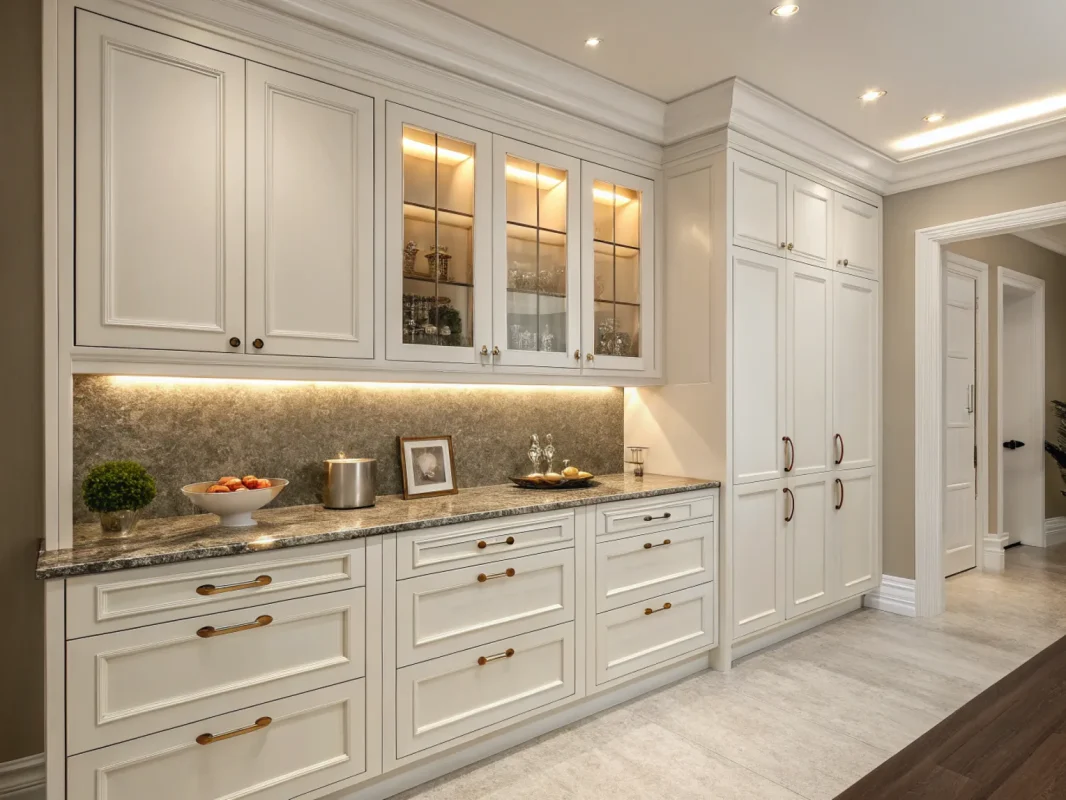
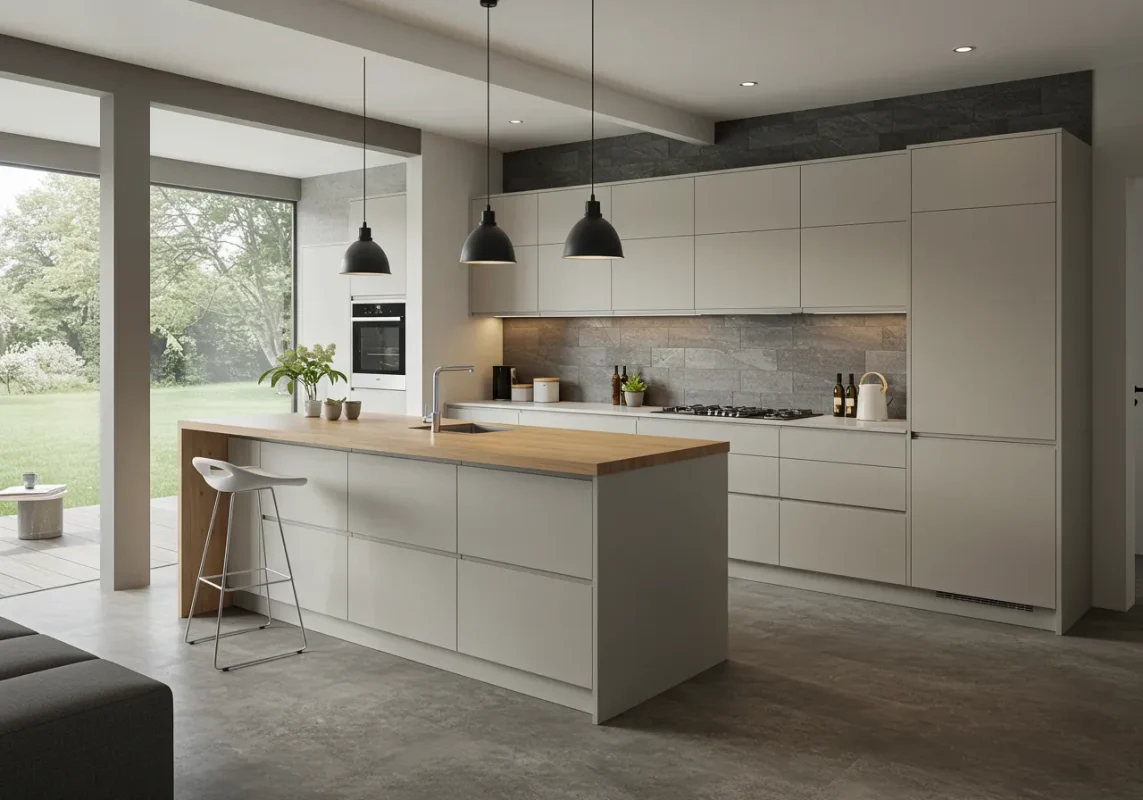
White Oak: The Organic Modern Champion
Over the last few years, White Oak has completely dethroned darker, reddish woods like cherry and mahogany. It offers incredible impact resistance and a beautifully subtle grain.
In 2026, high-end designs specifically demand rift-sawn White Oak. This specialized millwork cutting method produces a tight, perfectly straight linear grain, eliminating the busy, arched patterns you see in standard oak. It is the absolute perfect choice if you are aiming for a Wabi-sabi, Scandinavian, or minimalist aesthetic.
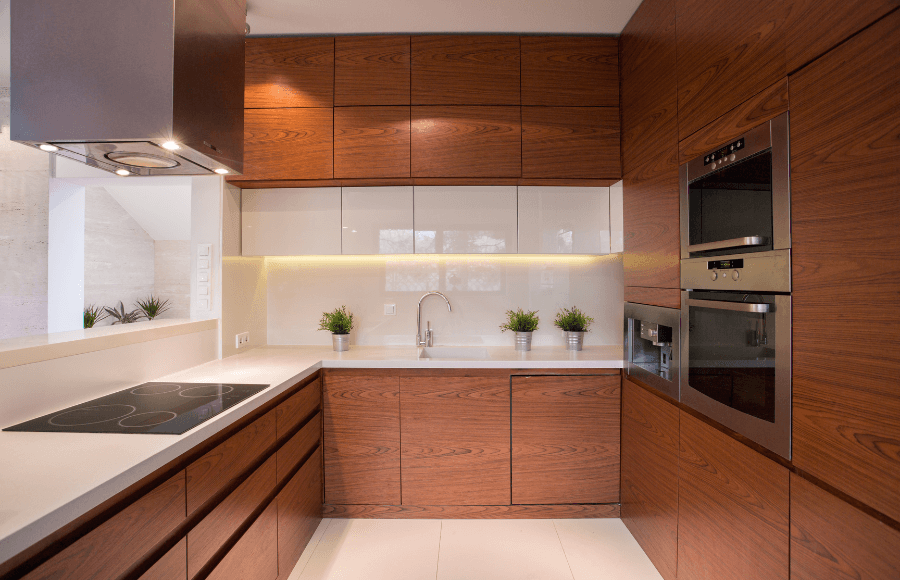
Walnut: The Moody Luxury Standard
If you want a kitchen that feels sophisticated, dramatic, and effortlessly expensive, Walnut is your answer. It features a rich, deep chocolate tone and a sweeping, elegant grain pattern that requires no artificial staining.
Walnut ages gracefully and looks spectacular when paired with ultra-matte black finishes or heavy marble islands. It is a staple in mid-century modern homes and contemporary penthouses.
Maple: The Architect’s Secret Weapon
Maple is an incredibly dense, heavy hardwood with a very tight, uniform grain. Because its natural pattern is so subtle, it does not fight for attention in a busy kitchen.
More importantly, Maple takes stains predictably and evenly. This means it can be customized by your manufacturer to mimic much more expensive exotic woods, all while offering incredible dent resistance at a slightly more accessible price point.
Related Article: Kitchen Cabinet Color Trends 2026: Where Aesthetics Meet Advanced Surface Tech
The Industry Secret: The “100% Solid Wood” Myth
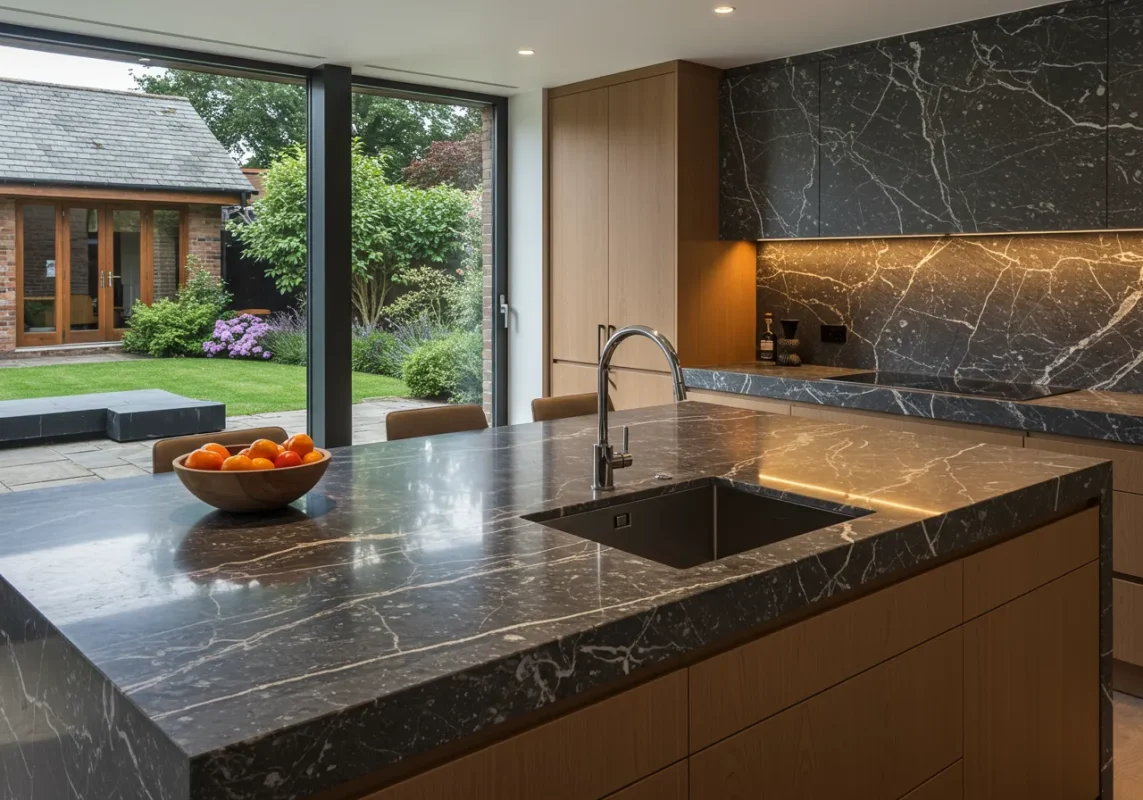
Now that you have fallen in love with Walnut or White Oak, it is time for a professional reality check. When clients ask us for a “100% solid wood kitchen,” they assume they are asking for the ultimate level of quality. In reality, demanding a kitchen made entirely of solid wood is a structural liability.
Here is the truth: wood is a living, hygroscopic material. This means it acts like a sponge, constantly absorbing moisture from the air during humid summers and drying out during cold winters.
If you build the entire cabinet—including the internal box structure—out of solid wood, those large panels will naturally expand and contract as the seasons change. Over time, the internal joints will stress, the structure will pull itself out of square, and those beautiful doors will eventually warp, rub against each other, and fail to close properly.
Modern high-end manufacturing relies on a much smarter, architect-approved principle: we use dimensionally stable engineered composites for the internal structural skeleton, and we reserve premium natural woods strictly for the visible doors and panels.
Related Article: Cupboard vs. Cabinet: Which Storage Solution is Right for Your Project?
The Anatomy of a Luxury Cabinet: Box vs. Doors
To build a kitchen that lasts 30 years, you must evaluate your materials based on the specific job they need to perform. Think of your cabinets like a house: you need a rock-solid foundation, and a beautiful exterior.
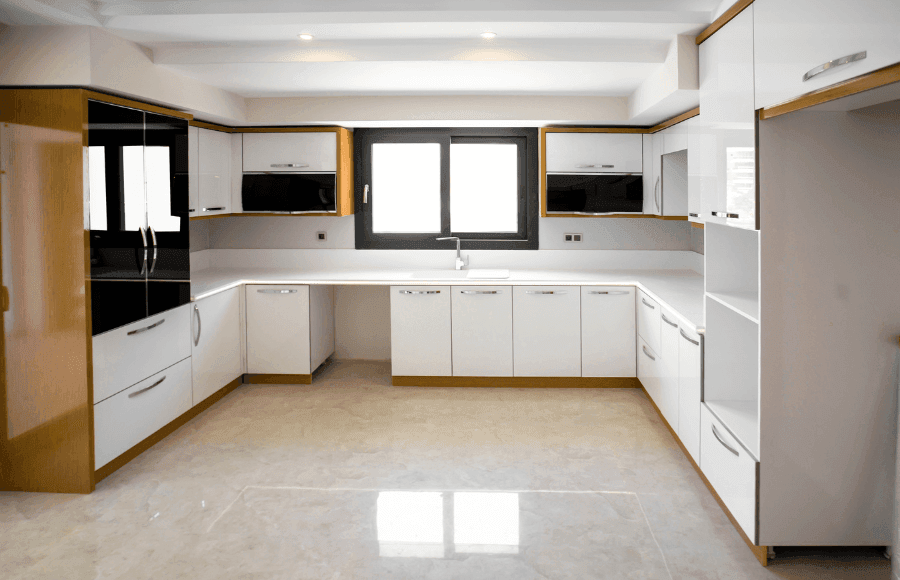
The Cabinet Box (Engineered for Heavy Lifting)
The box is the foundation. It must hold hundreds of pounds of stone countertops and resist under-sink plumbing leaks without ever bending.
Premium Furniture-Grade Plywood:
Constructed by cross-laminating thin layers of wood veneer under extreme pressure, plywood offers immense strength and superior screw-holding power. Because the grain of each layer faces a different direction, it neutralizes wood’s natural urge to warp.
High-Density Particleboard with PUR Banding:
This is the core material of choice for elite European brands. It offers absolute, unwavering flatness. When advanced factories seal the edges using PUR (Polyurethane) waterproof glue, moisture simply cannot penetrate the core, making it an exceptionally durable structural option.
The Cabinet Doors (Engineered for Aesthetics)
Solid Hardwood:
Best for classic raised-panel or Shaker-style doors. Hardwoods like Oak and Walnut can be carved into deep architectural profiles and hold their shape beautifully.
Premium Wood Veneer:
If you want modern, flat-panel (Slab) doors, a large, solid piece of wood will inevitably bow. The luxury solution is bonding a precise, thin slice of real premium hardwood to a stable engineered core. This prevents warping and allows factories to perform “Book-Matching”—a stunning technique where the natural wood grain flows continuously from one cabinet door to the next.
MDF (Medium-Density Fiberboard):
If you want a flawless painted kitchen or a high-tech matte finish, you must use MDF doors. Unlike solid wood, MDF has no joints that will expand and crack your expensive paint job over time.
The George Group Standard: Engineered for Global Climates
Ultimately, the “best” wood means absolutely nothing if it is not processed and manufactured to withstand your local environment.
Because George Solutions supplies custom cabinetry to projects worldwide—from the extreme coastal humidity of Southeast Asia to the dry heat of the Middle East—we engineer our materials for total environmental stability.
Operating from our advanced manufacturing hub in Foshan, China, we strictly control the moisture content of our raw materials. We utilize precision CNC machining and apply waterproof PUR edge-banding to ensure your cabinet cores remain indestructible, no matter where you live.
Furthermore, our One-Stop Sourcing capability eliminates the nightmare of mismatched finishes. If you select a specific rift-sawn White Oak veneer for your kitchen, we ensure that the exact same log batch is used for your interior doors, bathroom vanities, and living room wall cladding.
We deliver perfect architectural harmony, consolidated securely into a single shipment.
Stop guessing on materials and protect your investment. Contact the George Group engineering and design team today to build a custom kitchen that performs just as beautifully as it looks.
Frequently Asked Questions (FAQ)
Is MDF better than solid wood for painted kitchen cabinets?
Yes, MDF (Medium-Density Fiberboard) is highly recommended over solid wood for painted cabinets. Solid wood naturally expands and contracts with humidity, which will eventually cause the paint to crack along the door joints.
MDF is completely stable, has no grain, and provides a flawlessly smooth surface that ensures your painted finish lasts for decades without cracking.
What is the most durable wood for kitchen cabinets?
Hardwoods such as White Oak, Hickory, and Maple are among the most durable choices for cabinet doors due to their high density and impact resistance. However, true durability also comes from the cabinet’s construction. Pairing durable hardwood doors with a strong, moisture-resistant plywood cabinet box is the best way to ensure longevity.
Are solid wood cabinets waterproof?
No, solid wood is naturally porous and is not waterproof on its own. While dense hardwoods resist moisture better than softwoods, they can still warp or rot if exposed to standing water or constant humidity. This is why premium cabinetry relies on advanced factory sealants, high-quality lacquers, and waterproof PUR edge-banding to protect the wood from kitchen moisture.