

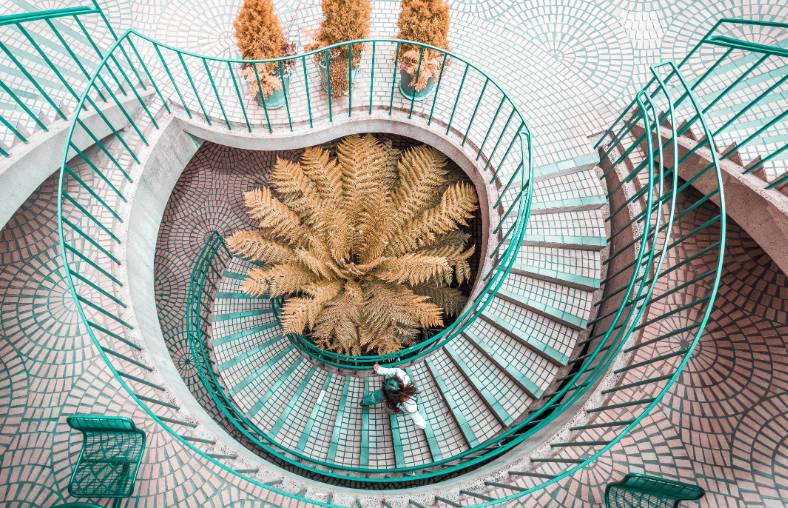
Spiral staircases have always possessed a certain kind of architectural magic. Winding elegantly around a single central column, they offer a perfect blend of style and functionality. For anyone looking to connect floors in a compact apartment or add a striking focal point to a commercial loft, exploring different spiral staircase designs is often the first step toward transforming a space.
But beyond their undeniable visual appeal, what does it actually take to bring one of these structures into your project? In this blog ,we will explore different spiral staircase designs help you establish a striking focal point while maximizing your available square footage.
Ⅰ. Beyond the Aesthetics: What Makes It a Spiral?
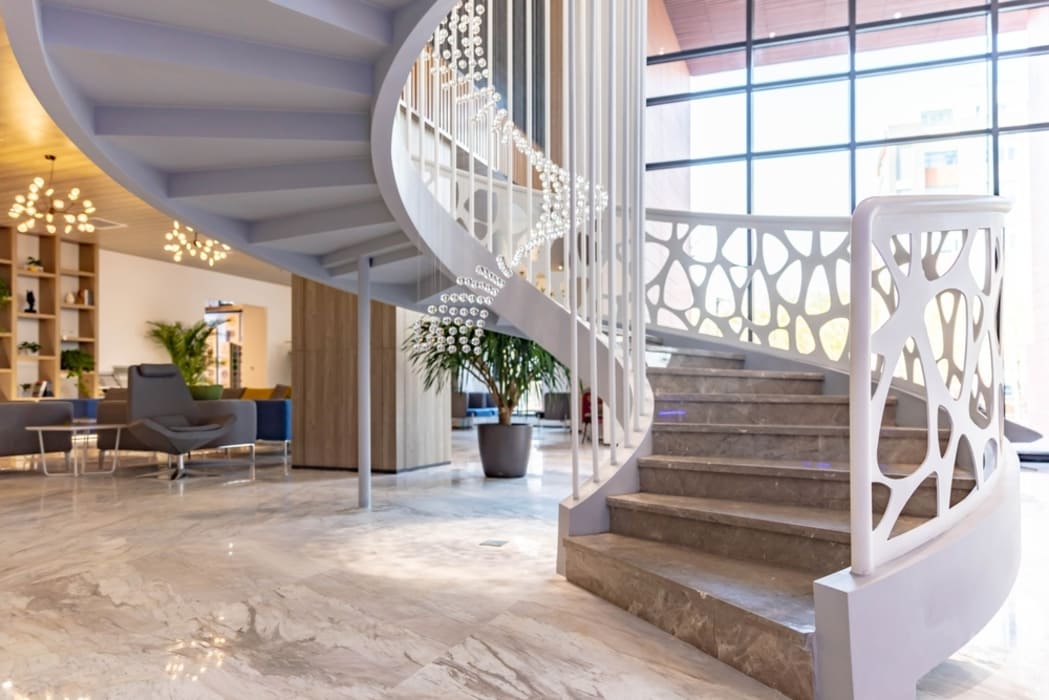
While many people use the term generically for any turning stair, a true spiral staircase has a very specific definition: it is a round stair system that uses a fixed radius and wraps symmetrically around a center support pole.
Spiral vs. Helical Staircases
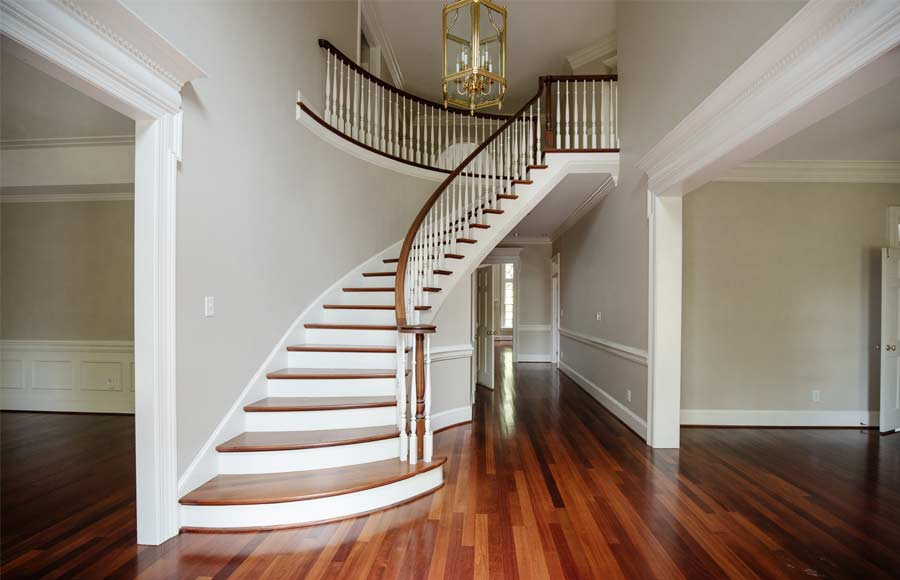
These two terms are often confused. While a spiral staircase winds tightly around a central pole, a helical staircase has no center pole. Instead, it curves gracefully between two rolled stringers (inner and outer radius handrails). Helical designs require significantly more floor space and a higher budget, whereas spiral stairs do “a lot” in a “little” space.
If your goal is to do “a lot” with a “little” space while maintaining a high-end look, the classic spiral is your ultimate solution.
Related article: 2026 Guide to Modern Curved Staircase Design: Trends & Inspiration
Ⅱ. The Reality Check: Weighing the Pros and Cons
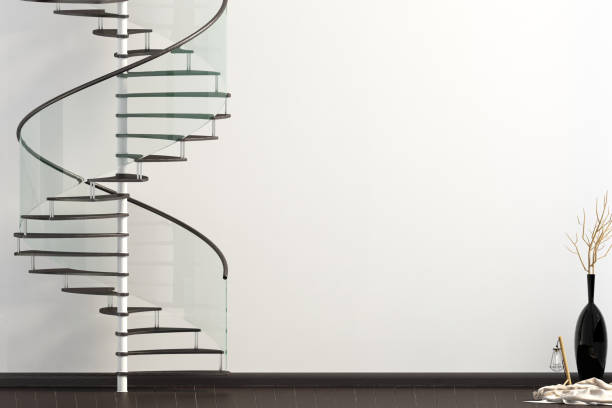
We often receive inquiries from homeowners who are completely captivated by the look of a spiral staircase. While they are fantastic additions to many projects, as an experienced custom manufacturer, we believe in being completely transparent about both their charm and their limitations.
The Advantages:
- Unmatched Space Efficiency: This is the primary reason architects and homeowners choose them. They take up a fraction of the floor space required by straight or L-shaped staircases.
- Aesthetic Focal Point: You do not see custom spiral staircases in every home. When implemented correctly, they act as a functional sculpture and a great conversation piece.
- Versatile Customization: From industrial lofts to classic mansions, bespoke spiral stairs can be tailored to fit any architectural style.
The Disadvantages & Limitations:
- Steeper Climbing: However, the unique geometry that saves so much space also brings challenges. Because the stairs radiate from a center pole, the treads are naturally narrower on the inside and the incline is typically steeper (averaging about a 9-inch rise per step). This can make them intimidating for young children, the elderly, or family pets.
- Code Restrictions: In most regions, spiral stairs cannot be used as the primary access in a home or business, nor can they serve as a primary fire escape or bedroom-only access. Always check with your local building department.
- Restricted Movement: It is difficult, if not impossible, to maneuver large furniture (like beds or heavy desks) up and down a spiral stair. It is also typically a “one user at a time” staircase.
Ⅲ. Finding Your Style: Materials and Visual Impact

The true beauty of modern spiral staircase designs lies in their versatility. They are essentially a blank canvas waiting for the right materials.
Modern Minimalist (Glass & Steel): For a contemporary, airy feel, tempered glass treads combined with a stainless steel framework are unmatched. The transparency allows natural light to flow through tight spaces.
Industrial Style (Carbon Steel): Crafted from powder-coated carbon steel or aluminum, these staircases offer immense durability and an edgy aesthetic. They are highly weather-resistant, making them ideal for outdoor access.
Classic & Warm (Wood & Brass): To achieve a timeless atmosphere, hardwoods like oak or walnut are used for treads. When paired with decorative iron or brass balusters, this style seamlessly integrates into traditional interiors.
Custom Hybrid Designs: Yet, the most highly requested style in luxury projects is often a Custom Hybrid. Imagine the solid, cold strength of a heavy-duty metal center pole, paired with the organic warmth of solid walnut treads and wrapped in a sweeping, curved glass handrail. This tailored approach allows the staircase to seamlessly integrate into almost any interior design vision.
Related article: Best Materials for Outdoor Stairways 2026: A Complete Guide
Ⅳ. Planning the Fit: Sizing and Logistics
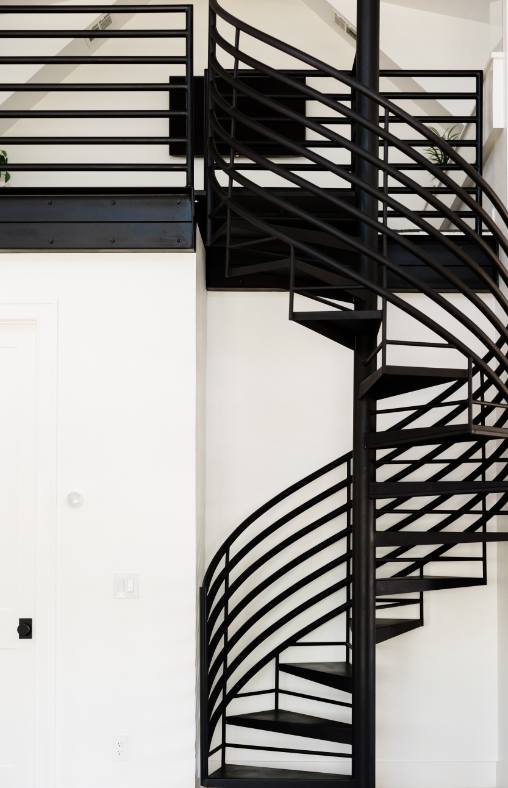
When it comes to the actual planning, the dimensions of your floor opening will dictate what is possible. While custom manufacturers can build to almost any size, the industry standard for a comfortable, code-compliant spiral stair is usually a 5’-0” (1500mm) diameter.
Furthermore, a critical rule of thumb for structural engineering is the Finished Floor Opening. The opening must always be slightly larger than the stair diameter to provide proper hand clearance:
- 4’-0” Diameter Stair: Requires a 4’-6” x 4’-6” square or round opening.
- 5’-0” Diameter Stair: Requires a 5’-6” x 5’-6” square or round opening.
- 6’-0” Diameter Stair: Requires a 6’-6” x 6’-6” square or round opening.
Delivery and Installation Logistics
One of the biggest anxieties buyers have is the delivery. The thought of maneuvering a fully welded, two-story steel spiral through a standard front door is daunting. However, premium suppliers solve this by pre-building the entire system in the factory to ensure a perfect fit, then disassembling it into manageable, numbered sections. This allows just two people to carry the pieces through a standard doorway and easily slide them over the center pole on-site.
Ⅴ. Bringing the Vision to Life with George Solution
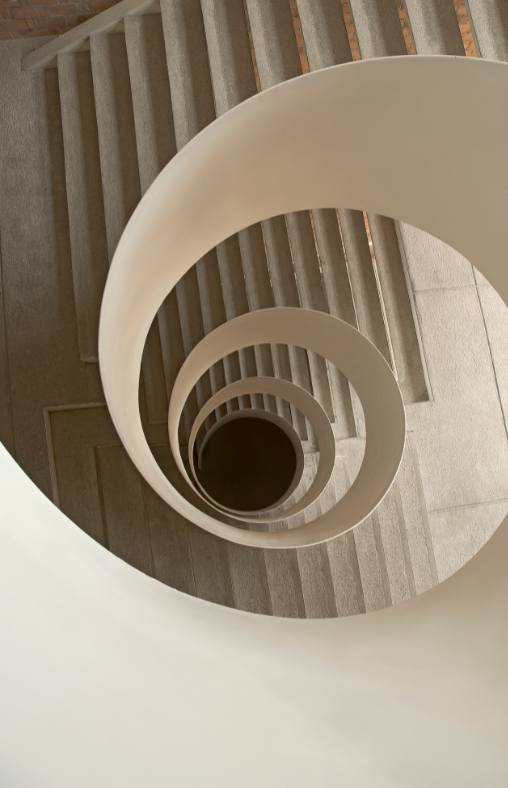
Ultimately, the cost of your staircase will reflect the materials you choose and the level of customization required. While the market is flooded with inexpensive, “one-size-fits-all” kits, these often lack the structural rigidity and refined finish required for a high-end interior.
At George Solution, we step away from commodity products. We believe that your staircase should be engineered for a lifetime of safety and tailored exactly to your space. By collaborating through 3D renderings and utilizing a premium global supply chain, we turn complex design ideas into flawless realities.
FAQ
What is the difference between a spiral and a helical staircase?
A spiral staircase winds symmetrically around a fixed central support pole, making it highly space-efficient. A helical staircase has no center pole and instead curves between two rolled stringers, which requires a much larger floor footprint and a higher budget.
Can a spiral staircase be used as the main staircase?
In most regions, local building codes do not allow spiral staircases to serve as the primary access route or main fire escape in a home or commercial building. They are typically approved for secondary access, such as reaching a loft or attic, due to their steeper incline and narrower treads.
What is the standard size for a spiral staircase?
The industry standard and most widely used diameter is 5’-0” (1500mm). This size provides a comfortable walking space and complies with most uniform building codes. It requires a slightly larger finished floor opening of 5’-6” (square or round) for proper hand clearance.