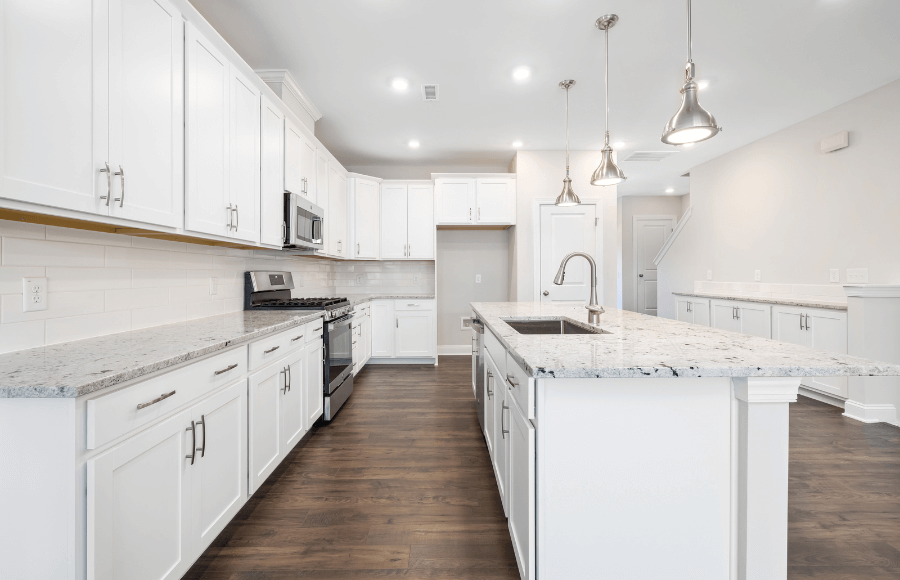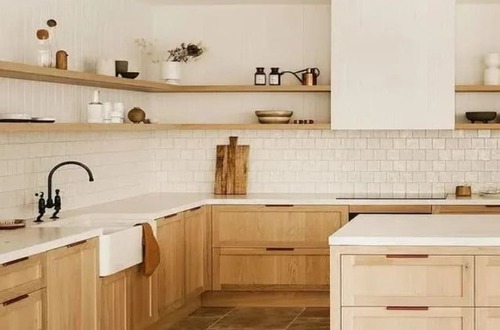


Planning a kitchen remodel in 2026? Let’s cut right to the chase: custom cabinets will be the largest single expense of your entire project.
Wondering exactly what you will pay? In 2026, fully custom kitchen cabinets typically range from $500 to $1,200 per linear foot installed. For an average-sized kitchen, expect a total budget between $15,000 and $35,000+.
But the secret to staying on budget isn’t just staring at the final price tag—it’s understanding what you are actually paying for. Is it the premium inset doors? The high-tech nano finishes? Or the hidden structural engineering?
Let’s break down what really drives custom cabinetry costs and share a few insider strategies to get the luxurious kitchen you want, without overspending.
The Real Cost of Custom Kitchen Cabinets in 2026
When you walk into a kitchen showroom, the terminology and pricing tiers can get confusing very quickly. To understand your budget, you first need to know how the industry calculates costs.
Cabinet pricing is almost universally measured by the “linear foot” (LF)—which simply means measuring the horizontal length of the wall space your cabinets will occupy. Here is how the three main tiers stack up in 2026:
| Cabinet Category | Cost Per Linear Foot | What You Actually Get |
| Stock (Ready-to-Assemble) | $100 – $300 | Mass-produced in standard sizes (usually in 3-inch increments). Limited finishes. Typically constructed using particleboard or MDF. |
| Semi-Custom | $150 – $650 | Basic stock boxes but with a wider catalog of door styles and finish options. Minor sizing adjustments are possible to better fit your layout. |
| Fully Custom | $500 – $1,200+ | Built entirely from scratch to your exact millimeter. Offers unlimited finishes, premium multi-plywood construction, and tailored architectural details to maximize every inch of space. |
To put those per-foot numbers into a real-world perspective, a small standard kitchen (around 15 to 20 linear feet) will generally start at $10,000 for custom work. A medium-sized kitchen ranges from $15,000 to $36,000. For large, luxury kitchens with extensive islands, massive pantry walls, and premium materials, the budget often scales from $40,000 to over $60,000.
While a $25,000 custom quote might sound like a massive jump from a $5,000 stock kitchen from a big-box store, those surface numbers do not tell the whole story. Let’s look at what is actually happening behind the scenes.
Related Article: How Much Does a Custom Open Kitchen and Living Room Cost? A 2026 Budget Guide
What Actually Drives the Price?
As an industry consultant, I always remind clients that when you buy custom cabinetry, you are not just paying for wood. You are paying for advanced engineering, sophisticated finishing processes, and absolute precision. Here are the three hidden factors that drive your final quote.
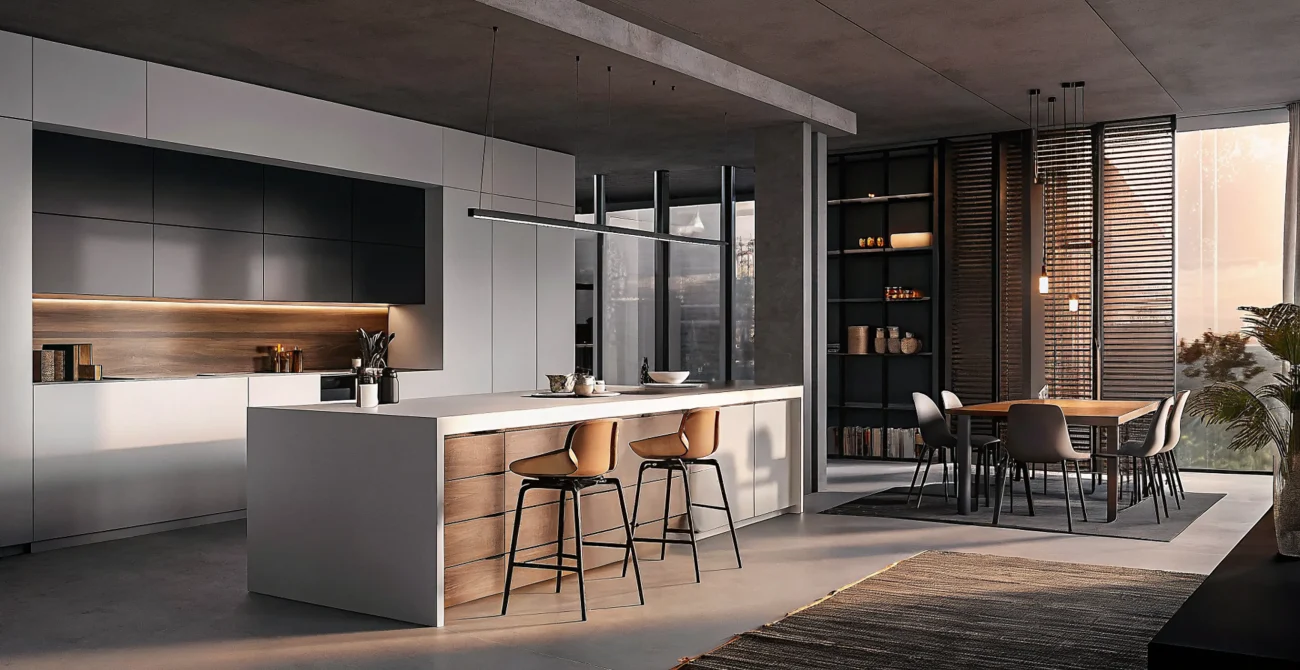
Material Selection: The Core vs. The Surface
High-density commercial particleboard is the global standard for modern European luxury cabinetry. It is highly prized for its absolute flatness, making it the perfect core for tall, minimalist cabinet doors that cannot risk warping over time.
However, for regions with extreme tropical humidity or for kitchens designed to support massive, heavy stone countertops, upgrading the core to premium furniture-grade plywood offers enhanced moisture resistance and superior load-bearing strength. Upgrading the internal box material from standard high-density board to premium plywood will naturally increase the baseline cost of your custom project.
For the exterior doors, the wood species plays a major role in the cost. Budget-friendly hardwoods like Oak and Birch take paint beautifully and offer great durability. However, if you want the rich, natural grain patterns of Walnut, Cherry, or White Oak, the raw material cost can easily jump 30% to 40%.
This is because these premium woods grow slower and require meticulous manual sorting at the factory to ensure the wood grains match perfectly across your entire kitchen wall.
Finishes: Paint is More Than Just Color
This is where many homeowners get caught off guard: a smooth painted finish is almost always more expensive than a stained wood finish.
Why? Because achieving a flawless, mirror-like painted or lacquered surface is incredibly labor-intensive. It requires multiple rounds of sanding, priming, and baking the doors in climate-controlled, dust-free factory rooms. A cheap spray job will chip within a year, but a factory-baked custom lacquer will resist scratches and moisture for decades.
Furthermore, 2026 has seen a massive rise in ultra-premium surface technology. If you specify FENIX nanotech surfaces—an incredible material that is soft to the touch, highly anti-fingerprint, and can actually heal its own micro-scratches with heat—expect your total bill to increase.
You are paying for advanced material science that makes your kitchen virtually maintenance-free.
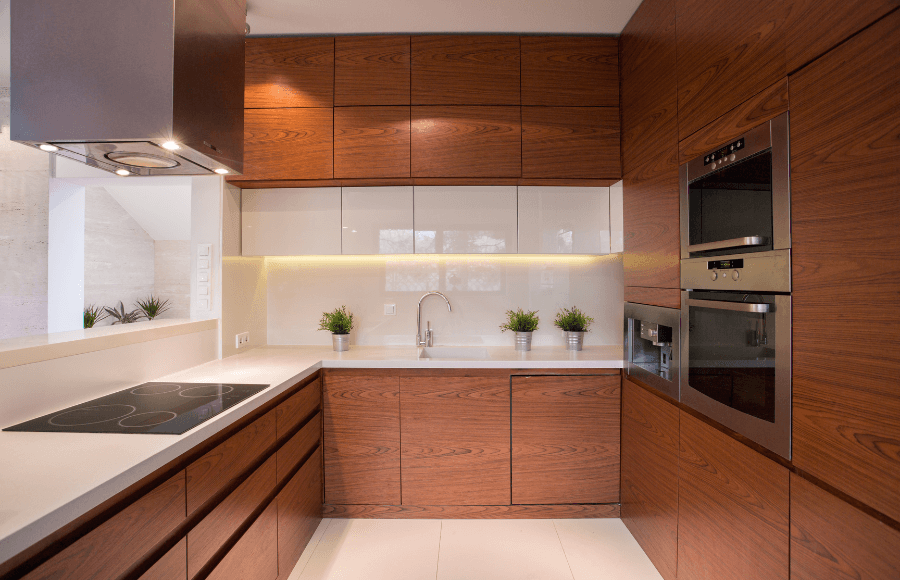
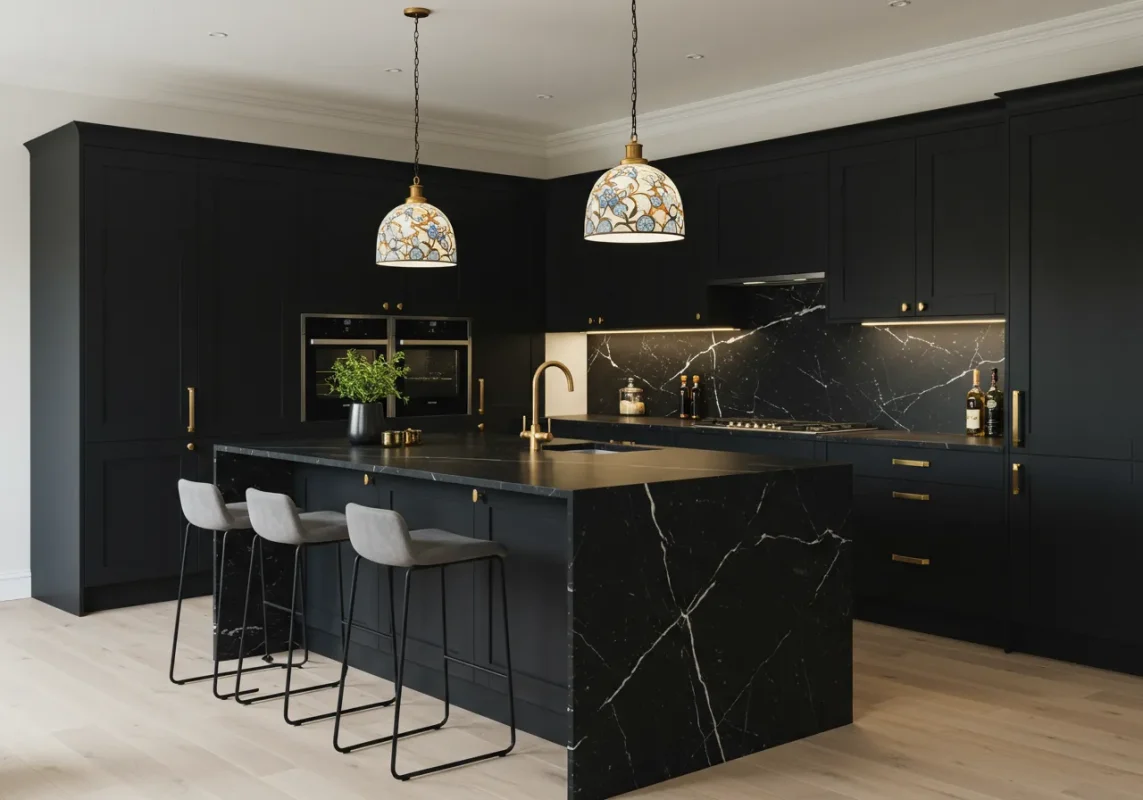
Design Complexity: The Engineering Behind the Aesthetics
Custom cabinetry shines in its architectural details, but those details require heavy CNC machining and highly skilled labor.
Inset vs. Full-Overlay Doors
Standard cabinets use “overlay” doors that simply sit on top of the cabinet frame. High-end custom kitchens often feature inset cabinetry, where the door sits perfectly flush inside the frame.
This requires millimeter-perfect engineering; the factory must leave exactly a 2mm gap around the door so it looks seamless but doesn’t scrape the frame when the wood expands in summer humidity. Upgrading to inset doors typically adds 20% to 30% to your bill.
Ceiling-Height Upper Cabinets
Taking your upper cabinets from the standard 30 inches to a dramatic 36 or 42 inches maximizes storage and draws the eye upward, making the room feel larger. However, creating these massive, warp-free doors requires significantly more material and stabilizing hardware.
Integrated Appliance Panels
Hiding your refrigerator or dishwasher behind matching cabinet panels for a seamless, minimalist look isn’t just about attaching a piece of wood. It requires custom heavy-duty hinges and exact weight calculations to ensure the appliance door operates smoothly.
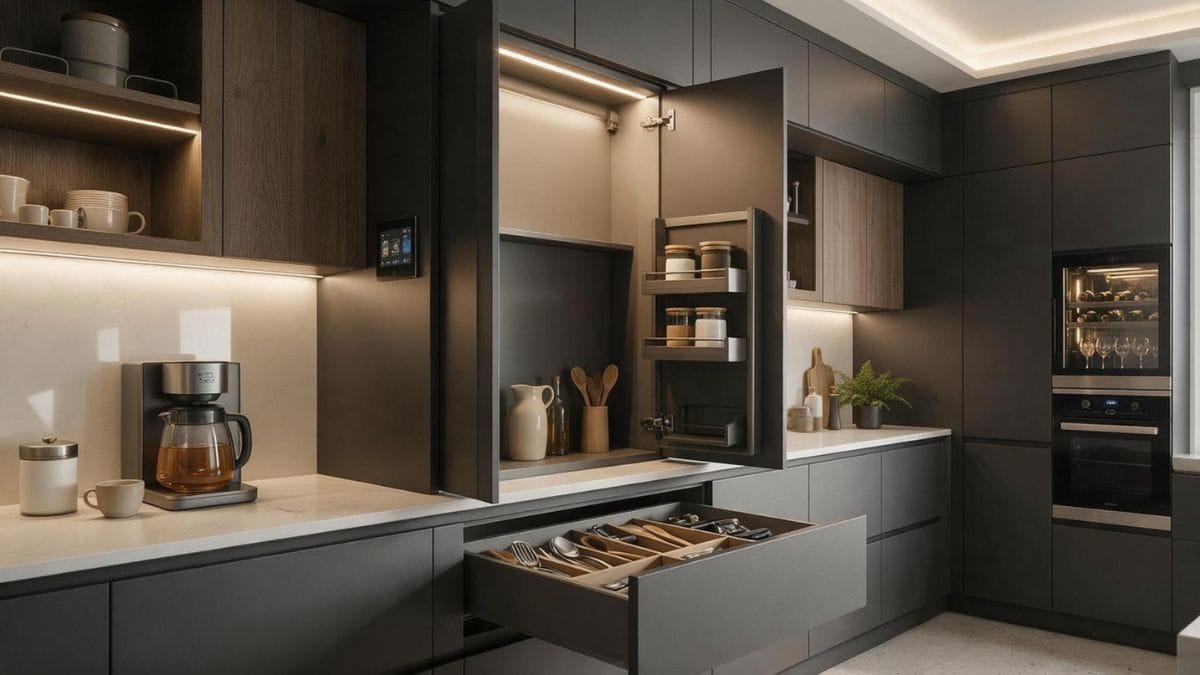
Don’t Forget the “Hidden” Costs
A beautiful cabinet is useless if it is not installed properly. When setting your budget, you must factor in these two critical elements:
The Art of Installation (20% to 35% of Total Cost)
Walls in a home are rarely perfectly straight, and floors are never perfectly level. Therefore, custom installation is a slow, meticulous process. The installers must “scribe” (custom cut) the wooden filler panels on-site so that the cabinets sit perfectly flush against wavy drywall without any ugly gaps or caulk lines.
You are paying for master carpentry, not just someone turning a screwdriver.
Internal Hardware
In a luxury kitchen, the hardware does the heavy lifting. Upgrading to European soft-close hinges (like Blum or Hettich), heavy-duty under-mount drawer glides that can effortlessly support 100 lbs of cast-iron pots, or installing complex “Magic Corner” pull-outs will add thousands to the final quote. However, this is the hardware you will interact with every single day—it is never the place to cut corners.
Are Custom Cabinets Worth the Investment?
When clients hesitate at the upfront price of custom cabinetry, I ask them to shift their perspective and look at the “Cost Per Year.”
Let’s say a mass-produced stock kitchen costs $5,000, but because it uses cheap hardware and basic glued edges, the doors sag and the panels suffer from water damage after 7 years. That kitchen is costing you about $1.95 per day in usable life, not to mention the massive headache of a premature remodel.
Now, consider a $15,000 custom kitchen engineered to last 30 years. Because custom cabinets utilize precision PUR (Polyurethane) edge-banding technology to completely seal the wood core against moisture, paired with heavy-duty hinges, they survive under-sink water leaks and daily heavy use. Your cost drops to just $1.36 per day.
Over the long term, custom cabinets are actually the more economical choice. They survive under-sink water leaks, slamming doors, and the weight of heavy stone countertops.
Furthermore, an upscale, custom-fitted kitchen consistently ranks as one of the highest ROI home improvement projects, dramatically increasing your home’s resale appeal and often recovering 70% to 80% of its cost when you eventually sell.
Smart Ways to Save Without Sacrificing Quality
If you want the high-end custom look but need to keep your budget in check, here are three industry strategies:
- Optimize Your Core Material: You do not necessarily need expensive plywood for every single cabinet in your kitchen. A highly effective industry strategy is to use high-density, PUR-edge-banded particleboard for the upper wall cabinets and standard dry zones to save costs. Then, selectively upgrade to waterproof plywood strictly for the under-sink cabinets, where plumbing leaks are highly likely.
- Mix and Match Complexity: You do not need expensive internal accessories in every single cabinet. Use standard drawers and shelves for the perimeter of your kitchen, and concentrate your budget on a stunning, fully custom kitchen island featuring premium finishes and advanced pull-out hardware.
- Go Direct to the Source: The biggest markup on custom cabinets comes from local showrooms acting as middlemen. By sourcing directly from a large-scale manufacturer, you bypass the retail markup completely.
The George Group Advantage: Factory-Direct Precision
Achieving the flawless look of inset doors or seamless integrated appliance panels requires world-class manufacturing capabilities. That is where George Group changes the equation.
Operating from our massive 25-story headquarters and manufacturing hub in Foshan, China, we bring factory-direct pricing directly to international builders, architects, and homeowners.
Because we utilize advanced CNC machinery and dust-free coating rooms, we deliver the exact same millimeter-level precision and luxury finishes—from self-healing FENIX laminates to flawless baked lacquers—as high-end European brands, but without the middleman markup.
Better yet, as a one-stop building material solution, we do not just stop at cabinets. We can manufacture your custom kitchen, ensure the wood finish perfectly matches your interior doors, and consolidate everything—along with your floor tiles, sanitary ware, and windows—into a single shipping container. This unified approach eliminates logistical headaches and significantly reduces your shipping costs.
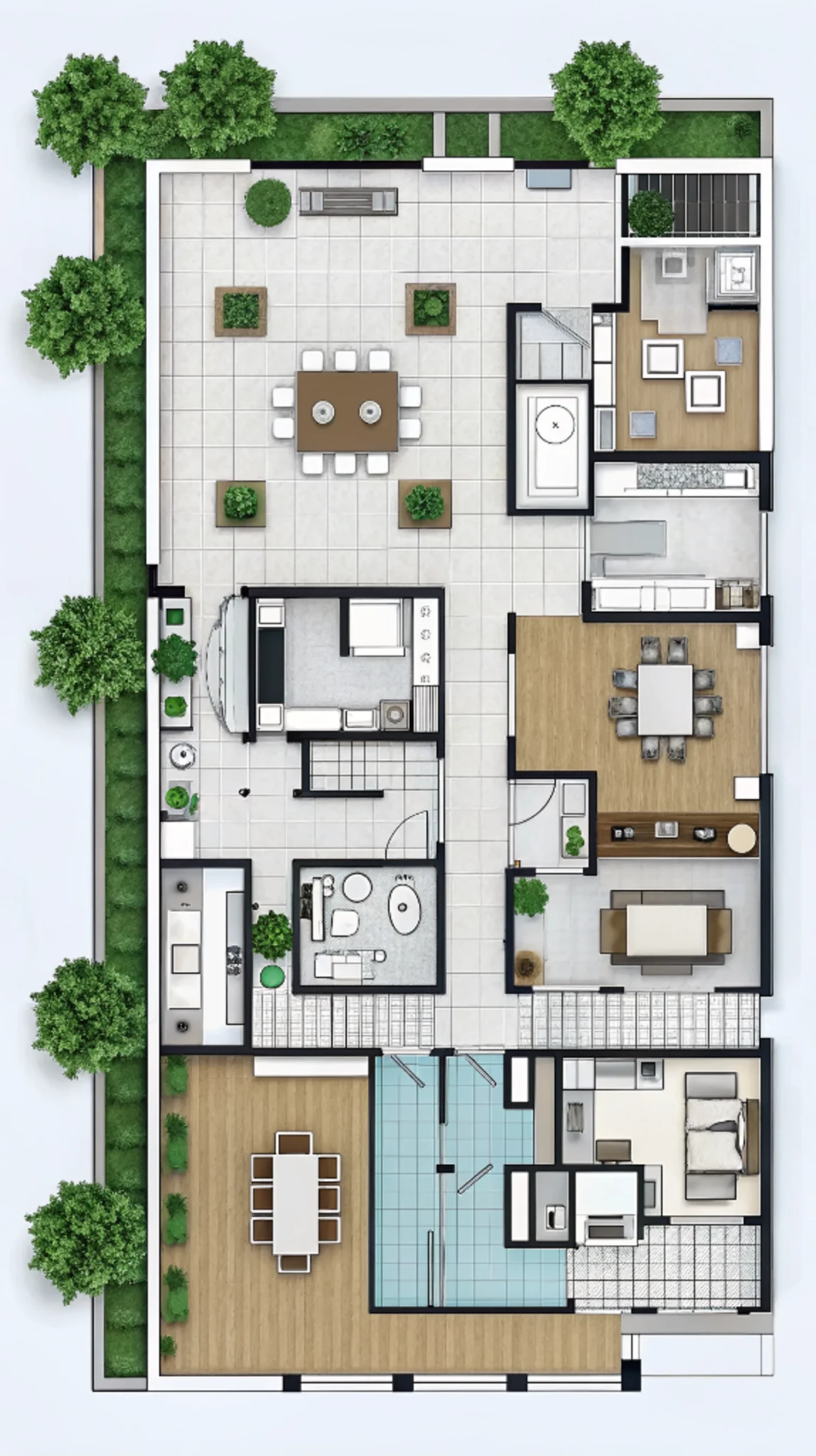
Ready to get an accurate quote for your specific kitchen layout? Contact the engineering and design team at George Group today to start turning your floor plans into reality.
Frequently Asked Questions (FAQ)
What is the standard depth of custom kitchen cabinets?
In standard designs, lower base cabinets are 24 inches deep to accommodate standard countertops and appliances. Upper wall cabinets are typically 12 to 15 inches deep to ensure you have plenty of clearance while working at the counter.
However, the primary benefit of custom cabinetry is that these depths can be precisely adjusted to fit oversized plates, unique appliances, or narrow galley layouts.
How long does it take to manufacture and install custom cabinets?
Because every piece is cut to order, manufacturing usually takes 4 to 8 weeks. This timeline heavily depends on the complexity of the finish, as custom baked lacquers take longer to cure than simple wood stains. Once delivered, professional installation typically takes 3 to 7 days, depending on the size of the kitchen and the amount of custom scribing required to fit the cabinets perfectly to your walls.
How do I calculate the linear footage of my kitchen?
To calculate linear footage, simply measure the horizontal length (in inches) of the walls where you plan to install cabinets, and divide that number by 12. If you are installing both upper and lower cabinets on the same wall, you only need to measure the wall length once. Most cabinetmakers factor both top and bottom units into their “per linear foot” pricing structure.