

If you are planning a luxury build or a major renovation in 2026, the way we think about kitchens has fundamentally shifted. The kitchen is no longer just a functional utilitarian space; it has become the architectural centerpiece of the modern home.
For the past decade, the industry was dominated by the standard all-white kitchen—clean and safe, but ultimately a bit sterile. Today, high-end design is moving in a completely different direction.
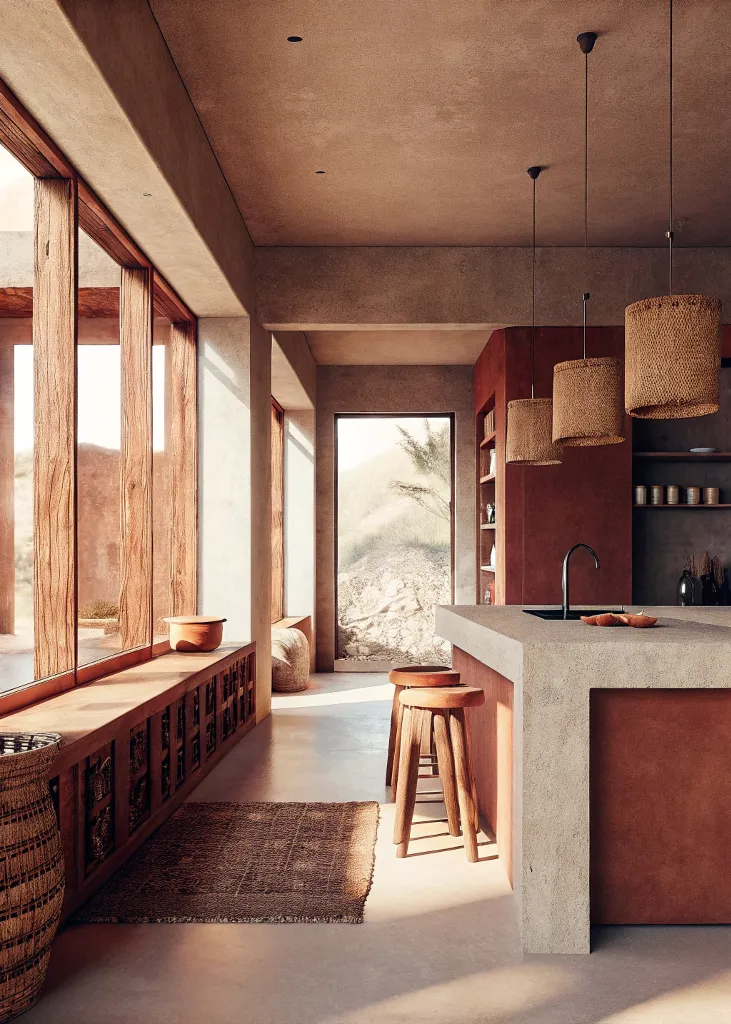
Architects, designers, and homeowners are now prioritizing rich natural textures and hidden engineering. The goal is to create a space that feels like a seamless extension of the living room, where heavy-duty appliances completely disappear behind flawless paneling, and warm wood grains meet striking ultra-matte finishes.
But here is the reality check: capturing these 2026 design trends requires much more than simply picking the right colors from a showroom catalog. Achieving this level of minimalist luxury requires absolute precision in manufacturing.
Let’s explore the top design trends defining custom kitchens this year, and more importantly, the structural engineering secrets you need to know to actually bring them to life.
The “Invisible” Kitchen: Mastering Integrated Minimalism
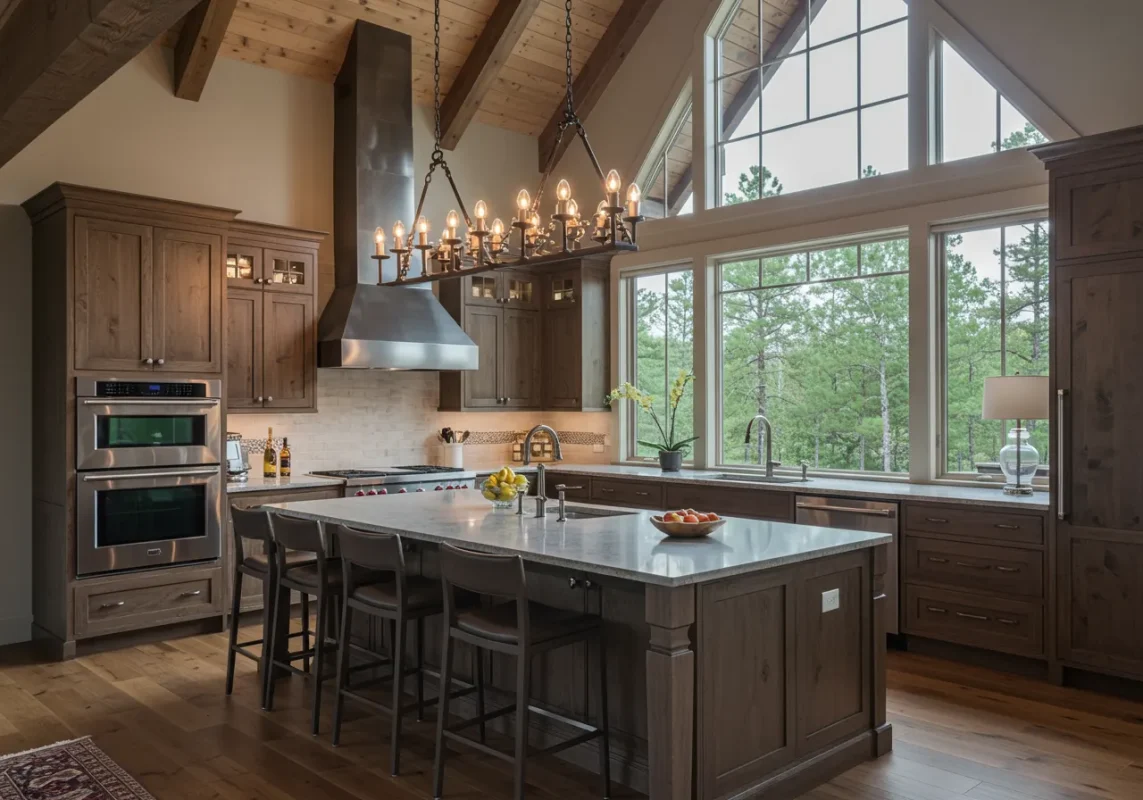
Minimalism in 2026 is not about having fewer things; it is about hiding everything perfectly. The most sought-after look right now is the “invisible” kitchen, where large appliances like refrigerators and dishwashers are completely concealed behind custom cabinet panels that perfectly match the rest of the room.
However, executing this seamless look is an engineering challenge.
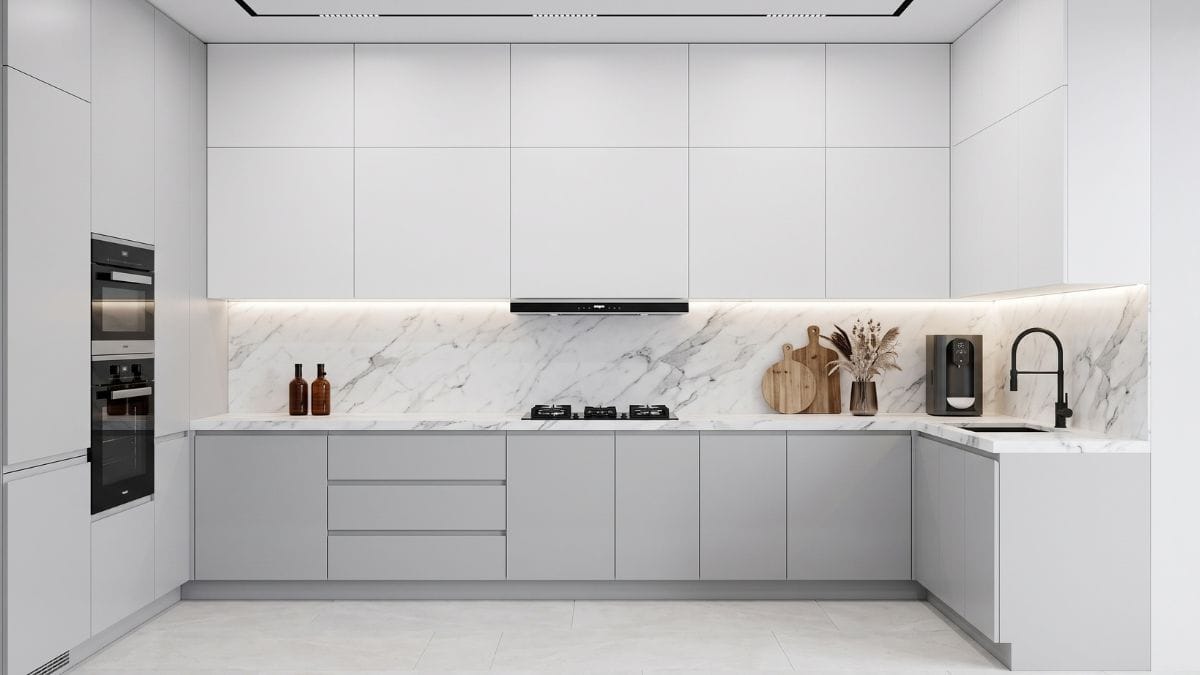
Integrated Appliance Panels
Hanging a heavy, solid wood panel onto a refrigerator door requires specialized heavy-duty hinges and exact weight calculations. If the factory cuts the panel even two millimeters off, the door will rub against the adjacent cabinets every time you open it.
True Handleless Design
Getting rid of handles creates a beautiful, sleek line. But rather than relying on cheap “push-to-open” latches that quickly break or leave fingerprints on the doors, high-end kitchens now use CNC-milled Gola profile systems.
This involves engineering a continuous recessed metal channel directly into the cabinet carcass, allowing you to easily pull the door open from behind. It requires millimeter-perfect CNC machining to execute correctly.
Warm Woods Meet Ultra-Matte Dark Tones
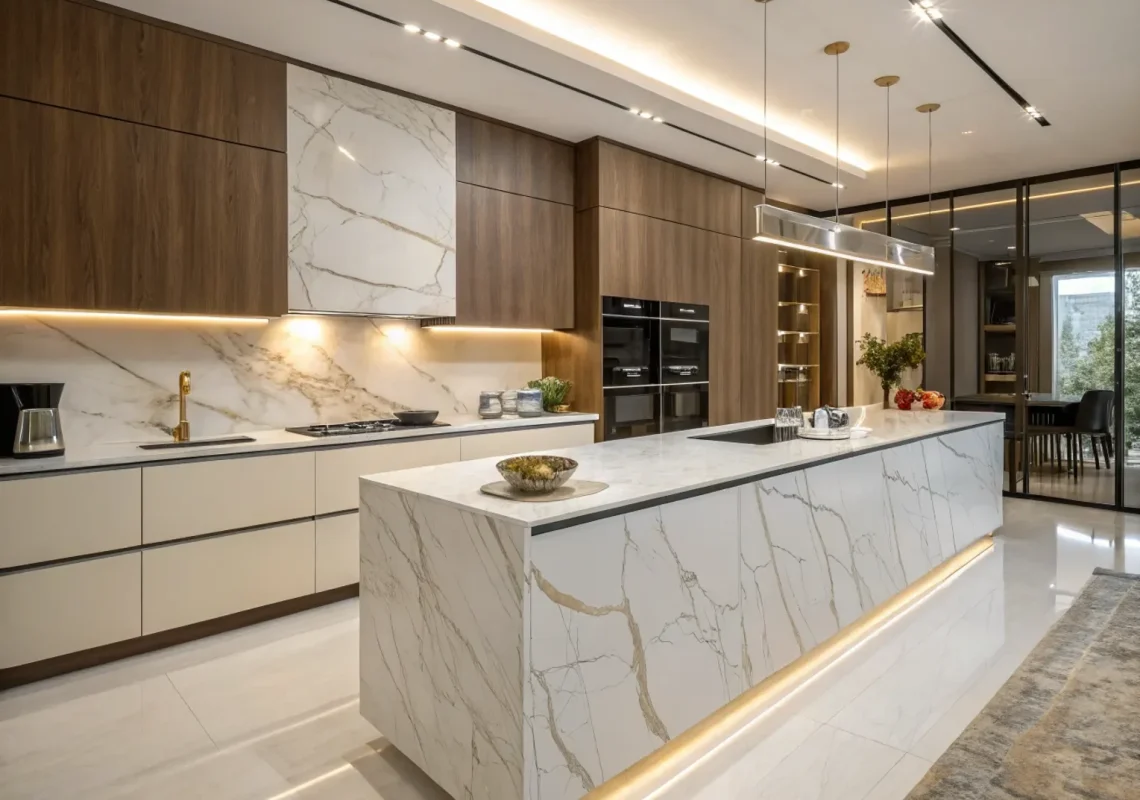
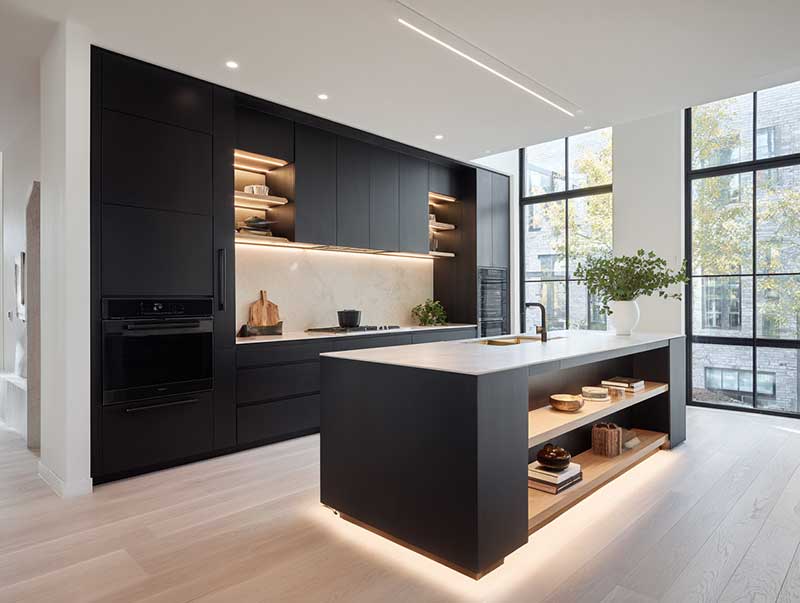
Comparison of modern custom kitchen cabinets featuring warm wood grain veneer and matte black finishes with a marble island
The era of the clinical white kitchen is fading. The defining color palette of 2026 pairs the organic warmth of natural wood (like Walnut, White Oak, or ribbed wood textures) with deep, dramatic colors—most notably matte black or charcoal gray. This contrast creates a sophisticated, moody atmosphere that feels more like a luxury lounge than a traditional cooking space.
The Manufacturing Secret: Matte dark cabinets look incredible in photos, but in real life, standard matte paint is a magnet for oily fingerprints and scratches. If you are specifying dark cabinets, you must upgrade the surface material.
To solve this, high-end manufacturers use Premium Skin-Feel PET (Polyethylene Terephthalate) finishes or advanced multi-layer matte lacquers. These specialized ultra-matte surfaces are engineered to be highly resistant to fingerprints and incredibly soft to the touch.
Pairing a high-tech anti-fingerprint PET finish with a beautifully grain-matched natural wood veneer is the ultimate hallmark of a 2026 luxury kitchen, ensuring the dark tones remain pristine even in a high-traffic environment.
Related Article: Kitchen Cabinet Color Trends 2026: Where Aesthetics Meet Advanced Surface Tech
The Rise of the Hidden “Prep Kitchen” (Butler’s Pantry)
As the main kitchen becomes a beautiful, open-concept showpiece for entertaining, homeowners are realizing they still need a place to do the messy, heavy cooking. Enter the “Prep Kitchen” or expanded Butler’s Pantry. This secondary, hidden room houses the loud blenders, the messy baking stations, and the dirty dishes, keeping the main architectural kitchen spotless.
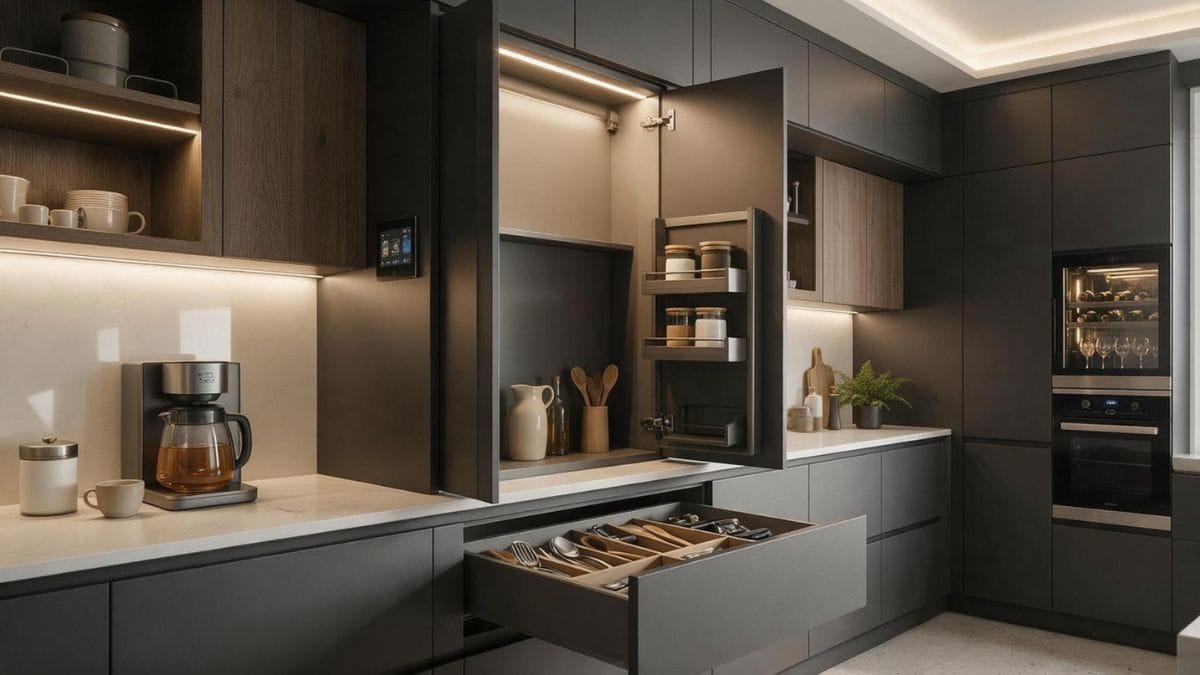
The Smart Budget Strategy: Building two kitchens sounds incredibly expensive, but smart material sourcing makes it highly efficient.
The Main Show Kitchen: Allocate your budget here. Use premium waterproof plywood cores, luxury wood veneers, inset doors, and high-end pull-out hardware.
The Prep Kitchen: Because this is a purely functional, hidden space, you can optimize your costs. We advise clients to use high-density, PUR-edge-banded particleboard for the prep kitchen cabinets.
When perfectly sealed with PUR waterproof glue, premium commercial particleboard provides exceptional flatness and durability at a fraction of the cost, allowing you to invest your money where it is actually seen.
Related Article: Cupboard vs. Cabinet: Which Storage Solution is Right for Your Project?
Seamless Surfaces: Upgrading from Traditional Tiles to MCM
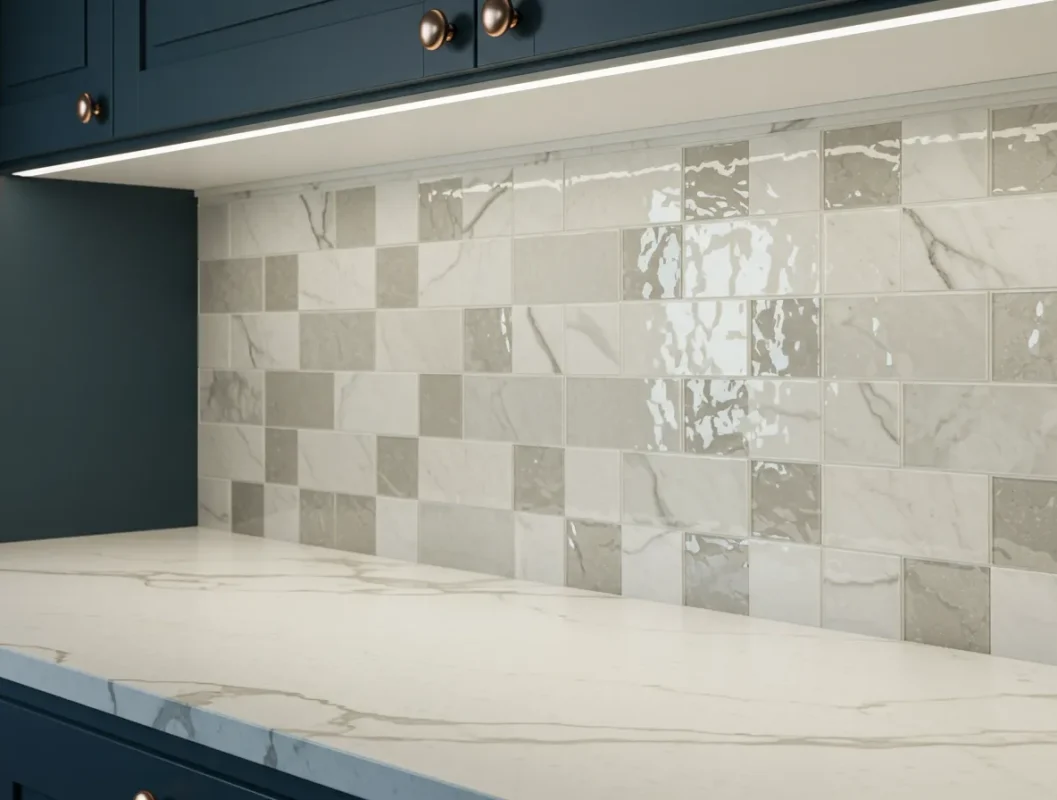
For years, the standard kitchen backsplash has been the traditional ceramic subway tile. While basic ceramic tiles are cheap to buy, they come with a significant hidden cost in 2026: grout lines and expensive labor.
In modern design, visible grout lines break up the visual flow and become a nightmare to clean when exposed to daily cooking oils. Furthermore, installing traditional tiles requires specialized wet saws, messy mortar, and expensive masonry labor.
Designers are now shifting toward continuous, uninterrupted surfaces using MCM (Modified Clay Material) flexible wall cladding.
Why is MCM taking over? It offers the striking, continuous texture of natural stone, travertine, or architectural concrete, but it is incredibly lightweight and flexible. While the material itself is a premium upgrade over basic ceramic tile, it cuts easily with a utility knife and glues directly to the wall.
This dramatically reduces costly installation time and eliminates heavy shipping fees. It is the smartest way to achieve a $50,000 continuous-stone aesthetic on a reasonable budget.
(Note for kitchen use: Because MCM features rich natural textures, we always recommend applying a clear protective sealer over the backsplash area to ensure cooking oils wipe away effortlessly.)
Related Article: What is the Best Kitchen Countertop Material in 2026? (Honest Guide)
Bring the 2026 Trends to Life with George Solution
The biggest risk when trying to execute these sophisticated 2026 design trends is supply chain fragmentation. If you buy your skin-feel PET cabinet doors from one supplier, your wood veneers from a local carpenter, and your MCM wall panels from another vendor, getting the colors and architectural tolerances to match is nearly impossible.
At George Solution, we eliminate that risk. Operating from our massive headquarters and manufacturing hub in Foshan, China, we offer true factory-direct precision and One-Stop Sourcing.
Whether you need perfectly milled Gola profiles for an invisible kitchen, heavy-duty integrated appliance panels, or MCM flexible stone that perfectly complements your cabinetry, we manufacture and coordinate it all under one roof.
We ensure every material, color, and finish speaks the same design language before securely consolidating your entire project into a single shipping container.
Do not leave your luxury kitchen to chance. Contact the George Group engineering and design team today to start building your 2026 architectural masterpiece.
Frequently Asked Questions (FAQ)
What are the most popular kitchen cabinet colors for 2026?
The trend has moved away from all-white kitchens toward high-contrast, moody palettes. The most popular combination pairs warm, natural wood veneers (like Walnut or White Oak) with ultra-matte dark tones such as charcoal gray and matte black.
Can I use MCM flexible stone for a kitchen backsplash?
Yes, MCM (Modified Clay Material) is an excellent choice for a kitchen backsplash. It provides a luxurious, seamless stone aesthetic without the ugly grout lines of traditional tiles. Because of its textured surface, we recommend applying a clear protective sealer over the MCM to make cleaning up cooking oils quick and easy.
Are handleless kitchen cabinets still in style?
Handleless cabinets are more popular than ever, but the technology has evolved. Instead of standard “push-to-open” latches that can easily break, 2026 designs utilize integrated Gola profile systems. This CNC-milled channel is built directly into the cabinet box, providing a sleek, invisible look while remaining highly functional and durable.