

Replacing your front door is a major investment, but choosing between fiberglass and steel often feels like a guessing game. While steel offers heavy-duty security at a lower upfront cost, fiberglass provides the luxurious look of real wood with virtually zero maintenance.
So, which material is actually better for your home?
As architectural manufacturing experts, we are skipping the confusing sales pitches. In this guide, we will break down the true pros, cons, and real-world performance of both materials, helping you choose the perfect door for your climate, lifestyle, and budget.
1. Steel Doors: The Heavy-Duty Protector
Steel doors are the go-to choice for commercial properties and homeowners who prioritize maximum security and a modern, sleek aesthetic. However, not all steel is created equal. Many entry-level doors use a thinner 24-gauge steel that is highly susceptible to dents from everyday impacts.
For a truly durable entryway, experts always recommend upgrading to a 20-gauge galvanized steel door, which offers significantly higher structural integrity and better rust resistance.
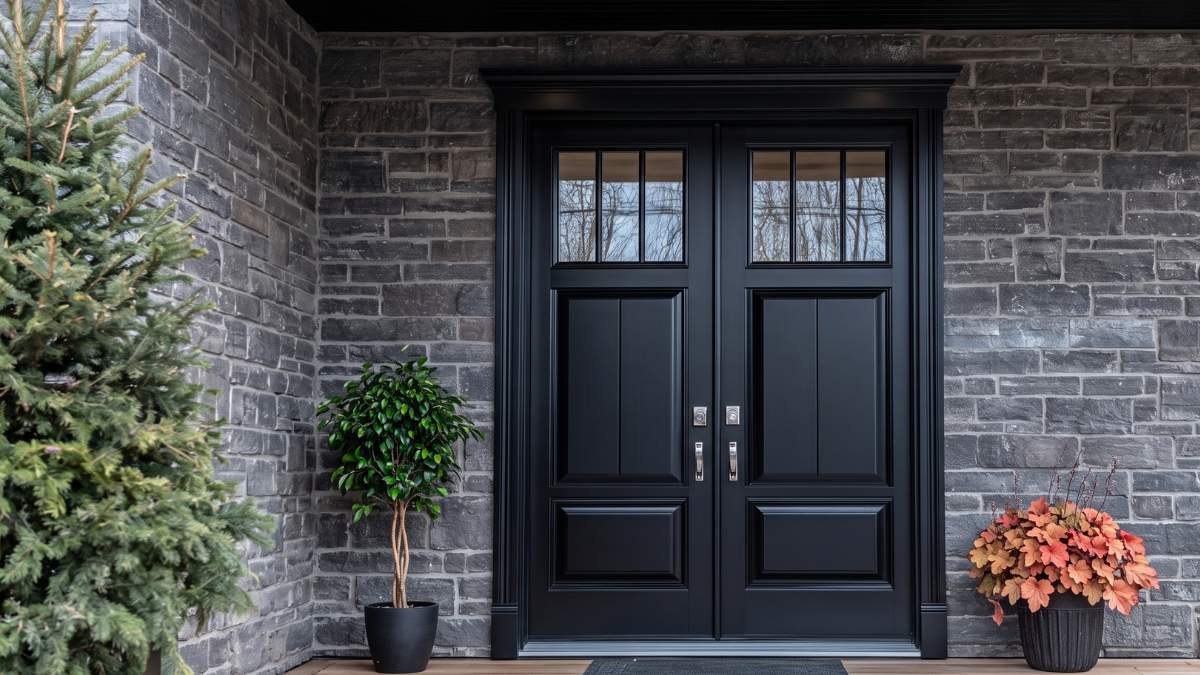
The Pros of Steel Doors:
Ultimate Security: Steel provides the highest level of protection against forced entry and physical impact. Its rigid structure makes it incredibly difficult to kick in, which is why it remains the industry standard for commercial buildings and security-conscious homeowners.
Cost-Effective: Generally, steel doors have a lower upfront purchase price compared to premium fiberglass or solid wood. This makes them an excellent choice for budget-conscious renovations or multi-family property developments where keeping initial costs down is a priority.
No Warping: Unlike solid wood, steel will never warp, bow, or crack under extreme temperature changes. This dimensional stability ensures that the door will always fit perfectly within its frame, preventing drafts and structural gaps from forming over time.
The Cons of Steel Doors:
Prone to Dents: A stray baseball, a heavy boot, or a bumped piece of furniture while moving can leave permanent dents. Unlike wood, which can be sanded, or fiberglass, which bounces back, a dented steel door often requires auto-body filler to repair properly.
Rust Potential: If the paint is deeply scratched and the raw metal is exposed to moisture, steel doors will eventually rust. For homes in coastal areas or places with heavy rain and snow, this means you must be vigilant about touch-up maintenance.
Temperature Conduction: Metal naturally conducts heat and cold. Even with an insulated core, the exterior steel skin can act as a thermal bridge, making the door feel hot to the touch in the summer sun or freezing during harsh winter nights.
2. Fiberglass Doors: Beauty Without the Baggage
Many homeowners dream of a grand, solid oak front door, but the reality of real wood can be a maintenance nightmare. This is why fiberglass has taken over the premium residential market.
Advanced fiberglass doors use a compression-molded composite skin (often made of SMC) that flawlessly mimics the natural grain of mahogany, oak, or walnut.
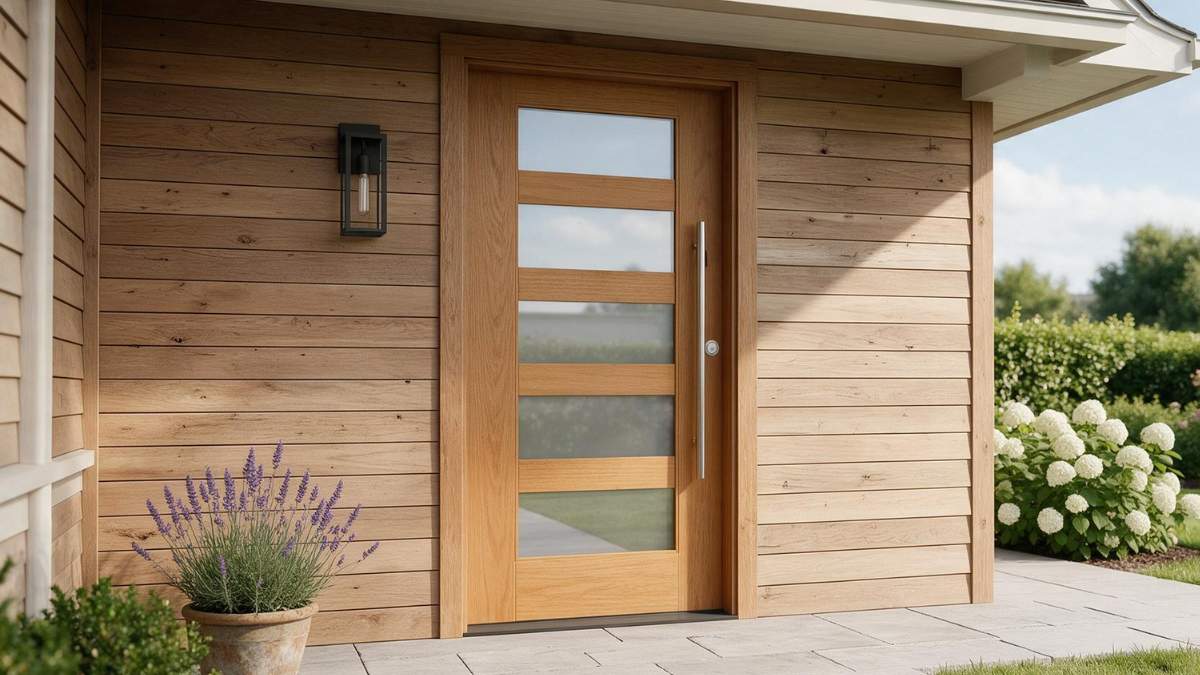
The Pros of Fiberglass Doors:
Incredible Aesthetics: You get the luxurious, warm texture of real wood without the upkeep. Modern manufacturing uses high-definition molds cast from actual wood boards, allowing you to match the exact grain of oak, mahogany, or walnut to your interior floors and cabinetry.
Highly Durable: Fiberglass is incredibly resilient. Its advanced composite skin absorbs everyday impacts and bounces back from hits that would leave a steel door permanently dented, making it perfect for active households with kids and pets.
Rot and Rust-Free: Fiberglass will never rust like metal, nor will it rot at the bottom frame like natural wood. It is completely impervious to moisture, making it the ultimate long-term solution for humid climates and coastal properties exposed to salt air.
Superior Insulation: It acts as an excellent thermal barrier, keeping your home comfortable and your energy bills low. Because fiberglass does not conduct temperature, it prevents winter drafts and keeps your expensive air conditioning trapped inside during the summer.
The Cons of Fiberglass Doors:
Higher Upfront Cost: Quality fiberglass doors are an investment and typically cost more initially than standard steel doors. However, this initial expense is usually offset by the door’s extended lifespan, energy savings, and near-zero maintenance requirements.
Difficult to Trim: Because they are manufactured to exact sizes with rigid composite edges, they cannot be easily planed or cut down on-site if your door frame is unlevel. This makes precise initial measurements and purchasing a factory-assembled pre-hung system absolutely critical to avoid installation failures.
3. How to Choose the Right Door for Your Home
To make the best decision for your specific project, you need to evaluate more than just the price tag. Consider these three core factors:
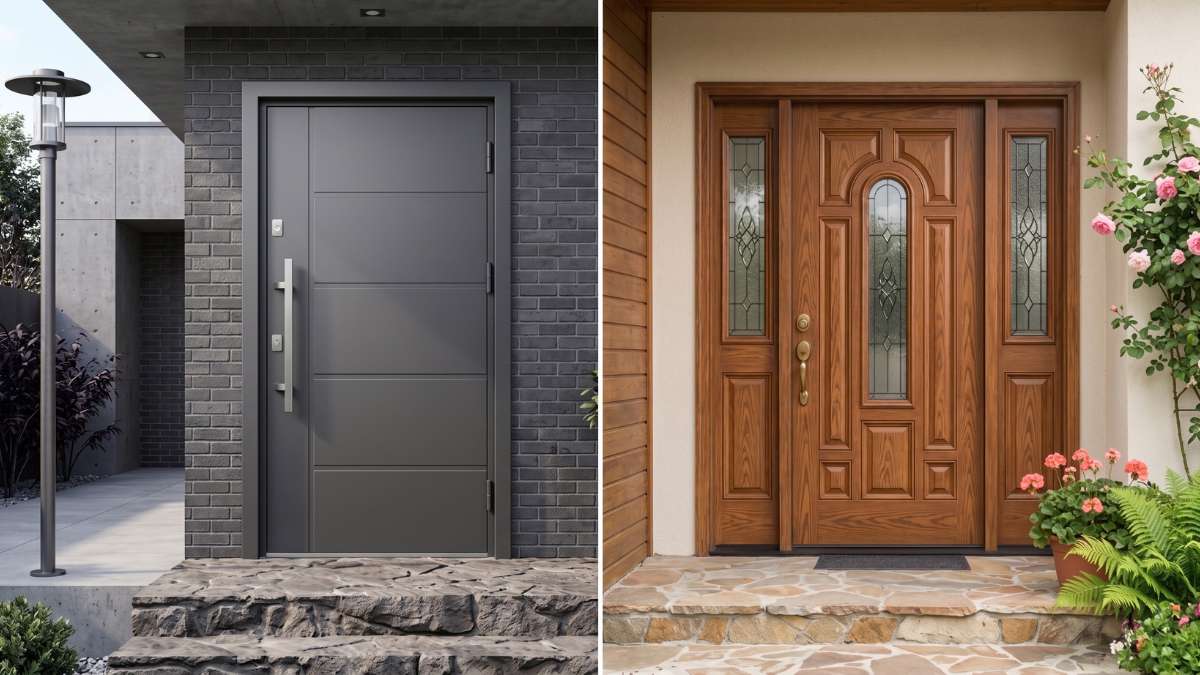
Aesthetics and Architectural Style
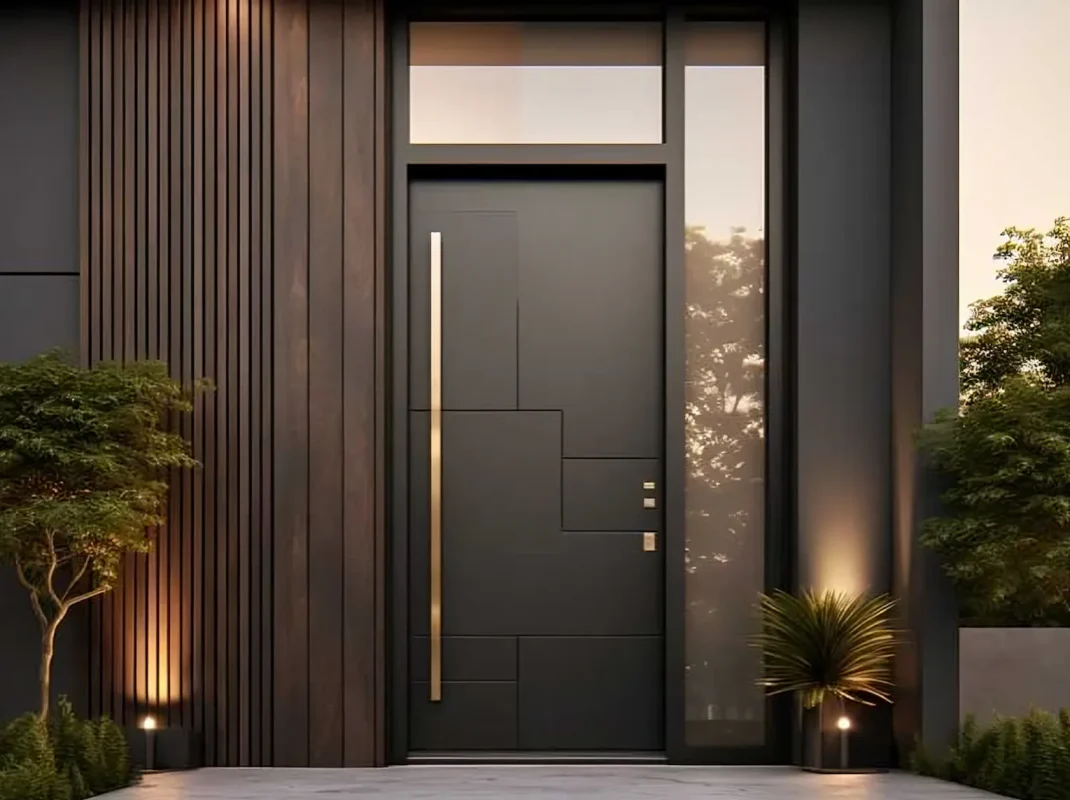
Your front door sets the architectural tone for the entire house. If your home features a modern, industrial, or minimalist design, a flat-panel steel door painted in a bold, solid color (like matte black or charcoal) creates a striking, clean look. Steel pairs exceptionally well with geometric glass inserts and sleek, modern hardware.
On the other hand, if you own a craftsman, farmhouse, or traditional property, a smooth metal door might feel too cold or clinical.
Here, the authentic wood-grain finishes of a fiberglass door—which can be expertly stained to mimic natural mahogany, oak, or cherry—will significantly elevate your home’s warmth and curb appeal, seamlessly matching your interior trim.
Durability and Maintenance Lifestyle
Consider the daily traffic your door will endure. Is it a heavily used front entry where kids drop their bikes, or where an energetic dog might scratch at the panel to be let in?
If your household is highly active, fiberglass is the undisputed winner. It bounces back from impacts that would leave a steel door permanently dented, and its composite skin resists animal scratches brilliantly.
However, for a secondary entrance, a garage-to-house transition door, or a commercial back exit where sheer structural security trumps aesthetics, steel remains an unbeatable, economical workhorse.
Cost vs. Long-Term Value
If your renovation budget is tight, a steel door provides excellent immediate value and top-tier security for your dollar. But if you are looking at the lifetime Return on Investment (ROI), fiberglass often pulls ahead.
According to annual real estate reports, upgrading your front door is consistently ranked as one of the highest-yielding home improvements. Premium fiberglass doors often recoup over 70% of their cost at resale, as potential buyers immediately recognize the “solid wood” luxury feel without the looming dread of future maintenance.
Related Article: Best Interior Door Materials: The Ultimate Selection Guide
4. The Insulation and Climate Factor
Both premium steel and fiberglass doors are significantly more energy-efficient than traditional solid wood doors. This is because modern doors are manufactured with a high-density polyurethane foam core, which provides an R-value (a measure of thermal resistance) up to five times higher than solid wood. However, the exterior skin material dictates how well the door performs in specific environments.
Coastal or High-Humidity Climates
If you live near the ocean or in a region with heavy rainfall, fiberglass is mandatory. Salt spray in the air acts as a catalyst for oxidation, meaning even a tiny scratch on a steel door will quickly blossom into destructive rust. Fiberglass is non-porous; it will never absorb moisture, swell in the damp air, or corrode from coastal salt.
Extreme Temperature Shifts
In regions that experience blistering summers and freezing winters, doors face “thermal bowing”—a condition where the extreme temperature difference between the warm inside and freezing outside causes the door panel to warp. Fiberglass has exceptional dimensional stability to resist this bowing.
Furthermore, it prevents “thermal bridging,” ensuring your indoor heating and cooling systems aren’t working overtime to compensate for a metal door radiating outside temperatures into your hallway.
Mild, Dry Climates
If you live in a temperate or arid climate where humidity is rarely an issue, the risk of a steel door rusting is practically zero. In these environments, a high-quality steel door will perform flawlessly for decades, allowing you to secure a heavy-duty, modern entryway while keeping your project well within budget.
5. Factory Precision: The Secret to a Door’s Lifespan
Regardless of whether you choose the heavy-duty security of steel or the maintenance-free luxury of fiberglass, the material means nothing if the door is manufactured or installed poorly. A door that doesn’t seal properly will leak air, let in water, and ultimately fail.
At George Solution, we believe that manufacturing precision is the ultimate feature. Whether it is a sleek steel slab or a rich wood-grain fiberglass unit, our doors are engineered as complete Pre-hung systems.
We utilize advanced CNC machining in our factory to pre-drill all hardware holes with microscopic accuracy. By perfectly integrating the door slab, the frame, heavy-duty hinges, and premium weatherstripping before it ever leaves our facility, we guarantee a flawless fit.
You don’t just get a door; you get a precision-engineered entryway designed to last a lifetime. Contact the George Solution engineering team today to find the perfect entry door system for your next residential or commercial project.
Frequently Asked Questions (FAQ)
Which door provides better security against break-ins?
Both doors are highly secure when paired with a quality deadbolt and a reinforced door frame. However, steel doors hold a slight edge in pure blunt-force impact resistance, making them a popular choice for commercial security and heavy-duty residential protection.
Can you paint a fiberglass door?
Yes. While many homeowners choose fiberglass specifically for its factory-finished, realistic wood stains, smooth fiberglass doors can easily be painted. You must use an acrylic latex paint or a specialized exterior paint designed for fiberglass composites to ensure it bonds properly without peeling.
How long do steel and fiberglass doors actually last?
A well-maintained steel door typically lasts 15 to 20 years, provided scratches are promptly touched up to prevent rust. A high-quality fiberglass door has a longer lifespan, often lasting 20 to 30 years or more, as it is immune to rust, rot, and deep denting.