

When designing a custom kitchen, the backsplash is no longer just a functional barrier to protect your drywall from cooking splatters. It has evolved into the visual anchor of the entire room.
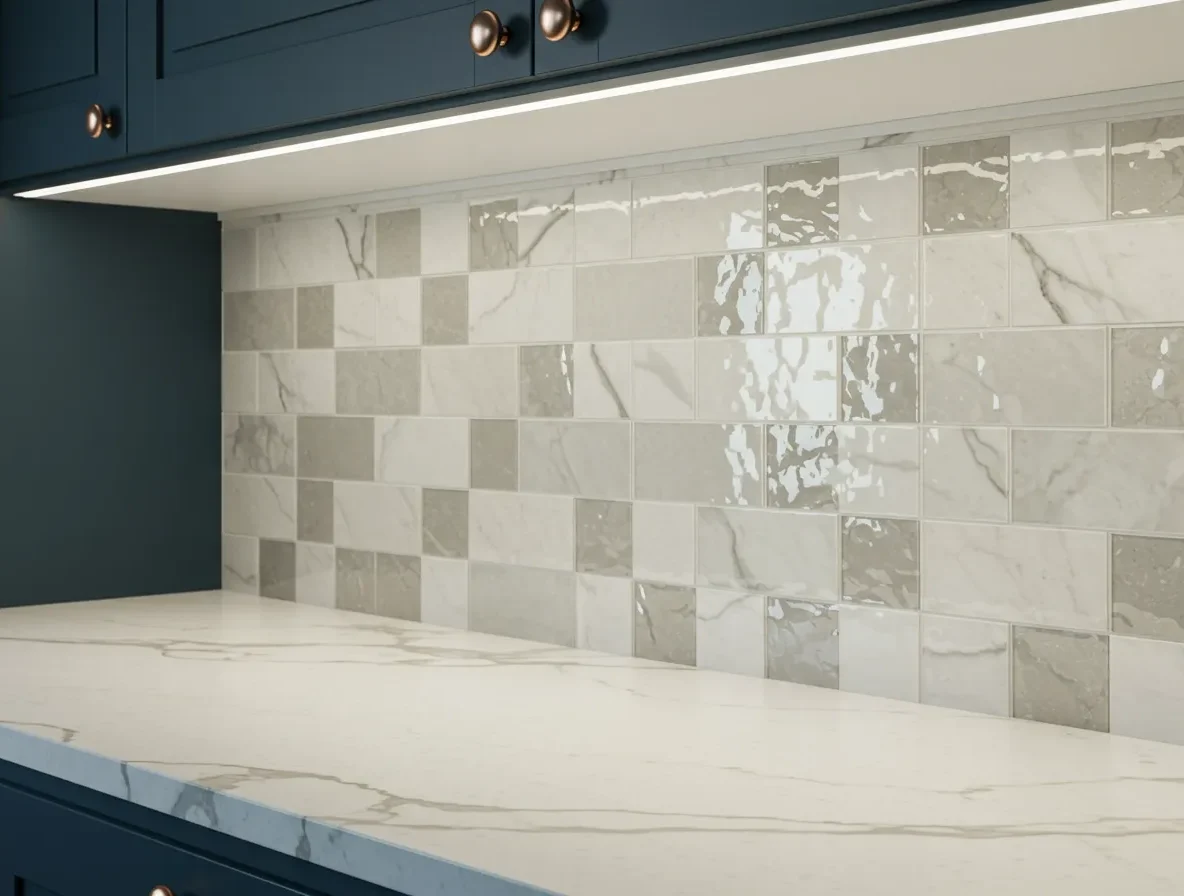
While many design blogs will hand you a list of trendy mosaic patterns or colorful subway tiles, those traditional approaches often lead to visually cluttered walls and a lifetime of scrubbing dirty grout lines.
If you are aiming for a high-end, architectural aesthetic—the kind that elevates a kitchen from “standard builder-grade” to “custom luxury”—you need to think bigger than small tiles.
Here is a curated look at the most sophisticated kitchen backsplash design concepts, blending modern material science with flawless factory engineering.
The Continuous Slab: Ditching Grout for Visually Seamless Stone
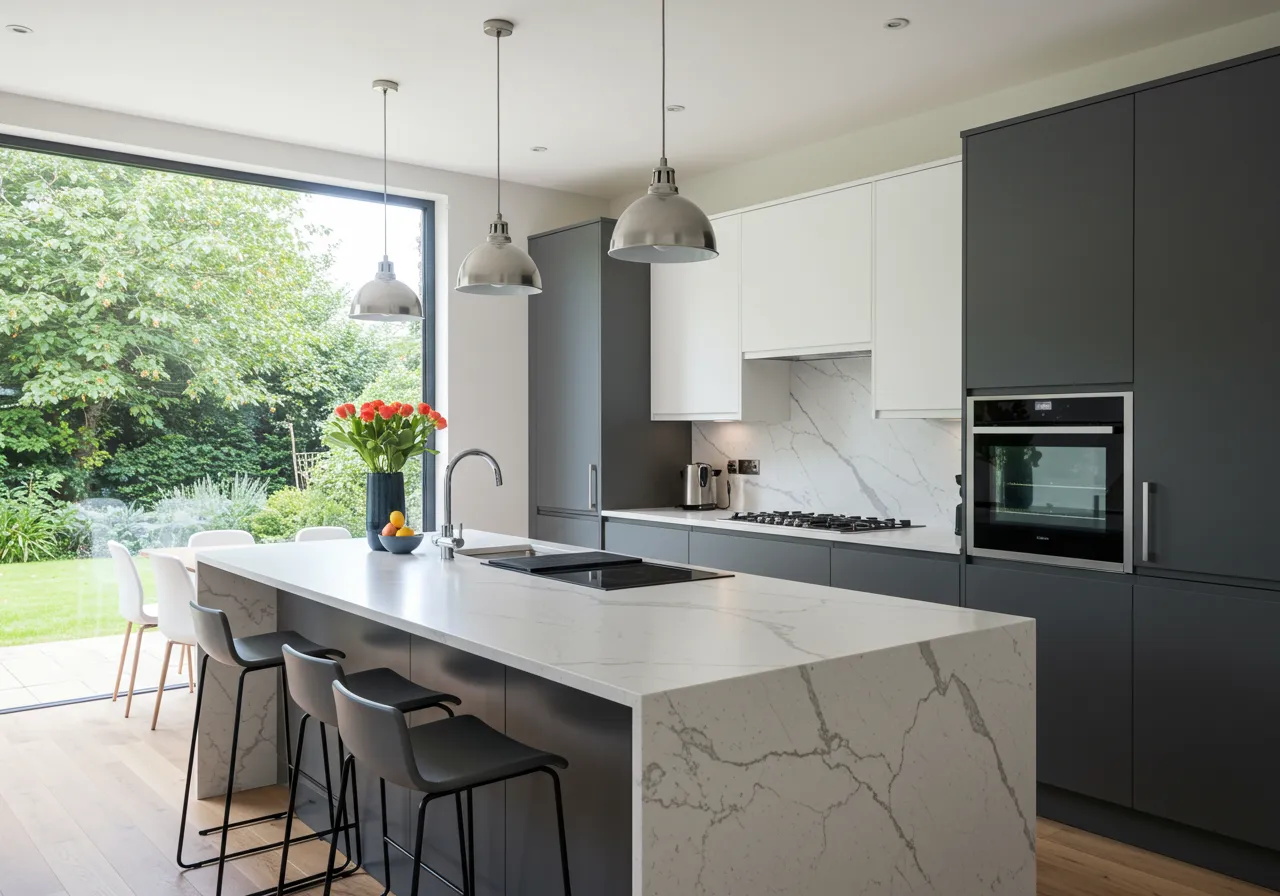
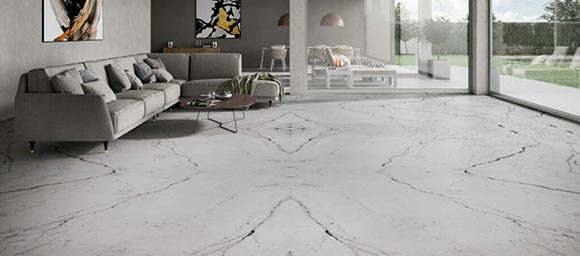
For decades, the standard kitchen backsplash has been defined by small tiles and endless grout lines. But in high-end architectural design, the most defining shift is the move toward the “continuous slab.” This involves taking the exact same material used for your countertop—whether it is a striking Calacatta marble look or a moody dark stone—and carrying it vertically up the wall to meet the upper cabinets.
The immediate impact is visual expansion. By eliminating the horizontal break between the counter and the wall, the eye is drawn upward, making even a compact kitchen feel grand and monolithic.
From a practical standpoint, this design eradicates the nightmare of maintaining grout. There are no porous lines to trap grease, moisture, or cooking splatters; just one smooth, continuous surface that wipes clean instantly.
However, executing this minimalist look requires maximum engineering behind the scenes. The illusion of a continuous block of stone relies entirely on a technique called vein-matching (or book-matching).
The horizontal countertop and the vertical wall panel must be digitally mapped and cut from the exact same jumbo slab. If the veining does not flow perfectly across that 90-degree intersection, the luxurious effect is completely broken. This level of precision requires advanced CNC (Computer Numerical Control) bridge saws and a zero-tolerance fabrication process.
Ceiling-Height Backsplashes and Floating Shelving
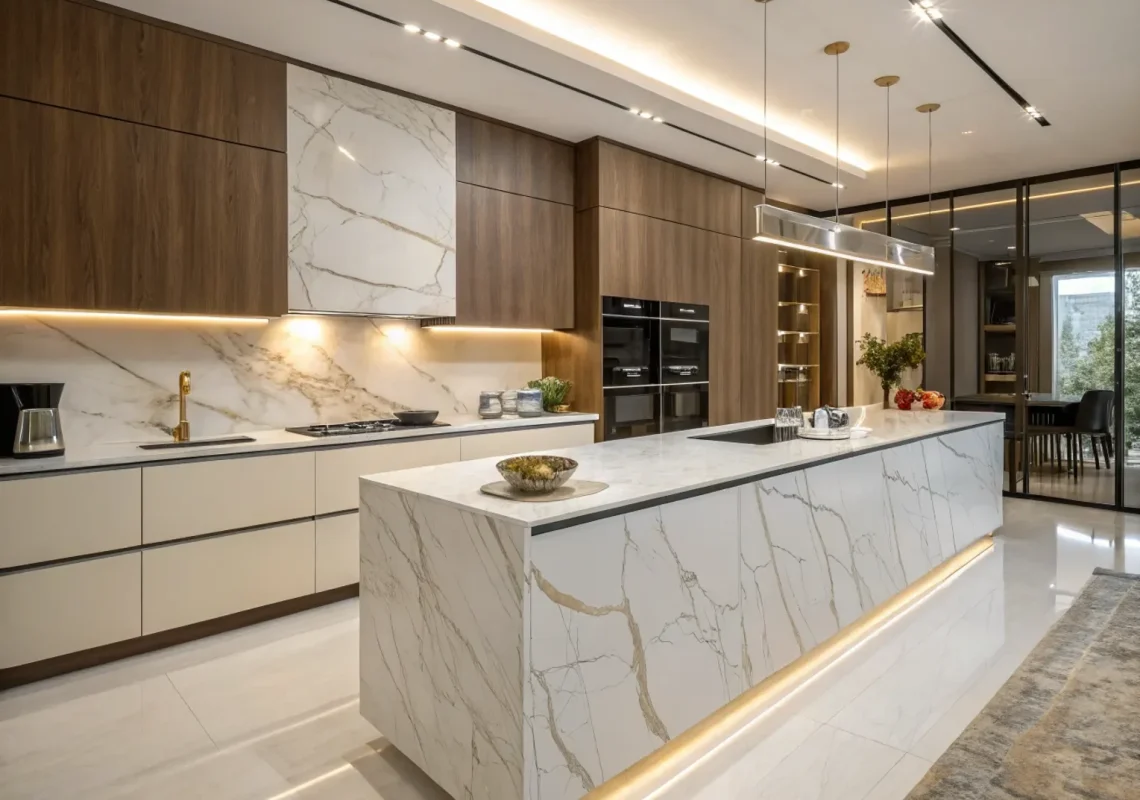
Who decided a backsplash must stop exactly 18 inches above the counter? Modern custom kitchens are challenging this limitation by taking the stone material all the way to the ceiling, particularly around range hoods, sinks, or kitchen windows.
Taking the stone to the ceiling turns a functional protective surface into a dramatic architectural feature wall. To prevent the space from feeling too heavy, designers often replace bulky upper cabinets in these areas with minimalist floating shelves.
However, installing floating shelves over a solid stone slab is not as simple as drilling a few holes on-site. It requires pre-engineered, hidden steel support brackets built into the wall’s framework before the stone is ever applied.
Furthermore, to illuminate the workspace without exposed wires, channels for LED lighting strips (typically a warm 3000K to 4000K color temperature) must be routed directly into the wooden shelving during the factory manufacturing phase.
Large Format Sintered Stone: The Ultimate Material
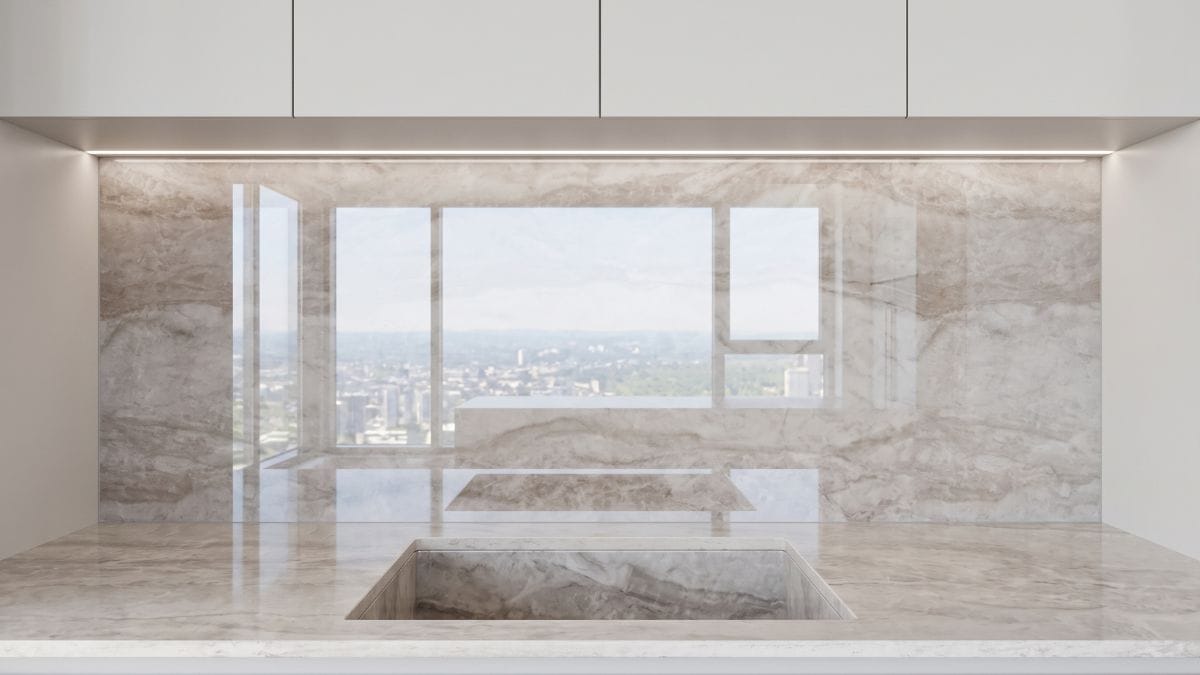
For a long time, homeowners faced a difficult compromise: choose the luxurious look of porous natural marble (which stains easily from red wine and acidic foods) or settle for durable but uninspiring ceramics. Today, Sintered Stone has solved this dilemma, becoming the most advanced material for kitchen surfaces.
Unlike quartz, which contains polymer resins that can scorch or discolor if exposed to the intense heat of a high-BTU professional gas range, sintered stone is formed under extreme heat and pressure. It is 100% heat-proof, UV resistant, and boasts a porosity of near zero.
For backsplashes, manufacturers can utilize ultra-thin profiles of sintered stone (often 6mm or 9mm thick, compared to the standard 12mm or 20mm used for countertops). This lighter weight allows for massive panels—sometimes up to 3200mm in length—to be safely adhered to the wall as a single, unbroken piece, flawlessly mimicking Italian marble without any of the fragility.
Related Article: Beyond Marble: Why Aqua Fusion Quartzite is the Future of Premium Kitchens
Dark & Moody Tones: Mastering Lighting and Texture
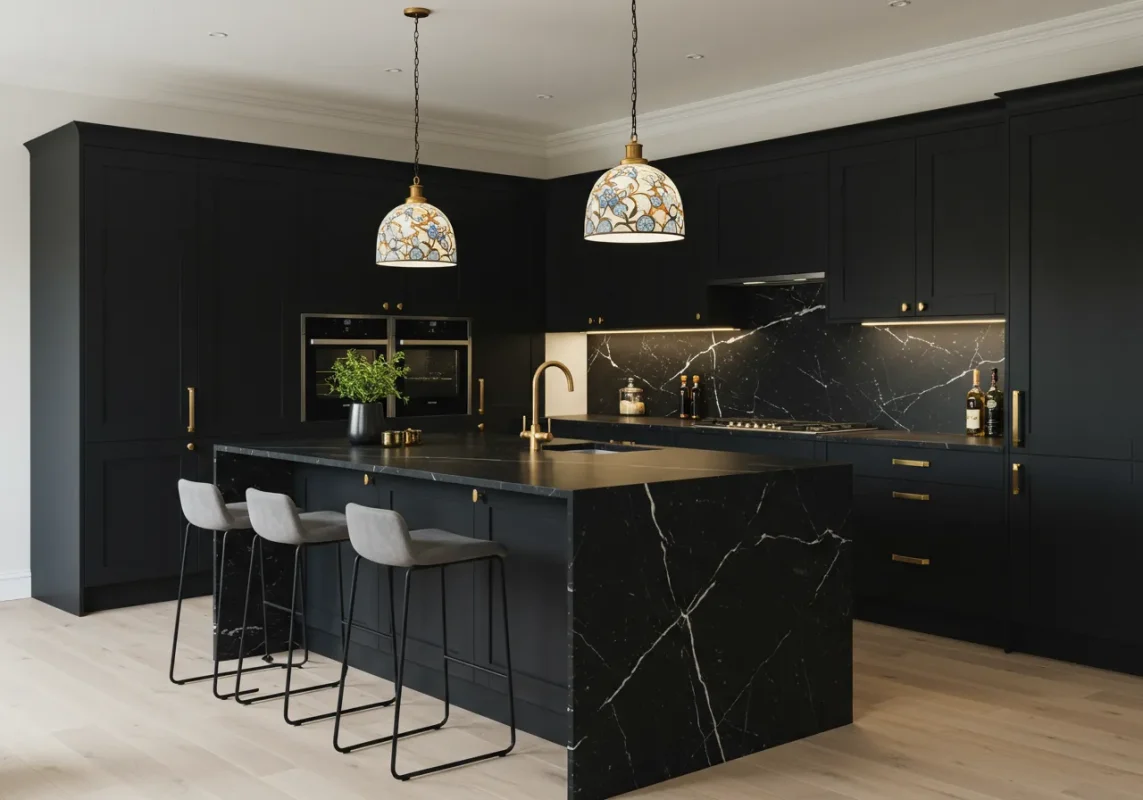
While the all-white kitchen remains a classic, the current movement in luxury interiors leans heavily toward moody, sophisticated palettes: deep charcoal, walnut, or matte black cabinetry paired with dark, dramatically veined stone backsplashes (such as Nero Marquina looks).
The technical challenge of a dark kitchen lies in lighting and finish coordination. Dark stone naturally absorbs light. If you choose a high-gloss finish for a dark backsplash, your under-cabinet LEDs will create harsh, blinding reflections (glare spots) on the stone surface.
Instead, specifying a matte or leathered finish diffuses the light beautifully. You must also ensure the LED strips have a high Color Rendering Index (CRI of 90+) to accurately bring out the subtle undertones of the dark stone.
Coordinating these elements—ensuring the cabinet’s specific undertone does not clash with the stone’s veining, and the lighting interacts perfectly with the surface texture—is a meticulous process that is notoriously difficult when sourcing materials from disjointed, separate suppliers.
Related Article: The Ultimate Guide to Light Wood Kitchen Cabinets in 2026
The Secret to Flawless Execution: One-Stop Sourcing
An architectural kitchen is a precise ecosystem. The relationship between your cabinetry, your countertops, your lighting integration, and your backsplash requires millimeter-level accuracy.
When you fragment your purchasing across different cabinet makers and local stone fabricators, you invite measurement errors, severe color mismatches, and messy on-site modifications.
At George Solution, we engineer the entire space under one roof. As a direct-source manufacturer specializing in full-house customization, your cabinetry 3D data and your stone CNC cutting paths exist in the exact same system. We ensure that every piece of sintered stone is vein-matched to your counters, and every cabinet is pre-routed for your lighting before it ever leaves our Foshan headquarters.
By eliminating the guesswork and integrating the manufacturing process, we provide a seamless installation experience and a breathtaking final result. Contact the George Solution engineering and design team today to start planning your custom kitchen project.
Frequently Asked Questions (FAQ)
What is the standard height for a kitchen backsplash?
The standard height for a backsplash—the space between the countertop and the bottom of the upper cabinets—is typically 18 inches (about 45 cm). However, extending the backsplash to 24 inches or full ceiling height around range hoods is a popular technique to create a more expansive, custom look.
Is sintered stone better than quartz for a backsplash?
Both are excellent premium options, but sintered stone holds a clear advantage behind stoves. Because sintered stone is manufactured without resins, it is completely heat-proof. Quartz can potentially scorch or yellow over time if exposed to the direct, intense heat of a gas range.
How do you clean a continuous slab backsplash?
Because a continuous slab eliminates porous grout lines—the primary place where kitchen grease and dirt accumulate—cleaning is incredibly simple. For sintered stone or engineered quartz slabs, wiping the surface with a soft microfiber cloth and a mild dish soap solution is all that is required to remove daily cooking splatters.