

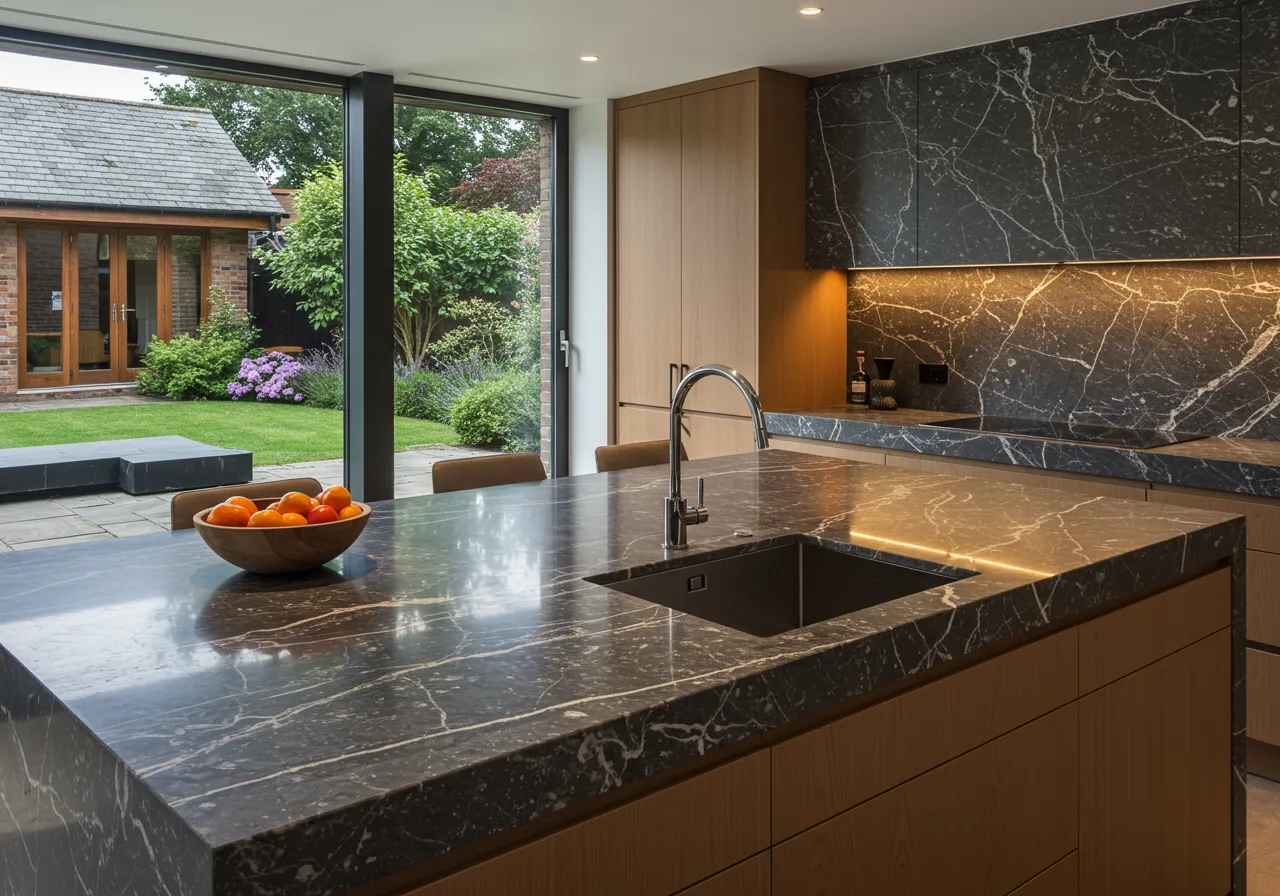
Specifying the right stone for a high-end kitchen requires balancing natural beauty with structural integrity. While soft marbles risk permanent staining and manufactured stones lack authentic depth, true Brazilian quartzite bridges the gap perfectly. Renowned for its vibrant watercolor veining and extreme thermal resistance, Aqua Fusion Quartzite has emerged as the premier choice for luxury residential and commercial kitchens.
Here is everything you need to know about designing, fabricating, and living with this extraordinary stone. I’m excited to show how Aqua Fusion elevates design and functionality in modern kitchens.
Executive Summary: Designing a high-end kitchen often forces a difficult compromise: do you choose the breathtaking natural beauty of marble and risk permanent stains, or do you settle for the manufactured durability of engineered quartz? Aqua Fusion Quartzite eliminates this dilemma entirely. This guide breaks down the geological strengths, precise cabinetry pairings, objective pros and cons, and fabrication requirements behind this premium Brazilian stone, explaining why it is becoming the ultimate choice for luxury homeowners and top-tier contractors.
The Art Of Brazilian Quartzite Kitchens
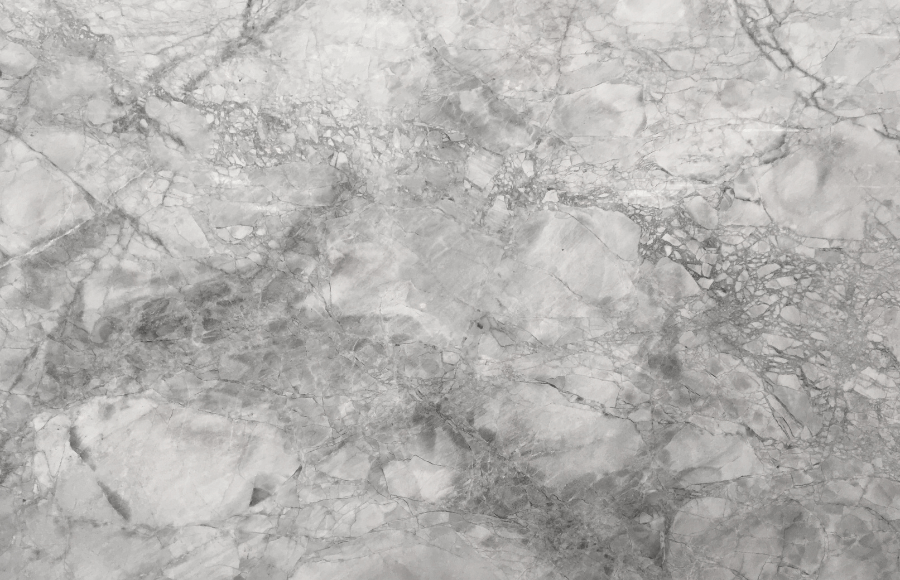
If you have ever walked through a premium stone yard, you know that true natural stone has an undeniable presence. Among the vast selections, Aqua Fusion Quartzite stands in a league of its own. Quarried from the rich geological landscapes of Brazil, this stone is nothing short of a natural masterpiece.
Instead of the repetitive patterns found in artificial surfaces, each slab of Aqua Fusion reads like a geological map or a watercolor painting. It features a mesmerizing interplay of oceanic blues, emerald greens, and sophisticated greys, all woven together with striking veins of warm gold.
For homeowners looking to create a kitchen that serves as the centerpiece of the house, this quartzite offers an exclusive, bespoke aesthetic that simply cannot be replicated in a factory.
Engineered by Nature: The Hard Facts Behind the Beauty
While the visual appeal is what makes people initially select Aqua Fusion, kitchens are demanding work zones. Contractors and homeowners need to know that the surface will actually survive daily life.
The Mohs Hardness Test As a metamorphic rock formed under extreme heat and pressure over millions of years, Aqua Fusion Quartzite boasts a rating of 7 on the Mohs hardness scale. To put that in perspective, luxurious marble sits at a fragile 3 or 4, and even heavy-duty granite typically tops out at 6. This exceptionally dense crystalline structure means Aqua Fusion is highly resistant to the scratches and gouges that easily ruin softer stones. You can prep meals with confidence knowing your counters are physically harder than the steel knives you are using.
Extreme Thermal Resistance One of the biggest frustrations with popular engineered quartz (artificial stone) is its vulnerability to heat; the synthetic resins used to bind it can scorch or melt if a hot pan is set down. Aqua Fusion Quartzite, born from geothermal heat, can comfortably withstand temperatures up to 300°F (150°C). While using a trivet is always a good habit, this stone provides the peace of mind that a misplaced baking sheet will not result in a permanent, costly burn mark.
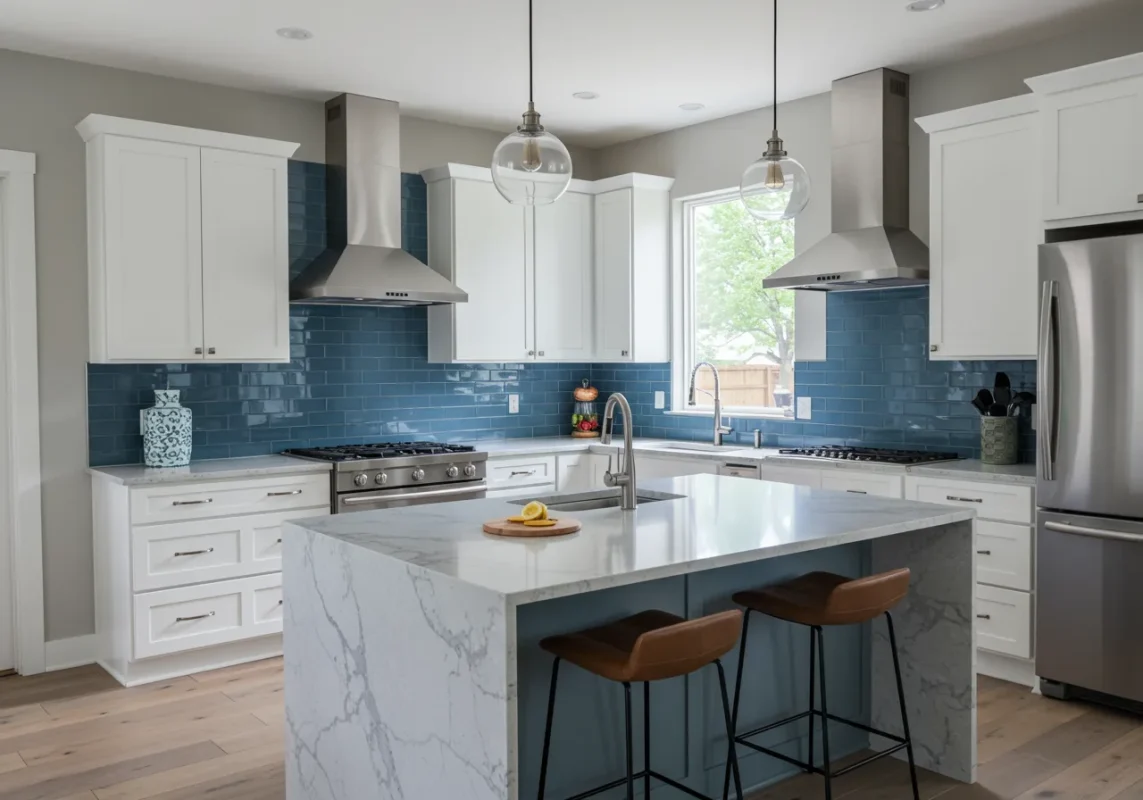
What Are the Pros and Cons of a Brazilian Quartzite Kitchen?
Specifying Aqua Fusion for a project is a significant architectural decision. While its beauty is undeniable, every high-end material comes with functional trade-offs, particularly regarding the budget and structural requirements. Here is an objective breakdown of what to expect.
Pros of Aqua Fusion Quartzite Brazil Kitchen
- Unmatched Visual Exclusivity: Unlike manufactured quartz, which features repeating, printed patterns, Aqua Fusion is 100% natural. Every single slab is a unique piece of earth’s history, providing a bespoke centerpiece.
- Heavy-Duty Performance: Its Mohs 7 hardness and high heat resistance mean it outperforms almost every other natural and artificial stone on the market. It handles the rigors of a heavy-use kitchen without the constant fear of scratching or scorching.
- High Return on Investment (ROI): Premium natural stone significantly elevates real estate value. Buyers in the luxury market actively look for authentic materials, making Brazilian quartzite a highly profitable long-term asset for property developers and homeowners.
Cons of Aqua Fusion Quartzite Brazil Kitchen
- The Premium Price Tag: Brazilian quartzite is a luxury import, and its pricing reflects that. The cost is not just in the raw material; because the stone is so incredibly hard, fabricators charge a premium for labor. It takes longer to cut, requires expensive diamond-tipped blades, and demands highly skilled artisans.
- Structural Weight: Natural quartzite is exceptionally heavy. You cannot install an Aqua Fusion slab on cheap, flimsy cabinetry. The base cabinets must be structurally reinforced and perfectly leveled to support the immense weight without bowing over time.
- Requires Periodic Maintenance: While highly durable, it is not a zero-maintenance synthetic countertop. To remain completely stain-resistant, the stone requires a high-quality penetrating sealer to be applied immediately after installation, and re-applied every one to two years depending on usage.
Recommended Related Reading: Top 10 Open Kitchen Living Room Ideas – Modern Layouts for Small & Large Spaces
Creative Ways to Incorporate Aqua Fusion Quartzite in Your Kitchen
A stunning slab of stone does not exist in a vacuum; its true potential is only unlocked when perfectly paired with the surrounding millwork and lighting. Aqua Fusion’s dynamic colors demand specific design strategies to truly shine.
The Waterfall Island (The Statement Piece)
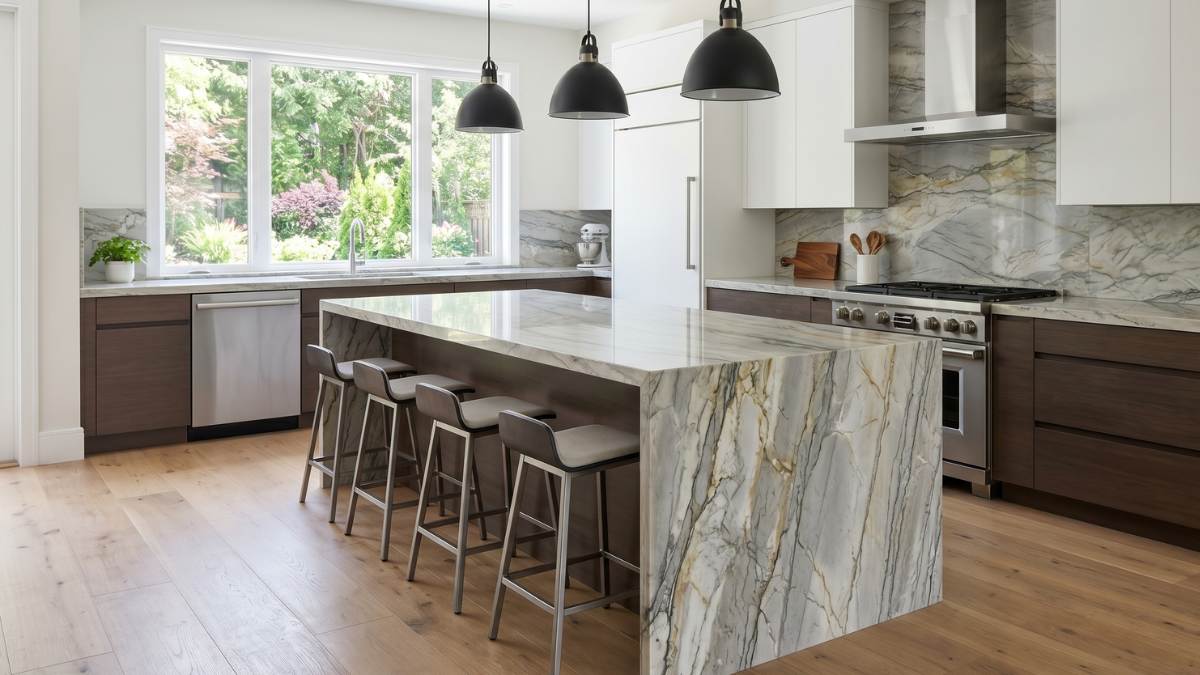
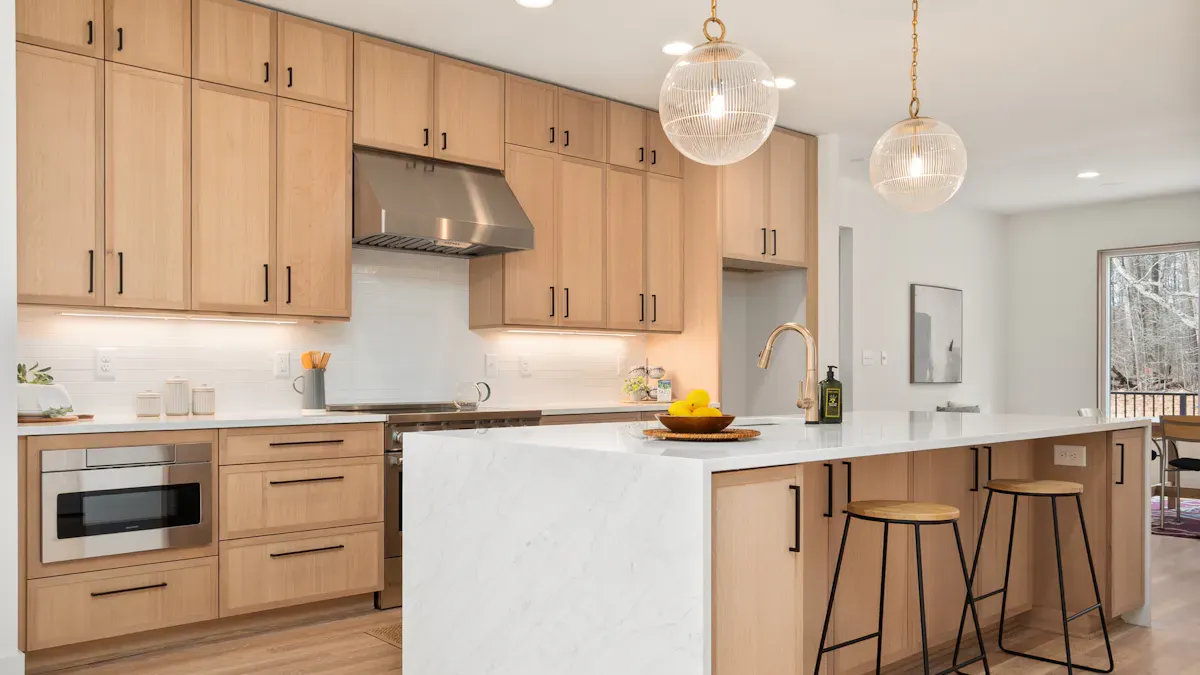
Because of its sweeping veins, Aqua Fusion is the ultimate candidate for a waterfall edge island. Running the stone continuously from the horizontal countertop down the vertical sides creates a monolithic focal point.
- The Engineering Detail: To achieve a flawless waterfall effect, the stone must be cut with a precision 45-degree mitered joint. This creates the illusion of a single, solid block of quartzite rising from the floor. Beyond aesthetics, the stone sides protect the island’s base from scuff marks and chair impacts in high-traffic kitchens.
Mastering the Cabinetry Palette & Hardware
To prevent the kitchen from feeling visually overwhelming, the custom cabinetry must complement the stone. We highly recommend these three pairing strategies:
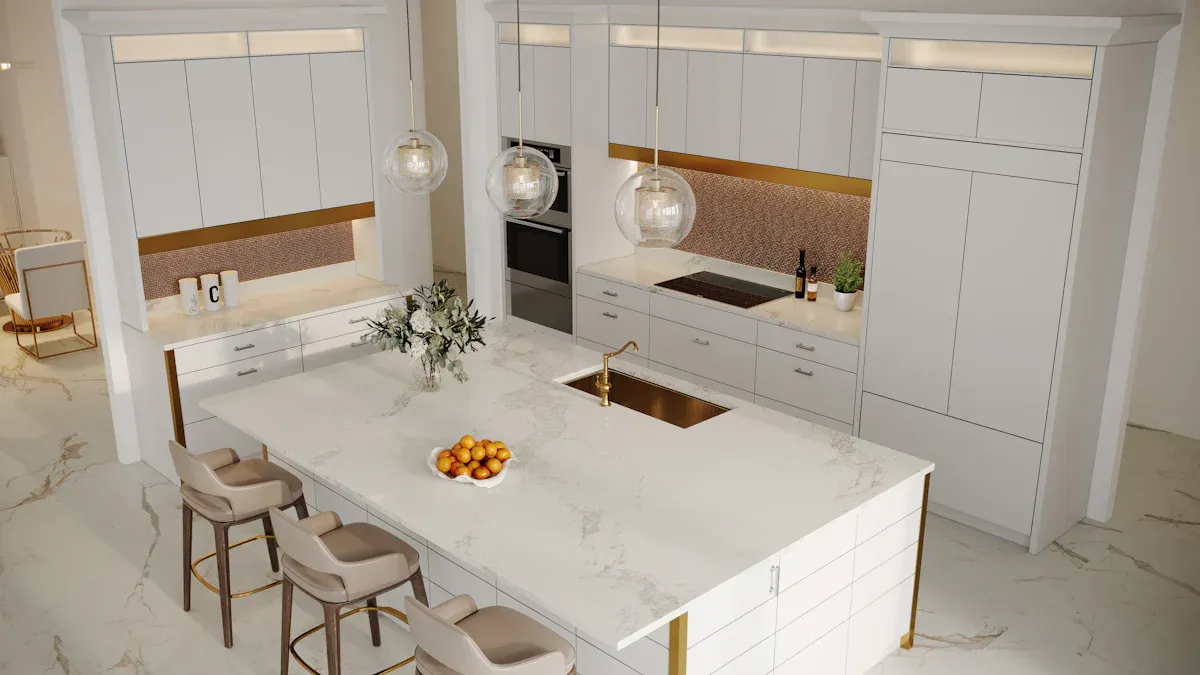
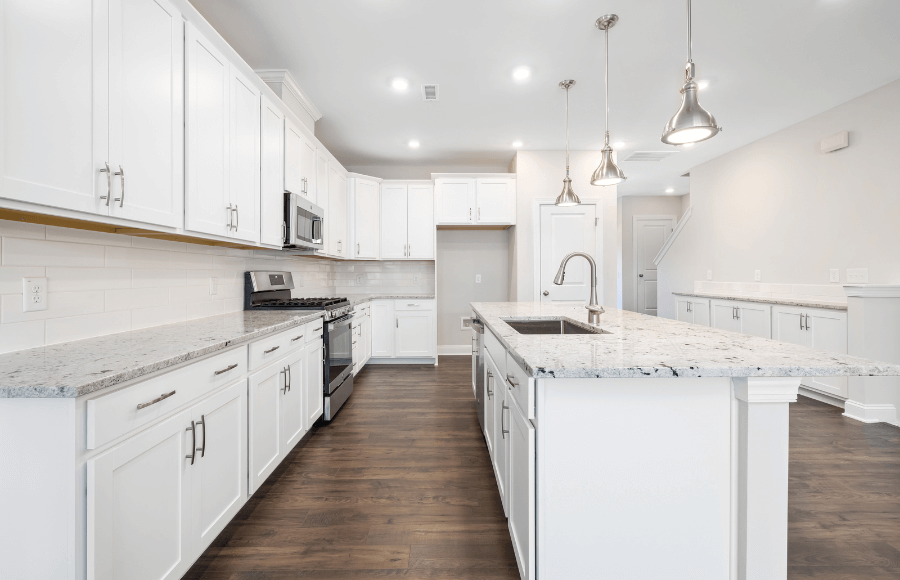
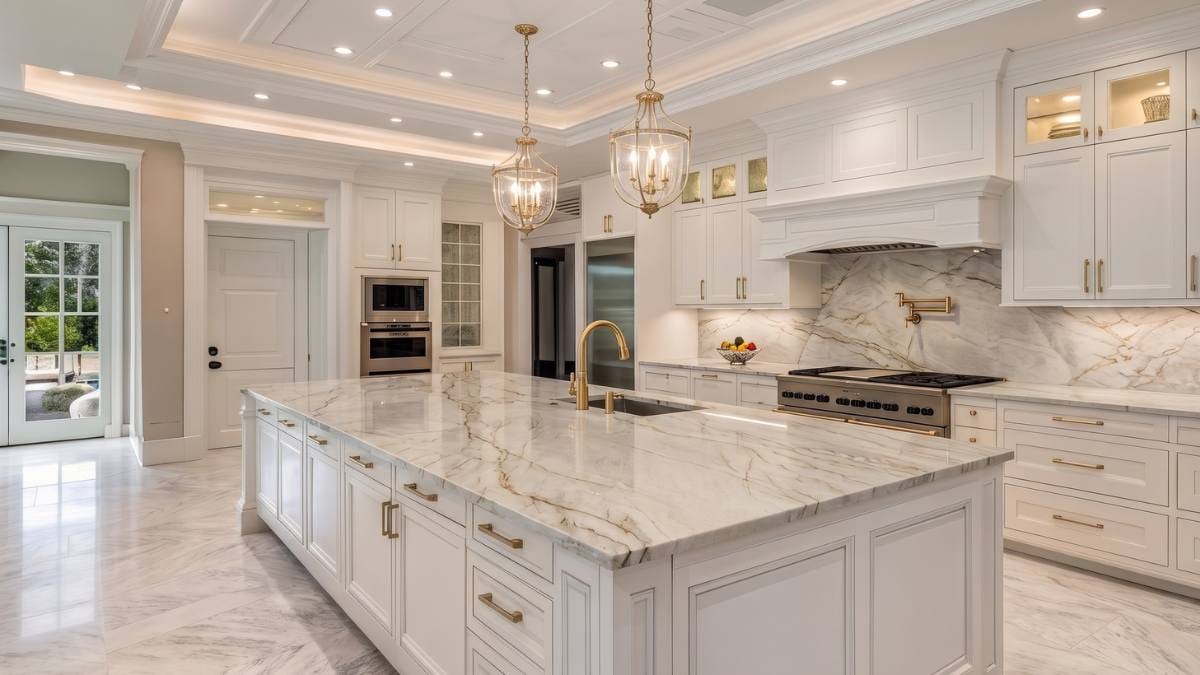
- Crisp White & Brass Accents: Pairing this vibrant stone with clean, white Shaker or flat-panel cabinetry creates a modern, transitional look. Integrating brushed brass or champagne gold hardware (drawer pulls and faucets) perfectly extracts the hidden gold veining within the quartzite.
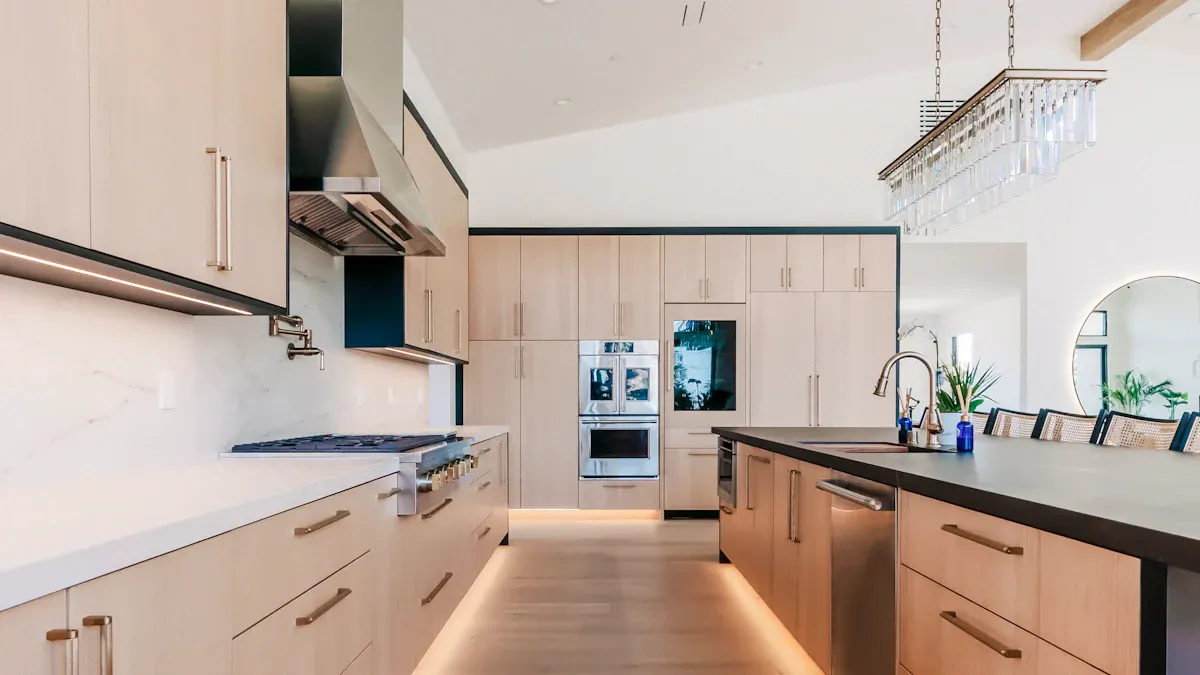
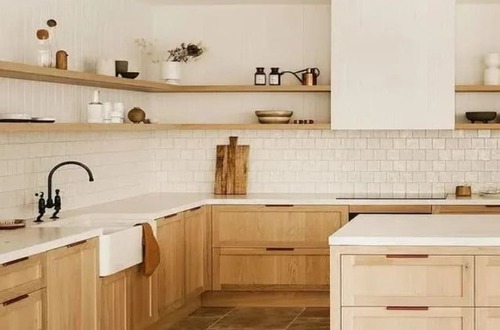
- Warm Wood & Ribbed Textures: To ground the space with organic warmth, pair the stone with natural walnut, light oak, or ribbed wood (fluted) base cabinets. This combination bridges the gap between modern luxury and natural comfort, allowing the oceanic blues of the stone to contrast beautifully against earthy wood tones.
- Moody Navy or Charcoal: For a more dramatic, ultra-luxury aesthetic, dark cabinetry in navy blue or charcoal grey harmonizes seamlessly with the deep water tones of Aqua Fusion, creating a sophisticated culinary space.
Strategic Lighting Design
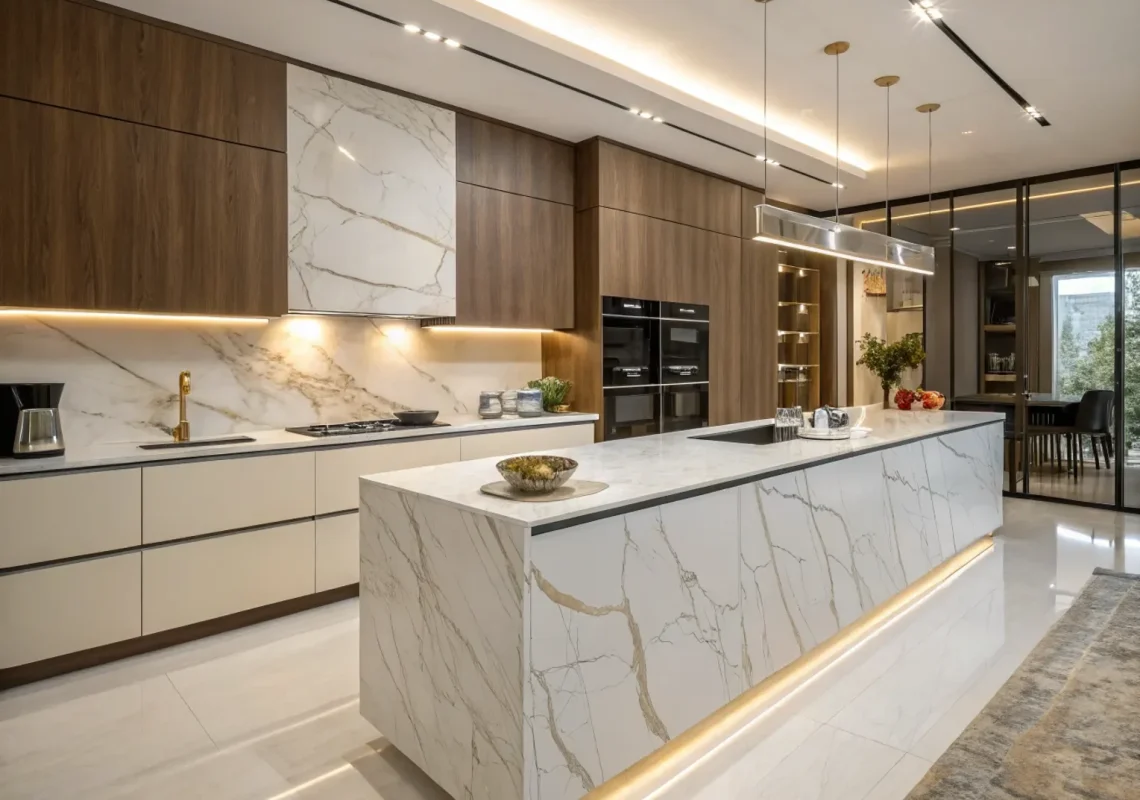
Layered Illumination: Integrating hidden LED strip lights under the countertop overhang highlights the stone’s vertical veins. Sleek glass or brass pendant lights directly above the island create beautiful, cascading reflections on the highly polished surface.
Color Temperature: We recommend using LED lighting with a warm-white color temperature of 3000K to 3500K. Avoid harsh 6000K daylight bulbs, which can wash out the stone’s rich colors and make it look sterile.
Recommended Related Reading: Smart Kitchen Design: The Rise of High-Tech Smart Kitchens in 2026
Installation Considerations: Securing the Perfect Finish
Bringing a material like Aqua Fusion into a kitchen is only half the battle; the true test is executing the installation. Because of the stone’s unique physical properties, contractors and homeowners must focus on the following macro-level installation strategies to ensure a flawless finish:
Strict On-Site Protection: Moving and installing premium slabs requires heavy lifting and extreme care. More importantly, once the countertops and islands are installed, the general contractor must enforce strict surface protection. During the crossover phases of construction—when carpenters, electricians, and plumbers are still working—accidental tool drops are the highest risk factor for luxury stone.
Structural Leveling of the Base: As noted in the cons, quartzite is completely rigid and immensely heavy. Before any stone is placed, the custom cabinetry base must be absolutely level and structurally reinforced. Any slight unevenness in the floor or cabinets will create stress points under the heavy stone, which can lead to micro-fissures over time.
The Art of Vein-Matching: The dramatic, flowing veins of Aqua Fusion require meticulous planning before a single cut is made. The design team and fabricators must map out the slab to ensure the veins flow naturally across seams. Seams should be strategically hidden near sinks or inconspicuous corners to maintain the illusion of a continuous, unbroken natural masterpiece.
Frequently Asked Questions
Does Aqua Fusion Quartzite etch like marble when exposed to lemon juice or vinegar?
No. Unlike marble, which is calcium-based and reacts violently to acids, true quartzite is highly chemically stable. When properly sealed, acidic liquids like citrus, wine, or vinegar will not etch or dull the surface of Aqua Fusion.
Can Aqua Fusion be used for an outdoor BBQ countertop?
Absolutely. Because it contains no synthetic resins, Aqua Fusion is entirely UV resistant and will not fade or yellow under direct sunlight. Combined with its high heat resistance, it is a phenomenal choice for luxury outdoor kitchens.
What is the best way to clean this quartzite on a daily basis?
Keep it simple. Use a soft microfiber cloth with warm water and a pH-neutral dish soap or a dedicated natural stone cleaner. Avoid abrasive scouring pads and harsh chemicals (like bleach or ammonia), as these can slowly degrade the protective sealer over time.