

When renovating a home or designing a new commercial space, interior doors are often treated as an afterthought. However, the materials you choose for your doors dictate much more than just visual aesthetics. They determine how much noise travels between rooms, how the door holds up to daily impact, and the overall architectural “feel” of your space.
As a leading manufacturer and supplier of comprehensive building materials at George Solution, we see firsthand how material choices impact the final project. With options ranging from traditional solid wood to modern minimalist aluminum, navigating the market can be overwhelming.
In this comprehensive guide, we strip away the marketing jargon to break down the exact interior door materials you need to know, how they perform, and where they belong in your project.
The Foundation: Hollow Core vs. Solid Core Interior Doors
Before you fall in love with a specific color or wood grain, you must look inside the door. Unless you are purchasing a 100% natural solid wood door, nearly all interior wooden doors on the market fall into two structural categories: Hollow Core and Solid Core.
This invisible structural difference dictates everything from the price and weight to acoustic privacy.
1. Hollow Core Doors: The Budget-Friendly Standard
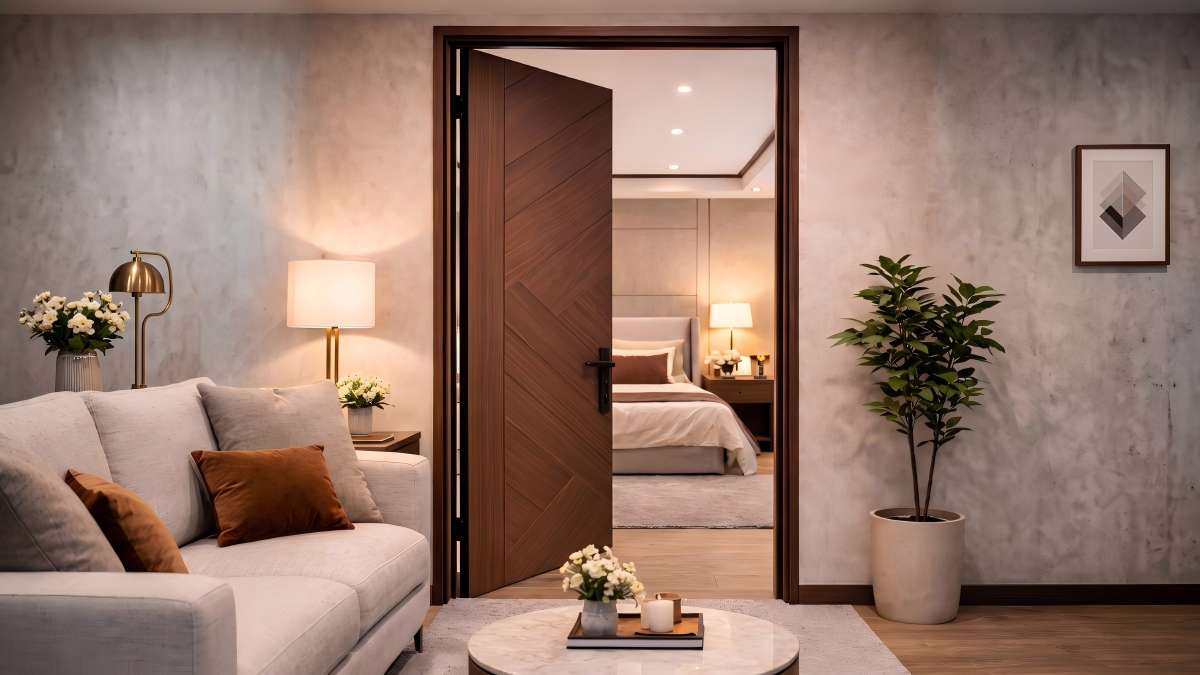
Despite the name, hollow core doors are not completely empty inside. They feature a solid wood frame around the edges, but the interior is filled with a lightweight, honeycomb cardboard or fiberboard structure. The entire frame is then wrapped in a thin skin of MDF or wood veneer.
- The Pros: They are incredibly lightweight, making them easy to transport and install. More importantly, they are highly cost-effective. If you are outfitting a large multi-family complex on a strict budget, hollow core is the standard go-to.
- The Cons: Because they are mostly air, they offer almost zero sound insulation. A hard impact can also easily punch a hole through the thin outer skin.
- Best Used For: Closets, pantries, laundry rooms, or spaces where acoustic privacy is not a priority.
2. Solid Core Doors: The Premium Alternative
Solid core doors bridge the gap between affordable hollow doors and expensive natural solid wood doors. They are completely filled with a heavy mixture of engineered wood or solid MDF, then finished with a high-quality wood veneer or a smooth, paint-grade skin.
- The Pros: This upgrade fundamentally changes how a house feels. Solid core doors are heavy, durable, and offer excellent sound deadening. Because the core is engineered, they are actually more resistant to expanding and contracting from humidity than natural wood.
- The Cons: They are significantly heavier, meaning they require heavy-duty hinges and usually two people to install safely.
- Best Used For: Bedrooms, bathrooms, home offices, and media rooms.
Related Article: The Architectural Guide to Custom Door Designs: Styles and Spaces
The Core Materials: What Actually Goes Into Your Doors?
Once you understand the internal core, the next step is selecting the exterior material. The market has evolved significantly beyond basic wood and hollow cardboard, offering advanced composites and metals designed for specific environments.
Here is an honest look at the materials dominating modern construction in 2026.
The Traditional Standard: Solid Wood
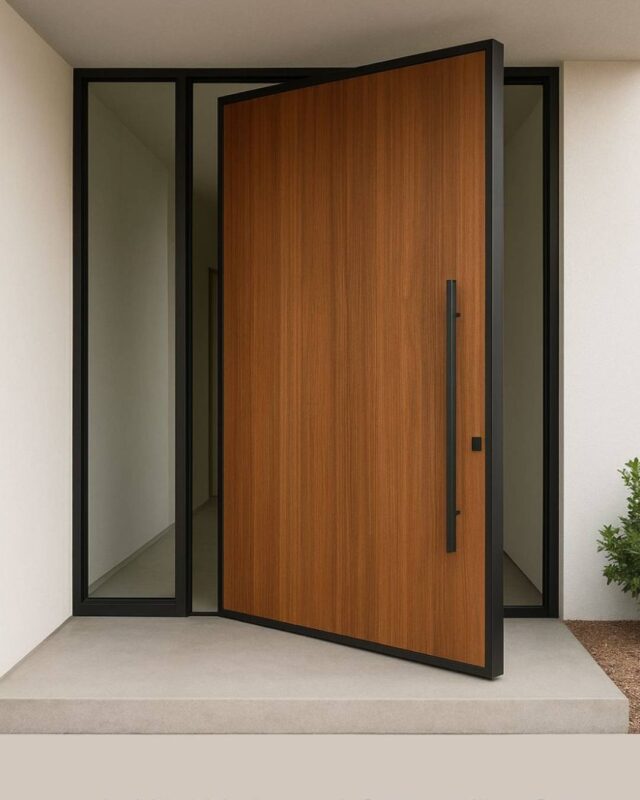
For centuries, solid wood has been the undisputed gold standard for luxury homes. Crafted entirely from natural species like oak, mahogany, or walnut, these doors carry a satisfying, heavy weight and deliver exceptional acoustic privacy.
Many homeowners and traditional builders prefer solid wood because it is a generational investment; if the door gets severely scratched or dented, it can simply be sanded down and refinished.
However, natural wood comes with a distinct biological flaw: it breathes. In environments with high humidity or aggressive temperature shifts, solid wood doors are notoriously prone to expanding, warping, or sticking in their frames. They also sit at the highest price point on the market.
The Budget Staple: Hardboard
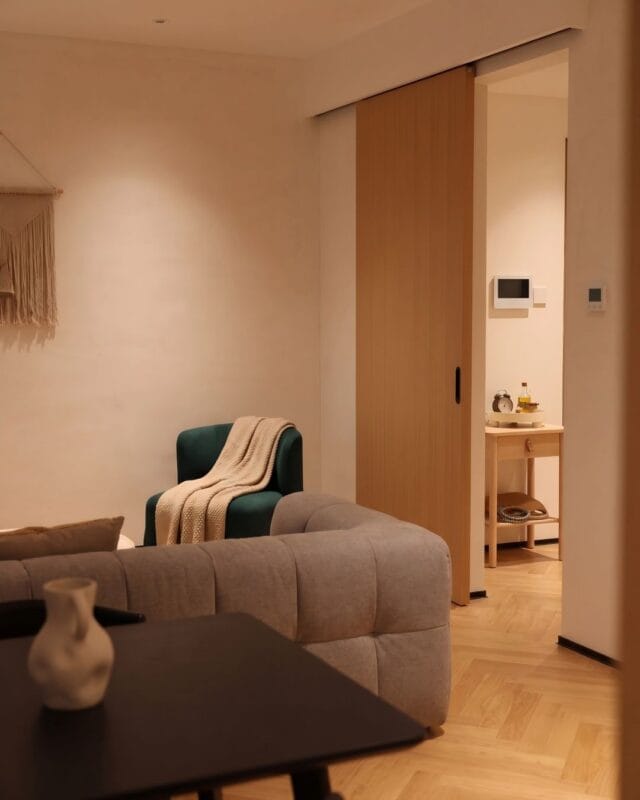
When dealing with strict budgets or large-scale multi-family developments, hardboard is the industry’s workhorse. Hardboard is a high-density engineered wood product that manufacturers press into thin “skins.”
If you have ever seen a standard, lightweight, white six-panel door in a residential home, you are likely looking at a hollow-core hardboard door. While it lacks the premium weight and feel of natural wood, hardboard holds paint exceptionally well and resists the shrinking and swelling that plagues solid wood.
It is the ultimate cost-effective solution for closets and secondary rooms.
The Paint-Grade Champion: MDF (Medium-Density Fiberboard)
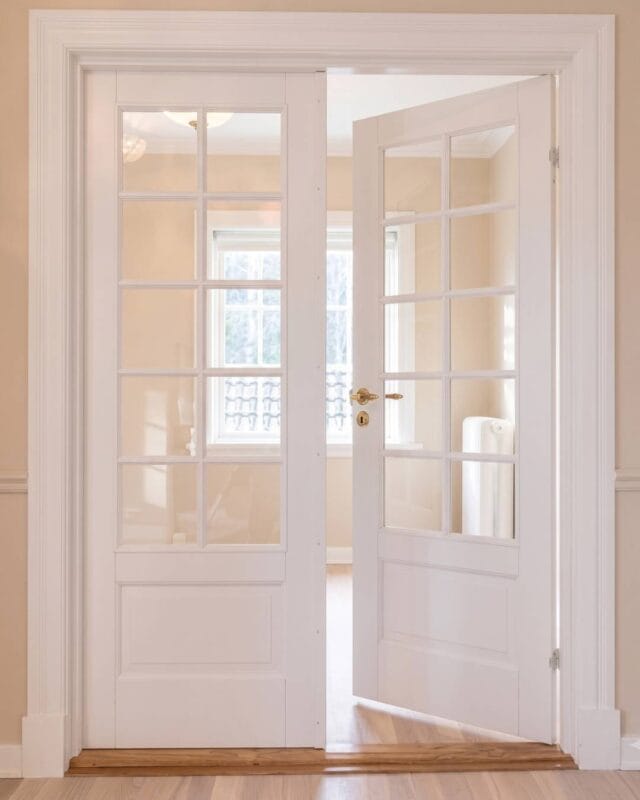
If you want the stability of engineered wood but the heavy, premium feel of a high-end door, MDF is where the industry turns. MDF is significantly thicker and denser than hardboard. Because it is engineered without a natural wood grain, it provides an ultra-smooth, flawless canvas for paint—meaning no unexpected splitting or cracking over time.
Designers frequently utilize solid MDF doors because the material can be precisely router-carved by CNC machines to create crisp, modern geometric lines.
The only limitation? MDF cannot be stained; it must be painted or wrapped in a wood veneer.
The Next-Generation Upgrade: Carbon Crystal Doors
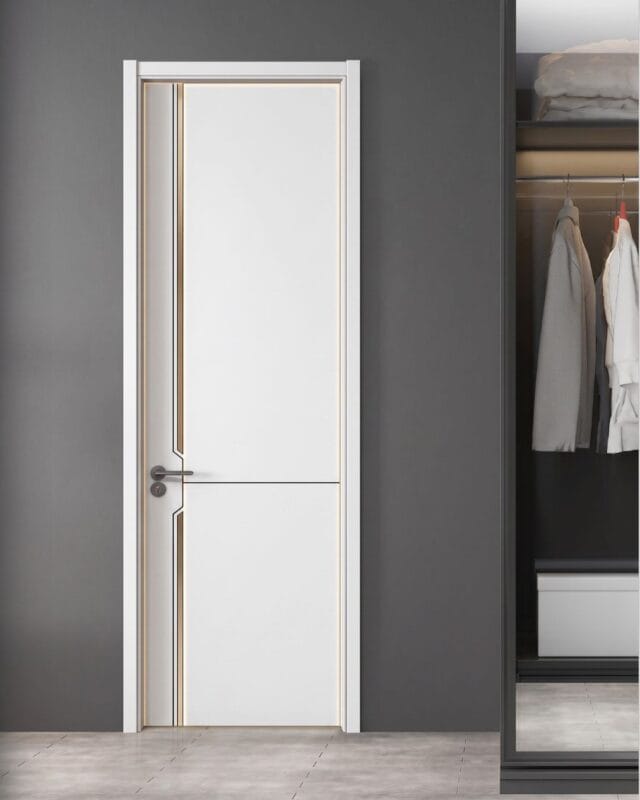
One of the most rapidly growing trends in high-end projects and international markets is the Carbon Crystal door. This is an advanced composite product that typically features a solid wood or plywood core, entirely wrapped in a carbon crystal composite panel.
The appeal of this material lies in its near-indestructibility. The surface is 100% waterproof, making it highly effective for poorly ventilated bathrooms, and it is incredibly resistant to scratches and everyday impacts. Furthermore, carbon crystal doors are manufactured without traditional painting processes, meaning they release zero formaldehyde (VOCs).
Visually, they can flawlessly mimic high-end textures, from natural stone and exotic wood grains to the highly sought-after matte “skin-feel” finish. While the advanced manufacturing process makes them costlier than standard MDF, their lifespan and zero-maintenance profile heavily outweigh the initial investment.
Related Article: The Top 10 Window and Door Manufacturers in China (2026 Guide)
The Modern Minimalist: Aluminum & Glass
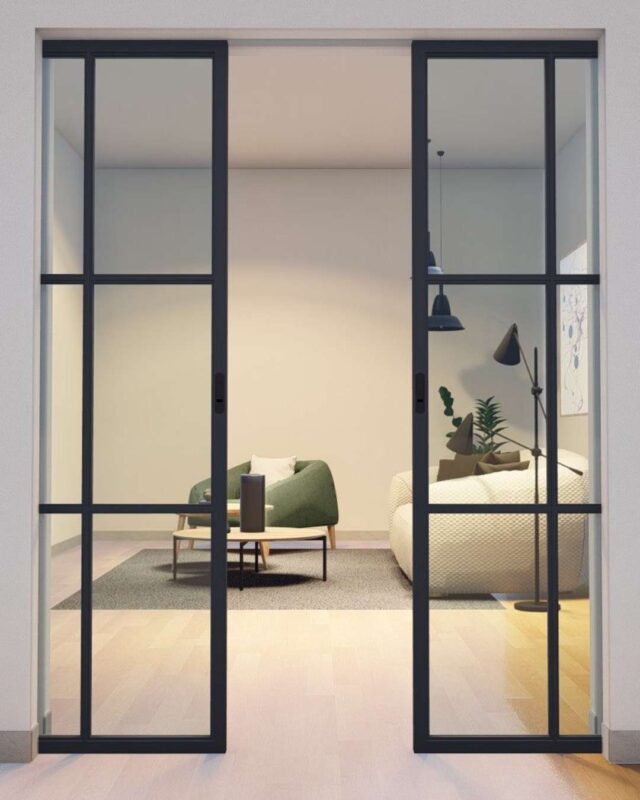
Moving completely away from wood, narrow-frame aluminum doors integrated with tempered or frosted glass have become the defining feature of contemporary and industrial builds. Architects favor aluminum because the metal is completely immune to rust, rot, and warping, allowing for an exceptionally thin structural profile that doesn’t compromise strength.
These doors serve brilliantly as functional room dividers—such as separating a home office from a hallway—without blocking the flow of natural light. The obvious trade-off is privacy. Because glass inherently offers less acoustic and visual separation, aluminum doors are best reserved for transitional spaces rather than primary bedrooms.
Popular Interior Door Styles & Material Configurations
The style of the door should seamlessly integrate with your chosen material. Here is how professional designers pair styles with optimal materials:
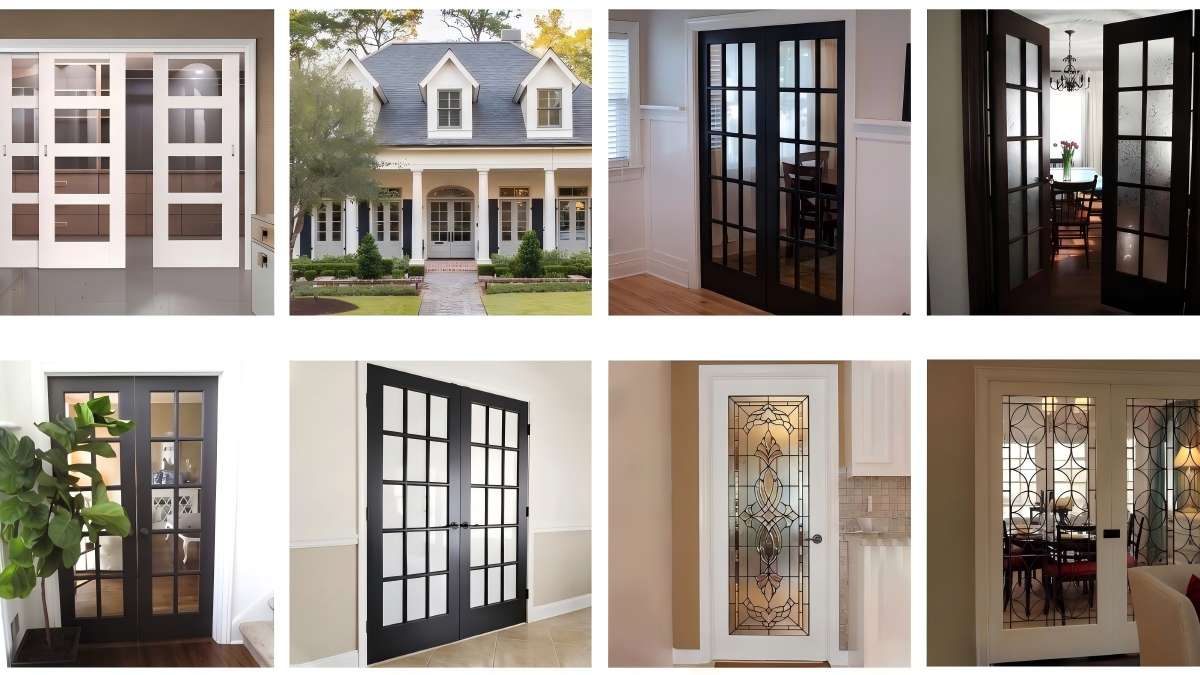
- Panel Doors: Featuring classic rectangular patterns (like the popular 1-panel Shaker or classic 6-panel doors). Best Material: Solid MDF for a flawless painted finish, or Solid Wood for a traditional stained look.
- Flush Doors: Completely flat and smooth, offering a highly modern, minimalist aesthetic. Best Material: Solid Core MDF covered in a premium, exotic wood veneer.
- French Doors: Double doors featuring large glass inserts extending most of the door’s length. Best Material: Aluminum for a sleek modern grid, or Solid Wood for a traditional library/dining room entrance.
- Barn Doors: Surface-mounted doors that slide on an exposed upper metal track. Best Material: Solid Wood or heavy MDF to ensure the door hangs straight and does not rattle on the track.
- Bifold Doors: Doors that fold in half, typically used to hide wide closets. Best Material: Lightweight Hollow Core MDF, ensuring the folding track hardware is not overworked by heavy materials.
Scenario-Based Selection: Choosing for Your Space
If you are still unsure which door to pick, let the functionality of the room dictate your choice.
What Type of Interior Door Is Best for Bedrooms?
For bedrooms, privacy and noise reduction are paramount. You should always opt for a Solid Core MDF or a Solid Wood door. Hollow core doors will allow living room conversations and TV noise to easily penetrate the bedroom, disrupting sleep.
Are Sliding Interior Doors a Good Choice for Tight Spaces?
Yes. For tight spaces like small ensuite bathrooms, narrow hallways, or walk-in pantries, standard swinging doors eat up valuable floor space. Pocket Doors (doors that slide entirely into a hidden wall cavity) or Sliding Barn Doors (which slide parallel to the wall) are the perfect solutions.
Expert Tip: If you choose a sliding door, the material matters less than the hardware. Always invest in heavy-duty, soft-close track rollers to prevent the door from derailing or slamming.
Final Thoughts
Selecting the right interior doors is a balancing act between your project’s budget, the architectural style, and the practical need for privacy.
A smart, cost-effective strategy for whole-house renovations is to mix and match: invest in premium Solid Core or Aluminum/Glass doors for your bedrooms, bathrooms, and home offices, and utilize matching Hollow Core doors for closets and pantries where soundproofing does not matter.
At George Solution, we supply a complete range of premium interior doors designed to elevate your space. Whether you need the timeless weight of solid wood, the flawless finish of molded MDF, or the modern edge of aluminum and glass, our manufacturing capabilities ensure perfect integration for your next project.
Explore our interior door collections today, or contact our project experts for a customized material quote.
FAQs
What is the best interior door material for a bathroom?
Carbon Crystal doors are the best choice because their composite surface is 100% waterproof and won’t peel. Alternatively, a Solid Core MDF door with a factory-painted finish works well. Avoid natural solid wood, as steam causes it to warp.
Are solid wood interior doors worth the higher cost?
Yes, if you want a generational investment with unmatched authentic beauty. However, if your region experiences drastic humidity changes, solid wood may warp. For a heavy feel without the warping risks, Solid Core MDF is a more stable, cost-effective alternative.
Can I replace hollow core doors with solid core doors using existing frames?
Yes, but you must upgrade the hardware. Solid core doors are significantly heavier. You will need heavy-duty hinges secured deeply into the structural wall framing, not just the trim, to prevent the door from sagging.
Which interior door material is the most soundproof?
Solid Core MDF and Solid Wood doors are the most soundproof because they have the mass needed to block noise. Upgrading from a hollow core (which allows sound to pass through easily) to a solid core is the best way to instantly quiet a room.