

1. Introduction: The Era of the Connected Culinary Space
Imagine preheating your oven from your office, or having your faucet dispense exactly two cups of water with a simple voice command. In 2026, the smart kitchen has evolved from a futuristic concept into a daily reality. The focus is no longer just on adding screens to appliances, but on engineering a space that actively adapts to your lifestyle.
In this guide, we explore the latest tech-driven trends, practical storage innovations, and intelligent layout strategies. Whether you are planning a full remodel or looking to make a few high-impact upgrades, you will discover how to create a culinary space that is more efficient, sustainable, and perfectly tailored to your routines.
2. What Defines a Modern “Smart” Kitchen?
A truly intelligent kitchen is defined by adaptability and integration. It is not merely a collection of standalone gadgets, but a cohesive ecosystem where technology operates quietly in the background to streamline your daily tasks.
While traditional kitchens rely entirely on manual operation and physical presence, connected spaces utilize integrated systems and remote monitoring. For instance, instead of manually checking inventory, an IoT-enabled refrigerator tracks expiration dates and suggests recipes based on what is inside.
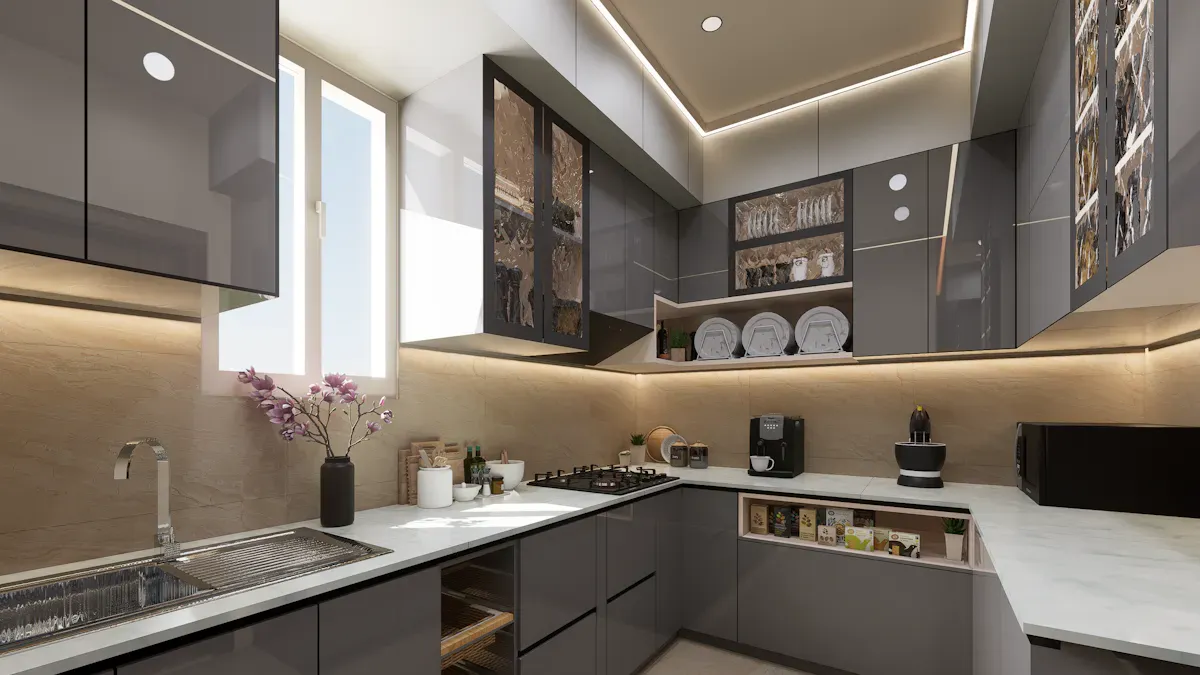
Instead of navigating a dark room, automated lighting systems adjust color temperature and brightness based on the time of day, creating a holistic environment that supports both culinary work and social relaxation.
3. Top Smart Kitchen Design Trends for 2026
Technology is reshaping how we interact with our cooking spaces. Here are the defining innovations for the year.
Voice Command and Automated Ecosystems
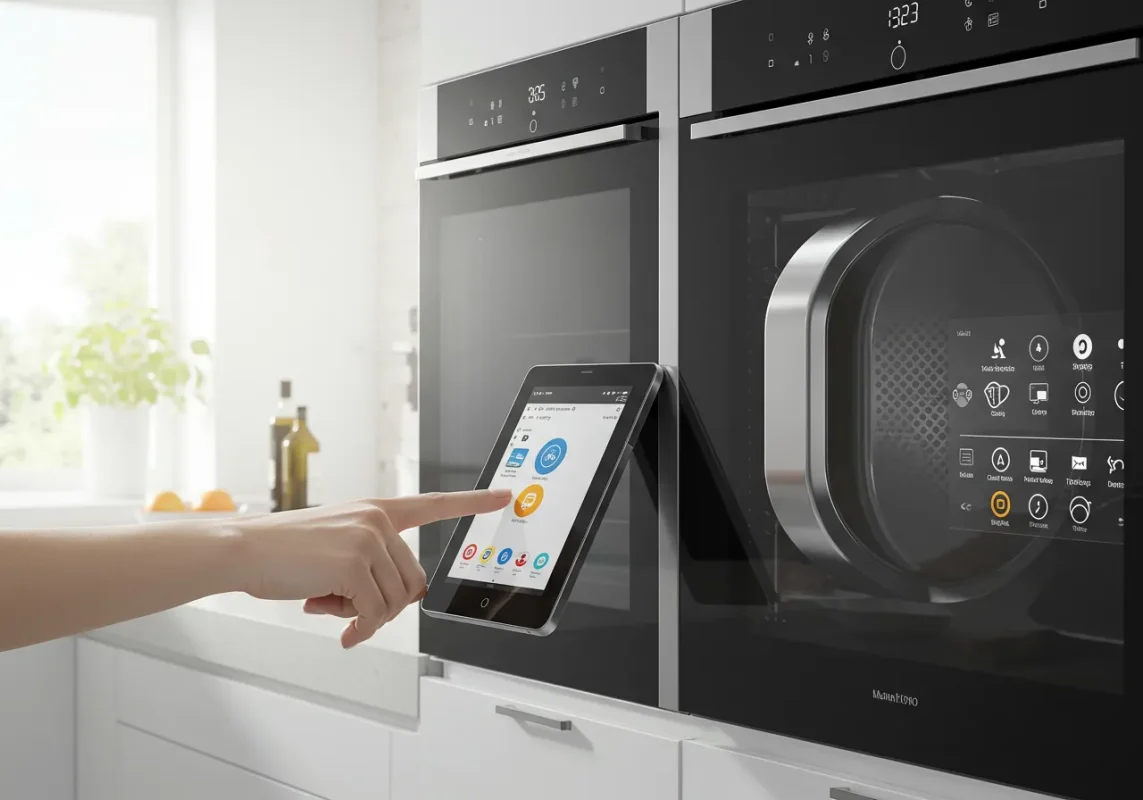
Voice control has matured into a highly reliable, central feature for the modern home. Integrating platforms like Amazon Alexa or Google Assistant allows for complete hands-free operation.
Homeowners can verbally adjust oven temperatures, set multiple timers, or add items to a digital grocery list while their hands are covered in flour. This level of automation significantly reduces surface contact and accelerates the cooking process.
IoT-Enabled Appliances
Connectivity between appliances creates a seamless workflow. In 2026, dishwashers synchronize with cooking appliances to automatically initiate the correct cleaning cycle based on what was cooked.
Advanced air fryers and multi-cookers come equipped with smart thermometers that monitor internal food temperatures and send push notifications to your smartphone the moment a meal reaches perfection.
Touchless Fixtures and Hygiene-First Tech
Post-pandemic design continues to prioritize hygiene. Touchless sinks and motion-activated trash cans are now baseline requirements in high-end remodels. By utilizing precision sensors, these fixtures drastically reduce the transfer of bacteria during food preparation. Furthermore, automated faucets are engineered to dispense exact water volumes, making them a crucial component for sustainable water conservation.
4. Intelligent Layouts and Ergonomic Flow
Advanced technology requires a physical framework that supports it. A high-tech kitchen must balance electronic integration with classic ergonomic principles.
The Tech-Enhanced Work Triangle
The traditional “work triangle” (the distance between the sink, stove, and refrigerator) remains fundamentally important, but it is now enhanced by tech. Placing a smart hub or a central charging station within this triangle ensures that digital recipes, video calls, and appliance controls are always within arm’s reach without disrupting the physical cooking flow.
Modular Cabinetry for Future Upgrades
here is a fundamental discrepancy in a high-tech kitchen: high-quality wooden cabinetry can last 20 years, but digital appliances often become obsolete or require upgrading within 5 to 7 years. Modular cabinetry solves this mismatch.
By designing cabinets with removable panels and accessible raceways for wiring, homeowners can swap out a smart oven or upgrade a built-in coffee machine without needing to tear down drywall or rebuild the surrounding structure. It is a design choice that anticipates future technological shifts.
Advanced Storage Solutions
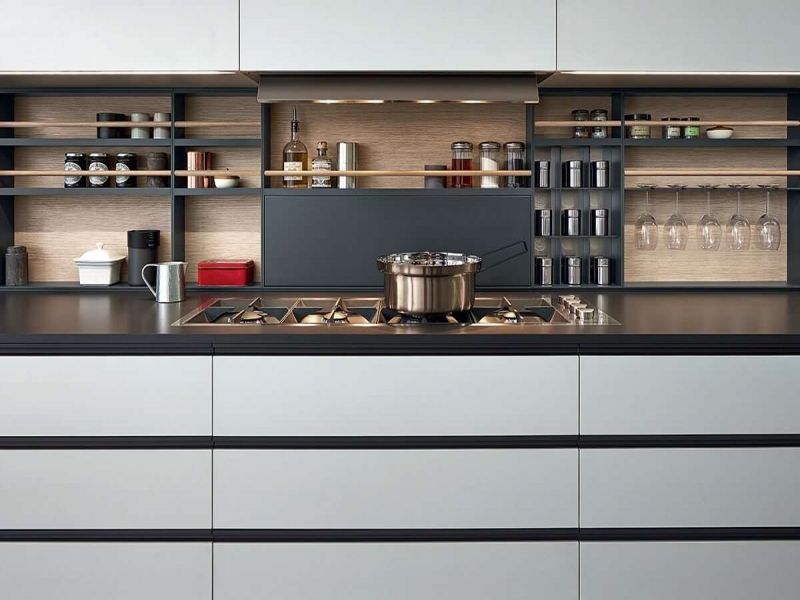
As kitchens take on more functionality, the visual noise of technology must be managed. The trend is moving rapidly toward “appliance garages”—dedicated countertop cabinets with heavy-duty internal power strips where appliances like toasters and blenders can be used and then immediately hidden behind retractable doors.
Additionally, motorized upper cabinets that lower to counter height at the push of a button are becoming standard, offering an elegant accessibility solution for multi-generational households.
Related article: Top 10 Open Kitchen Living Room Ideas – Modern Layouts for Small & Large Spaces
5. The Real-Life Benefits of a Connected Kitchen
Upgrading to a connected culinary space offers tangible returns on your daily quality of life.
Unmatched Convenience and Efficiency
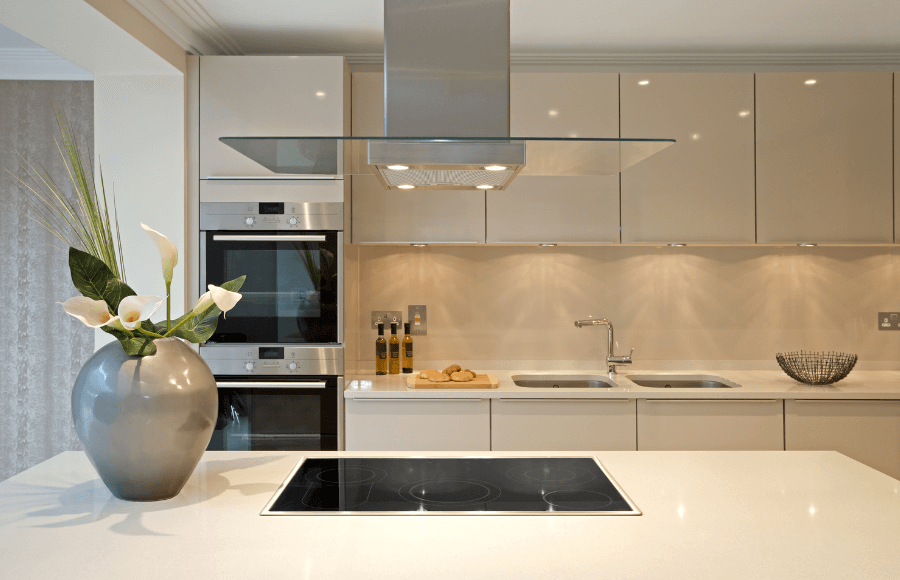
The primary benefit of a smart kitchen is not just physical convenience; it is the reduction of mental effort. In a fully integrated system, the induction cooktop communicates directly with the ventilation hood, automatically adjusting the fan speed based on the amount of steam or smoke detected.
You no longer need to manage multiple settings simultaneously; the environment reacts to your cooking intuitively, allowing you to focus purely on the food preparation.
Enhanced Safety and Hygiene
A traditional kitchen relies on human memory to prevent disasters; a connected kitchen acts as an active safety net. Remote monitoring eliminates the anxiety of wondering if you left the stove on while driving to work—a quick glance at an app allows you to power down appliances from anywhere.
Furthermore, smart leak detectors placed under the sink or dishwasher can automatically shut off the main water valve the moment moisture is detected, preventing catastrophic water damage before you are even aware of the issue.
Sustainability and Energy Savings
High-tech appliances achieve energy efficiency through precision. Smart refrigerators feature distinct, micro-climate zones that maintain exact humidity levels, keeping produce fresh for weeks longer and drastically reducing food waste.
During the cooking process, intelligent ovens use internal cameras and sensors to monitor the food’s progress, adjusting heat instantly to avoid overcooking and wasted energy. These granular optimizations lead to a naturally lower environmental footprint over time.
6.Conclusion: Future-Proofing Your Space
Does the thought of electrical panels, hidden wiring, and tech jargon make your head spin? It shouldn’t have to. The secret to a kitchen that won’t feel outdated in three years is planning what goes behind the walls—and that is where good design comes in.
To future-proof your kitchen, you just need to keep a few simple principles in mind. First, look for appliances that share a universal “language” (often called the Matter standard). This ensures that your fridge and your smart lighting will always work together, even if they are made by different brands. Second, plan for future wiring.
During a remodel, simply hiding empty tubes behind your cabinetry means you can easily add new cables years down the line without ever tearing up your beautiful drywall.
This level of foresight is exactly where professional planning pays off. At George Solution, we design your cabinetry and kitchen layouts with tomorrow in mind. We handle the structural headaches—planning for hidden wires, modular flexibility, and smart appliance integration—so you don’t have to. We build the foundation, so you can simply focus on enjoying a beautiful, effortlessly connected culinary space.
7. FAQ: Expert Answers on Connected Kitchens
Do high-tech kitchen systems require a complete remodel?
No. You can transition to a smart kitchen incrementally. Start with high-impact, standalone upgrades like a touchless faucet, a Wi-Fi-enabled multi-cooker, or smart LED under-cabinet lighting. Major structural changes are only necessary if you are rerouting plumbing or integrating flush-mount smart refrigerators.
How do smart appliances actually save energy?
Connected appliances use advanced sensors to optimize their performance. A smart oven maintains exact temperatures without fluctuation, while smart refrigerators track your usage habits to adjust cooling cycles during times of low activity. Additionally, energy-monitoring apps provide real-time data, helping you identify and eliminate power waste.
Are connected kitchen appliances easy to use for everyone?
Yes. Modern interfaces prioritize user-friendly design. Most systems can be controlled via intuitive smartphone apps, simple voice commands, or traditional physical dials. You can choose the interaction method that feels most comfortable for you, ensuring the technology serves your needs rather than complicating them.
Can I mix and match different brands of smart appliances?
While staying within one brand ecosystem (like GE Profile or Samsung SmartThings) offers the most seamless “out-of-the-box” experience, the industry is moving toward universal compatibility. Utilizing a central smart home hub (such as Amazon Echo or Google Nest) allows you to bridge different brands and control them from a single interface.