

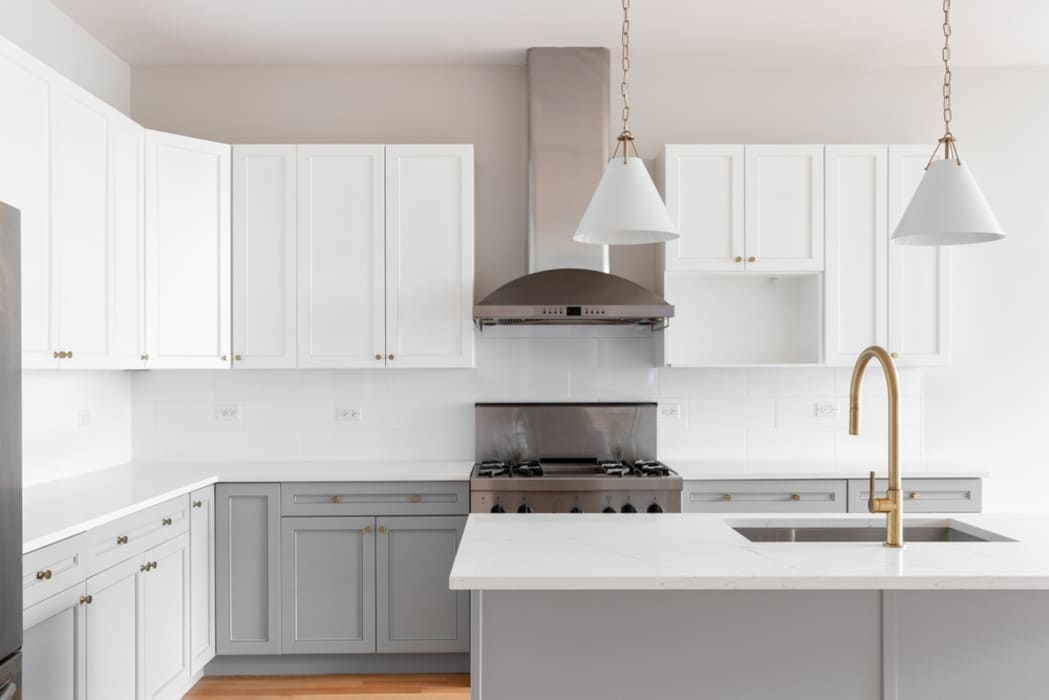
When it comes to kitchen cabinets, the choice of material significantly impacts the look, durability, and cost of your kitchen. Among the many options available, solid wood and composite wood are the most commonly used materials. The three typical types of composite wood most often used in cabinet making are particle board, fiberboard, and plywood.
Each of these materials has unique properties that make them suitable for different aspects of cabinet construction. In this article, we will explore the advantages and disadvantages of each material to help you make an informed decision for your kitchen cabinets.
Pros and Cons of Solid Wood Kitchen Cabinets
Solid wood boards are a popular choice for furniture and cabinetry due to their natural appearance and high quality. There are various types of solid wood, including red oak, ash, rubberwood, walnut, and elm. Each type of wood has its own unique characteristics, but they all share common advantages and disadvantages that influence their use in making kitchen cabinets.
Advantages
- Natural and Eco-Friendly: Solid wood uses very little glue, making it a natural and environmentally friendly choice.
- Aesthetic Appeal: It offers the natural texture and grain of wood, providing an authentic and warm appearance.
- High Quality: Solid wood is known for its superior quality and durability.
Disadvantages
- Expensive: One of the major drawbacks of solid wood is its high cost.
- Less Durable: Solid wood is not highly resistant to wear, scratches, and impacts.
Applications
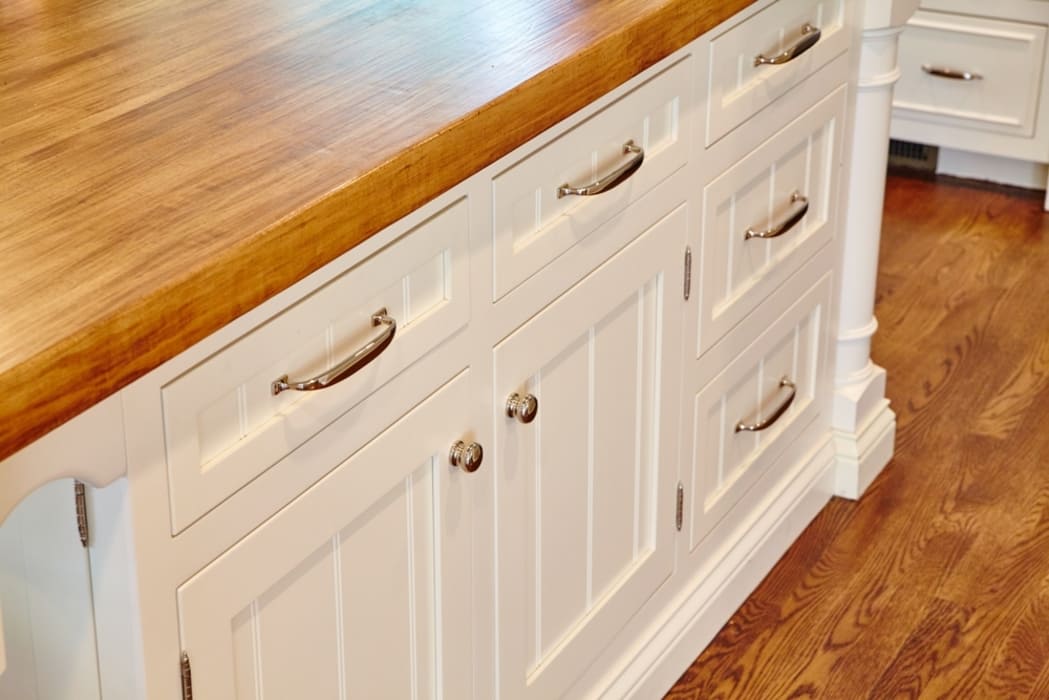
Solid wood is often used for both the body and doors of kitchen cabinets. However, it is important to note that the solid wood available in the market may not always be raw wood. Raw wood refers to a single piece of wood, whereas solid wood typically consists of processed wooden strips or blocks.
Pros and Cons of Composite Wood Kitchen Cabinets
Composite wood materials are made by combining wood particles, fibers, or veneers with adhesives. They come in various types, and the three most common ones used for kitchen cabinets are particle board, fiberboard (MDF), and plywood. Let’s delve into the unique manufacturing processes, advantages, and disadvantages of each, and how they are used in kitchen cabinets.
Particle Board
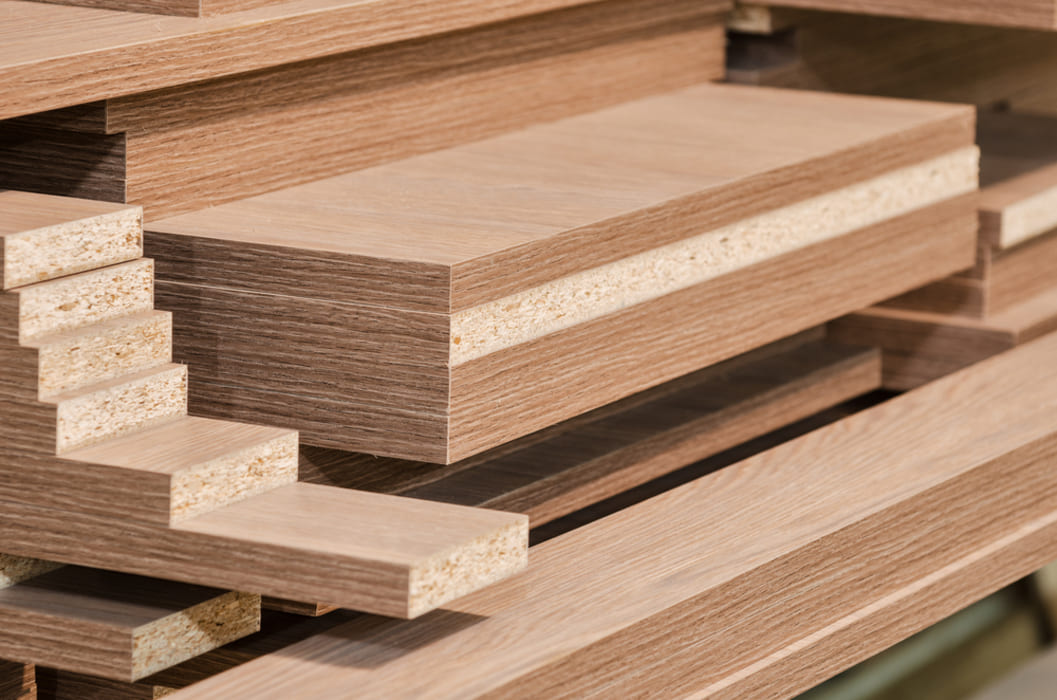
Particle board is made by binding wood particles with adhesive. It is one of the most widely used materials for kitchen cabinets due to its balanced properties.
Advantages
- Cost-Effective: Particle board is inexpensive and offers great value for money.
- Aging Resistance: It has strong structural stability and is resistant to aging.
- Durable: It is sturdy and not easily deformed.
Disadvantages
- Limited Design: Particle boards cannot be easily shaped or molded.
- Water Sensitivity: The edges of the board can absorb water and deform.
Applications
Particle board is commonly used for both the cabinet body and doors. When special formulations are added to regular particle boards (usually indicated by green particles), they become moisture-resistant and are referred to as moisture-resistant boards, making them ideal for kitchen cabinet bodies.

Fiberboard (MDF)
Fiberboard is made by bonding wood fibers or other plant fibers with adhesive. It is further classified into medium-density fiberboard (MDF) and high-density fiberboard (HDF). For kitchen cabinets, MDF is more commonly used than HDF, which is denser, stronger, heavier, and harder to process.
| HDF | MDF |
| Density: Up to 900kg/m3 | Density: 680kg/m3 – 730kg/m3 |
| Durability: Stronger and harder | Durability: Less dense and durable |
| Often used: Skirting board, laminate flooring, doors | Often used: Furniture and cabinetry |
| Cost: Higher | Cost: Lower |
Advantages
- Smooth Surface: MDF has a smooth surface that is perfect for painting and finishing.
- Fine Texture: Its fine texture allows for surface finishing and molding.
Disadvantages
- Lower Strength: MDF has lower strength and can deform under prolonged weight.
- Poor Moisture Resistance: It is prone to swelling and expansion when exposed to water.
Applications
MDF is often used for cabinet doors due to its smooth surface and ability to be shaped. However, it is not suitable for cabinet bodies due to its lower strength and poor moisture resistance.
Plywood
Plywood is made by layering thin sheets of wood veneer, which are glued together with the grains of adjacent layers at right angles to each other. This structure gives plywood its unique characteristics.
Advantages
- Durability and Strength: Plywood is highly durable and strong, capable of supporting heavy countertops.
- Moisture Resistance: It is more resistant to moisture compared to particle board and MDF.
Disadvantages
- Cost: Plywood is generally more expensive than particle board and MDF.
- Workability: It is harder to cut and shape compared to particle board and MDF.
Applications
Plywood is often used for cabinet bodies due to its strength and moisture resistance. However, it lacks the hardness needed for cabinet doors, making it less suitable for this application.
Choose the Right Material for Your Kitchen Cabinets
When selecting materials for your kitchen cabinets, consider the following factors:
- Budget: Determine how much you are willing to spend. Solid wood offers premium quality but at a higher cost, while particle board provides a budget-friendly option.
- Durability: For long-lasting cabinets, plywood and solid wood are excellent choices due to their strength and moisture resistance.
- Design and Finish: MDF is ideal for detailed designs and smooth finishes, making it suitable for cabinet doors and decorative elements.
- Moisture Environment: In high-humidity areas, opt for materials with good moisture resistance, such as plywood or moisture-resistant particle boards.
| Solid Wood | Particle Board | Fiberboard(MDF) | Plywood | |
| Load capacity | High | Medium | Below medium | High |
| Moisture Resistance | Medium | Medium | Below medium | Above medium |
| Glue Content | Low | Above medium | Medium | Medium |
| Pricing | High | Medium | Medium | Above medium |
| Uses in Cabinetry | Cabinet body & door | Cabinet body & door | Cabinet door | Cabinet body |
Choosing the right material for your kitchen cabinets involves balancing cost, durability, aesthetic appeal, and specific application requirements. Solid wood, particle board, MDF, and plywood each offer unique advantages and disadvantages. Understanding these can help you make an informed decision that aligns with your budget and design goals, ensuring your kitchen cabinets are both functional and beautiful for years to come. In cabinetry, it’s not just about selecting the right base material. The finishing touches, such as decorative surfaces and edge banding, play a significant role in the overall look and functionality of the kitchen cabinets.
Decorative Surfaces for Kitchen Cabinets
Decorative surfaces for kitchen cabinets come in various materials, each offering unique benefits and characteristics.
- Fireproof Panels: These panels are fire-resistant, moisture-resistant, and durable. They are available in many colors and patterns, making them a versatile choice. However, they have a hard texture and require professional installation.
- PVC Veneer: Made from polyvinyl chloride, PVC veneer is waterproof and durable, making it ideal for humid kitchens. It is easy to clean and comes in various colors and patterns. Some PVC materials may contain harmful substances, and they can discolor over time with prolonged exposure to light.
- Real Wood Veneer: This veneer involves applying thin slices of wood to the substrate, preserving the natural wood texture. It looks and feels like real wood, is eco-friendly, and can be sanded and refinished if damaged. However, it is more expensive than synthetic options and requires regular maintenance.
- Melamine: Melamine is a resin-saturated paper fused onto a substrate, providing a durable surface. It is affordable, available in many designs, and resistant to scratches, stains, and heat. However, it has a hard feel, and edges can chip or peel if not properly sealed or subjected to heavy wear.
Edge Banding for Kitchen Cabinets
Edge banding is the process of covering the exposed edges of base materials to create a finished, professional look and protect the core material from damage and moisture. It is commonly used on particle boards, MDF, and plywood edges.
Types of Edge Banding Materials
- PVC (Polyvinyl Chloride): PVC edge banding is durable, flexible, and available in various colors and textures.
- ABS (Acrylonitrile Butadiene Styrene): ABS is an environmentally friendly alternative to PVC, offering similar durability and aesthetics.
- Wood Veneer: Wood veneer edge banding provides a natural look and is often used to match the surface veneer of the cabinet.
- Melamine: Melamine edge banding is cost-effective and available in a wide range of designs, including wood grain and solid colors.
When it comes to cabinetry, selecting the right base material is only the beginning. The true beauty and functionality of cabinets come from the finishing touches, such as decorative surfaces and edge banding. These elements not only enhance the aesthetic appeal of your cabinets but also provide added protection and durability. By carefully selecting and combining these elements, you can create beautiful, durable, and highly functional cabinetry that meets your specific needs and preferences.
George® Custom Cabinets: Your Top Choice for Cabinetry Solutions
George® Custom Cabinets offers a fantastic range of cabinetry options crafted from premium materials, ensuring durability and style. With a variety of modern and classic designs that suit any budget, you’re guaranteed to find cabinets that fit your space perfectly. Our friendly design experts are here to help you customize every aspect, from dimensions and finishes to materials and more, ensuring your cabinets meet all your needs and preferences.