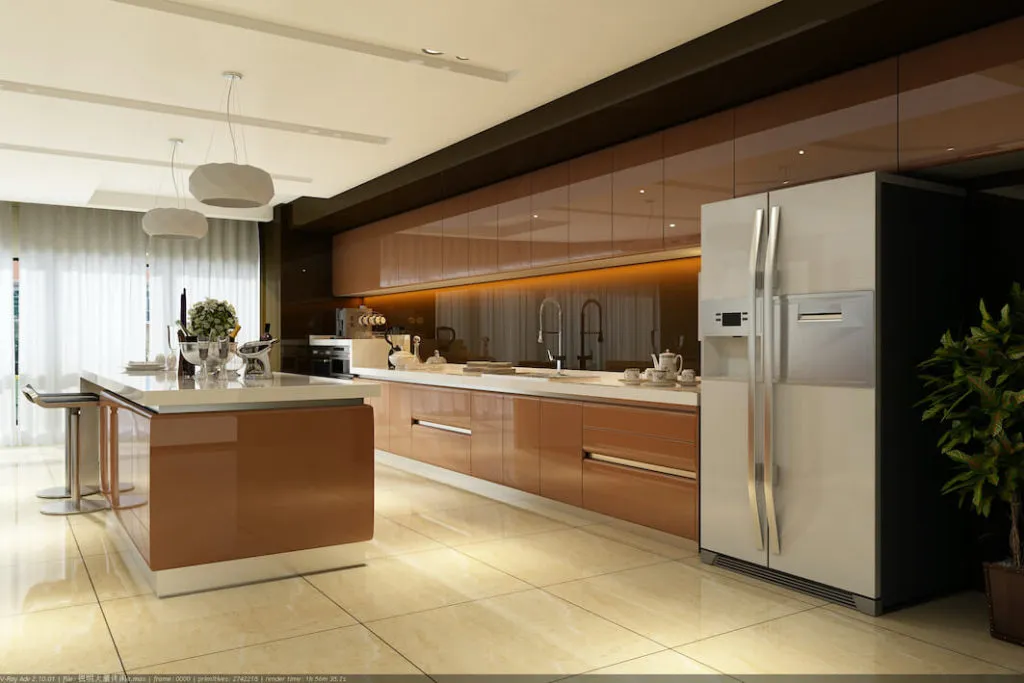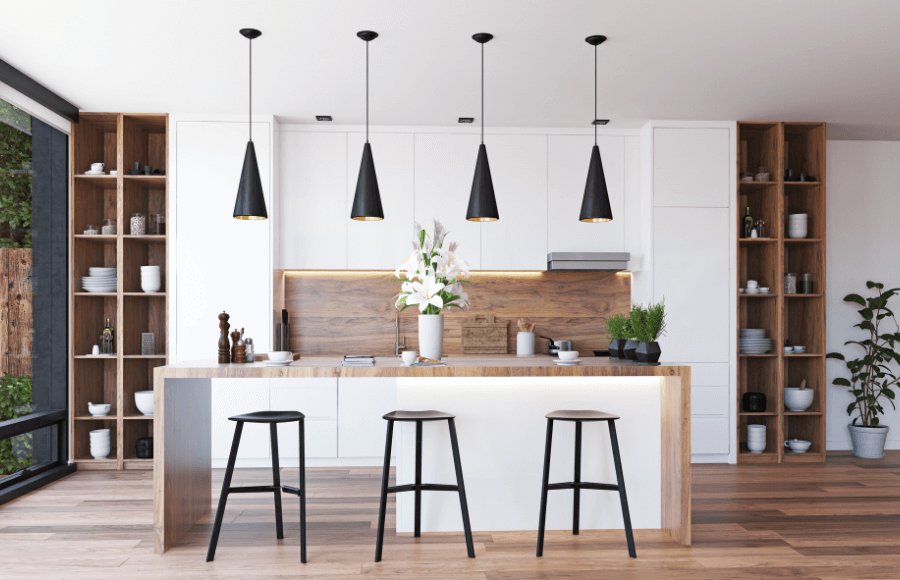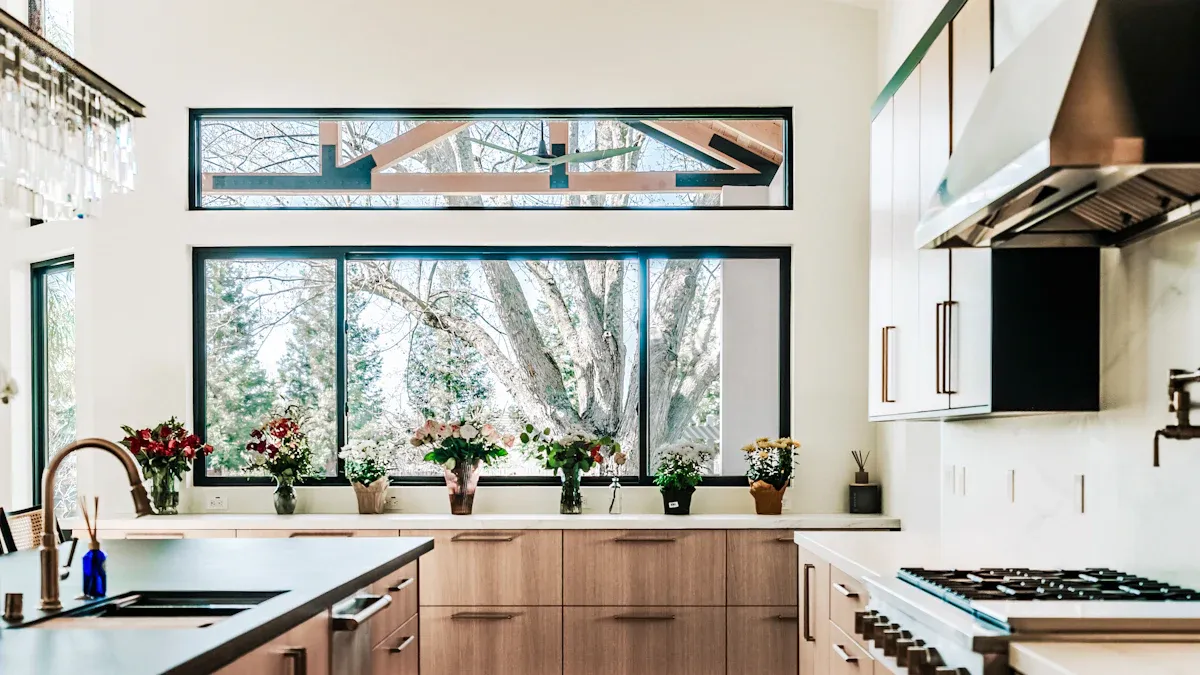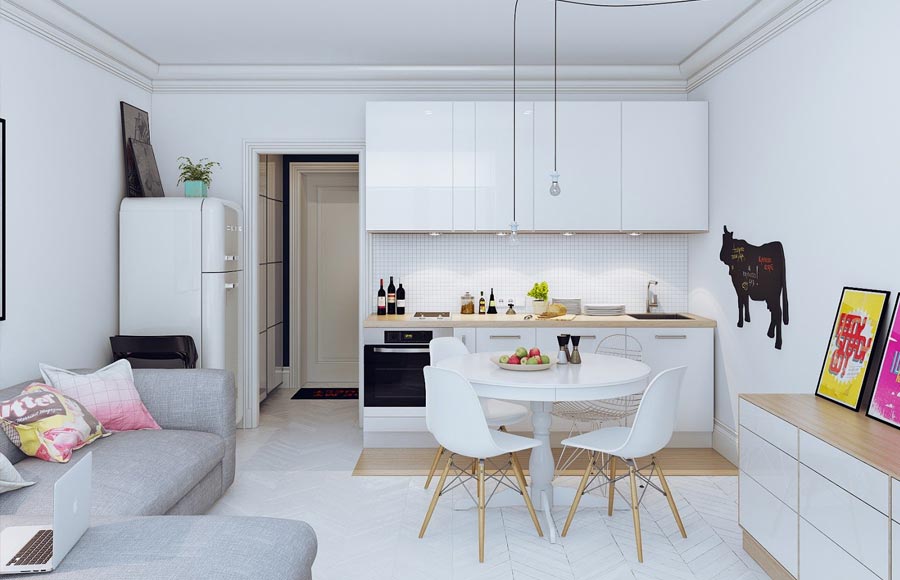


Ⅰ. Introduction: Why Your Kitchen Dimensions Matter
If you’ve ever finished a meal prep session with a sore back or strained shoulders, your kitchen counters might be to blame. Most people don’t realize that even an inch of difference in counter height can change how your kitchen feels. At George Solution, we believe a beautiful kitchen should also be a comfortable one. In this guide, we’ll break down standard measurements and show you how to tailor them to your unique needs.
Ⅱ. Standard Kitchen Counter Dimensions
You might wonder why almost every kitchen in the U.S. uses the same measurements. It’s not just a coincidence—it’s about making your kitchen work as a cohesive system.
The standard 36-inch height is the industry benchmark for a simple reason: it aligns perfectly with standard appliances. If your counters were even an inch lower or higher, your dishwasher or stove wouldn’t slide into place correctly, leaving awkward gaps.
As for the 24 to 25.5-inch depth, it is all about your reach. This size allows you to access everything on your counter without straining your back.
Why these standards help you:
- Easy Appliance Fit: Ensures your dishwasher and oven sit flush with your cabinets for a seamless look.
- Comfortable Reach: You can reach the backsplash and wall outlets without leaning over too far.
- Cleaner Cabinets: The slight 1.5-inch edge (overhang) protects your cabinet faces and handles from spills.
- Market Resale Value: Standard sizes make your home more attractive to future buyers.
Related article: What Are Standard Kitchen Cabinet Sizes? Base, Wall & Pantry Guide (2026)
Ⅲ. Precision Planning: How to Measure for Your Kitchen Counters
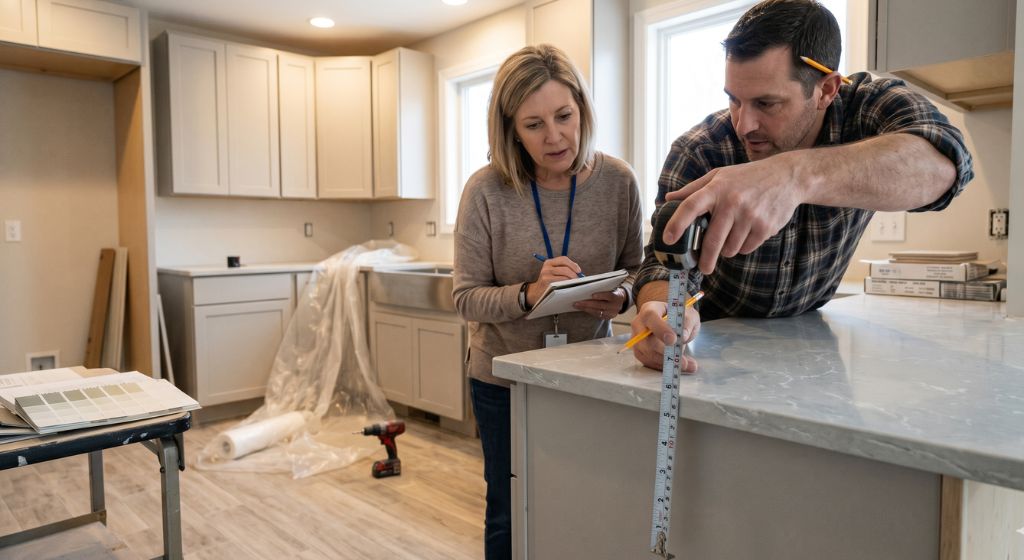
Before committing to a design, accurate measurements are non-negotiable. Whether you are replacing an existing surface or planning a complete remodel, follow this professional step-by-step process to ensure a perfect fit.
1. Measuring for Height
To determine the current height or plan for a new one, measure from the highest point of the finished floor to the top surface of the countertop.
- Pro Tip: If your floors aren’t level, take measurements at three different points along the wall and use the average. If you are planning for a custom height, stand in your typical prep position and measure the distance from the floor to your elbow, then subtract 3–4 inches.
2. Measuring for Depth
Place your measuring tape against the back wall (or the backsplash) and extend it to the front edge of the cabinet.
- The Overhang Factor: Remember that the standard cabinet is 24 inches deep, but the countertop should typically extend 1 to 1.5 inches beyond the cabinet face to protect your hardware and provide a finished look.
3. Checking for Level Surfaces
A countertop is only as good as the cabinets beneath it. Use a long carpenter’s level to check the horizontal plane across your base cabinets.
- Why it matters: Even a slight slope can cause liquids to pool or appliances like dishwashers to vibrate excessively and wear out prematurely.
4. Appliance Clearance & “The Gap”
Measure the width and height of the openings for your dishwasher, range, or under-counter fridge.
- The Rule of Thumb: Ensure there is a 1/8-inch clearance on either side of built-in appliances to allow for heat expansion and easy installation/removal.
Ⅳ. Customizing for Comfort: Finding Your “Golden Height”
While 36 inches is the standard, it isn’t perfect for everyone. At George Solution, we often suggest the “Elbow Rule”: stand with your arms bent at a 90-degree angle; your counter should be about 3–4 inches below your elbow.
- For Taller Users: If you are over 6 feet tall, consider raising your counters to 38 or 39 inches to avoid hunching.
- For Petite Users: A height of 34 or 35 inches can make heavy tasks like chopping much easier.
- Multi-Level Thinking: Consider a lower section (30–32 inches) for a baking station to give you better leverage when kneading dough.
Ⅴ. Kitchen Island Dynamics & Traffic Flow
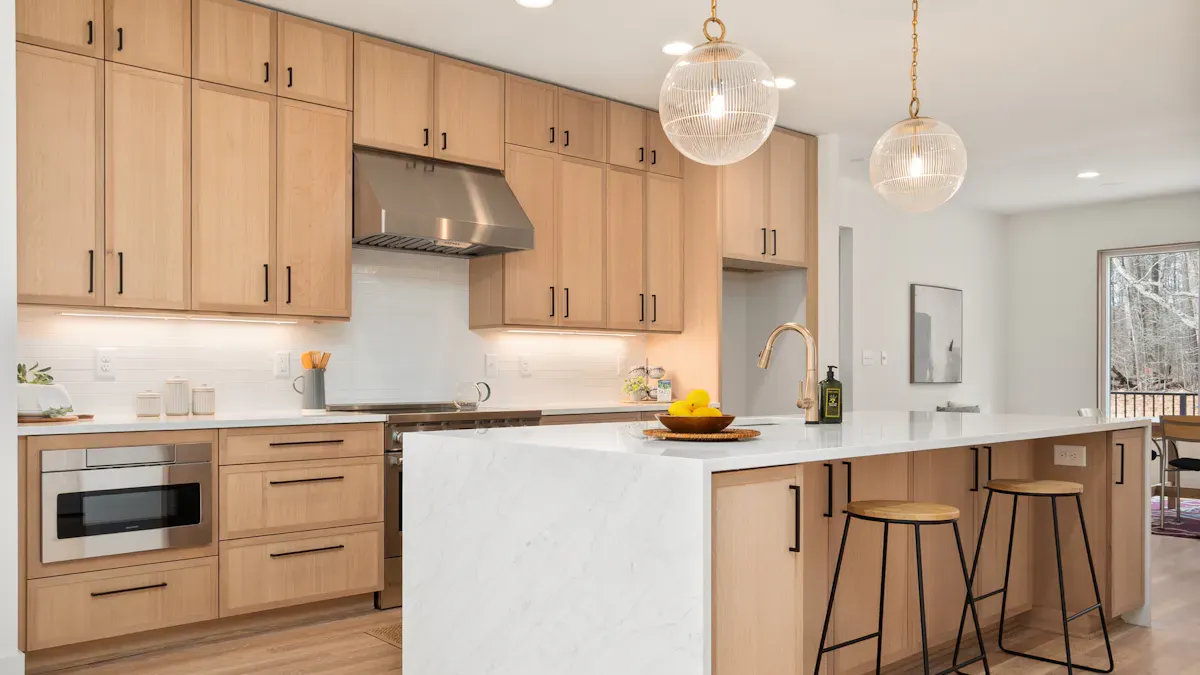
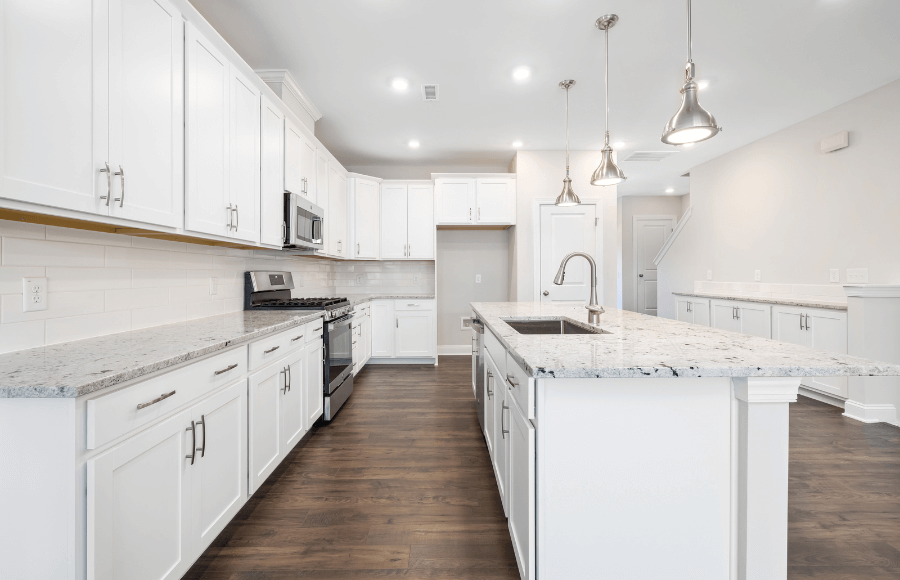
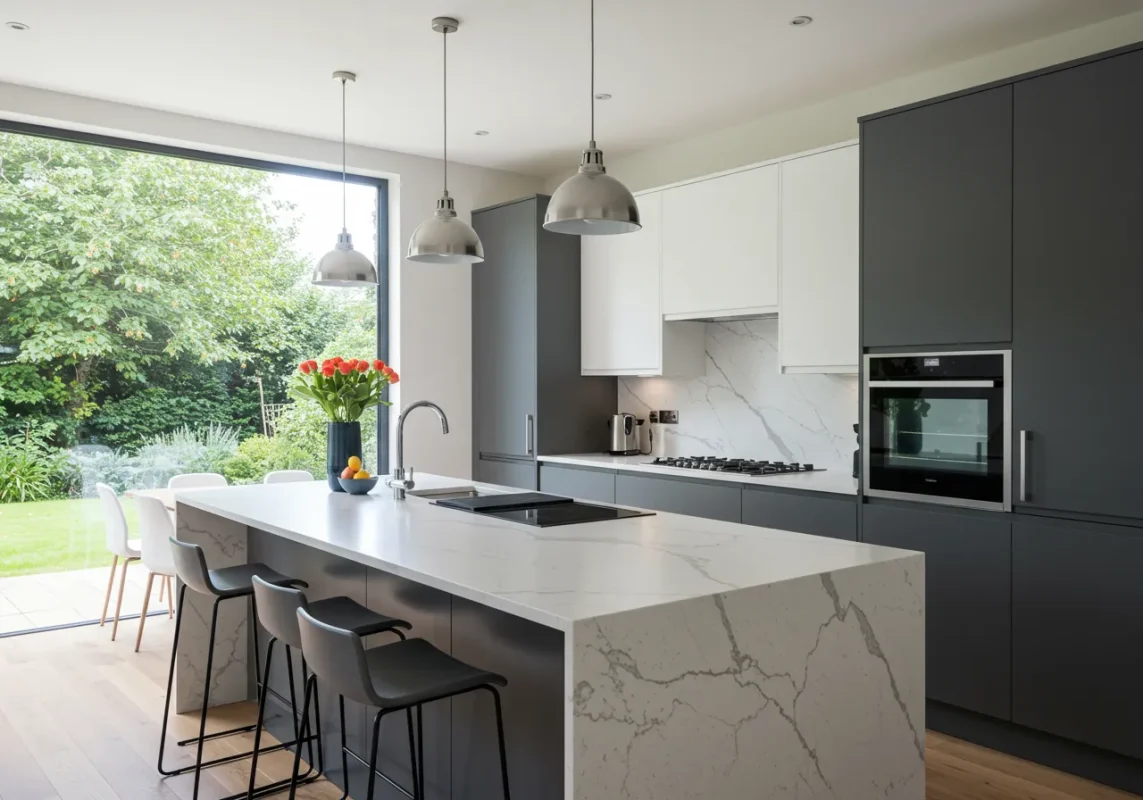
A kitchen island is often the heart of the home, but its success depends on more than just a beautiful countertop—it’s about the “breathing room” around it. In our experience at George Solution, the most common mistake is sizing an island so large that it bottlenecks the rest of the room.
To keep your kitchen moving smoothly, you should aim for at least 40 to 48 inches of walkway space between the island and your perimeter counters. This ensures that even if someone is loading the dishwasher, another person can comfortably walk past without a collision.
When it comes to seating, the dimensions are equally critical for comfort. If you plan on using your island for breakfast or casual dining, you need to allow roughly 24 inches of width for each person. This prevents elbows from bumping and ensures that everyone has enough personal space to enjoy their meal. By prioritizing these traffic patterns and spacing requirements, your island becomes a functional hub rather than a roadblock.
Related article: Top 10 Open Kitchen Living Room Ideas – Modern Layouts for Small & Large Spaces
Ⅵ. Universal Design: A Kitchen for Everyone
Accessibility is no longer an afterthought; it’s a key element of modern, thoughtful design. Adopting “Universal Design” principles means creating a kitchen that feels intuitive for every family member, regardless of age or mobility.
For instance, following ADA guidelines by incorporating counter sections between 28 and 34 inches can make a world of difference for seated work or for household members who use mobility aids.
Designing with these considerations in mind is what we call “future-proofing” your home. It’s not just about meeting a standard; it’s about ensuring that your kitchen remains a safe, comfortable, and welcoming environment as your family’s needs change over the years.
Whether it’s lowering a prep area for a senior family member or creating open knee space under a sink, these small adjustments at the planning stage add immense long-term value and livability to your remodel.
Ⅶ. FAQ: Common Questions
- Does countertop thickness affect the height?
Yes. Standard counters are usually 1.5 inches thick. If you choose a thicker stone, you may need to adjust your cabinet height to keep the total at 36 inches.
2. Can I change my counter height without replacing cabinets?
It’s difficult, but you can add “shims” or a thicker countertop to gain a bit of height, or adjust the toe-kick at the bottom.
3. What if I have a small kitchen?
In tight spaces, sticking to standard depths is usually best to ensure you have enough room for appliances and walkways.
Ⅷ. Conclusion: Your Path to a Perfect Kitchen
Comfort in the kitchen is a science, not a guess. By understanding these standard dimensions and measuring correctly, you can create a space that is as functional as it is beautiful.
If you’re ready to start your remodel or need a professional measurement kit, George Solution is here to help. Let’s build a kitchen that truly works for you.