

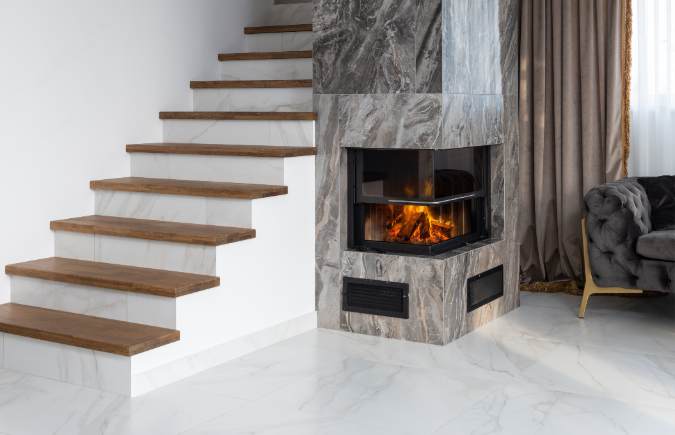
There are many options to choose from when you want to select a material to floor your stairs with. Amongst them all, Luxury vinyl planks (LVPs) are one of the most suitable materials for stairs.
They’re known mostly for the woody, oak feeling they can give to the design of a living space.
Of course, it’s a no-brainer that you could use them to floor your home, but can you use LVPs to your stairs?
The short answer is: yes. However, there are various things you need to be aware of before you choose to do this.
Here, we’ll be exploring the option of using luxury vinyl planks; what exactly they are, their pros and cons, how to install them, and even some other similar options you may consider.
At the end of this article, you should have all the information you need to make a good decision for your interior design. So, let’s get right at it.
What Are Luxury Vinyl Planks (LVPs)?
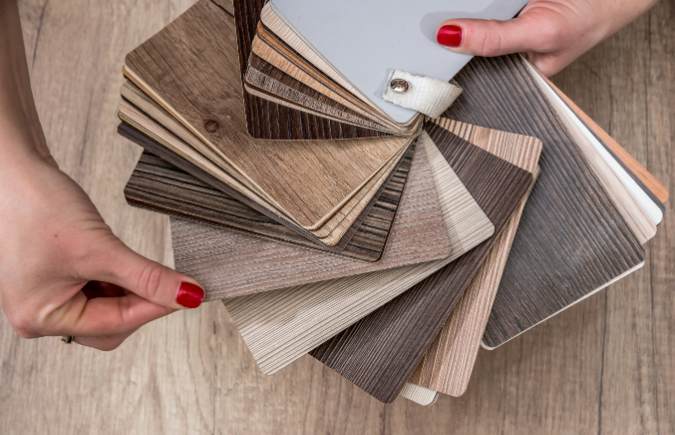
Luxury vinyl planks, or LVPs, are a unique type of flooring material that looks like long wood planks.
While other materials have similar looks, what differentiates LVPs is that the core of these planks is made of Polyvinyl Chloride (PVC).
Now, there are regular, standard vinyl floorings, but luxury vinyl is less likely to tear and is more comfortable underfoot.
They’re also easier to install because they have click-lock interlocking edges – exactly the kind used in laminate flooring.
LVPs are made up of about five layers: there’s the wear layer, decor layer, PVC layer, waterproof core layer, and the foam later.
All these together are what gives the LVP such quality and benefits as a flooring material.
What are the Benefits of Using LVPs on Stairs?
Exceptional Durability
LVPs are highly durable with a wear layer that resists scratches, dents, and scuffs, making them ideal for high-traffic areas like stairs.
They’re water-resistant, so they won’t warp or swell when exposed to moisture, unlike hardwood.
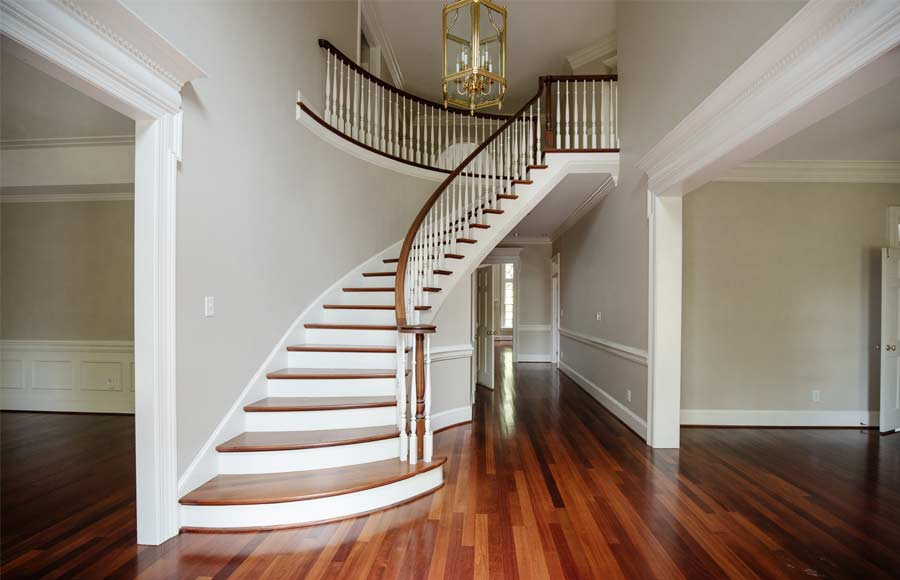
This makes them a great choice for areas like curved stairs where traditional wood can be more susceptible to damage.
Attractive Aesthetic Appeal
LVP mimics the look of hardwood at a lower cost. Available in various colors, textures, and finishes, it can replicate wood, stone, or other natural materials, offering a stylish and cohesive look for your home.
Low Maintenance
LVP is easy to maintain with no need for refinishing, waxing, or sealing. It’s resistant to stains and simple to clean with sweeping and mopping.
The smooth surface prevents dirt from accumulating, making it hygienic for stairs.
Cost-Effective
LVP is more affordable than hardwood, stone, or tile.
Installation is faster and simpler, especially with click-lock designs, making it a budget-friendly option for a high-end look.
Noise Reduction
LVP offers a quieter surface than tile or wood.
Many products include an underlayment that absorbs sound, reducing noise, which is especially useful for noisy staircases.
What are the Cons of Using LVP on Stairs?
Risk of Slipping (Safety Concerns)
LVP’s smooth surface, while easy to maintain, can pose a slipping hazard on stairs.
Though less slippery than tile, stairs still present a higher fall risk, especially for children, the elderly, or people with mobility issues.
Anti-slip treads or textured LVP can help reduce this risk, but it remains a concern, especially for high-traffic spiral staircases or floating staircase designs.
Installation Complexity
While LVP is generally easy to install, stairs require precise cuts and fitting.
Each stair tread and riser needs careful installation to avoid gaps or misalignment, which can make DIY installation time-consuming and challenging.
Moisture Concerns
Although LVP is water-resistant, it’s not entirely waterproof.
In areas with heavy moisture exposure (e.g., near entrances), water may seep into the seams, causing potential damage. This is less of an issue for stairs but still something to consider.
How to Install LVP on Stairs?
Installing LVP on stairs is a tricky business. But don’t worry, it’s still something that can be done easily. You just need to have some patience.
The tools you’d need are:
- Utility knife or saw for cutting planks
- Measuring tape and straightedge.
- Adhesive (specific for LVP installation).
- Trowel or roller for spreading adhesive evenly.
- Rubber mallet to secure the planks.
- Stair nosing for edges.
So, very briefly, here are the steps to installing LVP on the stairs:
- Remove old flooring and ensure a clean, level surface. Also, check for damages and make repairs where necessary.
- Measure the width, depth, and height of each step individually to account for variations.
- With these measurements, cut the luxury vinyl planks with the appropriate tools. When you’re done cutting, you want to lay each plank on the intended riser or tread so you can be sure it fits perfectly.
- Secure the planks and nosing using strong adhesives or screws. Ensure that the adhesive is evenly spread, but be careful not to use too much or it may spill out when you press the plank against the stairs.
- When attaching the planks, it’s best to start from the treads, then move to the risers, and finally, attach the nosings. Press the planks down from the center outward to eliminate air pockets.
- For the finishing touches, clean off any extra adhesive and check that your work is good. Allow the adhesive to be cured for at least 24 hours.
- You may also want to apply a non-slip coating for extra safety on the stairs.
Installing the stairs is relatively easy for DIYers, but if you’re in doubt, you can always call on a professional to achieve a flawless result.
Alternatives to LVP for Stairs
If you’re not sure about using LVPs for your stairs, there are several other flooring options to consider. Each comes with its own set of benefits and potential drawbacks:
Hardwood
Hardwood stairs provide a classic, timeless look and can be extremely durable when properly maintained.
They are more expensive than LVPs and can be prone to scratching and denting, especially in high-traffic areas.
Hardwood also requires periodic refinishing to keep it looking its best. This makes it a solid option for straight stairs, where durability and style are priorities.
Carpet
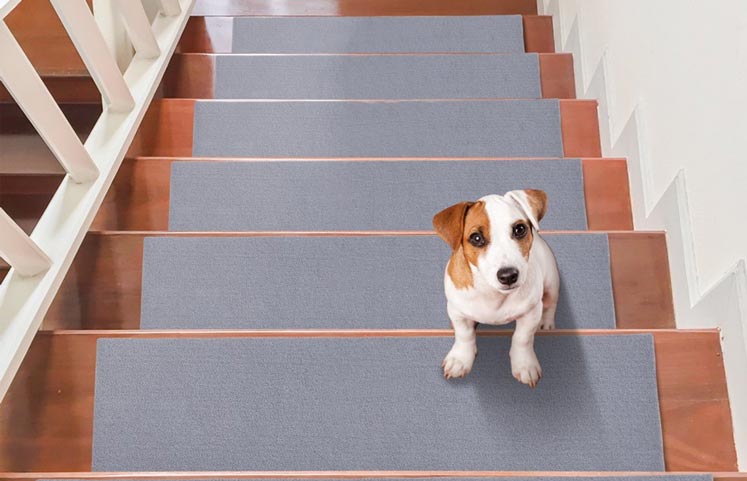
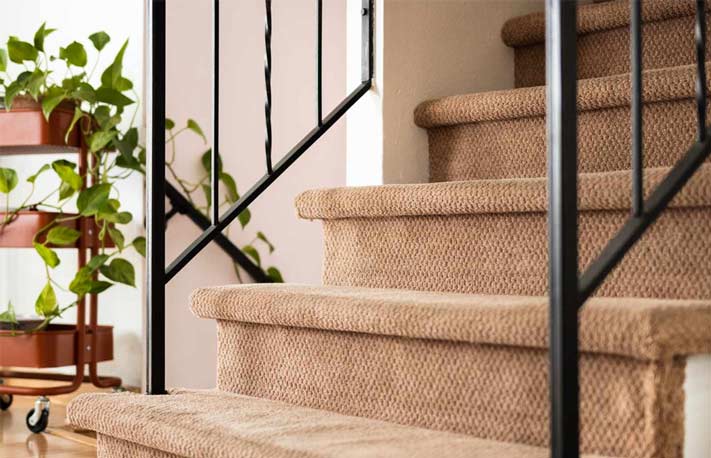
Carpeting on stairs offers comfort, warmth, and noise reduction.
It’s a great option if you want something soft underfoot, but it requires more maintenance to keep it clean, especially in high-traffic areas.
Carpet can also wear out faster than LVPs and can be prone to staining.
Tile
Ceramic or porcelain tiles offer a sleek and durable alternative, and are especially suited for more modern or high-moisture environments.
However, tiles can be slippery, and their hard surface can make them less comfortable to walk on compared to LVP or carpet.
Tiles also tend to be colder underfoot, which might be less desirable in colder climates.
Laminate
Laminate flooring is another alternative that mimics the look of wood but at a more affordable price point.
While laminate is durable and easy to maintain, it is not as resistant to moisture as LVPs and can be prone to swelling or warping if exposed to water.
It’s also less impact-resistant than LVP, which may be a consideration for stairs.
Rubber
Rubber stair treads provide a slip-resistant surface, making them a great choice for safety-conscious homes.
They are comfortable underfoot and durable, though they may not offer the same aesthetic appeal as other materials like wood or tile.
Rubber can be a practical choice for homes with children or elderly family members.
Conclusion
Installing luxury vinyl planks (LVP) on stairs is a practical and stylish option that combines durability, affordability, and aesthetics.
Most of the cons of LVPs are currently being countered by the latest technology, and its ease of installation is more reason to choose it.
Whether you choose to install it yourself or hire a professional, LVP offers a versatile and modern flooring option worth considering.
However, if you are considering space-saving staircase designs, LVP’s thin profile and easy installation can work well with unique layouts, providing both style and functionality.
Additionally, for those interested in Whole House Customization in China, LVP is a great option that can complement a wide range of interior styles, ensuring a cohesive look throughout your home.
Read More:
15 Bedroom Renovation Ideas – George Solution
15 Best Modern Bedroom Designs – George Solution
How to Decorate Bedroom Walls? Tips & Tricks – George Solution
Top Practical Lighting Ideas to Brighten Your Small Living Room – George Solution
Living Room Renovation: A Practical Guide for Homeowners – George Solution